
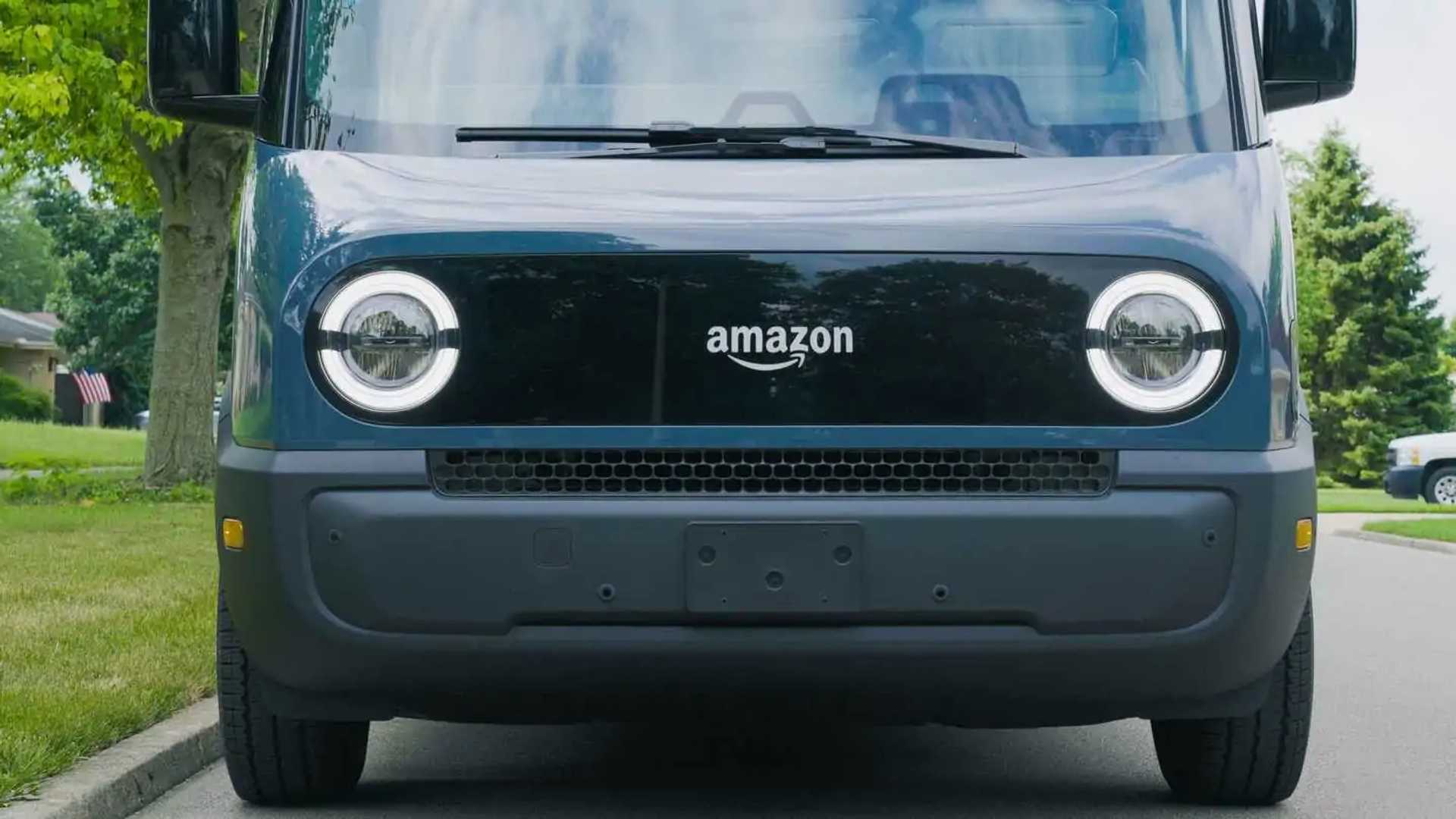
Key Takeaways:
- While the R2 SUV garners significant attention for Rivian’s long-term profitability goals, its less conspicuous Electric Delivery Van (EDV) is rapidly transforming into a pivotal revenue stream.
- Amazon’s demand for Rivian’s commercial van has surged dramatically, contributing $1.6 billion in revenue to Rivian this year—a near threefold increase year-over-year.
- The EDV’s success is fueled by its lower running costs compared to traditional diesel vehicles, prompting logistics giants like Amazon to expand their electric fleets.
- Rivian’s commercial van faces a diminishing competitive field, with major players like Ford and General Motors scaling back or exiting the medium-duty electric van segment.
- Beyond Amazon, Rivian is actively exploring new fleet customers and has introduced advanced EDV variants, positioning itself as a leader in commercial vehicle electrification.
In the dynamic and often volatile world of electric vehicle manufacturing, headlines frequently focus on sleek consumer models promising future disruption. For Rivian, much of this spotlight has fallen on its upcoming R2 crossover, hailed as the company’s crucial entry into the mass market with an anticipated starting price of $45,000. While the R2 is indeed a strategic pillar for long-term profitability, an understated workhorse in Rivian’s fleet, the Electric Delivery Van (EDV), is quietly establishing itself as a significant and immediate financial powerhouse.
This utilitarian vehicle, often seen silently navigating residential streets for Amazon deliveries, is proving to be a potent revenue generator for the EV startup. Its robust performance in the commercial sector underscores a critical shift in Rivian’s operational strategy and market impact, moving beyond consumer aspirations to deliver tangible financial results in a highly competitive industry.
Amazon’s Escalating Demand for Rivian’s Commercial Van
The strategic importance of Rivian’s commercial van has become unequivocally clear through its deepening relationship with Amazon. Rivian founder and CEO RJ Scaringe recently highlighted a substantial uptick in orders from the e-commerce giant, an early investor in the EV manufacturer.
“This year we have seen a significant step up in the level of demand from Amazon,” Scaringe stated during a recent earnings call. This increased demand is primarily attributed to the EDV’s compelling economic advantages, particularly its reduced operational expenses.
The shift towards electric delivery vehicles offers considerable benefits, including lower maintenance requirements compared to internal combustion engine counterparts. Coupled with the volatile and often high prices of diesel fuel, the economic case for electrifying large delivery fleets becomes undeniable.
Scaringe further elaborated on this commercial imperative, noting, “It’s creating true and very real structural cost advantages that are leading Amazon to double down to continue to buy more vehicles.” This statement underscores how Rivian’s commercial van directly addresses the pressing need for cost efficiency within large-scale logistics operations.
Financial Performance: A Booming Van Business
While Rivian refrains from publicly disclosing specific delivery volumes for individual models, the company’s financial disclosures paint a vivid picture of the EDV’s burgeoning success. The third quarter alone saw Amazon remit an impressive $596 million to Rivian, a figure that surpasses the total payments received from the logistics behemoth throughout the first three quarters of the preceding year combined.
This substantial infusion of capital highlights the growing reliance of Amazon on Rivian’s commercial van for its delivery infrastructure. Cumulatively, Rivian has recorded $1.6 billion in revenue from Amazon this year, predominantly stemming from EDV sales. This represents an almost threefold increase compared to the revenue generated from Amazon during the same period last year, signalling robust growth in this segment.
Despite these impressive gains in commercial sales, Rivian, like many burgeoning EV startups, continues to navigate its path towards consistent profitability. The company reported a net loss of $913 million for the third quarter, an improvement from a $1.17 billion loss during Q3 of 2025. This financial context further accentuates the critical role of the EDV in generating substantial revenue to offset ongoing operational expenses and fund future innovations.
The R2, with its anticipated higher margins and broader consumer appeal, remains central to Rivian’s long-term financial health. Concurrently, a burgeoning high-margin software and services business is also contributing to profits, helping to fuel the company’s ambitious vision for sustainable growth and market leadership.
Navigating a Shrinking Competitive Landscape
The ascendancy of Rivian’s commercial van is further propelled by a notable contraction in the competitive field for medium-duty electric vehicles. Several established automakers, initially seen as strong contenders, have either struggled to gain traction or completely withdrawn from this segment, creating a strategic vacuum that Rivian is effectively filling.
For instance, Ford, a traditional leader in commercial vehicles, has experienced significant challenges with its E-Transit van. Sales have plummeted to fewer than 700 units this year, marking an 85% decline compared to the same period in 2025. Adding to this, Ford has reportedly canceled plans for a next-generation E-Transit model, indicating a re-evaluation of its strategy in this specific EV segment.
Similarly, General Motors, another automotive giant, made the decision to entirely discontinue its BrightDrop electric delivery van line late last year. These retreats by major industry players underscore the inherent complexities and significant capital investment required to successfully compete in the commercial EV market, a domain where startups like Rivian appear to have an agile advantage.
Ray Minjares, who directs the heavy-duty vehicles program at the International Council on Clean Transportation, observes that the current dynamics in the U.S. market are largely being shaped by EV-only manufacturers. According to Minjares, “The dynamics that are playing out now in the U.S. market are basically being led by the EV-only manufacturers.” He identifies Rivian as a leader in the medium-duty EV sector, while Tesla’s Semi is making substantial inroads in the long-haul trucking segment. Other startups, such as Harbinger Motors, are also making strides, exemplified by its recent agreement to supply 2,000 electric trucks to FedEx.
Expanding Reach Beyond Amazon
Recognizing the immense potential of its EDV, Rivian is actively pursuing a strategy to diversify its customer base beyond its cornerstone partnership with Amazon. Last year, the company initiated the process of opening fleet orders to other businesses, with the smaller EDV model starting at a price of $79,900. This move signals Rivian’s ambition to capture a broader share of the commercial fleet market.
In a further demonstration of its commitment to innovation and market expansion, Rivian recently announced the delivery of two new EDV variants to Amazon. These specialized models are engineered to address the unique challenges of more rural delivery routes. One variant features an all-wheel-drive (AWD) system for enhanced traction and capability, while the other boasts a larger battery, providing a significant 30% increase in range. These developments highlight Rivian’s agility in responding to diverse operational needs within the logistics sector.
Speculation about additional high-profile partnerships has also begun to circulate, particularly after a photograph of a Rivian EDV adorned with Walmart livery went viral. When analysts broached the subject during the earnings call, CEO RJ Scaringe refrained from directly addressing the specific photo but indicated broader discussions are underway.
Scaringe remarked, “We do see other commercial operators, as they start to really look at ways to drive more efficiency into the business, starting to look at the EDV. And we’re excited for those potential future customers on this program as well.” This statement suggests Rivian is in active engagement with various potential clients, aiming to replicate the success seen with Amazon and further solidify its position in the commercial electric vehicle market.
The Future of Commercial EV Fleets
Rivian’s strategic pivot and significant investment in its commercial van segment underscore a broader transformation sweeping through the logistics and transportation industries. The global push for sustainability, coupled with economic imperatives, is accelerating the adoption of electric vehicles for commercial fleets worldwide. As governments enact stricter emissions regulations and corporations prioritize their environmental, social, and governance (ESG) commitments, the demand for efficient, reliable electric delivery solutions is set to soar.
Rivian’s EDV is poised to be a frontrunner in this evolving landscape. Its proven ability to deliver significant cost savings and operational efficiencies positions it as an attractive option for businesses looking to modernize their fleets. The company’s continued innovation, evidenced by the introduction of specialized variants and expansion into new customer segments, further solidifies its role as a key enabler of sustainable logistics.
The shift towards electrification in commercial transport is not merely an environmental trend; it represents a fundamental recalibration of operating models for businesses dependent on mobility. Rivian, by focusing on the practical, economic benefits of its commercial van, is not only building a successful product line but also contributing significantly to the infrastructure and operational paradigms of the future.
The journey for electric vehicle startups is fraught with challenges, from scaling production to achieving profitability. However, the unexpected rise of Rivian’s commercial van provides a compelling narrative of strategic foresight and execution. While the R2 may capture imaginations, it is the steadfast performance and growing revenue contribution of the EDV that are truly driving Rivian’s immediate viability and long-term prospects in the highly competitive electric vehicle industry.
Frequently Asked Questions (FAQ)
What is Rivian’s EDV?
Rivian’s EDV stands for Electric Delivery Van. It is a commercial electric vehicle designed primarily for last-mile delivery services. Known for its distinctive design, it is a key component of Amazon’s growing electric delivery fleet.
How much revenue has Rivian generated from Amazon’s EDV orders this year?
Rivian has booked $1.6 billion in revenue from Amazon this year, predominantly from EDV sales. This figure represents a nearly threefold increase compared to the revenue generated from Amazon during the same period last year.
Why is Amazon increasing its demand for Rivian’s commercial van?
Amazon is significantly increasing its demand due to the EDV’s lower running costs. Electric vehicles generally incur lower maintenance expenses, and the high price of diesel fuel makes Rivian’s commercial van a more cost-effective option for large-scale logistics.
Which competitors has Rivian’s EDV outperformed in the commercial EV market?
Rivian’s EDV has seen success as competitors like Ford and General Motors have struggled. Ford’s E-Transit sales have dropped significantly, and GM entirely axed its BrightDrop electric delivery vans late last year, leaving a more open field for Rivian.
Is Rivian’s commercial van available to companies other than Amazon?
Yes, Rivian opened fleet orders for its EDV to companies apart from Amazon last year. The smaller EDV model starts at $79,900, indicating Rivian’s strategy to diversify its commercial customer base beyond its initial exclusive partnership.
What new variants of the EDV has Rivian introduced?
Rivian has introduced two new EDV variants aimed at tackling more rural delivery routes. One features all-wheel drive (AWD), and the other includes a larger battery, providing 30% more range, enhancing the van’s versatility and capability.
Is Rivian’s EDV profitable for the company?
While the EDV is a significant revenue driver, Rivian still reported a net loss of $913 million for the third quarter. However, the substantial revenue from EDV sales is crucial in offsetting these losses and supporting the company’s path toward overall profitability.