
Key Takeaways
- SpaceX is targeting Friday, November 13, for Starship Flight 15, aiming for the program’s first-ever orbital ship catch using the launch tower’s ‘chopsticks.’
- This mission represents a critical step towards full and rapid reusability of the Starship system, a cornerstone of SpaceX’s long-term vision for space exploration.
- All necessary flight hardware, including Booster 22 and Ship 42, has undergone rigorous testing, demonstrating readiness for the ambitious maneuver.
- The primary remaining hurdle is securing regulatory approval from the Federal Aviation Administration (FAA) for a return-to-launch-site trajectory and tower catch.
- Elon Musk has expressed cautious optimism, estimating the odds of a successful ship catch at “more likely than not,” emphasizing the unprecedented nature of fully recovering an orbital-class rocket.
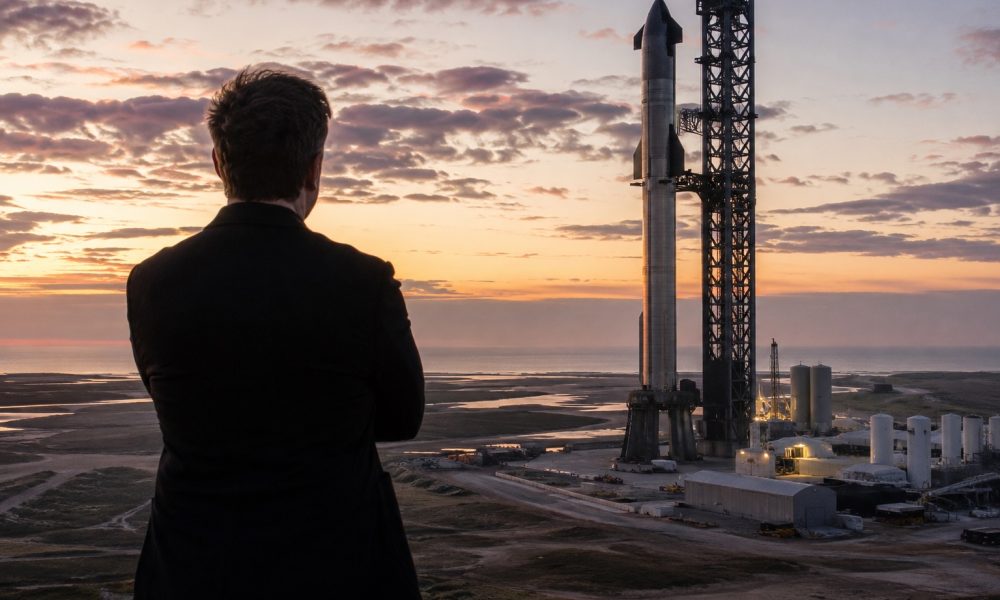
SpaceX is preparing for a landmark mission in its ambitious Starship program, targeting Friday, November 13, for Flight 15. This upcoming launch is poised to make history as the company’s first attempt to catch the Starship spacecraft directly with its towering launch structure upon returning from orbital velocity. The maneuver, if successful, would represent a significant leap towards the rapid and full reusability central to SpaceX’s vision for deep space travel and lunar and Martian colonization.
The target date for this pivotal mission was publicly confirmed by SpaceX Vice President of Launch Kiko Dontchev at the UP.Summit, as reported by Ars Technica’s Eric Berger. This marked the first direct confirmation from a SpaceX executive, providing a definitive timeline after earlier public schedules, derived from FAA air traffic planning, had indicated dates as early as November 8 and later November 12. As of now, an official mission page from SpaceX has not yet been published, and the precise launch time remains undisclosed.

The Significance of the Orbital Ship Catch
The concept of catching the Starship spacecraft, rather than a controlled ocean splashdown, is fundamental to SpaceX’s reusability paradigm. While the Super Heavy booster has successfully demonstrated tower catches multiple times, recovering the Starship itself, which returns from orbital velocity, presents a far greater engineering and operational challenge.
Elon Musk, CEO of SpaceX, has consistently highlighted the importance of this maneuver. Speaking at Giga Texas on October 10, Musk indicated that the flight would “probably launch a little bit before Thanksgiving.” Ten days later, during SpaceX’s third-quarter earnings call, he confirmed that Flight 15 would endeavor to catch both the Super Heavy booster and the Starship, projecting the odds of a successful ship catch at “more likely than not.” This statement underscores both the complexity and the company’s confidence in the pioneering attempt.
The successful execution of this maneuver is critical for achieving the rapid turnaround times and drastic cost reductions necessary for sustainable, frequent spaceflight. Full reusability means that both stages of the rocket system—the Super Heavy booster and the Starship spacecraft—can be prepared for another flight soon after landing, akin to commercial aircraft operations.

A Glimpse into the Catch Maneuver
During its third-quarter earnings webcast, SpaceX provided an animated visualization of the audacious ship catch. The animation depicted the Starship spacecraft swinging into a vertical orientation directly above Starbase, the company’s South Texas launch site. Following this precise alignment, the spacecraft is shown descending into the embrace of the launch tower’s ‘chopsticks’ – a pair of massive robotic arms designed to cradle the returning vehicle.
This intricate maneuver requires exceptional precision in guidance, navigation, and control. The spacecraft must execute a complex re-entry trajectory, perform a ‘belly flop’ atmospheric descent, and then reorient itself vertically for the final approach to the tower. The ‘chopsticks’ then engage, securing the Starship and allowing for its immediate preparation for subsequent missions.
Hardware Readiness: Extensive Testing Completed
The readiness of the flight hardware is a testament to SpaceX’s rapid development and rigorous testing protocols. Both the Super Heavy Booster 22 and the Starship Ship 42 have successfully completed crucial pre-flight evaluations, affirming their preparedness for the upcoming mission.
On October 25, Booster 22 underwent a full-duration static fire test at Pad 2, igniting all 33 of its powerful Raptor engines. This test is vital for verifying the booster’s propulsion system and structural integrity under operational thrust. The successful static fire provides critical data on engine performance and confirms the booster’s readiness for launch.
Ship 42 also completed a series of essential tests. On October 26, it performed a single-engine burn, simulating a deorbit maneuver, which is crucial for testing the spacecraft’s ability to precisely control its descent from orbit. The following day, Ship 42 conducted a 60-second firing of all six of its engines, as reported by NASASpaceflight. This longer duration burn simulates the propulsive landing phase, where the engines are used to control the vehicle’s descent rate and ensure a soft, controlled touchdown.
Prior to these engine tests, in September, Ship 42 had already rehearsed the physical catch maneuver. During this crucial test, the Pad 2 arms—the very ‘chopsticks’ intended for the live catch—lifted Ship 42 into its operational position. Crews then practiced connecting the quick-disconnect arm while the vehicle was suspended from the tower, simulating the intricate ground operations required post-catch. These comprehensive hardware checks underscore SpaceX’s methodical approach to mitigating risks associated with this groundbreaking flight.
Regulatory Approval: The Final Frontier
Despite the advanced state of hardware readiness, the primary outstanding hurdle for Flight 15 remains regulatory approval. The Federal Aviation Administration (FAA) plays a critical role in licensing commercial space launches in the United States, ensuring public safety and environmental protection.
Currently, the FAA’s Starship page does not yet list a Flight 15 license. SpaceX President Gwynne Shotwell acknowledged this challenge in October, stating that after “significant constructive engagement with the FAA,” she anticipates the license will encompass both a return to the launch site and a tower catch for both stages of the Starship system. This specific licensing is crucial because bringing the Starship spacecraft back to the launch site for a tower catch necessitates a re-entry path that heads toward land. This differs significantly from all previous Starship flights, which concluded with controlled splashdowns over open ocean.
A land-based re-entry involves stricter regulatory scrutiny due to the increased potential risk to populated areas and ground infrastructure. The FAA’s approval process for such a complex and unprecedented maneuver involves extensive safety and environmental impact assessments, which are currently ongoing between SpaceX and the regulatory body.
Previous Starship Milestones and the Road Ahead
SpaceX’s Starship program has progressively advanced through a series of test flights, each building upon the last. While the Starship spacecraft has never been caught upon its return from orbital velocity, the Super Heavy booster has demonstrated this capability successfully on three separate occasions, specifically during Flights 5, 7, and 8. These booster catches have validated the fundamental mechanics and control systems required for tower-based recovery.
Flight 14, conducted on September 28, marked another significant milestone as the first Starship to successfully reach orbit. During this mission, the spacecraft deployed 26 Starlink V3 satellites, contributing to SpaceX’s expanding satellite internet constellation. Although Flight 14 concluded with a splashdown due to an early engine shutdown—a issue Elon Musk later attributed to engine computer software—its achievement of orbital altitude was a critical step forward.
Musk has unequivocally stated that a successful ship catch on Flight 15 would represent “the first time that there’s been full recovery of an orbital class rocket.” This accomplishment is seen as a direct precursor to Flight 16, which Musk has envisioned as the inaugural mission where both the booster and the ship will be re-flown after full recovery. Looking further ahead, NASASpaceflight reports that Ship 43, the next vehicle in the production line, is scheduled for static fire testing in December, indicating the continuous development and expansion of the Starship fleet.
The Broader Vision: Unlocking Space Exploration
The successful implementation of full and rapid reusability through the ship catch maneuver is not merely an engineering feat; it is a fundamental shift in the economics and accessibility of space travel. By dramatically reducing the cost per launch and enabling quick turnovers between missions, Starship aims to unlock unprecedented opportunities for human spaceflight, satellite deployment, and deep space exploration.
This includes supporting NASA’s Artemis program to return humans to the Moon, establishing a sustainable lunar base, and ultimately, enabling the long-term vision of establishing a permanent human settlement on Mars. Each test flight, particularly the ambitious Flight 15, moves humanity closer to these monumental goals, redefining what is possible beyond Earth’s atmosphere.
Frequently Asked Questions About Starship Flight 15
When is SpaceX targeting Starship Flight 15?
SpaceX is targeting Friday, November 13, for Starship Flight 15. This date was confirmed by SpaceX Vice President of Launch Kiko Dontchev, marking the first direct executive confirmation for this specific mission.
What is the primary objective of Starship Flight 15?
The main objective of Flight 15 is to attempt the first-ever orbital ship catch of the Starship spacecraft using the launch tower’s ‘chopsticks.’ This aims to demonstrate full and rapid reusability of the entire Starship system.
Has the hardware been tested for Flight 15?
Yes, all primary hardware, including Booster 22 and Ship 42, has undergone extensive testing. Booster 22 completed a full 33-engine static fire, while Ship 42 performed a deorbit simulation burn, a 60-second six-engine firing, and a physical catch rehearsal with the tower arms.
What are the regulatory hurdles for this flight?
The primary hurdle is obtaining a launch license from the Federal Aviation Administration (FAA). This license needs to specifically cover a return-to-launch-site trajectory and a tower catch for both stages, which implies a land-based re-entry path instead of an ocean splashdown.
What are Elon Musk’s expectations for the ship catch?
Elon Musk has stated that the odds of a successful ship catch are “more likely than not.” He emphasizes that this would mark the first full recovery of an orbital-class rocket, an unprecedented achievement in rocketry.
How is this flight different from previous Starship missions?
Unlike previous Starship orbital test flights that ended with ocean splashdowns, Flight 15 aims for a controlled return to the launch site and a direct catch by the tower. This significantly increases the complexity and regulatory requirements due to the land-based re-entry.