
Key Takeaways:
- LG Energy Solution (LGES) reported record third-quarter earnings, signaling a robust rebound in its battery operations.
- The surge in revenue and operating profit is largely attributed to strong electric vehicle (EV) battery sales in Europe and escalating demand for energy storage systems (ESS) in the United States.
- Favorable U.S. production credits, particularly from the Inflation Reduction Act, significantly bolstered the company’s financial performance.
- LGES has strategically shifted focus to stationary energy storage to offset slower-than-expected EV battery demand in North America.
- The company is actively localizing its supply chain and manufacturing capabilities across North America, including new gigafactories and raw material agreements.
Global Market Dynamics Fuel Record Performance for LG Energy Solution
Seoul, South Korea – LG Energy Solution (LGES), a prominent global battery manufacturer and a key supplier to Tesla, announced record quarterly earnings on Thursday, propelled by soaring demand for its energy storage batteries in the United States and a flourishing electric vehicle market in Europe. The company’s preliminary results for the third quarter underscore a significant strategic pivot that has effectively mitigated earlier challenges in the North American EV sector.

The battery giant’s robust performance comes after a period of adjustment for many manufacturers in North America, where initial ambitious EV sales projections faced recalibration. However, LGES has adeptly navigated these market shifts, leveraging the burgeoning need for stationary energy storage solutions to power critical infrastructure, including rapidly expanding AI data centers and essential grid upgrades.
According to its regulatory filing in South Korea, LG Energy Solution’s third-quarter revenue surged by an impressive 59% year-over-year, reaching approximately $7.21 billion. Concurrently, the company’s operating profit witnessed a substantial 25% increase, climbing to $565 million. These preliminary figures highlight the company’s successful adaptation to evolving market demands, with full official results anticipated in November.
Strategic Bet on Energy Storage Systems Pays Off in U.S.
The strategic emphasis on energy storage systems (ESS) has proven to be a critical growth driver for LGES. The rapid expansion of AI data centers across the United States, alongside ongoing efforts to modernize and upgrade national grid infrastructure, has created an insatiable appetite for high-capacity, reliable battery storage solutions. LGES has positioned itself as a leading provider in this domain, with local production capabilities across multiple U.S. plants ensuring timely delivery and responsiveness to market needs.
This pivot was particularly timely given a period of recalibrated expectations within the North American electric vehicle battery market. By channeling resources into stationary storage, LGES successfully diversified its revenue streams and capitalized on a segment experiencing exponential growth, thereby offsetting some of the slower initial uptake in EV battery demand.
European EV Market and U.S. Incentives Drive EV Battery Growth
While the North American market presented complexities for EV battery makers, Europe has emerged as a powerhouse for electric vehicle adoption. LG Energy Solution’s plant in Poland has been instrumental in catering to this robust demand, reporting strong orders from major European automakers such as Volkswagen and Renault, whose EV sales continue to expand across the continent.
Further bolstering LGES’s financial standing are significant battery-manufacturing credits received through the U.S. Inflation Reduction Act (IRA). This landmark legislation, enacted in 2022, provides substantial incentives for domestic production of clean energy technologies, including EV batteries and components. The Section 45X Advanced Manufacturing Production tax credits, which remain available through 2032, offer crucial financial support to companies like LGES investing in U.S.-based manufacturing.
These credits are designed to accelerate the establishment of a robust, localized battery supply chain within the United States, thereby reducing reliance on foreign production and enhancing energy security. Additionally, LGES reportedly received compensation from certain automakers for failing to meet minimum EV battery purchase requirements, further contributing to its bottom line, as noted by *Reuters*.
Expanding North American Footprint and Supply Chain Localization
LG Energy Solution is making significant strides in localizing its battery supply chain and manufacturing presence across North America. This strategic initiative is vital for securing critical raw materials, reducing logistics costs, and taking full advantage of governmental incentives aimed at fostering domestic production.
A notable development in this regard is the multi-year off-take agreement signed with Canada’s Elevra Lithium. Under this deal, LGES will secure 240,000 metric tonnes of raw lithium concentrate from Elevra’s mine in Quebec. This agreement is a crucial step in ensuring a stable and diversified supply of essential battery minerals, critical for meeting both EV and ESS demand.
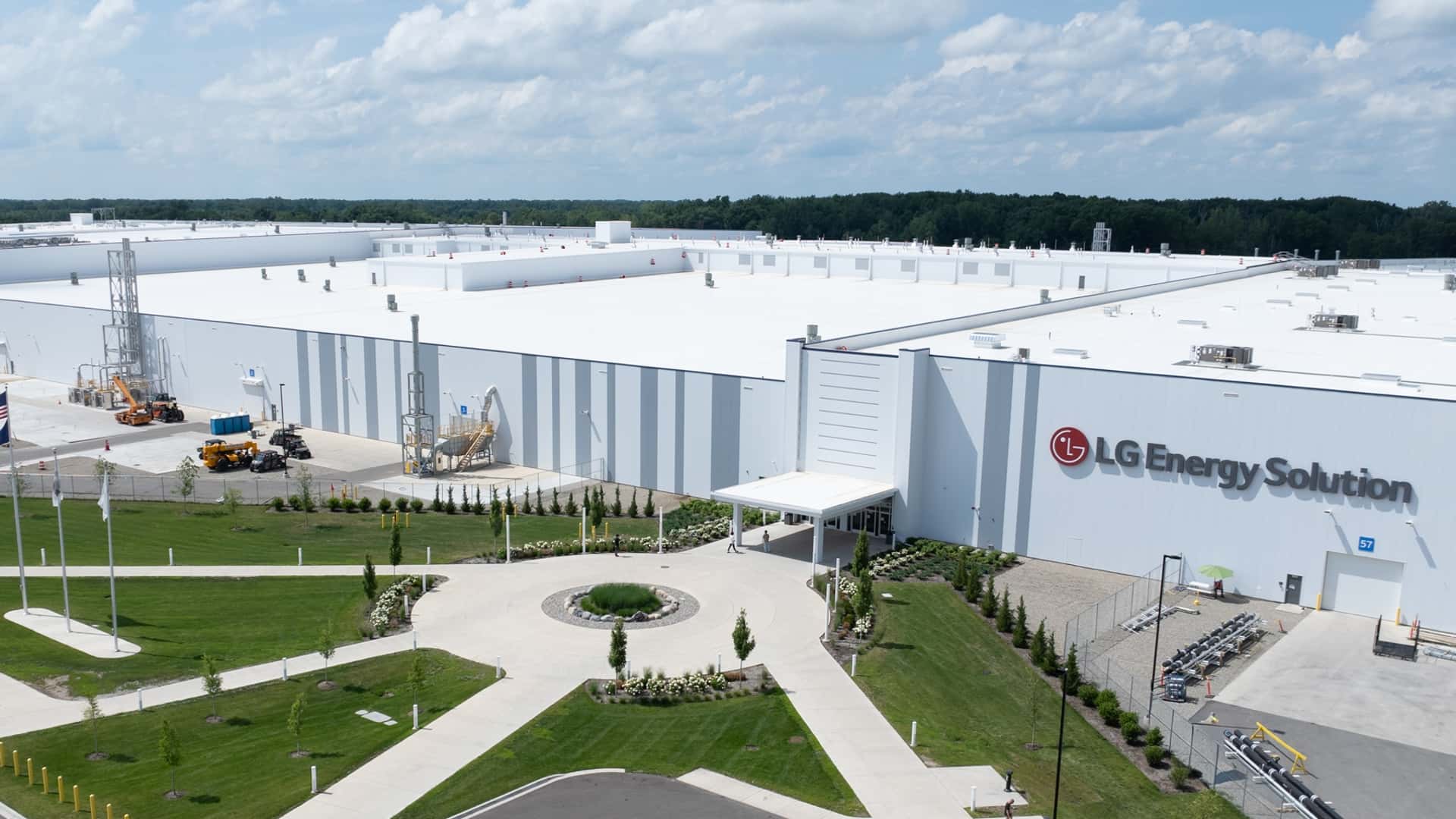
The company has also significantly expanded its manufacturing capacity within the U.S. In August, LGES inaugurated its state-of-the-art $2 billion gigafactory in Lansing, Michigan. This facility is strategically positioned to produce a diverse range of battery technologies, including energy storage lithium-iron-phosphate (LFP) batteries for Tesla and high-performance nickel-manganese-cobalt (NMC) EV batteries for Toyota. The Michigan gigafactory represents a substantial investment in U.S. manufacturing, creating jobs and strengthening the domestic battery ecosystem.
Industry Landscape and Future Outlook
The battery industry continues to evolve rapidly, characterized by fluctuating demand, technological advancements, and increasing geopolitical considerations. LG Energy Solution’s record-setting quarter demonstrates its resilience and strategic foresight in navigating these complexities.
By balancing its portfolio across the burgeoning energy storage sector and the dynamic EV market, while simultaneously investing heavily in localized manufacturing and supply chain development, LGES is strongly positioned for sustained growth. The interplay of government incentives, technological innovation, and expanding global demand for sustainable energy solutions provides a fertile ground for the company’s continued expansion.
Frequently Asked Questions (FAQ)
What contributed most to LG Energy Solution’s record Q3 earnings?
The primary drivers were strong demand for electric vehicle (EV) batteries in the European market and a significant increase in sales of energy storage systems (ESS) in the United States, coupled with the benefit of battery manufacturing credits from the U.S. Inflation Reduction Act.
How did LG Energy Solution address the slower EV demand in North America?
The company strategically offset slower EV battery demand in North America by intensifying its focus on the rapidly growing market for stationary energy storage batteries. This shift capitalized on the high demand from AI data centers and grid upgrades in the U.S.
What role does the U.S. Inflation Reduction Act (IRA) play for LGES?
The IRA provides substantial Section 45X Advanced Manufacturing Production tax credits for domestic battery manufacturing. These credits significantly reduce production costs and enhance profitability for LGES’s U.S. operations, making local production more competitive and attractive.
Which European automakers are contributing to LGES’s EV battery sales?
LG Energy Solution’s plant in Poland is experiencing strong demand for EV batteries from major European manufacturers such as Volkswagen and Renault, reflecting the robust growth of the electric vehicle market across the continent.
What is the significance of the Elevra Lithium agreement for LGES?
The multi-year off-take agreement with Canada’s Elevra Lithium secures a supply of 240,000 metric tonnes of raw lithium concentrate from Quebec. This deal is crucial for localizing LGES’s battery supply chain in North America and ensuring a stable, long-term source of critical raw materials.
Which types of batteries are produced at LGES’s Michigan gigafactory?
The $2 billion gigafactory in Lansing, Michigan, produces both energy storage lithium-iron-phosphate (LFP) batteries, primarily for Tesla, and nickel-manganese-cobalt (NMC) EV batteries, supplied to Toyota. This diverse production capability serves key players in both the EV and ESS sectors.