
Key Takeaways
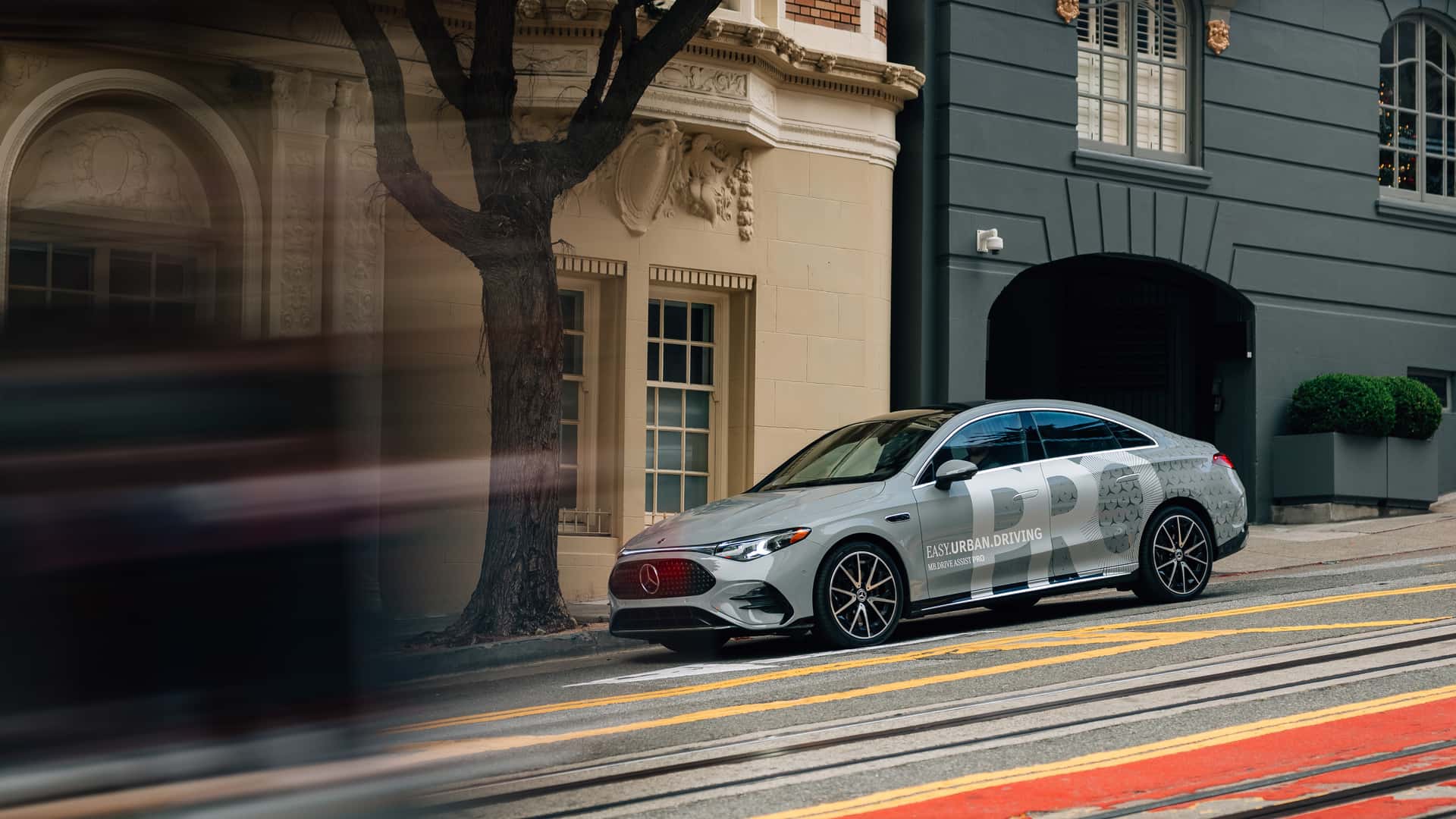
- Mercedes-Benz is launching its advanced automated driving system, MB.Drive Assist Pro, for a broad range of its vehicles early next year.
- The system offers point-to-point navigation and parking, similar to Tesla’s Full Self-Driving (FSD) (Supervised) feature.
- A key differentiator is Mercedes’ requirement for drivers to keep a hand on the steering wheel on surface streets, adhering strictly to SAE Level 2 autonomous driving definitions.
- In contrast, Tesla FSD (Supervised) allows hands-off driving in urban environments, leading to varied driver perceptions regarding convenience and safety.
- Mercedes emphasizes a multi-sensor approach (cameras, radar, ultrasonic) for enhanced safety, while Tesla primarily uses cameras.
- Consumer feedback from both European and U.S. drivers highlights a philosophical divide on the necessity of driver intervention in semi-autonomous systems.
For many commuters, the daily grind through congested routes represents a significant burden. Lucian Capellaro, navigating the challenging Laurel Canyon daily from the San Fernando Valley to Los Angeles, found himself intrigued by colleagues’ accounts of Tesla’s Full Self-Driving (FSD) system. The promise of entering a destination and having the car handle the entire journey seemed revolutionary.
Despite the appeal of such advanced driver assistance systems, Capellaro harbored reservations about owning a Tesla, citing preferences for design, interior quality, and body style from other manufacturers. This sentiment reflects a growing segment of consumers seeking comparable autonomous capabilities without committing to a single brand.
Mercedes-Benz is poised to offer a compelling alternative with its MB.Drive Assist Pro point-to-point automated driving system. Set for deployment in a wide array of the brand’s electric and internal combustion vehicles early next year, this technology aims to transform the driving experience. Existing eligible vehicles will gain access to the feature through convenient over-the-air (OTA) software updates.
Mercedes-Benz’s Approach to Autonomous Driving
The Mercedes MB.Drive Assist Pro system functions similarly to Tesla’s FSD (Supervised) in its core capability: allowing drivers to input a destination and have the vehicle navigate and park autonomously. However, a crucial distinction lies in its operational requirements.
While both systems permit hands-free operation on controlled-access highways, Mercedes-Benz mandates that drivers maintain a hand on the steering wheel when traversing surface streets. This decision, according to Mercedes executives, is rooted in a fundamental philosophical stance on autonomous driving development and regulatory compliance.
Adhering to SAE Autonomy Levels
Mercedes-Benz rigidly interprets the autonomous driving “levels” as defined by the Society of Automotive Engineers (SAE). MB.Drive Assist Pro, like FSD (Supervised), is classified as a Level 2 system, or what Mercedes terms “Level 2 Plus Plus.” This designation signifies that the system must always be supervised by the driver, who remains responsible for vehicle control.
The distinction between Level 2 and Level 3 autonomy is paramount for Mercedes. “There is a very important borderline between the levels,” stated Jörg Burzer, Mercedes Chief Technology Officer, in an interview. “That borderline is that with Level 2 Plus Plus, you are responsible. At Level 3, the machine, the car, the software stack, is responsible.”
Burzer highlighted the inherent complexities of surface streets, which present a far more chaotic and variable environment compared to controlled-access highways. This increased complexity, he explained, necessitates continued driver engagement in Level 2 systems to ensure safety and compliance.
Driver Perceptions and Safety Considerations
The requirement to keep hands on the wheel on surface streets resonates with some drivers. Lucian Capellaro, despite being an experienced motorcycle rider, views this precaution as logical. “Think about the reaction time it must be for someone to take their hands from off the wheel to on the wheel,” he commented. “I’d view my hand on the wheel as lessening the seconds of reaction time to something crazy happening.”
Mercedes’ customer research, particularly among European drivers, appears to corroborate this preference for driver vigilance in urban settings. “In the city, they like to have something, some regulation or some requirement that you have to have a hand on the wheel,” Burzer noted, though he acknowledged uncertainty regarding U.S. customer preferences.
When pressed on the competitive aspect against Tesla’s hands-off approach on surface streets, Burzer reiterated Mercedes’ commitment to regulatory frameworks and SAE definitions. He emphasized the anticipation for Level 3 autonomy, where truly hands-off driving would be permissible across all road types. “The big question is when is level 3 coming? Because then you can have the hands off (anywhere),” he insisted.
Tesla FSD Users Weigh In
Many Tesla FSD users, however, believe their vehicles are already performing at a level that transcends strict SAE definitions, often experiencing hands-off operation in diverse driving conditions. These users tend to prioritize the real-world performance of their systems over adherence to classification protocols.
Antonio Hidalgo, another Los Angeles resident and frequent FSD user, shared his experience of consistently using the system for all drives, even admitting to napping occasionally while driving with a hat and sunglasses. He finds FSD highly capable, with minor flaws primarily limited to parking maneuvers.
Hidalgo expressed skepticism about switching to a system that demands hands-on intervention on city streets. “If the (Mercedes system) worked the same but I had to keep my hand on the wheel … You know, I probably wouldn’t (make the switch). I mean, I think I would be interested in having a nicer car with a better interior. But no.”
Similarly, Mharlon Barrientos, who uses FSD for his commute in Indianapolis, described a progression from initially hovering his hand over the wheel to now fully hands-off driving, attributing this to system updates and increased trust. “Having a hand on the wheel as a requirement would be a bit of a step back to the feel of full autonomous driving that I’ve gotten used,” Barrientos reflected, recalling that his Model Y originally required hands on the wheel.
Technological Foundations and Future Outlook
Mercedes-Benz positions MB.Drive Assist Pro as technically superior to systems relying solely on cameras, like Tesla FSD (Supervised). Mercedes’ system incorporates a robust array of sensors: multiple cameras, five radar sensors, and 12 ultrasonic sensors. These inputs deliver comprehensive raw data to the vehicle’s Nvidia-powered computer, enhancing environmental perception.
Christoph von Hugo, Mercedes’ Head of Active Safety, underscored the importance of this multi-sensor approach. “Different sensor inputs increases performance and safety,” he affirmed. He implicitly critiqued camera-only systems, stating that “Relying on one just is not enough.” Mercedes has also indicated that achieving Level 3 capability would necessitate the addition of LiDAR technology, further bolstering sensor redundancy (Mercedes briefly offered a Level 3 system in the U.S., but it has since been phased out).
Despite the technical arguments, some drivers remain unconvinced that sensor specifications alone are a primary selling point. Mharlon Barrientos articulated this perspective: “I honestly haven’t even thought about the tech behind it, so I’m not so sure knowing that there’s radar and ultra-sonic sensors (on the window sticker) would be a huge selling point.” He emphasized that real-world performance and trust gained through mileage would be the ultimate determinants of system preference.
Barrientos’s pragmatism extends to brand loyalty, indicating that he is not exclusively tied to Tesla or its FSD system. “The hands-on requirement in the city would not be enough to sway me off of the car provided I like the rest of the car,” he explained. “While I like the functionality of FSD, it’s still a bit further down the list of what I look for in a car. Functionality, comfort, value … I still like to feel the mechanics and have the feel of actually driving a car.”
Lucian Capellaro echoed this sentiment, questioning the tangible difference MB.Drive Assist Pro would offer compared to his wife’s BMW i4, which features adaptive cruise control and hands-free highway driving assist at low speeds. He looks forward to personally experiencing the Mercedes system.
“I guess I’d just have to experience (MB.Drive Assist Pro) for myself, but if it can navigate all the craziness that is Laurel Canyon through Hollywood, and it is literally just my hand resting on the wheel, and that’s it, then sure,” Capellaro mused. “The fact that it’s truly point-to-point, then yes, that sounds super appealing.”
The ultimate efficacy and user acceptance of Mercedes MB.Drive Assist Pro, particularly its hands-on requirement on surface streets, will be crucial in the competitive landscape of advanced driver assistance systems. A forthcoming comprehensive review by InsideEVs will provide further insights into its performance and usability, addressing whether the hands-on approach represents an optimal balance of safety, technology, and driver convenience.
Frequently Asked Questions (FAQs)
What is Mercedes MB.Drive Assist Pro?
Mercedes MB.Drive Assist Pro is an upcoming point-to-point automated driving system from Mercedes-Benz. It allows vehicles to navigate to a destination and park autonomously. The system will be available in many Mercedes electric and internal combustion models, with existing eligible vehicles receiving it via over-the-air updates early next year.
How does MB.Drive Assist Pro compare to Tesla FSD (Supervised)?
Both systems provide point-to-point automated driving and hands-free operation on controlled-access highways. The primary difference is that MB.Drive Assist Pro requires drivers to keep a hand on the steering wheel on surface streets, while Tesla FSD (Supervised) permits hands-off driving in such environments. Mercedes cites adherence to SAE Level 2 autonomy as its rationale.
Why does Mercedes require hands on the wheel on surface streets?
Mercedes-Benz adheres strictly to the Society of Automotive Engineers (SAE) definition of Level 2 autonomous driving, which requires constant driver supervision. Mercedes Chief Technology Officer Jörg Burzer explained that surface streets present significantly more complex and chaotic variables, making continuous driver engagement crucial for safety within the Level 2 framework.
What sensor technology does Mercedes MB.Drive Assist Pro use?
Mercedes MB.Drive Assist Pro employs a comprehensive suite of sensors for environmental perception. This includes multiple cameras, five radar sensors, and 12 ultrasonic sensors. Mercedes states that this multi-sensor approach enhances performance and safety compared to systems relying primarily on cameras alone.
Will MB.Drive Assist Pro be capable of Level 3 autonomy?
Mercedes-Benz executives have indicated that achieving true Level 3 autonomous capability would necessitate the integration of LiDAR technology, in addition to its existing camera, radar, and ultrasonic sensors. This commitment reflects their cautious approach to advancing autonomous driving levels, prioritizing safety and regulatory compliance.
What is the customer perception of the hands-on requirement?
Customer opinions are divided. Some drivers, particularly in Europe and those with safety concerns, appreciate the hands-on requirement as it enhances perceived control and reduces reaction time. However, many Tesla FSD users find the hands-off experience on surface streets more convenient and view a hands-on requirement as a step back in autonomous driving feel.