
Key Takeaways
- Honda’s global electric vehicle (EV) sales plummeted by half in the October-December fiscal quarter, reaching just 15,000 units worldwide.
- The Japanese automaker anticipates staggering EV-related losses of approximately $4.48 billion for the full fiscal year.
- General Motors (GM) stands to gain financially from this downturn, receiving compensation for reduced production orders under their joint EV development and manufacturing agreement.
- The Acura ZDX EV was prematurely cancelled, and the Honda Prologue faces significant sales hurdles despite substantial incentives.
- In response, Honda is undertaking a “fundamental review” of its automotive strategy, pivoting towards a new in-house developed ‘0 Series’ EV platform.
The global automotive industry is witnessing a significant shake-up in its electric vehicle (EV) transition, with Japanese giant Honda Motor Co. experiencing a sharp downturn in its EV sales. This unexpected decline, detailed in the most recent financial quarter, has not only cast a shadow over Honda’s ambitious electrification plans but has also positioned its American partner, General Motors (GM), as an unlikely beneficiary in this evolving scenario.
Honda’s electric car business recorded a substantial setback in the financial quarter ending in December, with global sales figures dropping precipitously. This performance has prompted a comprehensive re-evaluation of the company’s electric vehicle strategy and its collaborative initiatives.
The Precipitous Decline of Honda’s EV Sales
Honda’s electric vehicle segment faced considerable challenges during the October-December quarter, marking a significant slump in its global sales performance. The company reported a halving of its EV sales, with merely 15,000 units sold across the globe during this crucial period.
This sharp contraction in sales contributes to a projected operating loss of approximately $4.48 billion for Honda’s EV business by the close of the current fiscal year. The figures highlight the formidable obstacles automotive manufacturers face in scaling EV production and achieving market penetration.
The GM-Honda Collaboration: A Double-Edged Sword
Central to Honda’s recent EV strategy was a strategic alliance with General Motors. This collaboration aimed to accelerate Honda’s entry into the burgeoning electric vehicle market, leveraging GM’s advanced Ultium electric platform and manufacturing capabilities.

Under this agreement, the Honda Prologue and the ill-fated Acura ZDX electric crossovers were co-developed, sharing foundational components with models like the Chevrolet Blazer EV. Production of these Honda-branded EVs was also outsourced to GM’s facilities, integrating them into the American automaker’s manufacturing ecosystem.
Fate of the Acura ZDX
The Acura ZDX, assembled at GM’s Spring Hill plant in Tennessee, represented a premium offering from Honda’s luxury division. However, its market journey was brief and challenging. Despite its initial promise, the ZDX was discontinued after just one model year due to sluggish sales, accumulating only 19,411 units in total before its cancellation.
Adding to its woes, the decision to pull the plug on the Acura ZDX came just ahead of the discontinuation of the $7,500 federal tax credit for eligible electric vehicles, further complicating its market viability.
Challenges for the Honda Prologue
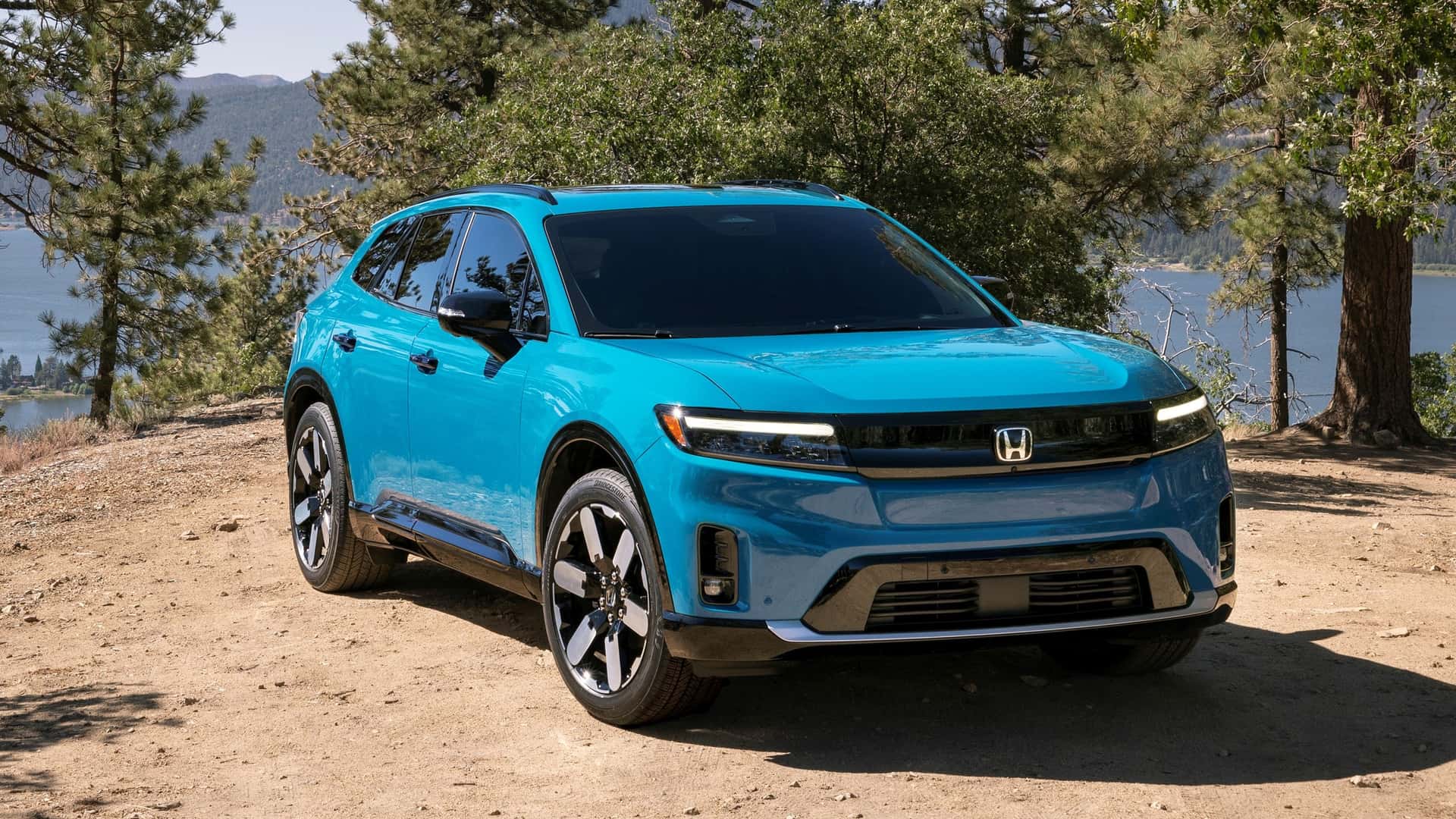
The Honda Prologue, produced at GM’s Ramos Arizpe plant in Mexico, has also encountered significant headwinds. While Honda sold 39,194 Prologue EVs in the U.S. last year, marking an increase of 18.7% compared to 2024, its recent performance paints a starkly different picture.
The previous financial quarter witnessed an alarming 86% slump in Prologue sales, with only 2,641 units finding new owners. This drastic decline underscores the intense competition and evolving consumer preferences within the electric vehicle market, particularly in the highly contested SUV segment.
Financial Fallout and Strategic Reassessment
The downturn in EV sales has had a pronounced impact on Honda’s overall financial health. The company recorded its fourth consecutive quarter of operating losses, culminating in a substantial 61% drop in consolidated profits during the October-December fiscal third quarter.
The financial strain from its electric vehicle ventures has been substantial. In the initial nine months of the previous financial year, which concludes in March 2026, Honda’s write-offs and associated expenses for its EV business escalated to $1.71 billion. Projections indicate these EV-related losses could balloon to $4.48 billion by the fiscal year’s end.
Further exacerbating Honda’s financial outlook are the repercussions of U.S. import duties, which are anticipated to contribute an additional $1.98 billion in losses by the end of March. Collectively, these factors are expected to reduce the automaker’s operating profit by a significant 55%.
Mitigation Efforts and Market Resistance
In an effort to counteract the pronounced sales slump for the Prologue, Honda has explored various mitigation strategies. These include boosting fleet sales of the crossover and allocating additional resources towards manufacturer incentives, a common tactic in the competitive automotive industry to stimulate demand.
Despite these considerable efforts, the impact on sales has been limited. Last month, Honda invested over $17,000 in incentives for every Prologue sold in the U.S. Yet, even with such substantial financial backing, only 664 units were purchased, signaling persistent market resistance and the efficacy challenges of incentives alone.
Charting a New Course: Honda’s In-House EV Strategy
In light of these challenges and the cancellation of the Acura ZDX, coupled with the underperformance of the Honda Prologue, the Japanese automaker is undergoing a significant strategic pivot. The company is now channeling its resources into developing a new, proprietary electric vehicle lineup.
This forthcoming generation of EVs will be built upon an in-house-developed architecture, dubbed the ‘0 Series’. This represents a crucial shift away from reliance on external platforms and towards greater control over its electric vehicle technology and design.
The first model to emerge from this new strategy will be the Acura RSX crossover, slated for market release by the end of the current year. Following its introduction, two new Honda models, the 0 Series SUV and the 0 Series Saloon, are scheduled to debut, further solidifying Honda’s refreshed electric vehicle strategy.
Revising Ambitious Targets
Honda’s initial electric vehicle aspirations were remarkably ambitious. In 2024, the company publicly stated its goal to sell as many as two million EVs globally by 2030, reflecting a strong commitment to electrification and a significant investment in future mobility.
However, the challenging market realities, coupled with internal operational hurdles, have necessitated a substantial recalibration of these targets. Last year, Honda revised its 2030 global EV sales estimate downwards to a more modest range of 700,000 to 750,000 units. This revision highlights the volatile nature of the electric vehicle market and the complexities involved in meeting aggressive sales objectives amidst evolving consumer demand and regulatory landscapes.
General Motors’ Unexpected Gain
Ironically, amidst Honda’s struggles, General Motors finds itself in a surprisingly advantageous position. The contractual agreement governing their EV collaboration includes provisions for compensation in the event of reduced production orders from Honda.
As Honda scaled back its orders for the Prologue and ZDX due to poor sales, GM is set to receive financial remuneration from the Japanese automaker. This scenario effectively shields GM from the full economic brunt of the sales slump, transforming Honda’s production cutbacks into a revenue stream for the American automotive giant.
The Broader Context of the Electric Vehicle Market
Honda’s predicament serves as a pertinent case study in the broader challenges confronting the electric vehicle market. The company’s initial vision for a future dominated by EVs has been met with complex realities, including evolving regulatory frameworks and dynamic trade policies that have significantly impacted its financial projections.
The experience of the GM-Honda collaboration underscores the inherent risks and rewards of strategic partnerships in a rapidly transitioning industry. While such alliances can offer economies of scale and shared technological advancements, they also expose partners to each other’s market performance and strategic adjustments.
Conclusion
Honda’s recent financial disclosures paint a clear picture of the significant headwinds it faces in the electric vehicle segment. The substantial drop in EV sales, coupled with escalating losses and the decision to pivot to an in-house platform, marks a critical juncture for the company.
The intricate dynamics of its partnership with General Motors, wherein GM emerges financially bolstered by Honda’s struggles, illustrates the complex interdependencies within the global automotive industry. As Honda embarks on its revised electric vehicle strategy with the ‘0 Series’ platform, the industry will closely watch how these changes reshape its competitive standing in the evolving landscape of sustainable mobility.
FAQ Section
Q1: What caused Honda’s EV sales to decline in the last quarter?
Honda’s global electric vehicle sales plummeted by half to 15,000 units in the October-December quarter due to poor market reception of models like the Acura ZDX and Honda Prologue, leading to reduced production orders and significant financial losses for the EV business segment.
Q2: How much are Honda’s projected EV-related losses for the fiscal year?
Honda anticipates substantial EV-related losses, projected to reach approximately $4.48 billion by the end of the current fiscal year. This figure reflects significant write-offs and expenses incurred in developing and marketing its electric vehicle offerings.
Q3: Why is General Motors considered a ‘surprise winner’ in this situation?
General Motors is poised to benefit financially because Honda will compensate them for reduced production orders of the Prologue and ZDX. These vehicles were manufactured in GM plants using GM’s Ultium platform, and contractual agreements ensure GM receives payment for underutilized capacity.
Q4: What was the fate of the Acura ZDX electric crossover?
The Acura ZDX electric crossover was cancelled after just one model year due to poor sales, accumulating only 19,411 units. Its discontinuation occurred shortly before the expiration of the $7,500 federal tax credit, further affecting its market viability.
Q5: What is Honda’s new strategy for its electric vehicle lineup?
Honda is conducting a “fundamental review” of its EV strategy and is now developing a new, in-house ‘0 Series’ architecture for its future electric vehicles. The first model, the Acura RSX crossover, is expected by year-end, followed by two Honda 0 Series models.
Q6: How have Honda’s long-term EV sales targets changed?
Honda initially aimed to sell two million EVs globally by 2030. However, faced with market realities and operational challenges, this ambitious target has been significantly revised downwards to a more conservative estimate of 700,000 to 750,000 units by the same year.
Q7: What impact do U.S. import duties have on Honda’s finances?
U.S. import duties are projected to add an additional $1.98 billion in losses for Honda by the end of March. This financial burden contributes to the overall expected 55% decrease in the automaker’s operating profit, exacerbating its current economic challenges.