
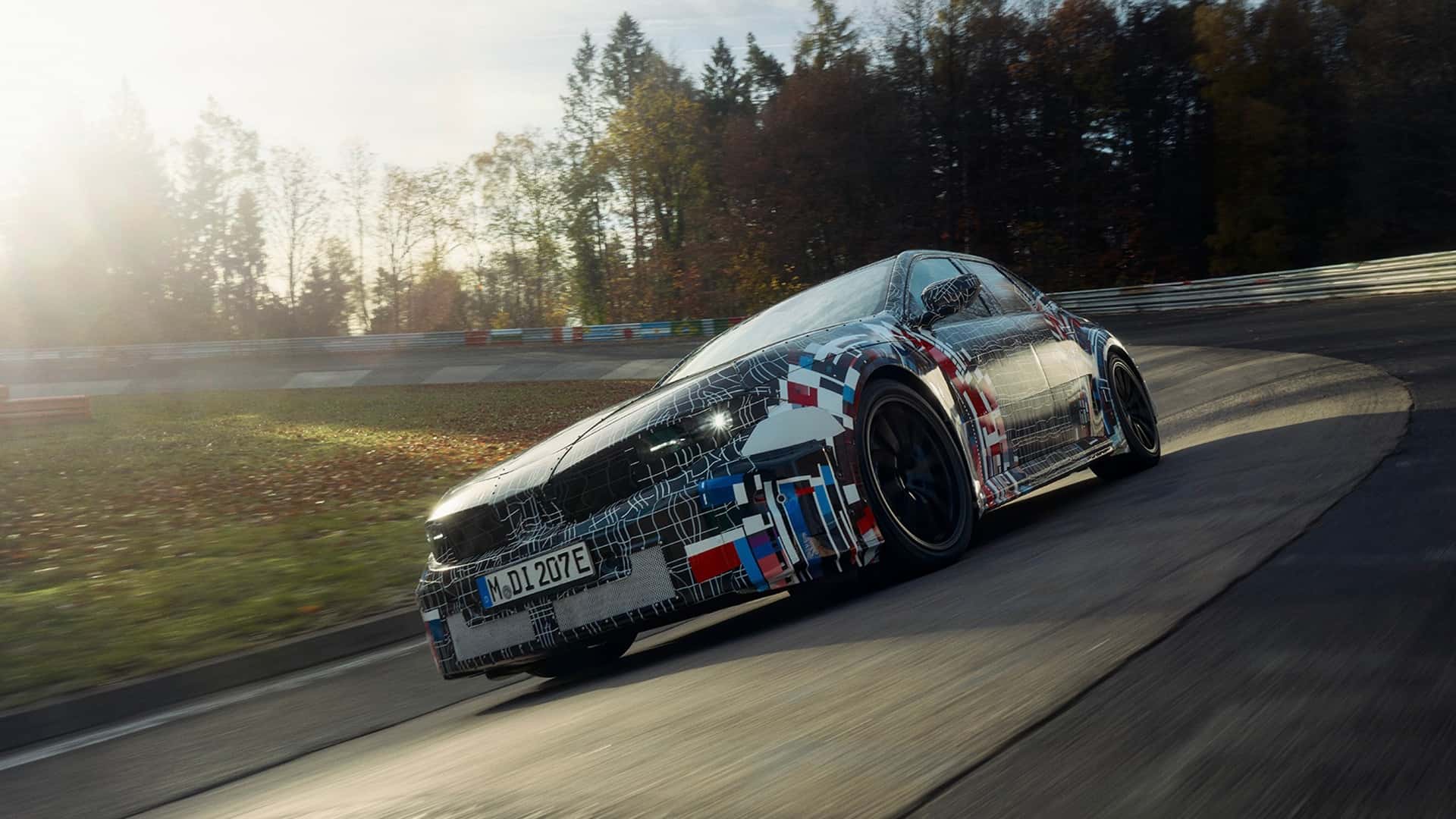
BMW is aiming to capture the visceral thrill of its iconic internal combustion M models in its upcoming electric M3, employing recorded engine sounds from legendary M cars for an authentic auditory experience.
Synthetic Engine Sounds for Electric Performance
The challenge of replicating the driving excitement of high-performance vehicles in an electric format has led many manufacturers to implement synthesized acceleration sounds. While many opt for futuristic soundscapes, BMW is taking a different approach for its electric M3 prototype. The automaker has revealed it sampled iconic M engine sounds to imbue its electric performance car with character and a familiar connection for enthusiasts.
Iconic M Engines Lend Their Voices
In a recently released video, BMW showcased the sound design process for the electric M3. The recordings included the distinctive roars of three celebrated M vehicles: the E63 M6 with its potent V10 engine, the F82 M4 featuring the turbocharged inline-six S55, and the E90 M3, renowned for its naturally aspirated V8 S65 engine. This deliberate selection aims to provide the electric M3 with a sound profile deeply rooted in M heritage.
Switchable Sound Profiles Hinted
Further analysis of the video suggests that the electric M3 may offer multiple, switchable engine sound profiles. An interior clip of the prototype accelerating reveals a sound more akin to the M6’s V10, contrasting with earlier sounds heard that were identified as being derived from the M4’s S55 engine. This indicates that drivers might be able to select from various authentic BMW M engine soundtracks, enhancing the immersive driving experience.
While synthesized engine audio can be a divisive feature, BMW’s strategy of using actual M car recordings adds a layer of authenticity. The video, available at the three-minute mark, allows a listen to the prototype’s current sound, which differs from previously heard iterations.
Mimicking the Combustion Driving Experience
Beyond engine sounds, the electric M3 is also expected to feature simulated gear shifts. This technology, which aims to mimic the feel of driving a combustion-engine M car, has already appeared in production EVs. Hyundai’s Ioniq 5 N was among the first to introduce this feature, receiving mixed reactions. While it might be considered a novelty that could impact acceleration, it aims to increase driver engagement.
Other manufacturers are also exploring similar features. Mercedes-AMG is reportedly developing its first dedicated EV with simulated V8 sounds and even haptic feedback to replicate engine vibrations. Genesis’ performance sub-brand, Magma, has also implemented a fake engine sound for its EV, aiming to emulate a turbocharged V6.
The Evolution of Engine Sound Augmentation
The concept of artificial engine sound augmentation is not new, with some combustion cars incorporating similar systems. For electric vehicles, which inherently lack engine noise, these features are arguably more crucial for delivering a dynamic and engaging driving experience. BMW’s commitment to electrification is clear, and proving its electric performance cars can deliver the thrills associated with its legendary M models is paramount. The upcoming electric M3, with its proposed quad-motor setup and advanced torque vectoring, is positioned to be a significant step in this direction.
The non-M version of the i3 sedan is slated for official unveiling and sale this year, with the high-performance M variant expected to follow. BMW’s M division has already seen considerable success with electric models, as evidenced by the i4 M50 (now M60) being its best-selling vehicle for two consecutive years, signaling strong consumer interest in electrified M cars. Consequently, the electric M3 stands out as a highly anticipated electric vehicle for many enthusiasts.