
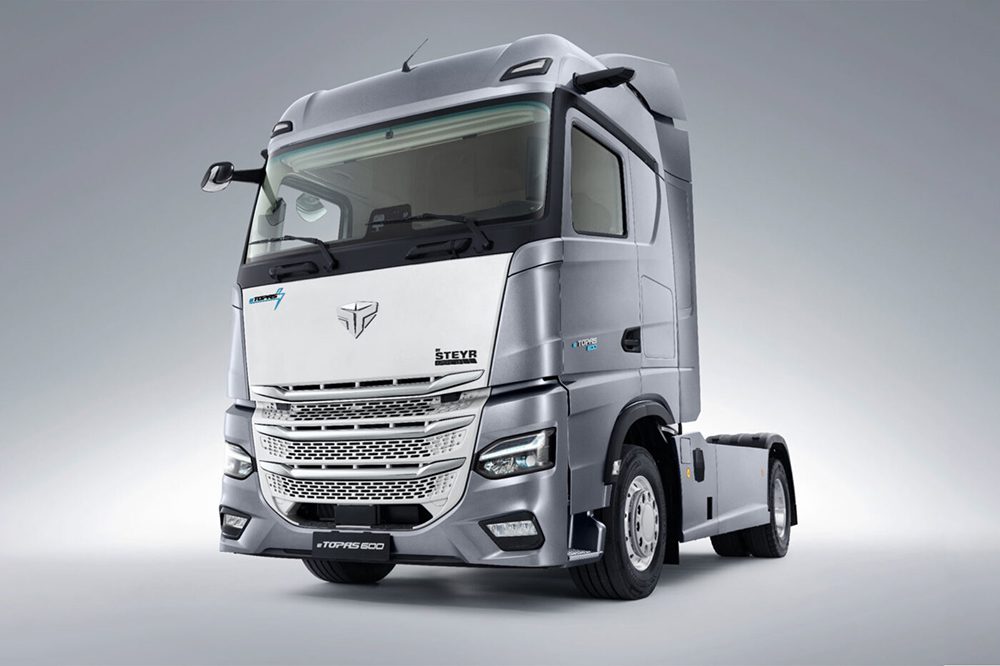
A new contender in the European electric semi-truck market is gearing up for launch, with Chinese startup SuperPanther set to begin sales in the region this year. Leveraging a contract manufacturing agreement with Steyr Automotive in Austria, SuperPanther aims to establish a significant presence in the burgeoning electric freight sector.
European Production and Delivery Targets
According to Frank Schulz, SuperPanther’s Europe sales chief, series production of the electric semi-trucks is slated to commence this summer. The company has set an ambitious goal of delivering between 100 and 200 customer vehicles across Europe by the close of 2026.

SuperPanther’s Origins and Market Strategy
Established just four years ago and based in Xiamen, China, SuperPanther has already deployed several hundred electric trucks within its domestic market. Europe will serve as its inaugural export destination. Schulz emphasized that SuperPanther aims to differentiate itself from the perception of Chinese manufacturers solely offering low-cost goods.
“We do not intend to [offer] price breakers—we want to convince with performance, added value and TCO,” Schulz stated, highlighting the company’s focus on total cost of ownership, performance, and enhanced value for its European clientele. This strategy is further supported by plans for comprehensive customer service, including integrated charging solutions, whether developed in-house or through partnerships.
Service and Support Network
To ensure a robust support system for its European customers, SuperPanther is also establishing repair and maintenance services. This will be facilitated through a strategic cooperation with Alltrucks, a well-established provider of services independent of specific vehicle brands.
Introducing the eTopas 600 Electric Truck
The cornerstone of SuperPanther’s European offering is the eTopas 600, a heavy-duty truck built on a dedicated battery-electric vehicle (BEV) platform. This model is configured as a 4×2 tractor unit, boasting an unladen weight of 10.8 tons and a maximum permissible gross weight of 42 tons.
Battery Technology and Performance
The eTopas 600 features advanced battery technology sourced from CATL, utilizing lithium iron phosphate (LFP) battery packs. These packs offer a substantial gross capacity of 621 kWh, with an anticipated operational range of approximately 500 kilometers on a full charge. The truck operates on an 876-volt architecture.
In its twin-engine configuration, the eTopas 600 delivers impressive power outputs, providing 394 kW of continuous power and a peak power of 692 kW. This robust powertrain is designed to meet the demanding requirements of long-haul freight transportation.
Charging Capabilities
SuperPanther’s electric truck is equipped with dual CCS-2 charging ports, designed to facilitate rapid charging speeds at compatible charging infrastructure. The vehicle is also slated to include a Megawatt Charging System (MCS) port, indicating readiness for future high-power charging standards that will be crucial for minimizing downtime in commercial logistics.
European Component Integration and In-House Development
Steyr Automotive will assemble the eTopas 600 trucks using pre-assembled modules. While core components will be imported from China, the assembly process will integrate parts from various European suppliers. These include prominent names in the automotive supply chain such as ZF, Schaeffler, Continental, and Aumovio.
SuperPanther is also investing in proprietary technology development, handling its e-axle, thermal management systems, and software layers in-house. The company has expressed intentions to potentially offer these advanced solutions to third-party manufacturers in the future.
Potential Key Customer: DHL
A significant development indicating potential market traction is the Memorandum of Understanding (MOU) signed with logistics giant DHL in 2024. This agreement positions DHL as the first prospective customer for SuperPanther’s electric semi-trucks in Europe, signalling strong interest from major players in the logistics industry.