
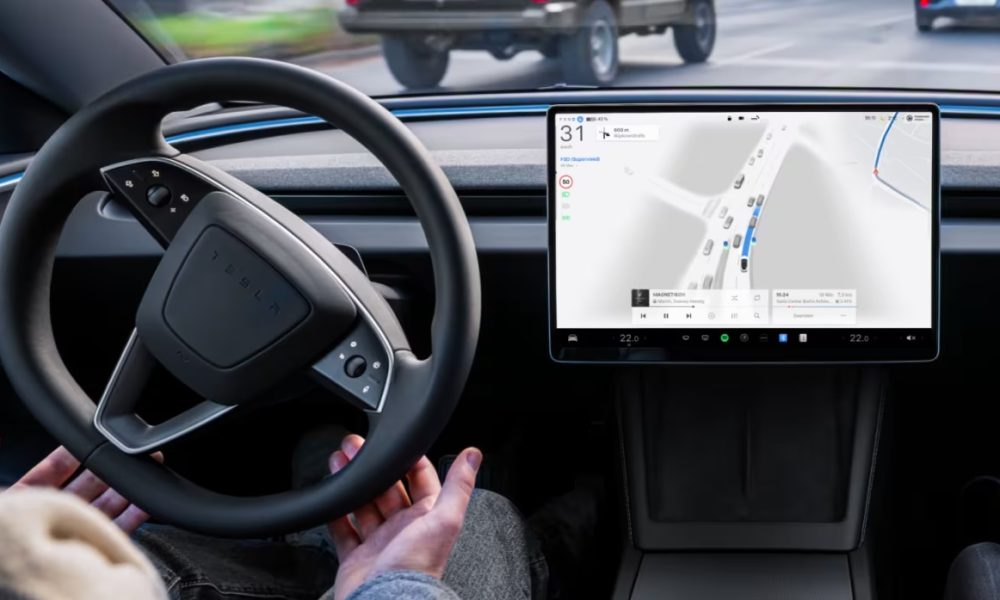
Tesla Advocates for Federal Autonomy Standards
In a crucial address before the U.S. Senate Commerce Committee, Tesla’s Vice President of Vehicle Engineering, Lars Moravy, has called for the establishment of a unified federal framework for autonomous vehicle development. Moravy emphasized that modernizing these standards is essential for the United States to foster innovation and maintain a competitive edge against international rivals, particularly China.
Addressing Regulatory Hurdles
Moravy argued that the current system, characterized by a fragmented state-by-state approach to autonomous vehicle regulations, significantly impedes progress. He highlighted that this patchwork of rules forces companies into a constant struggle with local legislators, slowing down the deployment and testing of self-driving technologies. A cohesive national framework, he asserted, would streamline these processes and accelerate the pace of development.

U.S. Competitiveness and Innovation at Risk
The Tesla executive warned the committee that outdated regulations and cumbersome approval processes risk stifling the industry’s innovative capacity. This, he cautioned, could lead to the U.S. falling behind in the global race for autonomous technology leadership. Moravy stated that the new federal framework is vital for the U.S. to “maintain its position in global technological development and grow its advanced manufacturing capabilities.”
Tesla’s Safety and Security Record
Highlighting Tesla’s advancements, Moravy pointed to the company’s Full Self-Driving (FSD) platform, noting that Tesla vehicles engaged with FSD average 5.1 million miles before a major collision. This figure significantly surpasses the average of approximately 699,000 miles for human drivers. He also referenced a National Highway Traffic Safety Administration (NHTSA) statistic indicating that roughly 94 percent of crashes are attributed to human error, positioning autonomous vehicles as a key solution for reducing road fatalities and injuries.
Addressing cybersecurity concerns, a topic raised during the hearing, Moravy assured the committee, “No one has ever been able to take over control of our vehicles.” He explained that Tesla employs a secure, core-embedded central layer inaccessible from external connections and utilizes a dual cryptographic signature system to maintain high security.

Inclusive Mobility and Future Vision
Moravy also underscored Tesla’s commitment to inclusive mobility, stating, “We are committed with our future products and Robotaxis to provide accessible transportation to everyone.” This vision extends to providing consistent transportation options for individuals with disabilities, the elderly, and the visually impaired, thereby enhancing accessibility in mobility.
In summary, Moravy’s testimony conveyed a sense of urgency regarding geopolitical competition, particularly with China, while backing his arguments with concrete safety data and a forward-looking vision for how autonomous technology can benefit society globally.