
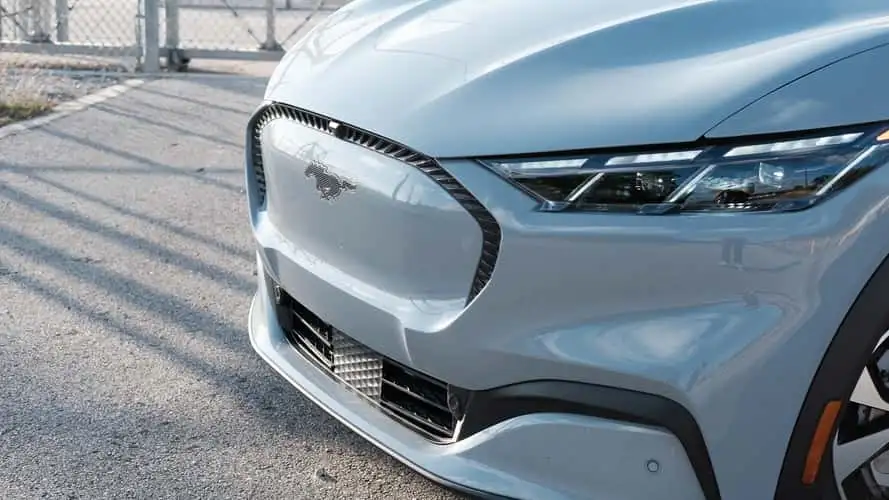
Ford is reportedly in discussions with Chinese automotive giant Geely Holdings regarding a potential partnership, a move that aligns with a growing trend of global automakers seeking collaboration to navigate the rapidly evolving electric vehicle (EV) landscape.
Potential Collaboration on Technology and Manufacturing
Sources familiar with the matter told Reuters that talks between Ford and Geely, a conglomerate that owns brands including Volvo, Polestar, and Lynk & Co, have been ongoing for several months. The discussions are exploring various avenues of cooperation, including the sharing of vehicle technologies, such as advanced driver-assistance systems, and the possibility of Geely utilizing Ford’s manufacturing facilities in Europe.

Specifically, Ford’s underutilized plant in Valencia, Spain, has been identified as a potential site for Geely to establish manufacturing operations. This facility, which currently produces the Ford Kuga crossover, has a significant annual production capacity and was previously considered by Ford for new vehicle production.
Strategic Advantages for Geely
A manufacturing presence in Europe through Ford’s facilities could provide Geely with a strategic advantage in avoiding substantial European Union tariffs on imported Chinese vehicles, which can reach up to 37.6%. This arrangement would support Geely’s global expansion efforts while mitigating cost barriers.
The talks also encompass the potential for sharing vehicle technology platforms. This could assist Ford in developing its planned affordable EV platform and $30,000 EV pickup truck, or conversely, allow Geely to leverage Ford’s established expertise.
A Growing Industry Trend
This potential collaboration between Ford and Geely is indicative of a broader shift in the automotive industry, where established Western manufacturers are increasingly looking to Chinese companies for technological advancements and manufacturing solutions in the EV sector. Chinese automakers, having honed their skills through earlier joint ventures, are now emerging as leaders in EV innovation.
Other notable industry collaborations include Volkswagen’s technology partnership with Xpeng and Stellantis’s investment in Leapmotor. Ford itself is already utilizing LFP battery technology licensed from China’s CATL for domestic cell production, underscoring its engagement with Chinese suppliers.
Uncertainty and Future Implications
While both companies have declined to confirm specific plans, Ford issued a statement acknowledging ongoing discussions: “We have discussions with lots of companies all the time on a variety of topics. Sometimes they materialize, sometimes they don’t.” Ford has previously denied reports of talks with Xiaomi regarding EV manufacturing in the U.S., indicating a willingness to publicly refute certain discussions.
The implications of a potential Ford-Geely deal for the U.S. market remain unclear. Geely’s ambition to enter the U.S. market faces hurdles such as import tariffs and restrictions on Chinese connected-car software. If a partnership were to extend to the U.S., it could potentially generate political controversy, especially given Ford’s existing reliance on Chinese technology, such as the CATL battery deal.