
Key Takeaways (TL;DR):
- Researchers at Hanyang University have established 2.5 nanometers as the critical minimum thickness for lithium niobium oxide (LNO) coatings to effectively safeguard cathode materials in sulfide-based all-solid-state batteries.
- This groundbreaking research provides a long-awaited quantitative guideline for optimizing cathode-electrolyte interfaces, crucial for enhancing the cycle life and performance of advanced solid-state energy storage solutions.
- Experiments demonstrated that a 2.5 nm LNO coating significantly suppresses unwanted side reactions, leading to a 43% improvement in cycle life and over a 50% reduction in interfacial resistance compared to uncoated cells.
- Thinner 1.0 nm coatings proved insufficient, while thicker 5.0 nm coatings offered no substantial additional benefits, indicating a precise sweet spot for material application.
- The study, published in Energy Storage Materials, utilized rotary powder atomic layer deposition, a method showing promise for scalable manufacturing processes for these high-performance battery components.
Revolutionizing Battery Performance: The Quest for Stable Cathodes
Seoul, South Korea – In a significant stride toward advancing energy storage technology, researchers at Hanyang University have precisely identified the minimum coating thickness required to protect cathode materials in sulfide-based all-solid-state batteries. This critical finding, setting the threshold at 2.5 nanometers (nm), addresses a fundamental challenge that has long hampered the development and commercialization of these highly anticipated power sources.

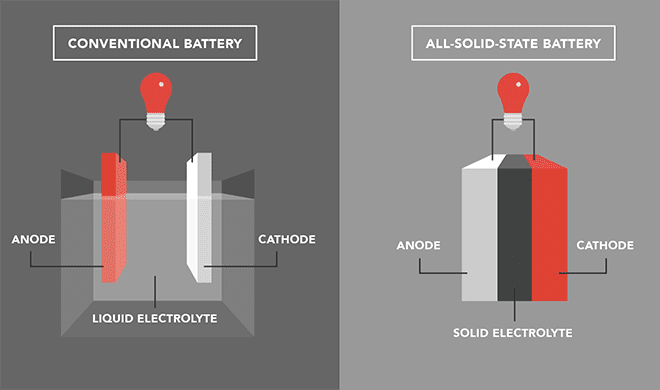
Solid-state batteries, particularly those employing sulfide electrolytes, are widely regarded as a promising alternative to conventional lithium-ion batteries due to their potential for enhanced safety, higher energy density, and extended cycle life. However, their widespread adoption has been challenged by intrinsic chemical reactivity at the interface between the cathode material and the solid electrolyte.
Addressing Interfacial Instability in Sulfide Solid-State Battery Cathodes
A core issue in sulfide-based all-solid-state batteries is the chemical instability at the crucial cathode interface. Upon contact, sulfide solid electrolytes tend to react with cathode active materials, forming resistive degradation products. These undesirable byproducts significantly increase internal resistance, impede lithium-ion transport, and ultimately curtail the battery’s operational lifespan and overall efficiency.
To counteract this, thin protective coatings are often applied to cathode materials, acting as diffusion barriers. Lithium niobium oxide (LNO) has emerged as a particularly effective candidate for this purpose. While LNO coatings have shown promise in mitigating these side reactions, the precise minimum thickness required to achieve effective protection without compromising other performance metrics remained an elusive quantitative measure until now.

Precision Engineering: The Role of LNO Coatings and ALD
The Hanyang University study, detailed in the prestigious journal Energy Storage Materials, focused on NCM811 cathode powders. NCM811, a nickel-rich lithium nickel cobalt manganese oxide, is a high-energy density cathode material frequently explored for next-generation batteries. The LNO coatings were applied using an advanced technique known as rotary powder atomic layer deposition (ALD).
This sophisticated ALD method allows for the deposition of extremely thin, highly conformal films with atomic-level precision. The research team employed a supercycle ALD approach, meticulously alternating lithium and niobium deposition steps with ozone. This precise control over composition and thickness was instrumental in accurately evaluating the performance of different coating layers.
Unpacking the Performance Data: A Critical 2.5 nm Threshold
The Hanyang team systematically investigated LNO coatings at three distinct thicknesses: 1.0 nm, 2.5 nm, and 5.0 nm. Their rigorous testing revealed a clear and crucial trade-off between initial discharge capacity and long-term cycle stability, providing valuable insights into the optimal design parameters for sulfide solid-state battery cathodes.
Cells featuring the thinnest 1.0 nm LNO coating initially delivered the highest discharge capacity, registering 229 mAh g⁻¹. However, this apparent advantage was short-lived, as their cycle life was a substantial 28% shorter compared to cells with the 2.5 nm coating. Furthermore, spectroscopic analysis confirmed that the 1.0 nm layer was simply too thin to effectively prevent direct contact between the electrolyte and cathode, leading to unchecked side reactions and a 59% higher interfacial resistance.
In contrast, the 2.5 nm LNO coating struck a balance between initial capacity and durability. These cells achieved an initial capacity of 216 mAh g⁻¹ while demonstrating significantly improved cycle stability and suppressed side reactions. The spectroscopic evidence clearly indicated that this thickness was sufficient to create a robust diffusion barrier, preventing the detrimental chemical interactions at the interface.
Pushing the coating thickness further to 5.0 nm resulted in an initial capacity drop to 207 mAh g⁻¹. Crucially, this thicker coating offered no meaningful additional gain in cycle life or further reduction in interfacial resistance beyond what was observed with the 2.5 nm layer. This suggests that while a thicker coating provides protection, it also introduces additional resistance to lithium-ion transport, diminishing the overall energy density without yielding proportional benefits in longevity.
Significant Gains: Enhancing Longevity and Reducing Resistance
When compared directly against an uncoated cell, the impact of the optimal 2.5 nm LNO coating was profound. The precisely engineered layer extended the battery’s cycle life by an impressive 43%. Moreover, it dramatically cut interfacial resistance to less than half of that observed in cells lacking the protective layer.
This substantial reduction in resistance is a critical factor for high-performance batteries, as lower resistance translates directly into faster charging capabilities, higher power output, and reduced heat generation during operation. The extended cycle life, a persistent challenge for solid-state battery technologies, underscores the practical utility of this quantitative finding for developing robust sulfide solid-state battery cathodes.
A Practical Guideline for Next-Generation Solid-State Batteries
Professor Tae Joo Park, who spearheaded this pivotal research, emphasized the immediate practical implications of their findings. “Our results show that the minimum effective thickness of the LNO protective layer to suppress side reactions in sulfide-based ASSBs is 2.5 nm,” stated Prof. Park. “This provides a practical guideline for cathode–electrolyte interface optimization in next-generation solid-state batteries.”
This quantitative guideline is invaluable for battery designers and manufacturers, offering a precise target for material engineering efforts. It moves the field beyond empirical trial-and-error, enabling more efficient and targeted development of robust and long-lasting solid-state battery cells. Such precision is essential for scaling up production and achieving the performance metrics required for electric vehicles and grid-scale energy storage.
The Path to Scalable Manufacturing: Promises and Challenges
The research team also highlighted the promise of powder ALD as a manufacturing technique for these advanced battery components. The ability of ALD to deposit uniform, ultra-thin films on powder particles makes it an attractive candidate for high-volume production. This precision at the nanoscale is critical for ensuring consistent performance across numerous battery cells.
However, the transition from laboratory-scale experiments to industrial-scale manufacturing presents its own set of challenges. While powder ALD offers significant advantages in terms of control and material efficiency, its integration into gigafactory-level production remains an open engineering hurdle. Addressing these scalability issues will be crucial for realizing the full commercial potential of high-performance sulfide solid-state battery cathodes.
Looking Ahead: The Future of Energy Storage
The advancements made by Hanyang University represent a crucial step forward in addressing one of the most significant barriers to the widespread adoption of sulfide solid-state battery technology. By providing a clear, quantitative target for cathode protection, this research accelerates the development of safer, more efficient, and longer-lasting batteries.
As the global demand for sustainable energy solutions continues to grow, breakthroughs in battery materials and interface engineering are more vital than ever. This work not only contributes to the fundamental understanding of solid-state battery chemistry but also lays a practical foundation for the next generation of electric vehicles, portable electronics, and grid energy storage systems.
Frequently Asked Questions (FAQ)
What are solid-state batteries, and why are they important?
Solid-state batteries use solid electrolytes instead of liquid ones, offering superior safety by eliminating flammable liquids. They also promise higher energy density, faster charging, and extended lifespans, making them a key focus for future electric vehicles and advanced electronics.
What challenge do sulfide electrolytes pose in solid-state batteries?
Sulfide solid electrolytes are chemically reactive when in contact with cathode materials like NCM811. This reaction forms resistive degradation products at the interface, which increase internal resistance, hinder ion flow, and ultimately reduce the battery’s performance and cycle life.
What is lithium niobium oxide (LNO), and how does it help?
Lithium niobium oxide (LNO) is a ceramic material used as a protective coating. It acts as a diffusion barrier, preventing direct contact and chemical reactions between the sulfide electrolyte and the cathode material, thereby enhancing the stability and longevity of the battery interface.
What is atomic layer deposition (ALD), and why was it used?
Atomic layer deposition (ALD) is a precise thin-film deposition technique that allows for atomic-level control over coating thickness and composition. Researchers used rotary powder ALD with a supercycle method to ensure uniform and precisely controlled LNO coatings on the NCM811 cathode powders.
What was the key finding of Hanyang University’s research?
The research identified 2.5 nanometers as the minimum effective thickness for LNO coatings to suppress side reactions in sulfide-based all-solid-state battery cathodes. This precise measurement provides a critical quantitative guideline for optimizing battery interfaces.
Why is 2.5 nm considered the optimal coating thickness?
At 2.5 nm, the LNO coating was thick enough to form an effective diffusion barrier, significantly reducing interfacial resistance and extending cycle life without excessively compromising initial discharge capacity. Thinner coatings (1.0 nm) were insufficient, while thicker ones (5.0 nm) did not offer meaningful additional benefits but led to higher capacity loss.
What are the implications of this finding for future battery development?
This precise guideline enables more targeted and efficient development of high-performance solid-state batteries. It helps engineers design more stable sulfide solid-state battery cathodes, accelerating the path toward scalable manufacturing and broader adoption of these advanced energy storage technologies in electric vehicles and other applications.