
Key Takeaways (TL;DR)
- Anthro Energy has received crucial authorization from the U.S. Department of Energy (DOE) to commence construction on its advanced electrolyte manufacturing facility in Louisville, Kentucky.
- This milestone marks a significant step towards establishing the first large-scale, U.S.-owned advanced lithium-ion battery electrolyte plant, aiming to bolster domestic supply chains.
- The project has secured approximately $43 million in federal support, including a $24.9 million DOE grant under the Infrastructure Investment and Jobs Act and $18.4 million in IRA Section 48C tax credits.
- The facility, converting an existing building, will boast a 25 GWh-capacity production hub, capable of producing around 12,000 metric tons of polymer electrolytes annually.
- Anthro Energy’s Proteus platform, utilizing FEOC-free (Foreign Entity of Concern-free) inputs, promises enhanced performance, safety, and design flexibility for lithium-ion cells across various sectors.
Louisville, Kentucky — In a pivotal move set to redefine the landscape of domestic battery manufacturing, Anthro Energy, a Stanford University spinout, has received full authorization from the U.S. Department of Energy (DOE) to advance its ambitious Louisville, Kentucky, electrolyte manufacturing facility into the critical construction phase. This approval paves the way for what is being hailed as the United States’ first large-scale, domestically-owned advanced lithium-ion battery electrolyte plant, a strategic endeavor aimed at strengthening national energy independence and supply chain resilience.

The landmark decision unlocks the subsequent phase of a substantial $24.9 million grant awarded by the DOE under the Infrastructure Investment and Jobs Act (IIJA), underscoring the federal government’s commitment to fostering a robust American battery ecosystem. Complementing this significant funding, the project has also secured an additional $18.4 million in investment tax credits through Section 48C of the Inflation Reduction Act (IRA). In total, this critical initiative has garnered approximately $43 million in federal support, signaling a concerted effort to scale up innovative battery material production within the nation’s borders.
Bolstering Domestic Battery Supply Chains
The establishment of this state-of-the-art lithium-ion battery electrolyte plant in Louisville represents a crucial stride in mitigating the United States’ reliance on foreign entities for essential battery components. Electrolytes are a fundamental part of lithium-ion batteries, facilitating the movement of ions between the anode and cathode. Their domestic production is vital for creating a self-sufficient and secure supply chain, particularly as global demand for electric vehicles (EVs), renewable energy storage, and advanced consumer electronics continues to surge.
The project aligns directly with broader national strategies to onshore critical manufacturing capabilities and reduce vulnerabilities stemming from geopolitical tensions or disruptions in overseas supply routes. By focusing on advanced polymer electrolytes, Anthro Energy is positioned to contribute significantly to next-generation battery performance and safety standards, directly addressing key challenges in the evolving energy sector.

Strategic Funding and Economic Impact
The federal financial backing is instrumental in accelerating the development of the Louisville facility. The Infrastructure Investment and Jobs Act, signed into law in 2021, allocates substantial funding towards upgrading American infrastructure, including provisions specifically targeting clean energy and electric vehicle supply chains. The $24.9 million grant to Anthro Energy falls directly within these strategic priorities, aimed at fostering domestic innovation and manufacturing capabilities.
Similarly, the Inflation Reduction Act of 2022 offers significant incentives, such as the Section 48C advanced energy project credit, to boost domestic manufacturing and clean energy technologies. The $18.4 million in tax credits underscores the project’s alignment with national efforts to drive economic growth through green technology and create high-skilled jobs.
Beyond the direct federal investment, the construction and operation of the lithium-ion battery electrolyte plant are expected to generate considerable economic activity in the Louisville region. This includes job creation during the construction phase, as well as permanent positions for engineers, technicians, and manufacturing personnel once the facility is operational. Such developments contribute to local economic revitalization and establish Kentucky as a burgeoning hub for advanced materials production in the EV and energy storage sectors.
The Louisville Facility: A Hub for Advanced Electrolyte Production
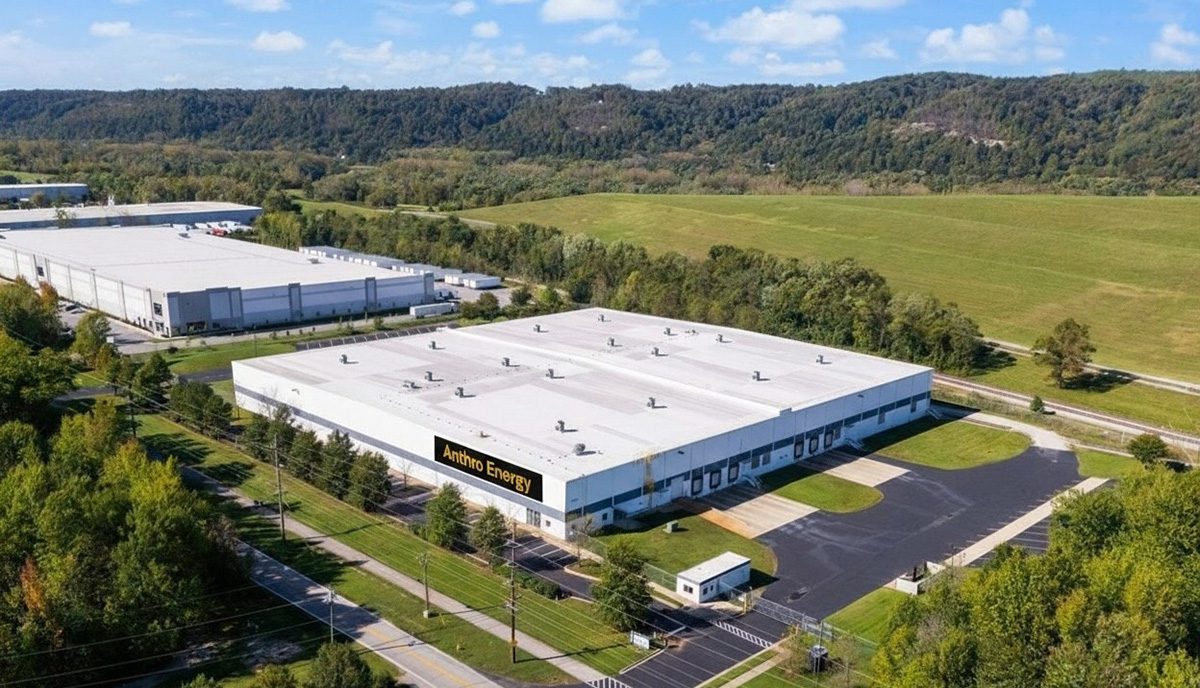
The chosen site in Louisville, Kentucky, will involve converting an existing building into a high-capacity production center. This adaptive reuse approach often allows for faster deployment compared to new greenfield constructions, leveraging existing infrastructure while minimizing environmental impact. The facility is projected to achieve an impressive 25 GWh (gigawatt-hour) equivalent production capacity.
In terms of material output, this translates to the capability of producing approximately 12,000 metric tons of advanced polymer electrolytes annually. This scale of production is critical for meeting the growing demand from battery manufacturers seeking reliable, high-performance electrolyte materials, particularly those prioritizing domestic content and robust supply chain integrity for their lithium-ion battery electrolyte plant sourcing.
FEOC-Free Commitment: Addressing Supply Chain Concerns
A cornerstone of Anthro Energy’s strategy for its new lithium-ion battery electrolyte plant is its commitment to using Foreign Entity of Concern-free (FEOC-free) inputs from its inception. This crucial distinction directly addresses a major concern among battery manufacturers and government agencies alike: the current dominance of Chinese entities in various segments of the global battery supply chain, including electrolyte production.
The FEOC designation has become increasingly important in U.S. policy, particularly in relation to subsidies and tax credits for electric vehicles and battery components. By ensuring its inputs are FEOC-free, Anthro Energy offers a compelling value proposition to customers seeking to comply with evolving regulations and strategically decouple from geopolitical dependencies. This commitment not only enhances the security of the domestic supply chain but also supports the ethical sourcing and responsible production of advanced battery materials.
Introducing the Proteus Platform: Next-Generation Electrolytes
At the heart of Anthro Energy’s innovation is its proprietary Proteus platform. This advanced technology focuses on developing polymer electrolytes that promise to significantly enhance the performance, safety, and design flexibility of lithium-ion battery electrolyte plant output. Traditional liquid electrolytes, while effective, can pose challenges related to flammability and leakage, impacting overall battery safety and lifespan.
Advanced polymer electrolytes, such as those developed by Anthro, offer several advantages. They can improve thermal stability, reduce the risk of dendrite formation (a common issue in lithium-ion batteries that can lead to short circuits and fires), and enable new battery architectures. This innovation is crucial for pushing the boundaries of what lithium-ion batteries can achieve, offering higher energy density, faster charging capabilities, and extended cycle life, all while bolstering safety protocols.
Targeting Diverse High-Growth Markets
The versatile nature of the Proteus platform’s advanced polymer electrolytes means they are poised for application across a broad spectrum of high-growth markets. These include:
- Defense: High-performance, safer batteries are critical for military applications, including portable power for soldiers, unmanned systems, and specialized vehicles, where reliability and operational safety are paramount.
- Consumer Electronics: From smartphones and laptops to wearables and drones, consumer devices demand increasingly powerful yet safer and more compact battery solutions. Anthro’s electrolytes can enable thinner, lighter, and more durable battery designs.
- Mobility Platforms: Beyond mainstream electric vehicles, this segment includes electric bicycles, scooters, autonomous vehicles, and various personal mobility devices, all of which benefit from improved battery safety, range, and charging speed.
- Energy Storage Systems (ESS): Large-scale grid storage, residential battery systems, and industrial backup power solutions require robust, long-lasting, and inherently safer battery chemistries to support renewable energy integration and grid stability.
Next Steps and Future Outlook
With the planning milestones now successfully completed, Anthro Energy is set to embark on the next critical phase of the project. This will encompass the comprehensive construction of the Louisville facility, meticulous installation of specialized manufacturing equipment, strategic hiring initiatives to build a skilled workforce, and seamless integration with key suppliers for raw materials and components.
Groundbreaking for the advanced lithium-ion battery electrolyte plant is currently anticipated for mid-2026. This timeline suggests an aggressive yet carefully planned rollout, reflecting the urgency and strategic importance of establishing domestic manufacturing capabilities for advanced battery materials. The rapid progression from technological development to full-scale production underscores a concerted effort to meet the growing demand for secure and high-performing battery solutions.
David Mackanic, CEO and co-founder of Anthro Energy, articulated the company’s forward momentum, stating, “We are moving quickly—from technology development to full-scale manufacturing — to ensure that next-generation battery materials are produced here in the United States.” This statement reinforces the company’s commitment to national security, economic growth, and technological leadership in the global battery market.
The development of Anthro Energy’s Louisville lithium-ion battery electrolyte plant represents more than just a new manufacturing facility; it symbolizes a significant leap forward in the United States’ journey towards a more secure, sustainable, and technologically advanced energy future. As the nation continues to invest in clean energy and domestic manufacturing, projects like this will play a pivotal role in shaping the next generation of power solutions.
Source: Anthro Energy
Frequently Asked Questions (FAQ)
What is the primary purpose of Anthro Energy’s new Louisville plant?
The plant’s primary purpose is to become the first large-scale, U.S.-owned facility for producing advanced polymer electrolytes for lithium-ion batteries. This initiative aims to strengthen the domestic battery supply chain and reduce reliance on foreign sources for critical EV components.
How much federal funding has Anthro Energy received for this project?
Anthro Energy has secured approximately $43 million in federal support. This includes a $24.9 million grant from the U.S. Department of Energy under the Infrastructure Investment and Jobs Act, along with $18.4 million in investment tax credits from Section 48C of the Inflation Reduction Act.
What is the production capacity of the new lithium-ion battery electrolyte plant?
The Louisville facility is designed to be a 25 GWh-capacity production hub. It will be capable of producing approximately 12,000 metric tons of advanced polymer electrolytes annually, catering to the increasing demand for high-performance battery materials.
What makes Anthro Energy’s electrolytes unique?
Anthro Energy utilizes its proprietary Proteus platform to produce advanced polymer electrolytes. These are designed to significantly improve battery performance, enhance safety by reducing risks like flammability and dendrite formation, and offer greater design flexibility for various lithium-ion cell applications.
What are ‘FEOC-free inputs’ and why are they important?
‘FEOC-free’ refers to inputs free from Foreign Entities of Concern. This is crucial for U.S. battery manufacturers looking to avoid supply chain dependencies on certain foreign countries, particularly China, and to comply with federal regulations and incentives aimed at promoting domestic and secure sourcing of materials.
When is groundbreaking anticipated for the Louisville facility?
The groundbreaking for Anthro Energy’s advanced lithium-ion battery electrolyte plant in Louisville is anticipated for mid-2026. This follows the completion of planning milestones and marks the commencement of the construction, equipment installation, and hiring phases.
Which markets will benefit from Anthro Energy’s new technology?
The advanced polymer electrolytes from Anthro Energy are targeting diverse high-growth markets. These include critical sectors such as defense, consumer electronics, various mobility platforms (like EVs and e-bikes), and large-scale energy storage systems, all of which demand safer and more efficient battery solutions.