
Key Takeaways
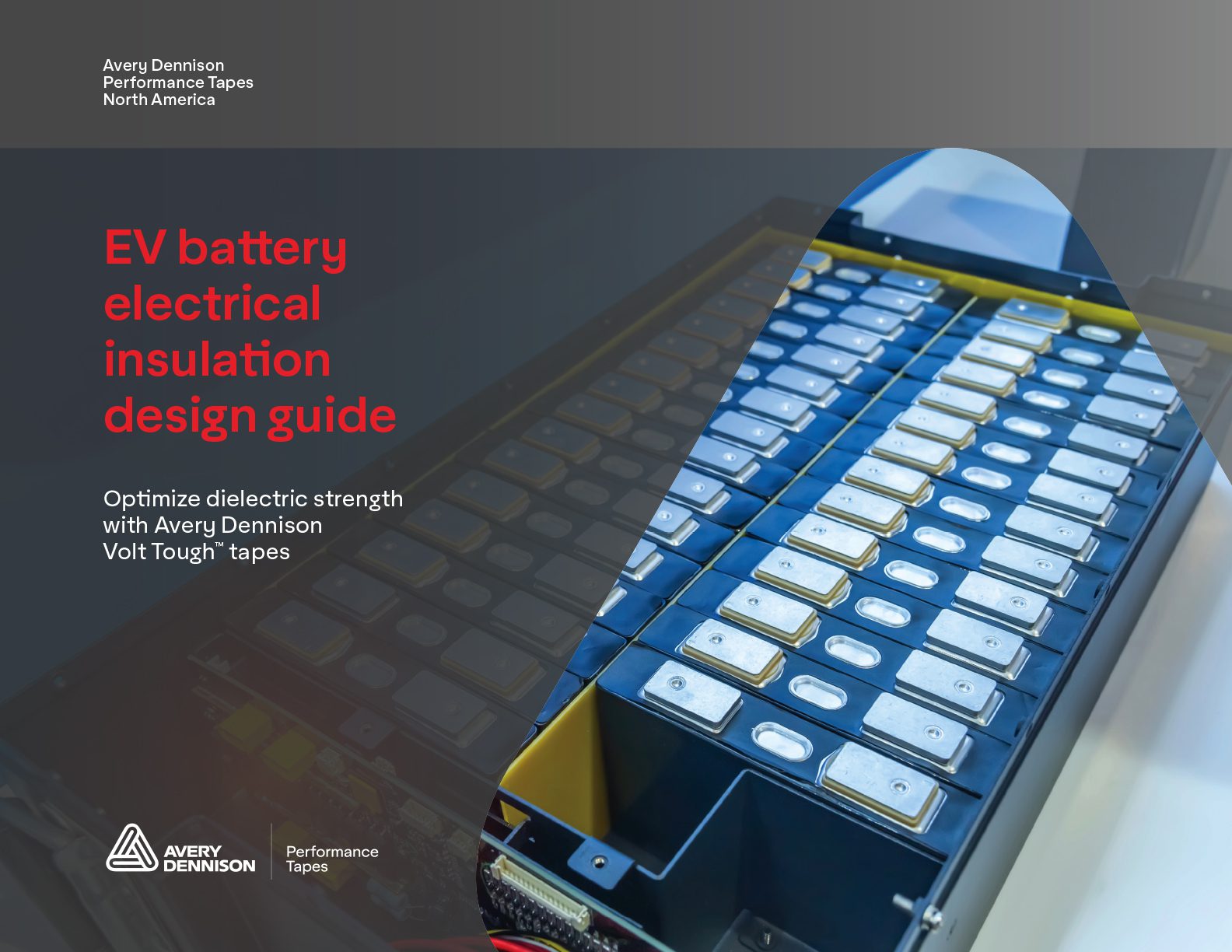
- Avery Dennison Performance Tapes has released a new “EV battery electrical insulation design guide” specifically for engineers and decision-makers in the electric vehicle (EV) battery sector.
- The guide focuses on dielectric tapes, particularly the Volt Tough™ portfolio, as advanced electrical insulation solutions, offering significant advantages over traditional coatings.
- Key benefits of Volt Tough™ tapes include high dielectric strength within thin profiles, enabling higher pack energy density, instant bonding for faster production, and durable, conformable options for complex battery pack geometries.
- The featured technology also emphasizes flame-retardant versions, meeting critical UL® 94V-0 safety standards within the battery pack.
- This resource aims to provide a comprehensive understanding of dielectric tape properties, aid in informed material selection, demonstrate integration methods, and facilitate customized solutions for specific EV battery design challenges.
In a significant development for the burgeoning electric vehicle industry, Avery Dennison Performance Tapes has launched a comprehensive resource titled the “EV battery electrical insulation design guide.” This pivotal guide is specifically tailored for engineers and decision-makers operating within the critical spheres of EV battery design, manufacturing, and implementation.
The new publication is engineered to empower industry professionals by providing an in-depth understanding of dielectric tapes and facilitating informed choices regarding their application as robust electrical insulation solutions. As electric vehicles continue to advance, the demand for sophisticated and reliable battery pack components intensifies, making expert guidance on materials selection more crucial than ever.

Revolutionising EV Battery Insulation with Volt Tough™ Tapes
At the core of this innovative design guide is the introduction and detailed exploration of Avery Dennison’s Volt Tough™ portfolio. This advanced range comprises electrically insulative, single-sided filmic pressure-sensitive adhesive (PSA) tapes, meticulously engineered to address the stringent requirements of modern EV battery packs.
The guide meticulously illustrates how the strategic combination of cutting-edge dielectric films with high-performance adhesives culminates in insulation solutions capable of meeting contemporary battery pack specifications. Such advancements are vital for ensuring the safety, efficiency, and longevity of EV battery systems, directly influencing vehicle performance and consumer confidence.
Key Advantages Over Traditional Methods
The Volt Tough™ tapes present a compelling alternative to conventional coating methods, offering a suite of advantages critical for optimising EV battery design. These benefits directly contribute to enhancing the overall performance and manufacturing efficiency of electric vehicles.

One primary advantage is their high dielectric strength maintained within remarkably thin profiles. This characteristic is crucial for maximizing the energy density of battery packs, allowing for more power in a smaller footprint without compromising electrical safety. Higher energy density translates to extended range and improved vehicle performance, a constant pursuit for EV manufacturers.
Furthermore, these innovative tapes boast instant bonding capabilities, significantly accelerating production times. In high-volume manufacturing environments, every second saved contributes to greater efficiency and reduced costs. The immediate adhesion simplifies assembly processes, which is a major benefit for large-scale EV battery production lines.
Beyond speed, the Volt Tough™ solutions are designed for durability, conformability, and tear resistance. These properties are indispensable for navigating the complex geometries and sharp corners often found within modern battery pack designs. Ensuring that insulation remains intact and effective, even in challenging structural configurations, is paramount for preventing electrical shorts and maintaining operational integrity.
Adherence to Critical Safety Standards
Safety remains a paramount concern in electric vehicle technology, particularly concerning battery systems. The technology detailed within this design guide places a strong emphasis on flame-retardant versions of the Volt Tough™ tapes.
These specialized tapes are engineered to uphold UL® 94V-0 requirements directly within the battery pack. Achieving UL® 94V-0 certification signifies that the material, when tested, stops burning within 10 seconds on a vertical part and drips of flaming particles are allowed as long as they are not inflamed. This stringent standard is a critical benchmark for fire safety in electronic components, underscoring Avery Dennison’s commitment to enhancing the safety profile of EV batteries.
Objectives of the Design Guide
The new “EV battery electrical insulation design guide” serves several clear objectives, each designed to provide maximum value to its target audience:
First, it aims to introduce and foster a deeper understanding of the properties, features, benefits, and diverse applications of Avery Dennison Volt Tough™ dielectric tapes. This foundational knowledge is essential for engineers to fully grasp the potential of these materials in their designs.
Second, the guide is structured to assist professionals in making more informed decisions when considering Volt Tough™ dielectric tapes as a primary electrical insulation solution in their EV battery pack designs. By presenting comprehensive data and application insights, it enables a data-driven approach to material selection.
Third, it provides practical demonstrations on how to properly integrate Volt Tough™ solutions within battery packs, including discussions on automation and other efficient application methods. This practical guidance is crucial for translating theoretical knowledge into scalable manufacturing processes.
Finally, the guide illustrates various avenues through which organizations can collaborate directly with Avery Dennison Performance Tapes to develop customized Volt Tough™ solutions. This bespoke approach ensures that insulation challenges unique to specific EV battery architectures can be effectively addressed with tailored materials and support.
Accessing Essential Insights for EV Innovation
The evolution of EV battery technology demands continuous innovation in every component, especially those critical for safety and performance like electrical insulation. This design guide stands as a testament to the ongoing advancements in material science dedicated to supporting the electric mobility revolution.
For engineers and decision-makers seeking to optimize their EV battery pack designs, improve manufacturing processes, and enhance safety standards, the “EV battery electrical insulation design guide” offers indispensable insights. It is a vital tool for staying ahead in a rapidly evolving industry, providing a clear pathway to advanced insulation solutions.
Industry professionals are encouraged to download the “EV battery electrical insulation design guide” to explore solutions for prevalent EV battery pack design challenges. Access to this document provides a direct route to understanding and implementing next-generation electrical insulation strategies. Further learning opportunities, including relevant webinars and technical resources, are also available for those looking to deepen their expertise in EV engineering and design.
To acquire your copy and delve into these crucial developments in EV battery electrical insulation design, simply complete the required details, providing your First Name, Last Name, Company, Email, Job Title, and Country, and confirm your consent to receive the whitepaper via email.
Frequently Asked Questions (FAQ)
What is the primary focus of the “EV battery electrical insulation design guide”?
The guide focuses on educating engineers and decision-makers about using dielectric tapes, specifically Avery Dennison’s Volt Tough™ portfolio, as effective electrical insulation solutions for electric vehicle (EV) battery packs. It aims to improve understanding and aid in informed material selection.
Who is the target audience for this design guide?
The guide is intended for engineers and decision-makers actively involved in the design, manufacturing, and implementation stages of EV batteries. It provides specialized knowledge critical for professionals navigating the complexities of advanced battery systems.
What are the main advantages of Volt Tough™ dielectric tapes?
Volt Tough™ tapes offer several advantages, including high dielectric strength in thin profiles for greater energy density, instant bonding for faster production, and durable, conformable, and tear-resistant properties suitable for intricate battery pack geometries and sharp corners.
Do these tapes meet specific safety standards?
Yes, the design guide highlights flame-retardant versions of Volt Tough™ tapes that are capable of maintaining UL® 94V-0 requirements within the battery pack. This ensures a high level of fire safety compliance for critical EV components.
How can this guide help with EV battery pack design challenges?
The guide helps by introducing the properties of Volt Tough™ tapes, assisting in informed material choices, demonstrating proper integration methods including automation, and showing how to collaborate with Avery Dennison for customized insulation solutions, thereby addressing complex design hurdles effectively.
Is customization an option with Volt Tough™ solutions?
Absolutely. One of the key objectives of the design guide is to illustrate how organizations can partner with Avery Dennison Performance Tapes to develop Volt Tough™ solutions that are specifically customized to meet unique EV battery design and manufacturing requirements.
How can I access the “EV battery electrical insulation design guide”?
The guide can be accessed by filling out a download form that requires basic professional information such as your name, company, email, job title, and country, along with consent to receive the whitepaper via email. This process ensures targeted distribution of the valuable resource.