
Key Takeaways
- Vision Marine Technologies has secured its 16th U.S. patent application for an innovative electronically controlled reverse thrust system.
- This new architecture for their E-Motion electric marine outboards replaces traditional mechanical shifting with electronic motor reversal.
- The design promises reduced moving parts, enhanced reliability, and simplified integration for manufacturers and service providers.
- It maintains compatibility with existing lower-unit marine architectures, facilitating easier adoption across the industry.
- The advancement underscores Vision Marine’s commitment to pioneering efficient and streamlined electric propulsion solutions for the marine sector.
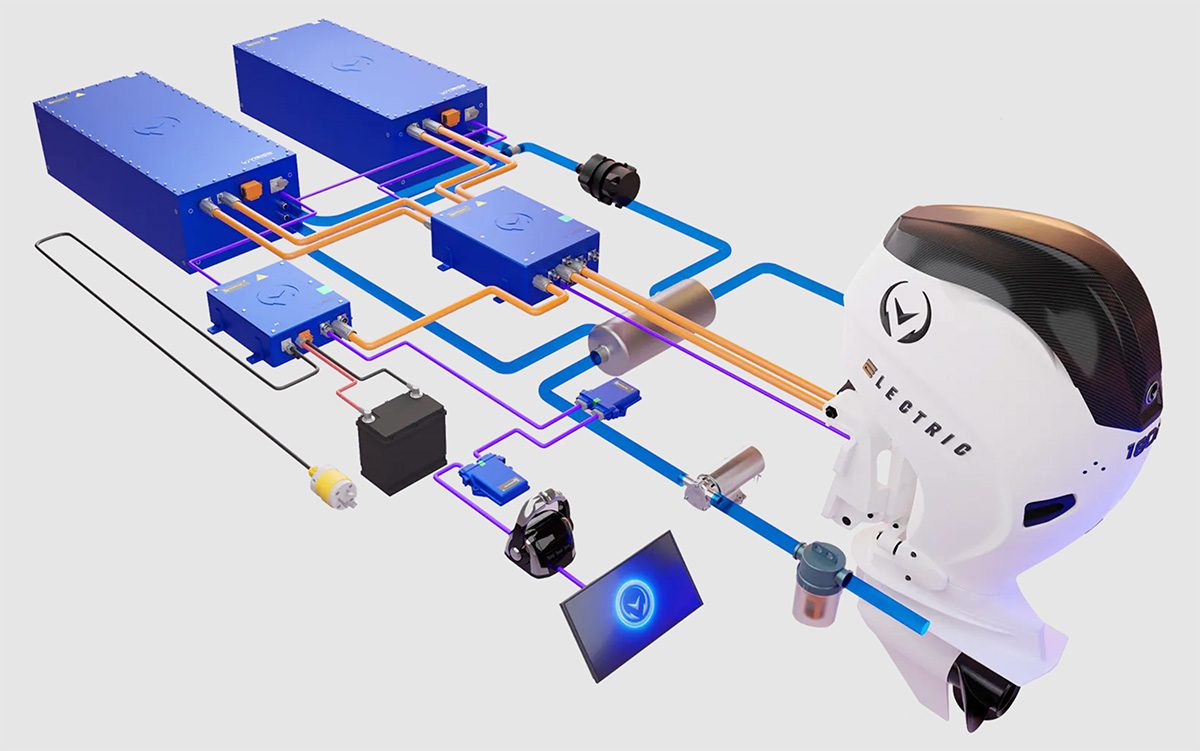
In a significant stride for marine electric propulsion, Vision Marine Technologies has officially filed its 16th U.S. patent application. This pivotal filing introduces an innovative electronically controlled reverse thrust architecture specifically designed for its E-Motion electric marine outboard platform. The application represents a departure from conventional mechanical shifting systems, addressing directional control through sophisticated motor reversal mechanisms.
This development is poised to redefine efficiency and simplicity in electric outboard motor design. By leveraging the inherent capabilities of electric motors, Vision Marine aims to eliminate complex mechanical components, thereby enhancing the reliability and ease of integration of its advanced propulsion systems.

Revolutionising Marine Propulsion with Electronic Control
The core of Vision Marine’s latest patent lies in its ingenious approach to directional control. Traditional combustion outboards rely on intricate mechanical gear systems to switch between forward and reverse thrust. These systems, while effective, introduce mechanical complexity, additional weight, and potential points of failure.
In stark contrast, an electric motor possesses the intrinsic ability to reverse its rotation electronically. This fundamental difference allows for the complete elimination of the cumbersome mechanical gear mechanism typically responsible for handling forward and reverse switching in conventional marine engines.
Vision Marine’s patent application meticulously outlines how to implement this electronically controlled reverse thrust. Crucially, it achieves this while maintaining seamless compatibility with existing lower-unit marine architectures. This forward-thinking approach means the innovative system is intended to be integrable without necessitating a complete redesign of the entire drivetrain, a factor that could significantly accelerate its adoption.

Advantages of Simplified Engineering
The implications of this electronically controlled reverse thrust system are far-reaching for both manufacturers and end-users within the marine industry. By replacing mechanical components with electronic controls, the design naturally leads to a substantial reduction in the number of moving parts within the outboard motor.
Fewer moving components translate directly into several tangible benefits. Firstly, it enhances the overall reliability and durability of the system, as there are fewer parts subject to wear and tear. Secondly, it simplifies the manufacturing process, potentially leading to reduced production costs and increased scalability.
Furthermore, Vision Marine highlights that the design significantly simplifies integration for manufacturers. Boat builders adopting the E-Motion platform will find it easier to incorporate these electric outboards into their designs. For service providers, the streamlined architecture promises simpler maintenance and repair procedures, potentially reducing downtime and operational costs for boat owners.
Enhancing the Electric Outboard Landscape
The advent of sophisticated electric outboards, such as Vision Marine’s E-Motion platform, signifies a broader trend towards sustainable and efficient marine travel. As global focus shifts towards greener technologies, the marine sector is witnessing a rapid evolution in electric propulsion solutions. Innovations like electronically controlled reverse thrust are vital for pushing the boundaries of what electric boats can achieve.
This patent not only solidifies Vision Marine’s position as a leader in electric marine technology but also contributes to the overarching advancement of EV engineering. By tackling fundamental design challenges like directional control, the company is helping to build a more robust and attractive ecosystem for electric boating.
The ability to integrate new technologies without demanding wholesale changes to established marine architectures is a key enabler for widespread adoption. This ensures that the benefits of electronic advancements can be enjoyed more readily across a diverse range of vessels and manufacturers, fostering a quicker transition to electric power on the water.
Vision Marine Technologies: A Pioneer in Electric Boating
Vision Marine Technologies, listed on NASDAQ under the ticker VMAR, is headquartered in Boisbriand, Quebec, Canada. The company has been at the forefront of developing high-performance electric propulsion systems and components for the recreational marine market.
Beyond its innovative engineering efforts, Vision Marine also maintains a strong retail presence through its Nautical Ventures network, operating marine dealerships primarily in Florida. This dual approach allows the company to not only innovate in electric motor design and manufacturing but also to connect directly with the boating community, understanding their needs and driving market adoption.
The continuous investment in research and development, evidenced by its robust portfolio of patent applications, underscores Vision Marine’s commitment to shaping the future of electric boating. Each patent, including this latest one for electronically controlled reverse thrust, moves the industry closer to a more efficient, quieter, and environmentally friendly marine experience. The company’s efforts are a testament to the ongoing evolution within the electric motor design and manufacturing sectors.
The Future of Marine EV Engineering
The filing of this patent application highlights a critical phase in the evolution of electric outboards. As the technology matures, features that enhance user experience, simplify manufacturing, and improve reliability become paramount. An electronically controlled reverse thrust system directly addresses these aspects, offering a more intuitive and seamless boating experience.
This innovation could set a new standard for electric marine propulsion, encouraging other industry players to explore similar advancements in simplifying mechanical systems through electronic intelligence. The overall impact will be a more sophisticated and accessible market for electric boats, accelerating the global shift towards sustainable marine transport. As the sector continues to grow, such foundational patents will play a crucial role in establishing best practices and defining the next generation of marine EV engineering.
FAQ Section
What is the primary innovation in Vision Marine’s new patent application?
The patent application focuses on an electronically controlled reverse thrust architecture for electric outboards. It allows an electric motor to reverse rotation electronically, eliminating the need for traditional mechanical gear mechanisms used for forward/reverse shifting in combustion engines.
How does this electronic system differ from conventional reverse thrust?
Conventional outboards use mechanical gearboxes for directional changes. Vision Marine’s system bypasses this by utilizing the inherent ability of electric motors to reverse direction simply by altering electrical current flow, leading to a more streamlined and efficient design.
What are the main benefits of eliminating mechanical shifting?
Eliminating mechanical shifting reduces the number of moving components, enhancing reliability and durability. It also simplifies the overall design, making integration easier for manufacturers and potentially lowering maintenance costs for service providers and boat owners.
Will this new system be compatible with existing boat designs?
Yes, a key aspect of Vision Marine’s patent application is that its electronically controlled reverse thrust approach is intended to retain compatibility with existing lower-unit marine architectures. This ensures easier integration without requiring extensive redesigns of current drivetrains.
What is Vision Marine Technologies’ role in the electric marine industry?
Vision Marine Technologies is a Canadian company listed on NASDAQ (VMAR) that develops high-performance electric propulsion systems for boats. They are known for their E-Motion electric outboard platform and also operate marine dealerships through their Nautical Ventures network in Florida.
How does this patent contribute to overall EV engineering?
This patent advances EV engineering by demonstrating how electronic control can simplify complex mechanical functions in demanding environments like marine propulsion. It highlights the potential for greater efficiency, reliability, and ease of integration across various electric vehicle applications, not just marine.
When was this patent application filed?
Vision Marine Technologies filed this, their 16th US patent application, on May 27, 2026. This reflects their ongoing commitment to innovation and leadership in the electric marine propulsion sector.