
Key Takeaways
- A recent 500-mile real-world road trip across Romania, including challenging mountain passes, has demonstrated the impressive capabilities of the BMW iX3 xDrive50.
- The journey, which included stretches of highway, country roads, and high-performance mountain driving on the Transfăgărășan, showcased the iX3’s ability to cover significant distances without requiring drivers to alter their driving style or conserve energy.
- Even after energetic driving, including two ascents of a major mountain road, the electric SUV maintained a comfortable 16% battery charge upon returning to Bucharest, indicating robust real-world efficiency and accurate range predictions.
- The 108.7-kWh battery, combined with strong efficiency and dynamic handling, makes the BMW iX3 a compelling option for those seeking an electric vehicle capable of effortless long-distance travel, effectively making traditional range anxiety feel outdated.
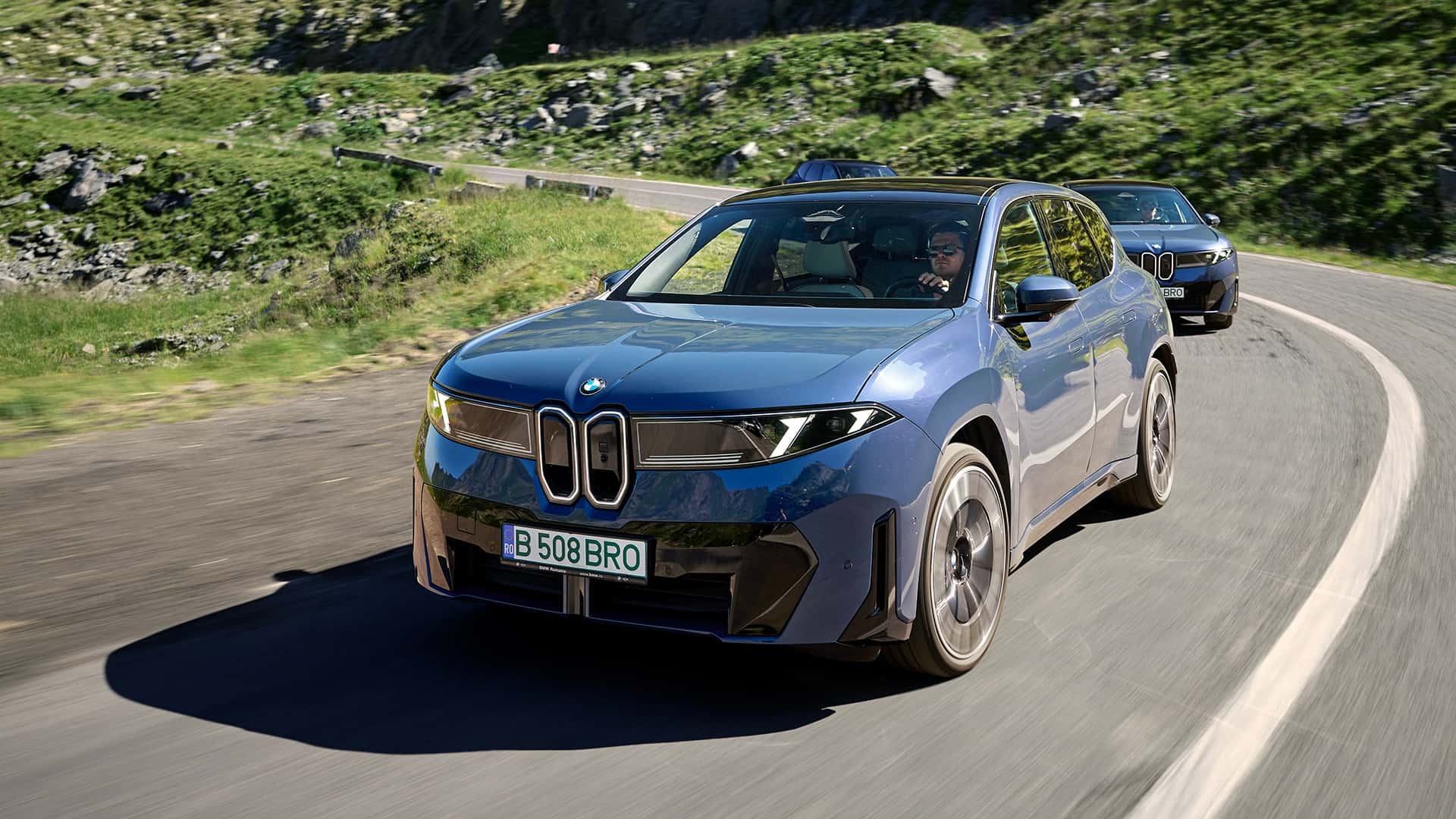
BUCHAREST, Romania – A rigorous 500-mile journey through the diverse landscapes of Romania, encompassing high-speed highways, winding country roads, and challenging mountain passes, has showcased the formidable capabilities of the BMW iX3 xDrive50. This extensive real-world test aimed to evaluate not just the electric SUV’s ability to complete such a demanding route, but to do so without any compromises to driving dynamics or the need for constant energy conservation.
The comprehensive road test unequivocally suggests that for vehicles equipped with the advanced technology and substantial battery capacity of the BMW iX3, concerns about `BMW iX3 range` in long-distance travel are becoming increasingly obsolete. The vehicle performed commendably, challenging conventional perceptions of electric mobility.

The Ambitious Itinerary: A True Test of Electric Mobility
The journey, initiated at the behest of BMW Romania, presented an itinerary that would typically induce apprehension in many electric vehicle (EV) drivers. The plan involved traversing Romania from its capital, Bucharest, in the south, to Șona, a quaint village in the country’s central region, known for its unique ‘pyramids’ and contemporary art scene. The route then included a return leg that notoriously featured the iconic Transfăgărășan mountain road.
This approximately 220-mile outbound trip and slightly longer return journey were specifically designed to push the BMW iX3 xDrive50 to its limits. The objective was clear: to ascertain if the vehicle could navigate this mixed terrain, including high-altitude ascents and descents, without the driver needing to slow down, practice hypermiling techniques, or meticulously plan every stop around charging infrastructure availability.
Testing Parameters: Real-World Driving, Not Hypermiling
Unlike controlled laboratory conditions, the test prioritised a naturalistic driving approach. The driver consciously avoided adapting their style to maximise the `BMW iX3 range` or efficiency. The vehicle was driven as if it were a conventional combustion-engine car, without an obsessive focus on conserving energy, providing a truer reflection of everyday use.

This methodology diverged significantly from BMW’s own record-setting demonstration, where an iX3 covered over 620 miles (1,000 km) on a single charge during a drive from Hungary to Germany. While impressive, such an achievement often involves highly optimized driving conditions and strategies. The Romanian test aimed for practical, spirited use, highlighting the usable `BMW iX3 range` for the average driver.
Day One: Across Romania’s Plains and Countryside
The expedition commenced in Bucharest early in the morning. The BMW iX3 xDrive50 began with a 97% charge in its substantial 108.7-kWh battery. The car’s onboard computer displayed an estimated range of 353 miles (568 km). For context, this iX3 variant holds a claimed WLTP range of 500 miles (805 km) in Europe, while its U.S. EPA rating stands at up to 434 miles (698 km).
The initial segment of the drive primarily involved extra-urban conditions at speeds averaging 62 mph (100 km/h), preceded by a brief highway stint. By the midway point, after covering 112 miles (180.4 km), the iX3 registered an average efficiency of 3.31 miles/kWh (18.8 kWh/100 km). This early data reinforced the vehicle’s promising efficiency metrics.
As the route transitioned to narrower, slower country roads, the efficiency only improved. Upon reaching the overnight destination, Șona, the BMW iX3 had accumulated 217.5 miles (350.1 km). The average efficiency for the day improved to 3.53 miles/kWh (17.6 kWh/100 km), with a remarkable 40% battery charge still remaining. The onboard estimate indicated an additional 173 miles (279 km) of `BMW iX3 range` was available, prompting a brief consideration of attempting the return journey without an overnight charge.
However, the prospect of tackling the Transfăgărășan with a spirited driving style, rather than engaging in a hypermiling exercise, proved more appealing. Consequently, the iX3 was charged overnight. The following morning, the vehicle was returned with 98% battery and a freshly optimistic range prediction of 437 miles (703 km), a figure recalibrated based on the previous day’s efficient driving.
Day Two: Conquering the Transfăgărășan Mountain Road
The second day began in the picturesque town of Sibiu, leading towards the legendary Transfăgărășan. During the initial, slow-speed ascent to the mountain road’s twisting sections, the iX3 demonstrated exceptional frugality. It delivered an average efficiency of approximately 4.44 miles/kWh (14 kWh/100 km), a notable achievement for a heavy, dual-motor SUV.
Despite weighing over 5,000 pounds (2.3 tons), boasting 463 hp, and offering neck-snapping acceleration, the BMW iX3 exhibited remarkable efficiency. This performance underscored how the vehicle’s engineering allows for both potent performance and impressive energy management, contributing positively to its practical `BMW iX3 range` in varied conditions.
Performance Dynamics on Mountain Twists
Activating Sport mode transformed the range test into a more dynamic, albeit less scientific, evaluation of the iX3’s capabilities. The SUV behaved like a quintessential BMW, adeptly disguising its considerable mass through bends. It resisted understeer effectively and responded with eagerness to accelerator inputs, allowing for precise line adjustments. The low-mounted battery pack further enhanced the driving experience by mitigating the top-heavy sensation often associated with large SUVs, even when pushing the 5,000-pound (2.3-ton) vehicle through demanding turns.
Around the Transfăgărășan’s challenging switchbacks, the iX3 felt stable, neutral, and surprisingly agile for a family-oriented SUV. Its driving dynamics were perceived as more engaging than those of its internal combustion engine counterpart, the BMW X3, highlighting the inherent advantages of electric powertrains in weight distribution and instantaneous torque delivery.
Double Ascent and Sustained Energy Management
One ascent to the Bâlea summit proved insufficient for the driver’s enthusiasm. After reaching the peak, a descent to Cârțișoara for lunch was followed by a complete re-run of the entire road, gaining approximately 5,200 feet (1,580 meters) for a second time. Upon emerging on the southern side, roughly 100 miles (160 km) into the day’s driving, the battery still displayed a reassuring 57% charge.
The trip computer indicated an average consumption of 2.1 miles/kWh (29.6 kWh/100 km at this point), having briefly peaked at 1.64 miles/kWh (37.8 kWh/100 km) during the most strenuous phases. This consumption figure accounted for the drive from Sibiu, two energetic mountain ascents, and the regenerative descent between them, showcasing effective energy recovery contributing to the overall `BMW iX3 range`.
The Return Journey: Zero Range Anxiety
Following the exhilarating mountain passes, the drive continued down the other side of the Transfăgărășan. Despite considerably heavier traffic, the BMW iX3 managed to complete the entire journey back to Bucharest without needing any additional charging. The return leg included approximately 90 miles (150 km) of highway driving, conducted at speeds of up to 87 mph (140 km/h).
Upon arrival at home, the vehicle still retained a comfortable 16% battery charge. This final metric was arguably the most compelling aspect of the entire trip. The iX3 had covered approximately 250 miles (400 km) on the second day, which included two hard-driven ascents of the demanding Transfăgărășan, yet concluded the journey with a significant energy buffer.
Crucially, this accomplishment did not necessitate reducing speeds, deactivating climate control, or employing any other compromises traditionally associated with long-distance EV travel. Even after fully exploiting its performance and exceptional chassis on one of Romania’s most challenging roads, a substantial energy reserve remained at the destination, solidifying confidence in the `BMW iX3 range` capabilities.
Beyond Battery Capacity: A Holistic EV Experience
The success of the BMW iX3 on this challenging road trip extends beyond its ample battery capacity. While the 108.7-kWh unit certainly plays a pivotal role, it is the synergistic combination of robust real-world efficiency, consistently reliable and non-optimistic range predictions, and effortless performance that truly distinguishes the iX3. The vehicle consistently delivered its capabilities without requiring the driver to constantly fret over energy conservation.
The BMW iX3 proves to be both quick and genuinely engaging when the road presents an opportunity for dynamic driving. Yet, it seamlessly transitions back into an efficient long-distance cruiser when conditions demand it. While range anxiety has not entirely vanished, particularly in regions with underdeveloped charging infrastructure, the impressive capabilities of an EV like the iX3, demonstrating the ability to cover significant distances with substantial `BMW iX3 range` in reserve, makes it increasingly difficult to justify delaying the transition to electric mobility.
Frequently Asked Questions (FAQ)
How does the BMW iX3’s real-world range compare to its official ratings?
During the Romania test, the BMW iX3 xDrive50 achieved impressive real-world range, often exceeding initial estimates based on driving style. While official WLTP (500 miles/805 km) and EPA (434 miles/698 km) figures provide benchmarks, the test showed the vehicle’s ability to deliver practical, long-distance travel even under demanding conditions, without the need for hypermiling.
Can the BMW iX3 handle challenging mountain roads efficiently?
Yes, the test on Romania’s Transfăgărășan road demonstrated the iX3’s robust performance on challenging mountain terrain. Despite spirited driving and significant ascents, the vehicle maintained commendable efficiency, utilizing regenerative braking during descents to conserve and even recover energy, contributing to its overall `BMW iX3 range`.
What is the battery capacity of the BMW iX3 xDrive50?
The BMW iX3 xDrive50 is equipped with a large 108.7-kWh battery. This substantial battery capacity is a key factor in its impressive `BMW iX3 range` and its ability to undertake long journeys without frequent charging stops, providing confidence to drivers.
Does the BMW iX3 exhibit range anxiety during long trips?
Based on the 500-mile Romania road trip, the BMW iX3 effectively dispels range anxiety. The vehicle’s combination of high real-world efficiency, accurate range predictions, and a significant remaining charge even after demanding driving, ensures a comfortable buffer and peace of mind for drivers on extended journeys.
How does the iX3’s driving performance compare to its combustion engine counterpart?
The BMW iX3, with its low-mounted battery and electric powertrain, is reported to offer superior driving dynamics compared to its combustion-engine equivalent, the BMW X3. It manages its weight exceptionally well, feels planted through corners, and offers eager responsiveness, making it a more engaging and enjoyable vehicle to drive, especially on twisty roads.
What factors contribute to the BMW iX3’s efficiency beyond battery size?
Beyond its large battery, the iX3’s efficiency is attributed to its advanced electric powertrain, effective energy management systems, and regenerative braking capabilities. These features collectively ensure that the vehicle not only has a substantial `BMW iX3 range` but also utilizes its energy optimally across various driving conditions, from highway cruising to mountain ascents and descents.