
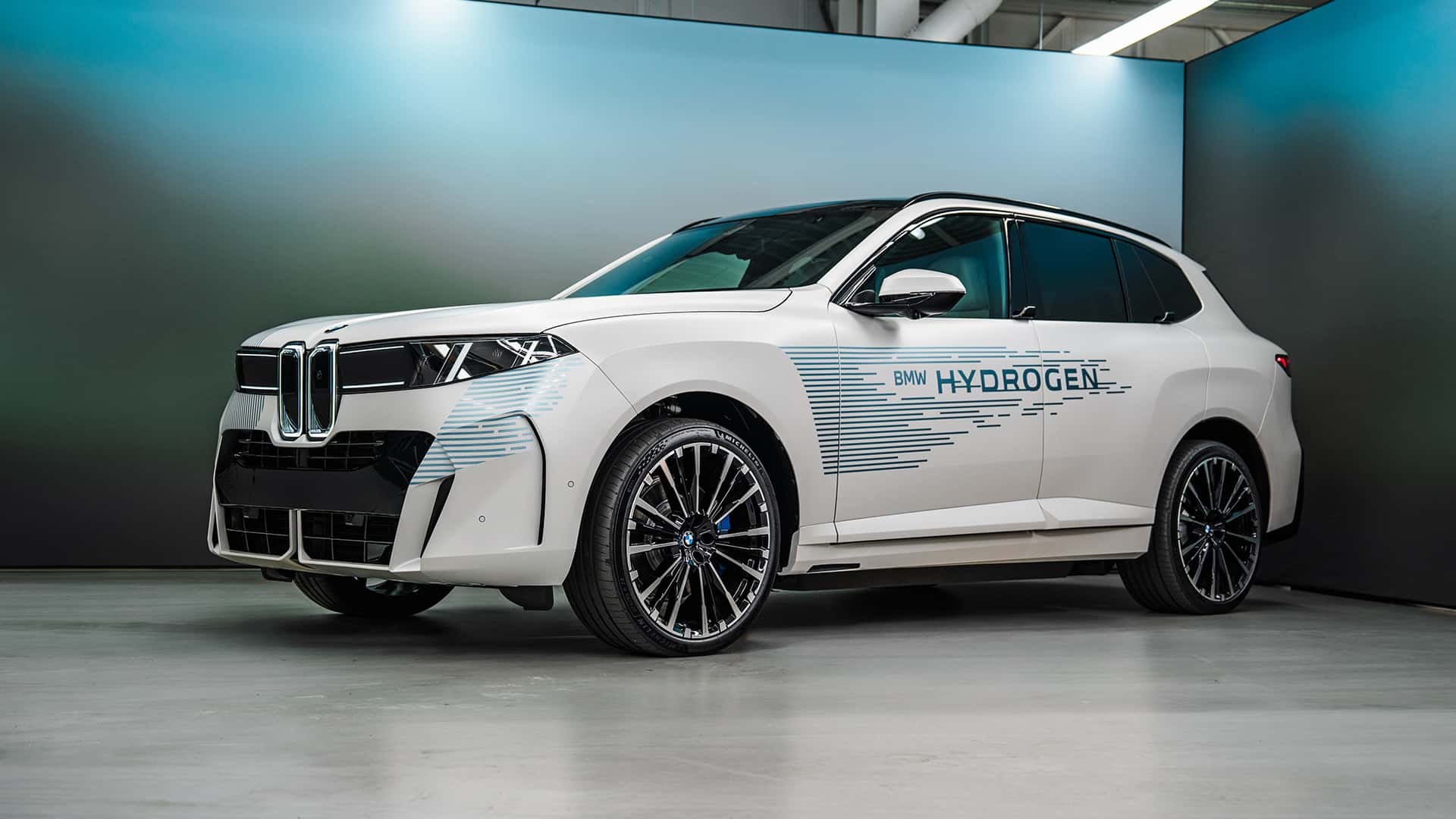
Despite the prevailing surge in battery electric vehicles (BEVs) and years of developmental hurdles for hydrogen-powered cars, German automotive giant BMW is reaffirming its commitment to fuel cell technology. The recent unveiling of the fifth-generation X5 last week prominently featured a hydrogen-powered variant, the iX5, signaling the manufacturer’s long-term strategic vision for diverse powertrains.
This distinct white X5, accentuated with blue stripes, represents one of five powertrain options planned for the SUV. While hybrid gas, diesel, plug-in hybrid, and fully electric versions will precede it, the hydrogen-powered iX5 is slated for release in 2028. Specific market availability for this innovative model is yet to be disclosed by the automaker.
Key Takeaways
- Strategic Reaffirmation: BMW continues to invest in hydrogen fuel cell technology, exemplified by the upcoming iX5 Hydrogen SUV, despite the current market dominance of battery electric vehicles.
- Energy Storage Focus: A primary driver for BMW’s hydrogen strategy is the potential for large-scale energy storage, complementing renewable energy sources like wind and solar power.
- Infrastructure Challenges: Hydrogen refueling infrastructure remains significantly underdeveloped globally, with the vast majority of stations concentrated in a few countries, hindering widespread adoption.
- Technological Specifications: The BMW iX5 Hydrogen will feature a Toyota-co-developed fuel cell system, offering approximately 400 miles EPA range and rapid refueling in under five minutes. It will be the first all-wheel-drive hydrogen passenger vehicle.
- Efficiency and Cost Barriers: Hydrogen production often relies on fossil fuels (‘grey hydrogen’), and its ’round-trip efficiency’ is lower than battery storage. High vehicle costs and the need for ‘green hydrogen’ production are significant obstacles.
The Global Landscape of Hydrogen Fuel Cells
BMW’s continued investment in hydrogen fuel cell technology stands as a notable strategic move, considering the persistent struggles this segment has faced in achieving widespread market acceptance. Unlike BEVs, which benefit from rapidly expanding fast-charging networks and maturing supply chains, hydrogen as an automotive fuel source remains largely experimental.
A critical barrier to mass adoption is the scarcity of refueling infrastructure. Publicly accessible hydrogen stations are still few and far between, concentrated predominantly in a limited number of geographical areas. In the United States, for instance, the Department of Energy reports that all 47 public hydrogen refueling stations are located exclusively in California.
Globally, as of last year, over 80% of the world’s hydrogen refueling stations were found in just five countries: China, Japan, South Korea, France, and Germany. This sparse network pales in comparison to the extensive availability of traditional petrol stations or the rapidly growing infrastructure for electric vehicle charging.
Consequently, hydrogen-powered electric vehicles such as the Toyota Mirai, Honda CR-V e:FCEV, and Hyundai Nexo have historically struggled to achieve substantial sales volumes. Their limited accessibility for refueling has made them less practical for the average consumer compared to their battery-electric counterparts.
BMW’s Strategic Rationale: Hydrogen as an Energy Storage Solution
Despite these considerable challenges, BMW’s conviction in hydrogen fuel cell technology remains strong. The automaker posits that hydrogen offers a viable pathway for large-scale energy storage, particularly as renewable energy generation from sources like wind and solar continues to grow exponentially.
The grid infrastructure requires increasingly robust solutions to store surplus power generated during peak production times, for use when demand is high or renewable output is low. While grid-scale batteries are currently fulfilling much of this role, BMW argues that hydrogen can serve as a complementary, long-duration storage medium.
Philip Koehn, vehicle line director at BMW Group, elaborated on this vision at the X5 launch in Spartanburg, South Carolina. He stated, “The hydrogen economy, if and when it develops, will most likely come alongside renewable energies.” Koehn further highlighted hydrogen’s capacity to store vast quantities of energy, positioning it as a key component in a future sustainable energy ecosystem.
The underlying logic is rooted in the concept of converting surplus renewable energy into hydrogen through electrolyzers. This hydrogen can then be stored in tanks for extended periods. When needed, this stored energy can be converted back into electricity, powering not only hydrogen-fueled cars but also heavy freight vehicles and industrial applications like forklifts.
The Mechanics of the BMW iX5 Hydrogen
The upcoming BMW iX5 Hydrogen SUV will integrate a sophisticated fuel-cell system, co-developed with Toyota, a pioneer in hydrogen vehicle technology through its Mirai model. This system is designed for high efficiency and performance.
The vehicle will be equipped with seven cylinders, capable of storing a total of seven kilograms (approximately 15.4 pounds) of hydrogen. Inside the fuel cells, this stored hydrogen reacts electrochemically with oxygen drawn from the outside air, generating electricity to power the vehicle’s electric motors.
Preliminary specifications indicate an impressive performance profile for the iX5 Hydrogen. BMW projects a WLTP range of up to 750 kilometers, which translates to approximately 400 miles on the EPA cycle. Crucially, refueling the hydrogen tank is expected to be as quick as filling a conventional petrol car, taking under five minutes.
Another significant advancement for the iX5 is its all-wheel-drive capability. BMW confirms that it will be the very first all-wheel-drive passenger vehicle powered by hydrogen. This distinguishes it from current offerings, as the Hyundai Nexo and Honda CR-V e:FCEV are front-wheel drive, while the Toyota Mirai powers only its rear wheels.
Challenges and Realities of Hydrogen Adoption
On paper, the BMW iX5 Hydrogen, much like its predecessors, presents an attractive proposition: the eco-friendliness of an EV combined with the rapid refueling times of a conventional car. However, practical hurdles remain. Pricing information for the iX5 has not yet been released, but hydrogen fuel cell vehicles have historically been substantially more expensive than their combustion-engine counterparts, in contrast to EVs which are gradually approaching price parity.
Beyond cost, the crucial issue of refueling infrastructure persists. Moreover, the environmental credentials of hydrogen are complex. The Department of Energy reports that in the U.S., 95% of hydrogen is currently produced using fossil fuels. This process, often referred to as ‘grey hydrogen,’ significantly undermines the technology’s potential eco-friendly benefits.
The industry’s long-term goal is the widespread adoption of ‘green hydrogen,’ which is produced using renewable energy sources like solar and wind power through electrolysis. The transition to green hydrogen production is vital to realizing the full environmental advantages of fuel cell technology.
Hydrogen vs. Battery: A Complementary Role in Energy Storage
Emerging research suggests that hydrogen may not directly compete with battery storage systems but rather complement them, particularly concerning energy storage duration. Battery energy storage systems are typically optimized for rapid charge and discharge cycles, primarily to stabilize grid fluctuations over short to medium periods.
A key limitation of lithium-ion batteries is their inability to maintain a full charge indefinitely without experiencing gradual energy loss over time. Conversely, hydrogen boasts a very low self-discharge rate, allowing it to be stored for months without significant energy degradation, according to one study.
However, this durability comes with a trade-off in efficiency. The same research indicates that hydrogen’s ’round-trip efficiency’—the amount of original electricity recovered after conversion to hydrogen and back again—ranges from only 35% to 55%. In contrast, battery storage systems typically operate at an 80% to 90% round-trip efficiency, benefiting from a more established and mature supply chain.
The battery supply chain is also rapidly evolving, with pricier nickel-manganese-cobalt (NMC) cells being increasingly supplemented or replaced by more affordable and durable lithium-iron-phosphate (LFP) batteries, and even emerging sodium-ion cell technologies. BMW’s strategy hinges on the belief that as hydrogen gains traction as a crucial complementary energy storage solution, the necessary refueling infrastructure will naturally develop in tandem.
Despite the differences in underlying technology, BMW assures that the iX5 Hydrogen will deliver a driving experience akin to its battery-powered siblings. This includes features like the ‘Heart of Joy’ computer, designed for smooth cornering and braking, and the integration of the same Gen6 high-voltage battery architecture.
Industry Peers and Persistent Efforts
BMW is not an isolated proponent of hydrogen technology. Several other major players in the automotive and industrial sectors continue to invest in and deploy hydrogen fuel cell solutions. BMW itself has utilized hundreds of hydrogen-powered forklifts and trolley trains at its Spartanburg plant for over a decade, demonstrating the technology’s reliability in specific industrial applications.
Similarly, Hyundai Motor Group employs its Xcient fuel-cell Class 8 semi-trucks for short-distance hauling at its Georgia factory. In the passenger vehicle segment, the Toyota Mirai has been available for years, albeit with modest sales figures, recording just 210 units sold in the U.S. last year.
Honda introduced its CR-V e:FCEV, a unique plug-in hybrid combined with a fuel-cell EV, for sale in California in 2024. Hyundai is also preparing to roll out a next-generation Nexo overseas, even as its availability in the U.S. remains unconfirmed, with the previous model having been discontinued there for the time being.
The collective efforts across these companies underscore a persistent belief in hydrogen’s long-term potential, despite current market realities and infrastructural limitations.
The Path Forward for Fuel Cell Technology
The future trajectory of hydrogen in the automotive and energy sectors remains a subject of ongoing debate. Whether it will experience a transformative boom driven by escalating demand for energy storage solutions, or if it will ultimately remain a niche, expensive experiment, is a question that only time will definitively answer.
BMW’s strategic commitment with the iX5 Hydrogen positions it to capitalize on potential future shifts in the energy landscape, betting on hydrogen’s unique attributes as a clean, high-density energy carrier and a critical component for a diversified, sustainable future mobility ecosystem.
Frequently Asked Questions (FAQ)
What is BMW’s strategy for hydrogen cars?
BMW views hydrogen fuel cell technology as a crucial complement to battery electric vehicles, particularly for long-duration energy storage in a renewable energy grid. The company is developing models like the iX5 Hydrogen, betting on eventual infrastructure growth driven by broader hydrogen economy development.
When will the BMW iX5 Hydrogen be available?
The hydrogen-powered BMW iX5 variant is scheduled to arrive in 2028. It will be one of five powertrain options for the new X5 generation, which will initially include hybrid, plug-in hybrid, and fully electric versions.
What are the main challenges for hydrogen cars?
Key challenges include a severely underdeveloped global refueling infrastructure, high vehicle production costs, and the reliance on fossil fuels for most current hydrogen production (grey hydrogen). The transition to green hydrogen, produced from renewable sources, is essential but costly.
How does hydrogen storage compare to battery storage?
Hydrogen excels in long-duration energy storage, capable of retaining energy for months due to its low self-discharge rate, unlike lithium-ion batteries which lose charge over time. However, hydrogen has a lower ’round-trip efficiency’ (35-55%) compared to batteries (80-90%).
Which countries have the most hydrogen refueling stations?
As of last year, over 80% of the world’s hydrogen refueling stations were concentrated in just five countries: China, Japan, South Korea, France, and Germany. In the U.S., all 47 public stations are located in California.
What is ‘green hydrogen’ and why is it important?
Green hydrogen is produced using renewable energy sources (like solar or wind) through electrolysis, making it a truly emissions-free fuel. It is crucial for the environmental sustainability of hydrogen fuel cell vehicles, as current ‘grey hydrogen’ production often relies on fossil fuels.
Will the BMW iX5 Hydrogen be all-wheel drive?
Yes, BMW has confirmed that the iX5 Hydrogen will be the first all-wheel-drive passenger vehicle powered by hydrogen fuel cell technology. This provides a performance and handling advantage compared to existing front-wheel or rear-wheel drive hydrogen models.