
Key Takeaways:
- BYD has launched its Denza Z9GT electric vehicle in Europe, marking the debut of its advanced ‘Flash’ charging technology in the region.
- The premium station wagon can achieve a 10%-80% charge in a mere six-and-a-half minutes, reaching 97% in under 10 minutes, significantly faster than most competitors.
- Positioned as a luxury offering, the Denza Z9GT carries a starting price of 115,000 euros, directly competing with established high-end European brands like Porsche.
- This ultra-rapid charging capability, powered by megawatt-capable stations and an enhanced Blade battery, aims to alleviate range anxiety among prospective electric vehicle buyers.
- BYD plans to roll out 3,000 Flash charging stations across Europe within the next year to support this revolutionary charging standard.
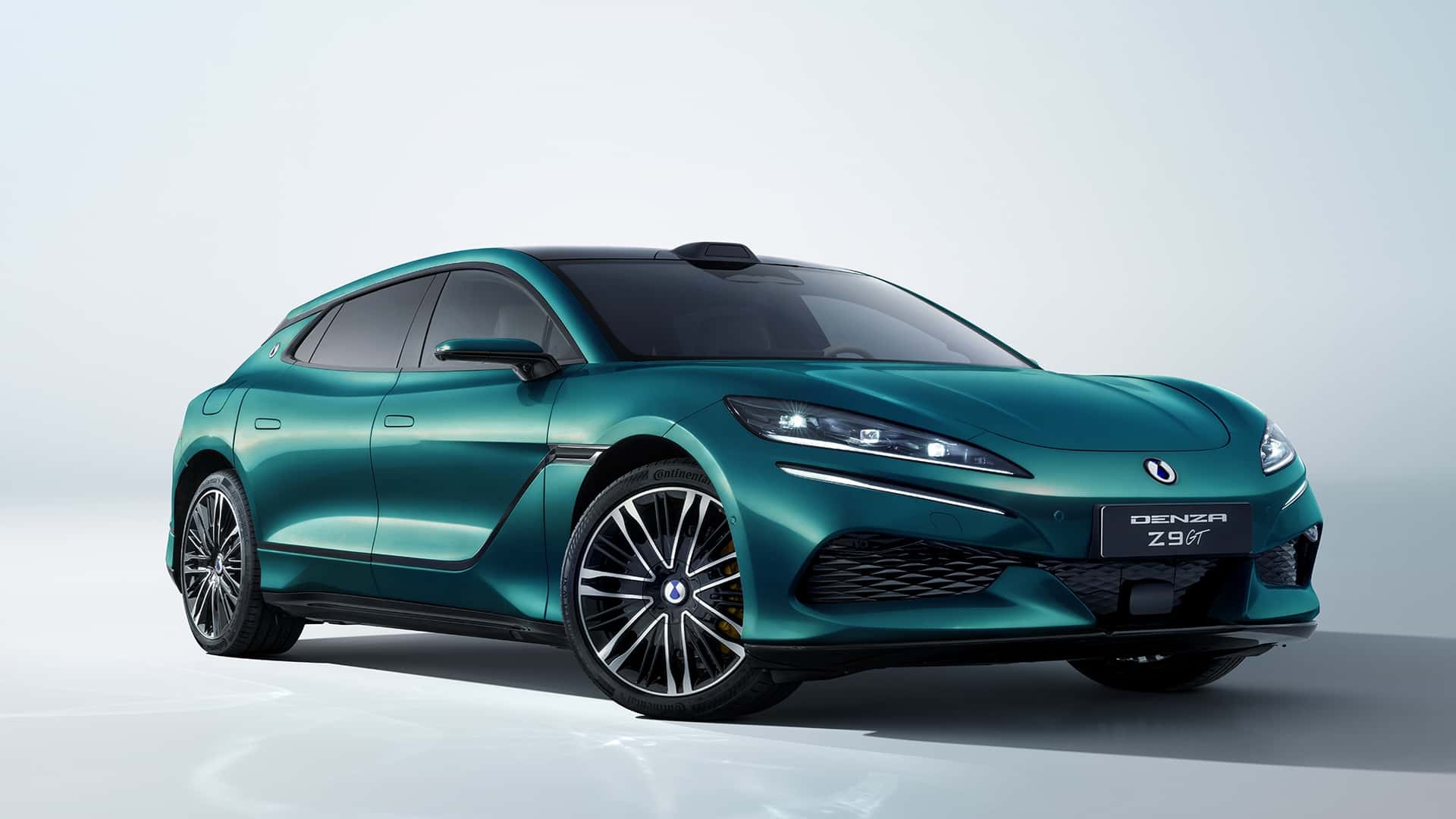
Paris, France – In a significant development for the global electric vehicle market, Chinese automotive giant BYD has officially introduced its revolutionary ‘Flash’ charging system to Europe. The technology arrives embedded in the new Denza Z9GT, a premium electric station wagon from BYD’s luxury sub-brand, Denza. Unveiled at a high-profile event in Paris, the Denza Z9GT promises to redefine electric vehicle charging standards with its astonishing speed, capable of recharging its battery from 10% to 97% in under 10 minutes.

This launch represents a pivotal moment for BYD as it extends its advanced electric vehicle technology beyond its domestic market. While the ultra-fast charging capability addresses one of the primary concerns for EV adoption, the Denza Z9GT’s premium positioning comes with a substantial price tag, setting it directly against Europe’s established luxury marques.
The Dawn of Ultra-Fast EV Charging in Europe
Last year, BYD captivated the automotive world with the announcement of its megawatt-capable ‘Flash’ charging system. This innovative technology promised to substantially replenish electric vehicle batteries in just minutes, bridging the convenience gap often cited between electric and gasoline-powered vehicles.
Building on this momentum, BYD unveiled the second generation of these chargers in March, alongside an upgraded, faster-charging version of its proprietary Blade battery. The culmination of these advancements is a blistering-fast charging performance that decisively challenges the long-held perception that refuelling an electric vehicle could never match the speed of a traditional petrol pump.

Denza Z9GT: Performance and Pricing in the European Market
The Denza Z9GT, a sleek and sporty station wagon, is the first BYD-affiliated vehicle to bring Flash charging capability to the European market. Its charging times are notably superior to many non-Chinese competitors currently available.
Equipped with BYD’s latest lithium iron phosphate (LFP) battery pack, the Denza Z9GT can recharge from 10% to 70% in just five minutes and from 10% to 97% in nine minutes. These figures are maintained even in challenging conditions; at -30 degrees Celsius, an environment known to severely impede EV charging rates, the Z9GT can still achieve a 20%-97% recharge in 12 minutes.
However, this unprecedented convenience does not come without a premium. The Denza Z9GT starts at 115,000 euros, approximately $135,000 at current exchange rates. This price point positions the Denza Z9GT above competitors like the Porsche Taycan Sport Turismo, which typically starts at 107,500 euros, indicating BYD’s bold strategy to compete directly with Europe’s most revered high-end brands.
While Chinese domestic markets often see more aggressive pricing, with the Z9GT costing under $50,000 in China, export prices reflect higher income levels, import tariffs, and other market dynamics in European countries.
Real-World Charging: A Game Changer
The true impact of the Z9GT’s charging speed becomes apparent when observed in real-time. During a demonstration for European media, the Denza Z9GT validated BYD’s bold claims. According to a video by Felix Hamer, the vehicle’s battery level surged at an unprecedented rate, dispelling any doubts about its capabilities.
The observed charging progression from a 10% state of charge was as follows:
- 20% in 50 seconds
- 33% in 1 minute 50 seconds
- 40% in 2 minutes 30 seconds
- 50% in 3 minutes 18 seconds
- 60% in 4 minutes 20 seconds
- 70% in 5 minutes 20 seconds
- 80% in 6 minutes 32 seconds
- 90% in 8 minutes
- 95% in 9 minutes
- 97% in 9 minutes 22 seconds
At the outset of the charging session, the vehicle reclaimed approximately 10% of its charge every 50 seconds. This rate slightly adjusted to about 10% per minute through the middle phase. Remarkably, even beyond 80% state of charge, where charging typically slows down significantly to protect battery health and manage heat, the Denza Z9GT maintained exceptional speed. Another observation highlighted that the Denza Z9GT could sustain a 300 kW charging rate even at an 80% state of charge at a different charging station.
Range and Supporting Infrastructure
The Denza Z9GT is equipped with a substantial 122.5-kilowatt-hour battery, ensuring that these five to ten-minute charging stops yield a considerable amount of driving range. BYD projects the souped-up tri-motor version to offer a 600-km (373-mile) WLTP range, while a rear-wheel-drive variant is expected to achieve an impressive 800 km (497 miles) under WLTP testing cycles. It is important to note for an international audience that WLTP figures generally tend to be somewhat higher than the EPA ratings typically used in the United States.
The efficacy of ultra-quick charging is intrinsically linked to the availability of compatible charging stations. To facilitate the adoption of the Denza Z9GT and its Flash charging technology, BYD has ambitious plans to establish 3,000 Flash charging stations across Europe within the next 12 months, as confirmed by the company’s head of charging for the region to Automotive News.
These innovative T-shaped charging stations feature a unique hardware design that suspends bulky cables, making them easier to handle and preventing them from touching the ground. The charging plug is designed to easily reach either side of a vehicle, enhancing user convenience. The stations leverage both grid power and integrated stationary LFP Blade batteries to deliver an astounding 1.5 MW through a single cable. BYD has already deployed 5,000 such stations within China, demonstrating the proven scalability and reliability of the infrastructure.
Beyond Charging: Luxury Features and Market Implications
Beyond its headline-grabbing charging capabilities, the European-spec Denza Z9GT is packed with an array of premium features designed to attract discerning buyers. It boasts an exhilarating 2.7-second sprint to 62 mph, a refrigerated compartment for beverages, and advanced digital side-view mirrors. Furthermore, it incorporates an innovative feature that allows it to swivel its rear end into tight parking spots by independently spinning its back wheels in opposite directions. These sophisticated offerings are key differentiators, positioning the Z9GT to effectively compete with high-end luxury vehicles from brands like Porsche.
The introduction of 10-minute charging technology, even if it might exceed the daily charging needs of many users, represents a significant leap forward in addressing ‘range anxiety’ – a primary deterrent for many potential electric vehicle buyers who lack reliable home charging options. While such cutting-edge technology currently commands a premium price, historical trends in automotive innovation suggest that these advancements are likely to trickle down to more affordable segments over time, democratizing rapid charging across the EV landscape. BYD’s strategic move with the Denza Z9GT underscores its growing influence and ambition in shaping the future of global electric mobility.
Frequently Asked Questions (FAQ)
What is BYD’s ‘Flash’ charging technology?
‘Flash’ charging is BYD’s advanced electric vehicle charging system, capable of delivering megawatt-level power. It utilizes second-generation chargers and an enhanced Blade battery to enable extremely rapid recharging, significantly reducing the time required to power up an EV.
How fast can the Denza Z9GT charge?
The Denza Z9GT can recharge from 10% to 80% in approximately six and a half minutes, and achieve a 10% to 97% charge in under 10 minutes. This exceptional speed is maintained even in cold conditions, with a 20%-97% charge taking only 12 minutes at -30 degrees Celsius.
What is the price of the Denza Z9GT in Europe?
The Denza Z9GT starts at 115,000 euros in Europe. This premium price point places it in direct competition with established luxury electric vehicles from European manufacturers such as Porsche.
How does the Denza Z9GT’s charging speed compare to other EVs?
Compared to typical electric vehicles, which often take 25-40 minutes for a 10%-80% charge, and even high-performance models like the Porsche Taycan or Hyundai Ioniq 5 that take around 20 minutes, the Denza Z9GT’s charging times are significantly faster, setting a new benchmark for rapid charging.
What infrastructure is BYD deploying to support Flash charging in Europe?
BYD plans to install 3,000 Flash charging stations across Europe within the next 12 months. These stations feature a unique T-shaped design for ease of use and utilize both grid power and integrated LFP Blade battery storage to deliver up to 1.5 MW of power.
What are some other notable features of the Denza Z9GT?
Beyond its charging speed, the Denza Z9GT boasts a 2.7-second acceleration to 62 mph, a refrigerated compartment, digital side-view mirrors, and a unique rear-wheel swivel function for enhanced maneuverability in tight parking spaces, positioning it as a technologically advanced luxury vehicle.
Why is there a significant price difference for the Z9GT between China and Europe?
The price difference, with the Z9GT costing under $50,000 in China versus 115,000 euros in Europe, is attributed to several factors. These include higher income levels in European markets, the imposition of import tariffs, and other logistical and market-specific considerations that increase the cost of exported vehicles.