
Key Takeaways
- Chinese battery giant CATL introduces its ‘Tectrans II’ battery, capable of charging commercial electric vehicles from 20% to 80% in under seven minutes.
- The innovative battery features significantly reduced internal cell resistance, enabling superior charging and discharging speeds.
- A specialized sodium-ion variant offers exceptional cold-weather performance, maintaining 90% capacity even at -40 degrees Fahrenheit.
- CATL backs the ‘Tectrans II’ with an impressive 1 million-kilometer (over 600,000 miles) or 10-year warranty, signaling high durability.
- This advanced battery technology aims to elevate the productivity and operational flexibility of light commercial electric vehicles, setting new industry benchmarks.
- The company is also expanding its battery swapping network in China, which will be compatible with these new commercial batteries.
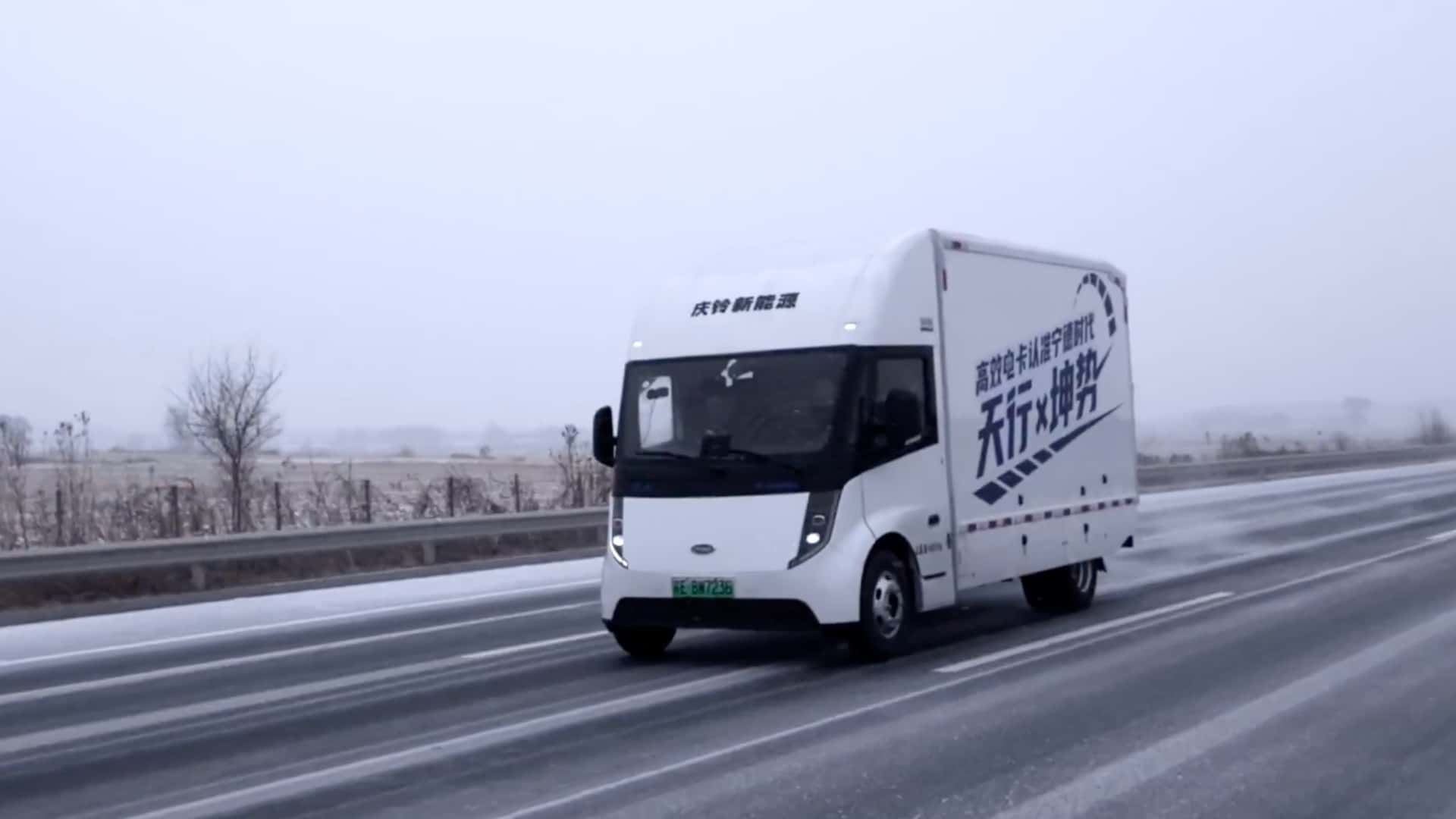
In a significant stride towards revolutionising electric mobility for the logistics sector, Chinese battery manufacturing behemoth Contemporary Amperex Technology Co. Limited (CATL) has introduced a pioneering battery solution specifically engineered for light commercial vehicles. The new ‘Tectrans II’ battery promises ultra-fast charging capabilities, fundamentally transforming the operational dynamics of delivery vans and other workhorse electric vehicles.
This development comes as the electric vehicle (EV) market continues its rapid expansion, pushing innovations beyond passenger cars into the crucial commercial segment. CATL’s latest offering, as reported by CNEVPost, underscores a strategic focus on enhancing the productivity and efficiency of commercial fleets, addressing critical pain points associated with range anxiety and extended charging times.

The ‘Tectrans II’ Battery: Engineered for Speed and Durability
The hallmark of the new CATL battery is its remarkable charging speed. The ‘Tectrans II’ is designed to replenish its charge from 20% to 80% in less than seven minutes, with a full charge achievable in just two additional minutes. This performance benchmark places it in an entirely different league compared to many existing commercial and even some passenger electric vehicle battery systems in Western markets.
Such rapid charging is facilitated by several technological breakthroughs, most notably a substantial reduction in internal cell resistance. CATL reports that it has halved this resistance compared to the industry average. This innovation allows lithium ions to move significantly faster during both charging and discharging cycles, thereby accelerating the energy transfer process without compromising battery health.
Beyond speed, durability has been a core focus in the development of this advanced electric vehicle battery. CATL is offering an unprecedented warranty package for the ‘Tectrans II’: 1 million kilometers (approximately 600,000 miles) or a decade of service. This robust warranty reflects the company’s confidence in the battery’s longevity and reliability under rigorous commercial operating conditions, offering fleet operators substantial peace of mind and predictability in their total cost of ownership.

Conquering Extreme Cold: The Sodium-Ion Variant
A particularly noteworthy innovation within the ‘Tectrans II’ line-up is its low-temperature sodium-ion version. This variant addresses one of the most persistent challenges for electric vehicles operating in harsh climates: significant range degradation in extreme cold.
CATL’s sodium-ion battery is engineered to retain 90% of its capacity even at a staggering -40 degrees Fahrenheit (-40 degrees Celsius). This capability is paramount for commercial vehicles deployed in regions experiencing severe winters, where conventional lithium-ion batteries often see substantial performance drops. The ability to maintain high capacity at such low temperatures ensures reliable operation, consistent delivery schedules, and predictable range, even in challenging environmental conditions.
The integration of sodium-ion technology in commercial EV batteries marks a crucial step forward. Sodium-ion batteries typically offer advantages in terms of cost and resource abundance compared to lithium-ion, while also demonstrating inherent strengths in low-temperature performance and safety characteristics. This strategic diversification showcases CATL’s holistic approach to battery innovation, tailoring solutions to specific market needs.
CATL’s Broader Innovation Landscape
The introduction of the ‘Tectrans II’ battery is not an isolated event but rather a continuation of CATL’s aggressive innovation strategy throughout the past year. The company has consistently pushed the boundaries of battery technology across various segments.
Earlier, CATL unveiled its third-generation Shenxing LFP pack for passenger vehicles, which boasts an equally impressive charging time, capable of going from 10% to 80% in under five minutes. Concurrently, the company has significantly expanded its battery swapping network across China, providing an alternative, rapid energy replenishment solution for EV owners.
Furthermore, CATL commenced the mass production of sodium-ion batteries, cementing its leadership in developing and commercialising this promising alternative to lithium-ion chemistry. These advancements collectively paint a picture of a company relentlessly pursuing technological superiority and market dominance in the global electric vehicle battery landscape.
Redefining Commercial EV Charging Standards: A Comparative Analysis
When juxtaposed with current commercial electric vehicle offerings, the ‘Tectrans II’ battery sets a new gold standard for charging performance. In the United States, for instance, discontinued models like the Chevy BrightDrop vans were reported to add approximately 160 miles of range in an hour of charging, without specified official fast-charging times. Rivian’s EDV, equipped with a 100 kilowatt-hour battery, peaks at a modest charging rate of 100 kilowatts.
Even the Ford E-Transit, considered among the faster-charging options in its segment, requires 28 minutes to charge from 10% to 80%. For broader context, the Mercedes-AMG GT, a high-performance passenger EV and one of the fastest-charging non-Chinese electric vehicles, takes 11 minutes for a 10-80% charge. CATL’s new commercial EV battery significantly surpasses these figures, promising a paradigm shift in fleet operations.
This stark difference highlights a growing disparity in electric vehicle battery technology and charging capabilities between Chinese manufacturers and their Western counterparts, particularly within the commercial vehicle sector.
Operational Flexibility: The Strategic Imperative for Ultra-Fast Charging
While some might argue that commercial vans, often operating on fixed routes and predictable daily schedules, can adequately rely on overnight Level 2 charging at dedicated depots, the advantages of ultra-fast charging extend far beyond this conventional model. Fast charging offers unparalleled operational flexibility, allowing vehicles to quickly top up during brief breaks or between shifts.
This capability enables commercial electric vehicles to cover longer distances on demand, respond to unforeseen circumstances or emergencies, and maintain higher utilisation rates. For logistics companies, reduced downtime translates directly into increased productivity and profitability. The ability to quickly recharge on the go means fewer vehicles might be required to maintain service levels, optimising fleet size and capital expenditure.
Thus, equipping commercial workhorses with blistering charging speeds is not merely a convenience but a strategic imperative that unlocks greater efficiency, versatility, and economic benefits for operators in an increasingly competitive market.
Integrated Ecosystem: Battery Swapping and Charging Infrastructure
CATL’s vision for seamless commercial EV operations extends beyond just the battery itself. The company has announced ambitious plans to deploy 4,000 battery swapping stations that will be fully compatible with these new commercial batteries. This integrated approach to charging infrastructure complements the fast-charging capabilities of the ‘Tectrans II’.
Battery swapping offers an alternative to conventional charging, allowing drivers to exchange a depleted battery for a fully charged one in minutes, akin to refuelling a petrol vehicle. This model drastically reduces vehicle downtime and eliminates concerns over charger availability or individual charging speeds. For commercial fleets, this dual strategy – ultra-fast charging alongside a robust battery swapping network – provides maximum operational uptime and flexibility, ensuring that electric vans and trucks can stay on the road for extended periods without significant interruptions.
Global Implications and Regional Availability
The advent of such advanced electric vehicle battery technology from CATL signifies a powerful acceleration in the global transition to electric mobility. China continues to be a hotbed of innovation in battery technology, with its manufacturers consistently pushing performance boundaries.
However, for now, this groundbreaking ‘Tectrans II’ battery technology, along with its extensive supporting infrastructure, is primarily targeted at the Chinese domestic market. Its availability in other regions, particularly in the United States and Europe, is not expected in the immediate future. Factors such as distinct regulatory frameworks, differing supply chain ecosystems, and the pace of local research and development efforts often influence the global rollout of such advanced technologies.
Nonetheless, CATL’s advancements serve as a clear indicator of the technological trajectory for commercial electric vehicles worldwide, setting a new benchmark that other manufacturers will undoubtedly strive to meet or exceed.
Frequently Asked Questions (FAQ)
What is the ‘Tectrans II’ battery?
The ‘Tectrans II’ is a new electric vehicle battery developed by CATL specifically for light commercial vehicles like delivery vans. It is designed for ultra-fast charging, high durability, and includes a variant for extreme cold weather conditions.
How fast can the ‘Tectrans II’ battery charge?
The ‘Tectrans II’ battery can charge from 20% to 80% in under seven minutes. It takes just two additional minutes to reach a full 100% charge, making it one of the fastest-charging commercial EV batteries available.
What makes this CATL battery so durable?
CATL has achieved significant durability breakthroughs by reducing internal cell resistance by half compared to the industry average. This innovation facilitates faster ion movement during charging and discharging, contributing to a longer lifespan and robustness, backed by a 1 million km or 10-year warranty.
What is the special feature of its low-temperature version?
A variant of the ‘Tectrans II’ utilises sodium-ion technology, allowing it to retain 90% of its capacity even in extreme cold conditions, down to -40 degrees Fahrenheit. This ensures reliable performance for commercial vehicles operating in harsh winter environments.
How does ‘Tectrans II’ compare to other commercial EV batteries?
The ‘Tectrans II’ significantly outperforms most current commercial EV batteries in charging speed. For instance, the Ford E-Transit takes 28 minutes for a 10-80% charge, while the CATL battery achieves a 20-80% charge in less than seven minutes, setting a new benchmark.
Will this battery technology be available globally?
Currently, the ‘Tectrans II’ battery and its supporting infrastructure, including 4,000 battery swapping stations, are primarily intended for the Chinese market. There are no immediate plans for its widespread availability in other regions like the United States.
What are the benefits of ultra-fast charging for commercial vehicles?
Ultra-fast charging provides commercial vehicles with enhanced operational flexibility, allowing for quick top-ups during breaks. This reduces downtime, increases vehicle utilisation, enables longer routes, and improves overall fleet efficiency and responsiveness to dynamic logistical demands.
How does CATL’s battery swapping network complement this new battery?
CATL’s planned network of 4,000 battery swapping stations will be compatible with the ‘Tectrans II’ battery. This offers an alternative to charging, enabling commercial vehicle operators to quickly swap out a depleted battery for a fully charged one, further minimising downtime and maximising operational uptime.