
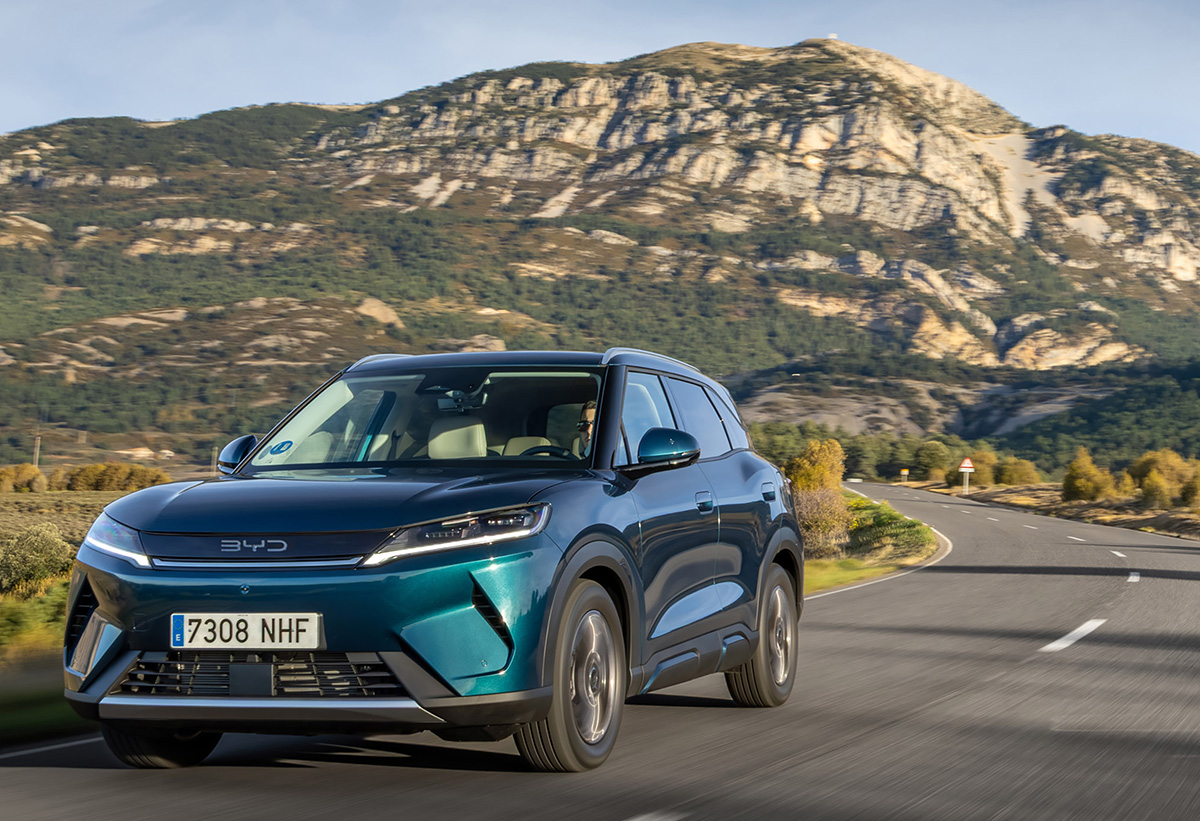
In a significant declaration that underscores the evolving landscape of the global electric vehicle (EV) industry, Chinese automotive giant BYD has emphatically stated its disinterest in directly entering the highly competitive United States passenger car market. Despite China holding the distinction of being the world’s EV capital and BYD emerging as the globe’s largest EV producer, the company asserts that its continued growth and dominance are not contingent on US market penetration. This strategic pivot highlights a calculated approach by BYD to solidify its formidable position across other burgeoning international markets.
The company’s Executive Vice President, Stella Li, a prominent figure in BYD’s ambitious global expansion, conveyed this clear stance at the recent Beijing Auto Show. Her comments signal a confident rejection of the US market, which remains largely inaccessible to Chinese automakers due to a complex web of high tariffs and bans on certain foreign-made technologies. This development provides crucial insight into the Chinese EV market strategy as major players redefine their international ambitions.

Key Takeaways
- BYD, the world’s largest EV producer, is strategically prioritizing global markets over direct entry into the US passenger car segment.
- High US tariffs and technology bans effectively exclude Chinese automakers, prompting BYD to declare it is “successful without the US market today.”
- The company faces immense demand in regions like Europe, the UK, Brazil, and Canada, indicating strong international growth.
- BYD is bolstering its global presence through advanced technologies like the Blade Battery 2.0 (1,000 km range) and rapid Flash charging.
- Analysts warn that the US risks falling behind by scaling back EV initiatives, while Chinese firms like BYD accelerate global market dominance.
The Global EV Juggernaut: BYD’s Ascendancy
China has firmly established itself as the undisputed epicenter of the electric vehicle revolution, driving innovation, production, and adoption at an unparalleled pace. Within this dynamic ecosystem, BYD has risen to become the world’s preeminent electric vehicle manufacturer. The company’s comprehensive vertical integration, spanning from battery production to vehicle assembly, provides it with a distinct competitive advantage in the rapidly expanding global EV market.
This dominant position is not merely confined to domestic sales; BYD’s influence is increasingly felt across continents. Its extensive portfolio, ranging from affordable urban commuters to sophisticated luxury models, caters to a diverse global consumer base. The scale of its operations and relentless pursuit of technological advancements have cemented its status as a key player shaping the future of sustainable mobility, directly influencing the broader Chinese EV market strategy for international growth.
Navigating Trade Barriers: The US Market Exclusion
While BYD’s global ambitions are expansive, the United States remains a market largely impenetrable for its passenger vehicles. This exclusion stems from a formidable combination of high import tariffs, designed to protect domestic industries, and bans on specific foreign-made technologies, often cited for national security considerations. These measures create significant hurdles that effectively deter Chinese automakers from directly competing in one of the world’s largest automotive markets.
Despite these barriers, selective workarounds exist, primarily for commercial vehicles. BYD, for instance, has successfully established operations for manufacturing electric buses in California, demonstrating its capability to adapt to specific market segments. Similarly, Windrose, another Chinese entity, has commenced selling its electric trucks in the US. However, these instances represent niche entries rather than broad penetration into the passenger car sector, which is the primary focus of BYD’s global strategy.
BYD’s Stance: “We Don’t Need the US Market”
Against this backdrop of trade restrictions, Stella Li’s declaration at the Beijing Auto Show resonated strongly across the industry. When questioned about BYD’s US passenger car strategy, Ms. Li was unequivocal, stating, “We survive and are successful without the US market today.” This bold assertion underscores the company’s confidence in its current trajectory and its capacity to thrive by focusing on other regions where demand is less encumbered by protectionist policies.
The statement is not merely dismissive but reflects a carefully considered Chinese EV market strategy that prioritizes efficiency and market receptiveness over direct confrontation with formidable trade barriers. It signals a shift in focus, where global success is redefined not by presence in every major market, but by strategic dominance in accessible and rapidly growing ones.
Exploding Demand and Strategic Global Expansion
Far from needing the US market, BYD finds itself grappling with an entirely different challenge: meeting an insatiable global demand for its electric vehicles. Ms. Li elaborated on this, indicating that the company’s primary hurdle is scaling up production to match burgeoning orders from diverse international territories. “Actually, we are now suffering [insufficient] capacity. Our demand is much higher than what we can supply,” she told the BBC.
This surge in demand is particularly pronounced in key regions such as Brazil, the United Kingdom, and the broader European market. These areas are experiencing rapid EV adoption, driven by consumer interest, favorable government policies, and increasing environmental awareness. BYD’s proactive approach to these markets involves establishing robust sales networks, localized production facilities, and strategic partnerships, all central to its ambitious Chinese EV market strategy.
Expanding Brand Recognition and Dealership Networks
Further solidifying its global footprint, BYD is actively working to enhance its brand recognition in these new markets. The company’s efforts extend to the UK, where it is aggressively building its presence. Similarly, Canada is poised for significant expansion, with plans to open up to 20 new EV dealerships. This strategic network expansion is critical for ensuring accessibility, providing localized support, and fostering consumer trust in regions where the BYD brand is steadily gaining traction.
Such concentrated efforts reflect a deliberate strategy to cultivate strong market positions in countries that offer clearer pathways for growth and fewer political impediments. This contrasts sharply with the challenges faced in the US, allowing BYD to allocate resources more effectively where returns on investment are more predictable and substantial.
Technological Edge: Driving BYD’s International Ambitions
At the heart of BYD’s global competitiveness lies its relentless commitment to technological innovation, particularly in battery technology and charging infrastructure. In a significant advancement in March, the company unveiled its Blade Battery 2.0, a groundbreaking development poised to redefine EV performance metrics.
This next-generation Blade Battery promises an impressive range of over 1,000 km on a single charge, addressing one of the primary concerns for EV adoption: range anxiety. Concurrently, BYD introduced an innovative Flash charging system designed to rapidly replenish power, capable of charging the Blade Battery from 10% to 70% in a mere five minutes. This ultra-fast charging capability represents a substantial leap forward, making EV ownership more convenient and comparable to traditional fueling experiences.
The immediate integration of these innovations into its global product lineup underscores BYD’s proactive Chinese EV market strategy. The Flash charging technology, for instance, is already being deployed in at least one EV model specifically destined for the European market. This rapid commercialization of advanced technologies provides BYD with a significant competitive advantage, enabling it to offer compelling value propositions to consumers in its target international markets.
The Shifting Global Landscape: “Rest of World” Dominance
Beyond the traditional major automotive markets, a significant transformation is underway in what media often collectively terms the “Rest of World” markets. These regions, encompassing parts of Southeast Asia, Latin America, Africa, and other emerging economies, are witnessing an unprecedented surge in EV adoption. Several factors contribute to this rapid growth, including evolving consumer preferences, increasing urbanization, government incentives for green transportation, and often, less entrenched legacy automotive industries.
In these burgeoning markets, Chinese automakers, with BYD at the forefront, have already established a commanding presence. Their success can be attributed to several factors: offering a diverse range of competitively priced, technologically advanced EVs tailored to local needs; agility in market entry; and robust supply chain capabilities. This strategic penetration into diverse global markets is a core component of the overarching Chinese EV market strategy, demonstrating a willingness to build market share where opportunities are most ripe.
This dominance in a wide array of international markets reinforces BYD’s assertion that its global success is not reliant on a direct US presence. Instead, the company is effectively building a global network of strongholds, leveraging diverse regional demands and a more favorable competitive landscape to fuel its expansion.
A Divergent Path: US Stumbles as Global EV Momentum Builds
In stark contrast to the aggressive global expansion spearheaded by Chinese EV manufacturers, many established US and, to a lesser extent, European automakers appear to be caught in a self-defeating spiral. Several have announced the cancellation or significant scaling back of their ambitious EV programs. This retrenchment comes at a critical juncture when the global EV market is accelerating into high gear, potentially putting Western automakers at a considerable disadvantage.
This cautious approach by traditional automotive powers is driven by various factors, including initial lower-than-expected EV adoption rates in some domestic markets, manufacturing complexities, and economic uncertainties. However, this hesitancy creates a vacuum that agile players like BYD are rapidly filling on the international stage, further solidifying the narrative of a split global EV trajectory. This divergence significantly impacts the broader Chinese EV market strategy, as it opens doors for greater international market penetration.
Bill Pierce of EVinfo.net encapsulated the potential consequences of this strategic divergence, stating, “The United States is making a strategic error by slowing momentum on electric vehicles at the federal level, and the timing could not be worse.” This critical assessment highlights the potential for the US to fall behind in a crucial technological and economic race, while other nations and their domestic champions, particularly China, accelerate their leadership in electric mobility.
The Future of Global EV Leadership
BYD’s clear declaration regarding its lack of dependence on the US passenger car market is more than just a statement; it’s a reflection of a carefully executed Chinese EV market strategy. The company’s focus on meeting surging demand in accessible and welcoming global regions, coupled with its consistent investment in cutting-edge battery and charging technologies, positions it for sustained international growth and leadership. This approach contrasts sharply with the current hesitant stance of many Western automakers, creating a fascinating and potentially decisive split in the global electric vehicle landscape.
As the world transitions towards sustainable transportation, BYD’s trajectory serves as a compelling case study of how strategic market selection, technological superiority, and a robust global outlook can translate into unparalleled success. The coming years will undoubtedly reveal the full implications of this divergent global EV strategy, shaping not only the automotive industry but also international economic dynamics.
Frequently Asked Questions (FAQ)
Why is BYD not selling passenger cars in the US market?
BYD is largely excluded from the US passenger car market due to a combination of high tariffs and bans on certain foreign-made technologies. Despite these barriers, BYD has stated that its growth and global success are not dependent on entering the US market, choosing instead to focus on other regions with less restrictive trade policies.
Where is BYD focusing its international expansion efforts?
BYD is strategically focusing its international expansion on regions experiencing soaring demand for EVs. Key markets include Brazil, the United Kingdom, and Europe. The company is also planning significant growth in Canada, with intentions to open numerous new EV dealerships to enhance its market presence and brand recognition.
What new technologies has BYD recently introduced?
BYD introduced its Blade Battery 2.0, which boasts a range of over 1,000 km on a single charge. Additionally, the company launched a new Flash charging system capable of charging the Blade Battery from 10% to 70% in just five minutes. This rapid charging technology is already being implemented in certain EV models for the European market.
Are any Chinese EV manufacturers present in the US?
While Chinese passenger car manufacturers face significant barriers, some Chinese companies have found workarounds for commercial vehicles. BYD, for instance, manufactures electric buses in California. Separately, Windrose has begun selling its electric trucks in the US, indicating a limited but growing presence in specific commercial segments.
How does BYD’s strategy compare to US and European automakers?
BYD’s strategy involves aggressive global expansion and investment in advanced EV technology, driven by high international demand. In contrast, some US and European automakers have been scaling back or cancelling their EV programs. This divergent approach suggests a potential for Western companies to fall behind in the accelerating global EV market.