
Key Takeaways
- Chroma Systems Solutions’ 17020 Battery Test System was crucial in validating the lithium-ion battery systems for NASA’s Orion crew capsule.
- This validation is for the Artemis II mission, the first crewed circumlunar flight, carrying four astronauts.
- Testing involved two phases: initial lab evaluation of performance, reliability, and safety, followed by direct integration into the launch tower for continuous validation.
- The programmable test platform enabled engineers to simulate challenging mission-specific load conditions, including periods without solar charging.
- Orion’s power architecture includes four primary batteries in the crew module and specialized batteries for the critical launch abort system.
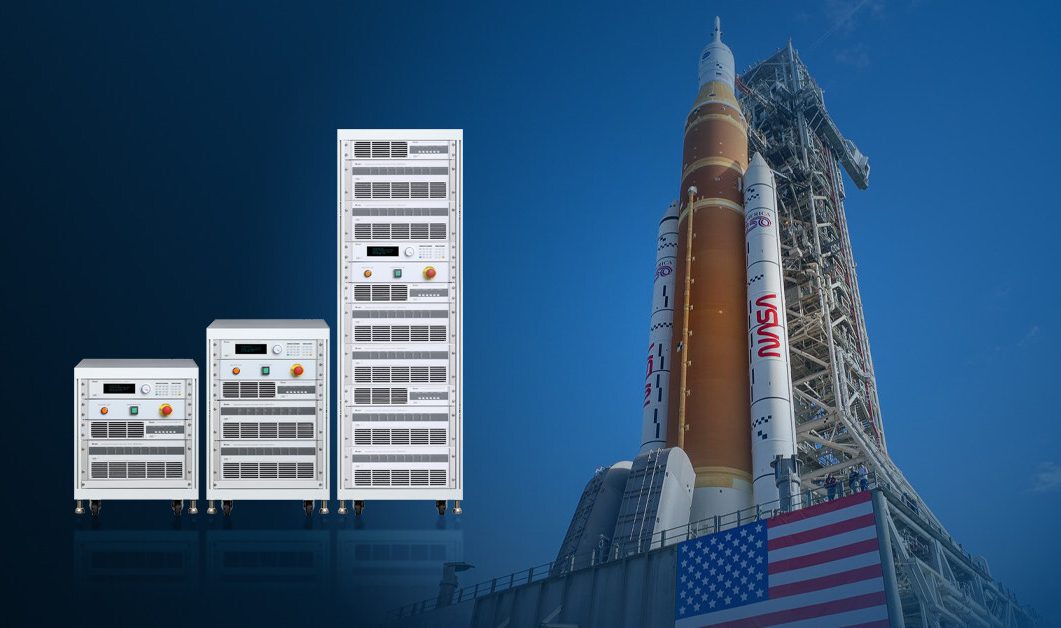
Bengaluru, India – May 15, 2026 – In a significant step toward humanity’s return to lunar exploration, Chroma Systems Solutions has announced that its cutting-edge Chroma 17020 Battery Test System played a pivotal role in evaluating the robust lithium-ion battery systems aboard NASA’s Orion crew capsule. This rigorous validation is critical for the upcoming Artemis II mission, slated to be the first crewed circumlunar voyage and a cornerstone of NASA’s ambitious Artemis program.
The Artemis II mission marks a monumental leap in human spaceflight, with four astronauts set to embark on a journey around the Moon. Ensuring the absolute reliability of every system, particularly the spacecraft’s power infrastructure, is paramount for crew safety and mission success. The integration of Chroma’s battery tester underscores the stringent safety and performance standards demanded by lunar missions.

Rigorous Two-Phase Validation Process
The comprehensive testing of Orion’s advanced battery systems was executed in two distinct, yet interconnected, phases, each designed to push the boundaries of performance and resilience. This methodical approach ensures that the lithium-ion power units can withstand the extreme conditions of space travel.
Laboratory-Based Performance Assessment
Initially, the Chroma 17020 Battery Test System was deployed in controlled laboratory conditions. During this phase, engineers meticulously evaluated the battery performance across a spectrum of operational parameters. The focus was on assessing the long-term reliability and inherent safety features of the battery units under various simulated scenarios, critical for a mission extending beyond Earth’s protective magnetosphere.
This early-stage validation included tests for charge/discharge cycles, thermal stability, voltage regulation, and overall power output consistency. The goal was to characterize the batteries thoroughly before their integration into the complex spacecraft environment, establishing a baseline for expected performance throughout the lunar journey.

On-Site Launch Tower Integration for Real-Time Checks
Following successful lab evaluations, the Chroma 17020 system was seamlessly integrated directly into the launch tower. This crucial second phase allowed for continuous validation of the battery performance right up to the final countdown. Proximity to the spacecraft during these critical hours ensures that no anomalies arise from integration or last-minute checks.
Monitoring the batteries in situ provides real-time data on their readiness, confirming their operational integrity under the actual launch environment. This layer of testing adds an indispensable assurance, verifying that the power systems are fully prepared for the immense stresses of liftoff and early flight stages.
Simulating Mission-Critical Conditions
A key capability of the programmable Chroma 17020 test platform was its ability to enable NASA engineers to accurately simulate mission-specific load conditions. This advanced feature is vital for understanding how Orion’s batteries will behave under the most demanding circumstances of a lunar mission.
Among the critical scenarios simulated were the prolonged eclipse periods, during which the Orion capsule would pass through the Moon’s shadow, rendering solar charging unavailable. In such instances, the lithium-ion batteries are solely responsible for carrying the full demand for the spacecraft’s essential communication, navigation, and propulsion systems.
These simulations allowed engineers to verify that the batteries could sustain all vital functions independently for extended durations, a non-negotiable requirement for deep space operations where power failures are not an option. The precision offered by Chroma’s battery tester ensured that every potential power draw was accounted for and thoroughly tested.
Orion’s Robust Battery Architecture
The Orion crew capsule is equipped with a sophisticated and redundant power system designed for ultimate reliability. It carries four primary lithium-ion batteries strategically placed within the crew module, providing the main power supply for all onboard systems during its mission around the Moon.
Beyond the primary power, Orion also features specialized batteries dedicated to its launch abort system. This critical hardware is engineered to deliver power instantaneously and flawlessly during a single, no-failure-tolerated event if an emergency were to occur during ascent. The performance of these specialized batteries is paramount, as they directly impact the ability to safely extract the crew in a catastrophic event.
The integrity of these battery systems, both primary and specialized, directly underpins the safety and success of the crewed Artemis II mission, emphasizing the importance of thorough and reliable testing provided by Chroma’s battery tester.
Chroma Systems Solutions’ Contribution to Space Exploration
Chroma Systems Solutions has expressed profound pride in its role in this historic endeavor. Fred Sabatine, CEO of Chroma Systems Solutions, highlighted the significance of their contribution, stating, “We are proud to contribute to a mission that represents a major step forward in human space exploration.”
The company’s advanced testing technology provides the essential confidence that critical power systems will perform flawlessly when astronauts venture beyond Earth orbit. This collaboration between commercial technology providers and space agencies is fundamental to pushing the boundaries of what is possible in space exploration, ensuring that missions like Artemis II are supported by the most rigorously validated equipment.
The successful validation of Orion’s lithium-ion power systems by Chroma’s battery tester is a testament to the robust engineering and meticulous preparation that underpins NASA’s journey back to the Moon and onward to Mars. As the Artemis II crew prepares for their historic flight, the integrity of every component, including its power source, has been thoroughly confirmed.
Frequently Asked Questions (FAQ)
What is the Chroma 17020 Battery Test System?
The Chroma 17020 Battery Test System is a sophisticated, programmable platform designed for evaluating the performance, reliability, and safety of lithium-ion battery systems. It allows engineers to simulate various load conditions and rigorously test batteries under demanding scenarios.
What is the Artemis II mission?
Artemis II is NASA’s upcoming mission, which will be the first crewed flight of the Artemis program, sending four astronauts on a circumlunar voyage around the Moon. It serves as a crucial precursor to landing humans on the lunar surface.
Why was Chroma’s battery tester important for Orion?
Chroma’s battery tester was vital for validating the lithium-ion battery systems aboard the Orion crew capsule, ensuring their performance, reliability, and safety for the demanding conditions of a lunar mission. This rigorous testing minimizes risk for the crew.
How many phases of testing were conducted?
Testing was conducted in two distinct phases: first, in laboratory conditions to evaluate battery characteristics, and then directly integrated into the launch tower for continuous, real-time validation leading up to the final countdown.
What kind of conditions did the Chroma system simulate?
The system simulated mission-specific load conditions, including critical eclipse periods when solar charging is unavailable. During these times, the batteries bear the full demand for communication, navigation, and propulsion systems.
What types of batteries does the Orion capsule use?
The Orion crew capsule utilizes four primary lithium-ion batteries in its crew module for general power. Additionally, it contains specialized batteries for its launch abort system, designed for a critical, no-failure-tolerated event during ascent.
Who is Fred Sabatine?
Fred Sabatine is the CEO of Chroma Systems Solutions. He expressed pride in his company’s contribution to the Artemis II mission, recognizing its significance for human space exploration.