
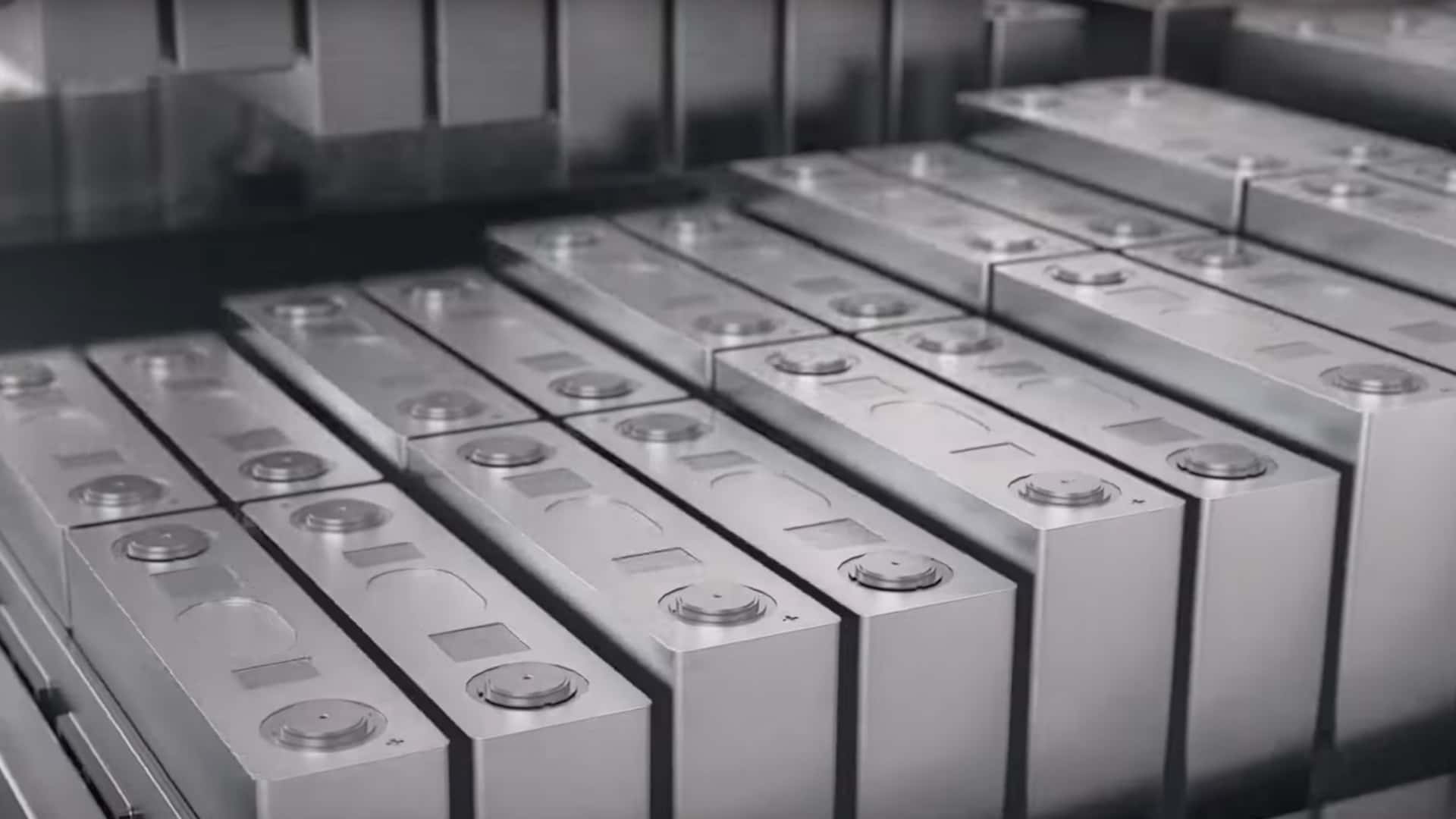
China has set an ambitious national objective to achieve large-scale deployment of solid-state batteries by 2030, aiming to solidify its already leading position in electric vehicle (EV) technology. This strategic move, outlined in a new battery industry roadmap released on September 28, underscores Beijing’s determination to dominate the next generation of battery innovation. However, industry giants like Contemporary Amperex Technology Co. Ltd. (CATL), the world’s largest EV battery manufacturer, are exercising caution, highlighting significant challenges in making this advanced technology both affordable and mass-producible.
The roadmap, detailed by the South China Morning Post, targets extending China’s substantial advantage from conventional batteries into the realm of solid-state technology. While the prospect of solid-state batteries in electric vehicles generates considerable excitement due to their potential for higher energy density, faster charging, and improved safety, industry experts suggest that the journey from laboratory breakthroughs to widespread commercial adoption is fraught with complexities.
Key Takeaways
- China aims for large-scale deployment of solid-state batteries by 2030 to bolster its global EV leadership.
- CATL, a leading battery manufacturer, cautions that significant cost and manufacturing hurdles persist.
- While limited production may begin by 2027, affordable, mass-market integration of solid-state batteries in EVs is projected to extend beyond 2030.
- The national roadmap emphasizes broader battery advancements, including sodium and flow batteries, alongside solid-state technology.
China’s Strategic Push for Solid-State Dominance
China’s recently unveiled battery industry roadmap for solid-state batteries by 2030 represents a clear national mandate to secure technological supremacy in the evolving global EV market. This initiative is designed to build upon the nation’s existing manufacturing prowess, which has positioned it as a dominant force in the production of conventional lithium-ion batteries.
The Ministry of Industry and Information Technology, responsible for guiding this strategy, acknowledges several existing challenges within China’s battery sector. These include shortcomings in fundamental innovation, a critical element for developing cutting-edge technologies like solid-state batteries, and imbalances in supply and demand that can hinder efficient market penetration. Despite these acknowledged issues, China’s vast industrial base and extensive research infrastructure provide a formidable foundation for tackling the complexities of next-generation battery development.
The pursuit of solid-state battery technology is not merely about incremental improvements; it represents a potential paradigm shift. These batteries replace the liquid or gel electrolyte found in conventional lithium-ion batteries with a solid material, promising enhanced safety, higher energy density, and longer lifespans. Achieving these benefits at scale and at a competitive cost is central to China’s long-term vision for its electric vehicle industry.
The Reality Check: Industry Leaders on Solid-State Hurdles
While China’s national ambition for solid-state batteries is resolute, leading industry players offer a more tempered outlook, underscoring the substantial engineering and economic obstacles that must be overcome before widespread adoption can occur.
CATL’s Measured Outlook on Solid-State Batteries
CATL, a critical player in the global battery supply chain, has been particularly vocal about the practical challenges associated with solid-state batteries. Earlier this summer, CATL chairman Robin Zeng provided a readiness assessment for solid-state technology, rating it at level four out of nine on a readiness scale, where nine signifies mass-production readiness. This assessment indicates that while research and development are progressing, the technology is still far from being commercially viable for large-scale deployment.
Zeng further articulated that the widespread adoption of solid-state batteries in millions of vehicles is unlikely before the end of the current decade. He specifically cited performance limitations and high costs as the primary obstacles. Manufacturing challenges for solid-state batteries are complex, involving new materials, precise fabrication techniques, and stringent quality control, all of which contribute to higher production costs compared to existing lithium-ion technologies.
Despite these caveats, CATL has confirmed plans to initiate limited production of solid-state batteries by 2027. However, the company has explicitly stated that scaling up to much larger volumes for mass-market vehicles would be considerably more difficult. This distinction between niche, small-scale production and broad, affordable integration is crucial for understanding the realistic timeline for solid-state battery availability.
Broader Industry Concerns on Next-Generation Battery Technology
The cautious stance from CATL is echoed by other significant players in the battery manufacturing sector. Robert Lee, North America president for LG Energy Solution, has also highlighted the inherent difficulties in manufacturing large solid-state cells, which are essential for electric vehicle applications. Lee anticipates that the initial mass-market applications for solid-state batteries might not even be in electric vehicles, suggesting that other sectors, perhaps those with less stringent cost or volume requirements, could serve as early adopters.
This industry-wide consensus points to the formidable nature of transitioning from laboratory prototypes to reliable, cost-effective, and scalable solid-state battery manufacturing processes. The complexities extend from materials science and electrolyte stability to electrode interface issues and thermal management, all of which require innovative engineering solutions.
Navigating the Path to Mass Production
The current landscape of advanced battery technology is dynamic, with various solutions emerging as potential steps towards all-solid-state batteries. Semi-solid-state batteries, for instance, which retain some liquid electrolyte components, are already finding their way into a limited number of vehicles in China. However, it is critical not to conflate these advancements with the readiness of fully solid-state technologies for widespread adoption.
Market forecasts reflect this nuanced reality. BloombergNEF, a respected research provider, projects that solid-state technology will account for only 10% of the combined global demand for EV batteries and stationary battery storage by 2035. This long-term outlook underscores that while solid-state batteries hold immense promise, their path to market dominance will be gradual and challenging, requiring substantial investment in research, development, and manufacturing infrastructure.
China’s national battery roadmap is comprehensive, extending beyond just solid-state batteries. It includes strategic targets for other emerging battery chemistries, such as sodium-ion and flow batteries, which could offer alternative solutions for specific applications or cost segments. Additionally, the roadmap prioritizes significant improvements in battery safety, temperature performance, and overall manufacturing quality across all battery types. A separate, ambitious target within this framework calls for the development of long-life lithium batteries capable of 15,000 cycles, although this specific objective does not imply that solid-state batteries will necessarily achieve this same lifespan benchmark.
China’s Proven Track Record and Future Ambitions
The coordinated national push behind China’s battery roadmap should be viewed in the context of the country’s highly effective industrial planning. China consistently sets its economic and industrial priorities through comprehensive five-year plans, which provide a unified direction for government agencies, research institutions, and private businesses. This structured approach has historically proven instrumental in achieving national technological and economic objectives.
The immediate preceding five-year cycle, spanning from 2021 to 2025, served as a testament to China’s strategic effectiveness in the EV sector. By its conclusion, the nation had cemented its electric vehicle dominance, accounting for an impressive 70% of global electric car production. This unparalleled growth was a direct outcome of coordinated policies, significant investments, and a relentless focus on manufacturing scale.
The new 2026–2030 battery roadmap is designed to extend this formidable advantage into the next generation of battery technology, ensuring China remains at the forefront of global innovation. While deploying solid-state batteries in any capacity will undoubtedly mark a significant milestone, the ultimate achievement—and the true measure of success for China’s ambitious plan—will be the ability to integrate these advanced power sources into millions of reasonably priced electric vehicles, making them accessible to a broad consumer base worldwide.
FAQ Section
What is China’s main goal for solid-state batteries?
China aims for large-scale deployment of solid-state batteries by 2030. This national objective is part of a broader strategy to extend the country’s existing dominance in conventional EV battery technology into the next generation, securing a leading position in future electric vehicle markets.
Why is CATL cautious about solid-state battery adoption?
CATL, the world’s largest EV battery maker, cautions that significant challenges remain regarding the performance and cost of solid-state batteries. Chairman Robin Zeng rated the technology at only level four out of nine on a readiness scale, indicating that achieving affordable mass production by the end of the decade is unlikely.
What are the key hurdles to mass-producing solid-state batteries?
The primary hurdles include high manufacturing costs, complex production processes, and the need for significant breakthroughs in materials science and engineering to improve performance and stability. Scaling up from limited production to millions of units while maintaining affordability presents a substantial challenge for the entire industry.
When does CATL expect to begin solid-state battery production?
CATL has confirmed plans to commence limited production of solid-state batteries by 2027. However, the company emphasizes that moving from these small-scale volumes to widespread, mass-market integration in electric vehicles will be considerably more difficult and will likely extend beyond the initial target date for full deployment.
How do semi-solid-state batteries differ from all-solid-state batteries?
Semi-solid-state batteries retain some liquid or gel electrolyte components, making them a transitional technology, whereas all-solid-state batteries use an entirely solid electrolyte. While semi-solid versions are seeing limited introduction in vehicles, all-solid-state technology faces greater manufacturing and cost complexities before widespread adoption.
What is the forecast for solid-state battery market share?
BloombergNEF forecasts that solid-state battery technology will account for approximately 10% of the combined global demand for EV batteries and battery storage by 2035. This projection suggests that while the technology will grow, its market penetration will be gradual rather than a sudden, overwhelming shift.
What other battery technologies is China developing?
Beyond solid-state batteries, China’s roadmap encompasses a broader range of next-generation technologies, including sodium-ion and flow batteries. The strategy also focuses on improving critical aspects like battery safety, thermal performance, and overall manufacturing quality across all battery types to enhance the robustness of its energy storage sector.