
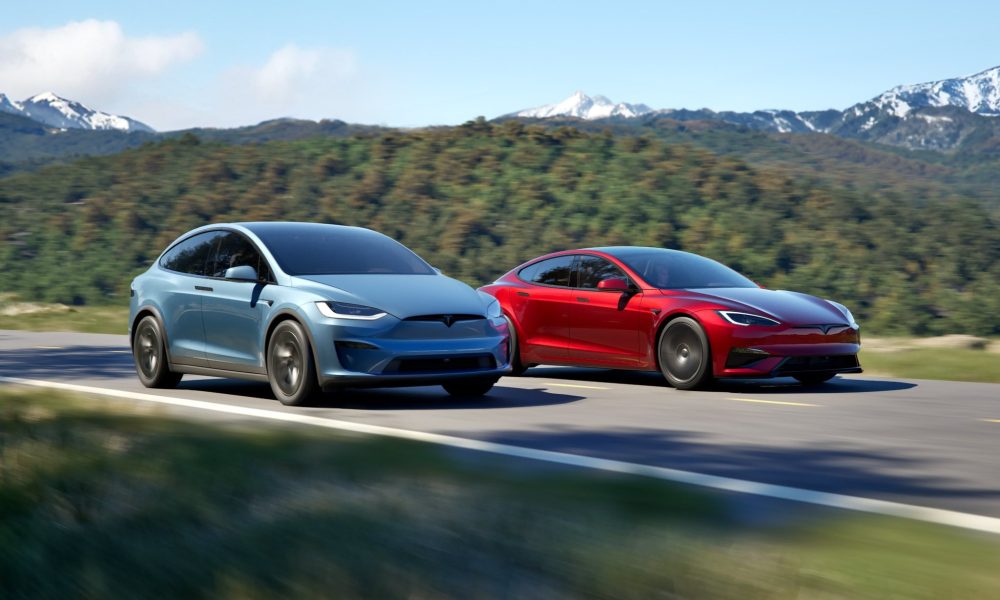
Tesla has officially commenced the wind-down of production for its iconic Model S and Model X vehicles in the United States, marking a significant strategic pivot for the electric vehicle giant. Owners across the U.S. began receiving email notifications on March 27, 2026, confirming that these long-running flagship models are nearing the end of their manufacturing lifecycle.
This decision aligns with an earlier statement from Tesla CEO Elon Musk during the Q4 2025 earnings call in late January. Musk had characterized the move as an “honorable discharge” for the two pioneering electric vehicles, indicating that their production would cease by Q2 2026.

A Strategic Shift in Tesla’s Production Landscape
The email communique, sent to U.S. customers, commenced with a note of profound appreciation for the role these vehicles played in the company’s journey and the broader automotive industry. It stated, “Model S and Model X marked the beginning of the world’s transition to electric transportation.” This opening underscored their foundational contribution to the global shift towards sustainable mobility.
The message further acknowledged their critical role in technological advancement, adding, “These vehicles also made it possible for Tesla to develop the technology that would move our world toward autonomy.” This highlights how the early successes and engineering breakthroughs of the Model S and Model X were instrumental in funding and developing Tesla’s advanced driver-assistance systems and full self-driving capabilities.
The announcement then delivered the core news directly: “As we make way for this autonomous future, Model S and Model X production will be ending. If you’d like to bring home a new Model S or Model X, order yours soon from our limited inventory.” The email concluded with a simple yet heartfelt acknowledgment: “Thank you for being part of our journey.”

The phasing out of Model S and Model X production is not merely a discontinuation of older models but a strategic realignment. It is designed to free up crucial factory floor space at Tesla’s Fremont, California, facility. This reallocation of resources is vital for accommodating the company’s ambitious next-generation manufacturing initiatives, including the production of Optimus humanoid robots and the highly anticipated Robotaxi platform.
The Pioneering Legacy of Model S and Model X
Introduced in 2012 and 2015, respectively, the Model S sedan and Model X SUV were instrumental in establishing Tesla’s reputation and credibility. They served as the company’s original ‘halo cars,’ demonstrating that electric vehicles could not only compete with but also surpass traditional gasoline-powered luxury vehicles in key performance metrics.
At their debut, these models captivated the automotive world with their blistering acceleration, impressive range, and groundbreaking technological features. They were pioneers in introducing over-the-air (OTA) software updates, a revolutionary concept that allowed vehicles to receive new features and improvements remotely, akin to smartphone updates. This capability kept the cars constantly evolving and improving, setting a new industry standard.
Furthermore, the Model S and Model X were at the forefront of integrating early autonomy hardware, laying the essential groundwork for Tesla’s sophisticated full self-driving development. Their engineering innovations and market success proved the viability and desirability of high-performance electric vehicles, significantly influencing the trajectory of the wider automotive industry.
While the Model S and Model X never achieved the mass-market sales volumes of their more affordable siblings, the Model 3 and Model Y, their impact on brand perception and technological advancement was profound. They established Tesla as a leader in automotive innovation and a serious contender against established luxury marques.
Strategic Repurposing: Fremont’s Future Beyond Flagships
The decision to cease Model S and Model X production underscores Tesla’s strategic shift towards a future heavily focused on artificial intelligence, robotics, and fully autonomous transportation. The reallocation of manufacturing space at the Fremont factory is a critical step in enabling this vision.
The development and large-scale production of Optimus humanoid robots and the Robotaxi platform represent a significant technological and logistical challenge. These initiatives require dedicated facilities and streamlined manufacturing processes, making the repurposing of existing factory space a logical and necessary move for the company.
Elon Musk has frequently articulated his vision for Tesla evolving beyond just an automotive manufacturer into a leader in AI and robotics. The discontinuation of its longest-running car models, therefore, is not merely an operational adjustment but a tangible manifestation of this broader corporate strategy, prioritizing future disruptive technologies over legacy products.
Navigating Customer Sentiment and Market Transitions
The announcement has elicited a range of responses from the Tesla community. While many understand the strategic rationale, some U.S. owners who had not yet received the direct email expressed mild frustration, highlighting the personal connection many have with these groundbreaking vehicles. These early adopters often credit the Model S and Model X with convincing them to invest not only in electric vehicles but also in Tesla stock and the broader EV movement.
It has been confirmed that the outreach regarding the wind-down of production remains U.S.-only for now, with international customers not yet receiving similar notifications. This suggests a phased approach to the global transition, or an initial focus on markets where the manufacturing impact is most immediate.
The Model S and Model X have garnered a loyal following over the years, with owners often praising their performance, technological prowess, and the seamless integration of software features. Their role as aspirational vehicles at the forefront of the electric revolution has fostered a strong sense of community and brand loyalty among early enthusiasts.
The Limited Window: Final Opportunities for Ownership
For prospective buyers still interested in acquiring a new Model S or Model X, the window of opportunity is rapidly closing. Tesla has explicitly stated that inventory for these models is now limited. This scarcity creates a sense of urgency for those contemplating a purchase, transforming the announcement into both a farewell and a final sales push.
Indications from other markets further underscore this limited availability. Tesla’s Korean division, for instance, has already imposed a March 31 cutoff date for new orders of the Model S and Model X in that specific market, signaling a global reduction in availability as the Q2 2026 production target approaches.
This final sales push allows Tesla to clear remaining stock while providing an opportunity for enthusiasts and new buyers alike to own a piece of electric vehicle history before Model S and Model X production officially ceases. The email serves as an elegant close to a chapter that profoundly helped define modern electric driving.
Tesla’s Forward Vision: Autonomy and Robotics Ascendant
As Tesla prepares to bid farewell to the Model S and Model X, the company has not detailed an exact final production date beyond the Q2 2026 target, nor has it confirmed any immediate replacements for these flagship models. While speculation persists about a potential Cybertruck-derived SUV that could fill a luxury EV niche, Tesla’s public focus has demonstrably shifted.
The company’s executive communications and resource allocation are now squarely aimed at accelerating the development and deployment of autonomy solutions and robotics. This strategic redirection signals a bold leap into areas that Tesla believes will define its future growth and impact, moving beyond its current automotive offerings.
The discontinuation of Model S and Model X production is more than just a product cycle adjustment; it represents a significant turning point in Tesla’s evolution. It marks the end of an era defined by groundbreaking electric vehicles and heralds the beginning of a new chapter focused on scaling AI, robotics, and fully autonomous transportation solutions, reshaping not only the automotive landscape but potentially broader technological industries as well.