
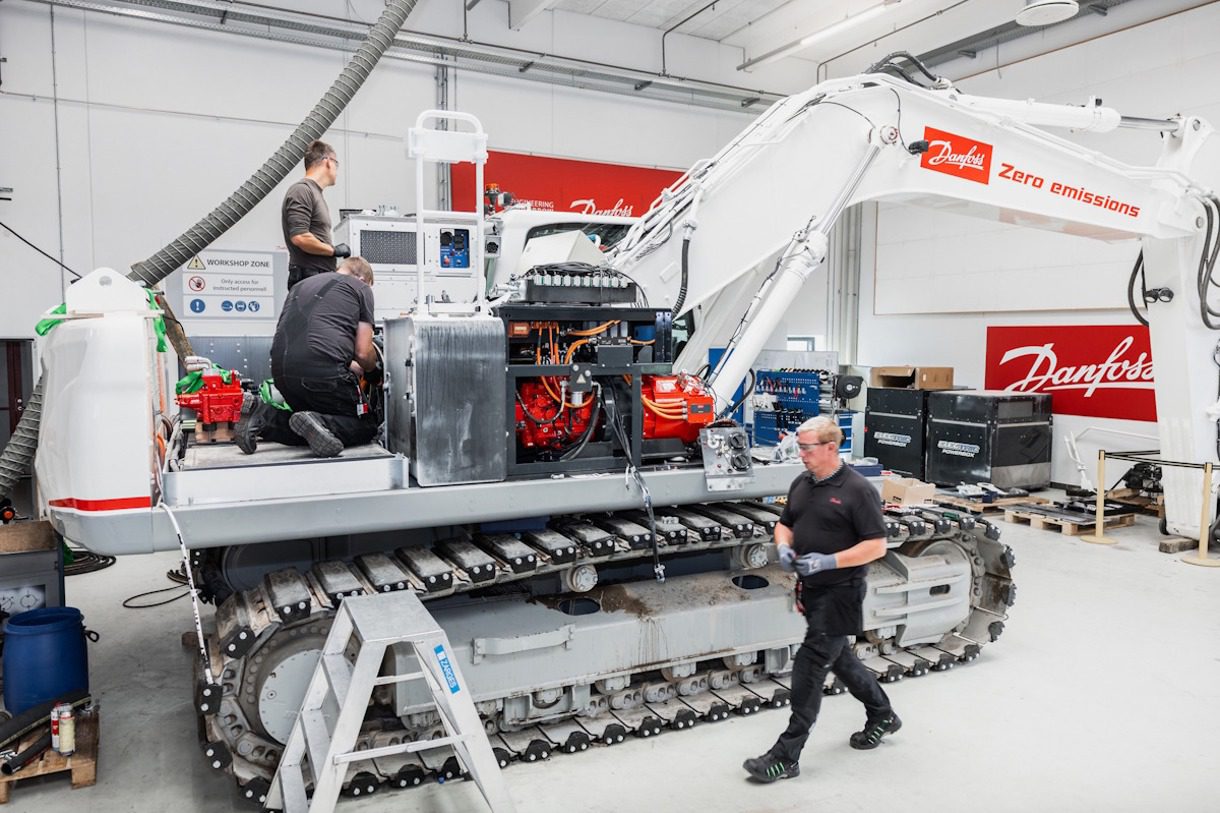
In a significant advancement for heavy-duty machinery electrification, Danfoss Scotland, a key division of global hydraulics and electric powertrain systems supplier Danfoss Power Solutions, has unveiled compelling validation results for its innovative Dextreme Max system. The company announced that its advanced digital hydraulic architecture has demonstrably reduced electric excavator power consumption by an impressive 35% across a diverse duty-cycle mix. This breakthrough translates directly to a remarkable 53% increase in operational runtime on a single battery charge, poised to transform the viability of battery-electric excavators in demanding applications.
The Dextreme Max system’s validation marks a crucial step forward in addressing one of the primary hurdles in heavy equipment electrification: energy efficiency and extended operational periods. By significantly enhancing the energy economy of these powerful machines, Danfoss is paving the way for wider adoption of zero-emission construction and mining equipment.

Key Takeaways (TL;DR)
- Danfoss’s Dextreme Max system achieved a 35% reduction in electric excavator power consumption during validation tests.
- This efficiency gain extends the operational runtime of a battery-electric excavator by 53% on a single charge.
- The core of the system is the DDP1X0D Digital Displacement hydraulic pump/motor, designed to minimise energy losses and recover waste energy.
- Validation was conducted on a 30-ton Develon DX300LC-7 crawler excavator, converted to a battery-electric platform.
- The innovation significantly enhances the productivity and total cost of ownership for electrified heavy machinery, addressing key electrification challenges.
Revolutionising Hydraulic Efficiency with Digital Displacement
At the heart of the Dextreme Max system lies the DDP1X0D Digital Displacement hydraulic pump/motor, an integral component engineered to dramatically cut excavator energy consumption. This sophisticated system operates by meticulously reducing energy losses inherent in traditional hydraulic setups and actively recovering energy that would otherwise be dissipated as waste. The unique design principles aim for unparalleled efficiency in demanding operational scenarios.
Traditional hydraulic systems often suffer from significant energy wastage due to constant pressure regulation and flow control mechanisms, especially when the machine is not performing peak work. The Dextreme Max system, with its digital architecture, offers a more intelligent and responsive approach, delivering power precisely when and where it is needed.
Strategic Funding and Project Genesis
The development and validation of the Dextreme Max system received a substantial boost in 2023 through a grant from the UK’s Department for Energy Security & Net Zero. This crucial funding covered approximately 65% of the eligible project costs, underscoring the UK government’s commitment to fostering green technologies and reducing carbon emissions in industrial sectors.
Danfoss contributed the remaining financial resources, demonstrating its significant investment and confidence in the potential of digital hydraulics to redefine the performance benchmarks for electric heavy-duty machinery. This collaborative funding model accelerated the research, development, and rigorous testing phases of the Dextreme Max technology.
The Testbed: A Converted Battery-Electric Excavator
For the comprehensive validation project, Danfoss strategically selected a Develon DX300LC-7 crawler excavator, a robust 30-ton machine widely used in various construction and earthmoving applications. The transformation of this diesel-powered excavator into a cutting-edge battery-electric platform was expertly undertaken by Staad, a renowned Dutch yellow machine manufacturer.
Staad meticulously replaced the excavator’s conventional diesel engine with a sophisticated electric drivetrain, integrating several advanced components from Danfoss Editron. This included an EM-PMI375 permanent magnet synchronous motor, an EC-C1200 inverter, and an MC050 motor controller. Powering this new electric heart were three substantial 140 kWh battery packs, providing the necessary energy reservoir for sustained operation.
Unpacking the Digital Hydraulic Architecture
Central to the Dextreme Max system’s efficacy is the replacement of the excavator’s conventional swashplate hydraulic pump with the innovative DDP180D pump/motor. This digital displacement unit represents a paradigm shift in hydraulic control and energy management. Unlike traditional pumps that deliver continuous flow, the DDP180D offers precise, on-demand power delivery.
The pump’s advanced design incorporates 10 individually controllable outlets, specifically engineered to supply the excavator’s four primary services: the boom, arm, bucket, and swing functions. These outlets are not static; rather, they are dynamically grouped and controlled through a ganging block. This digital distributor intelligently reallocates hydraulic capacity to the specific service demanding it, ensuring optimal power delivery without waste.
Advanced Boom Functionality and Energy Recovery
A particularly innovative aspect of the Dextreme Max system is the development and application of a dedicated valve, operating as a hydraulic H-bridge, specifically for the boom function. This bespoke valve enables independent metering, providing several crucial benefits. It allows for advanced anti-cavitation control, preventing the formation of damaging air pockets within the hydraulic fluid, thereby enhancing system longevity and performance.
Furthermore, this H-bridge design facilitates pressure amplification, ensuring robust and responsive control even under demanding loads. Crucially, it also enables significant energy recovery during overrunning motions, such as when the boom is lowered. Instead of dissipating this potential energy as heat, the system captures and reuses it, contributing substantially to the overall energy savings and improved electric excavator power consumption.
Rigorous Validation: Proving Performance and Efficiency
To provide a robust comparison of system performance, Danfoss engineers conducted multiple tests before and after the Dextreme Max conversion. These included industry-standard benchmarks such as JCMAS air grading and JCMAS air dig and dump, which are equivalent to ISO/AWI TS 11152-2 protocols, ensuring credibility and comparability of results.
The results were unequivocal. Compared to the baseline electric excavator, the Dextreme Max system delivered substantial reductions in battery energy use. In air grading operations, the system achieved an impressive 49.2% reduction in energy consumption. During the demanding air dig and dump cycles, energy consumption was reduced by a significant 31%. Critically, these substantial energy savings were achieved with a negligible impact on the excavator’s cycle time, ensuring productivity was not compromised.
Optimised Runtime and Economic Advantages
Extrapolating from these test results, Danfoss projected the real-world operational benefits. Assuming a typical duty cycle comprising 30% grading and 70% digging, the Dextreme Max system would reduce overall battery power consumption by 35%. This efficiency gain directly translates into a 53% longer operating duration with the same battery capacity as the baseline machine.
Alternatively, the improved efficiency allows for similar operational runtime as the baseline excavator but with a reduced battery pack configuration – potentially using only two battery packs instead of three. This not only lowers the initial capital expenditure associated with battery packs but also reduces the weight of the machine, potentially offering further operational advantages and contributing to a lower total cost of ownership for the electric excavator.
Industry Implications and Future Outlook
Alasdair Robertson, Senior Director, Digital Displacement, Danfoss Power Solutions, highlighted the broader significance of these findings. “The results of this testing highlight the potential of digital hydraulic architectures to overcome the obstacles in heavy-duty machinery electrification,” Robertson stated. He further elaborated on the intrinsic advantages of electric excavators:
“Electric excavators offer excellent responsiveness, smooth control, a quiet cab environment and zero-emission operation. With Dextreme Max, they can also deliver the runtime, productivity and total cost of ownership advantages required for wider adoption. We are encouraged by these results, but there is more work to do. Further gains are possible, and we will continue optimizing the system to maximize the energy savings and value for our customers.”
This statement underscores the commitment to continuous innovation and the recognition that while significant progress has been made, the journey towards fully optimised electrification is ongoing. The Dextreme Max system addresses critical pain points for operators, namely the limited runtime and high upfront costs associated with battery technology, making the transition to electric heavy equipment more appealing and economically viable.
Addressing Electrification Challenges in Heavy Equipment
The electrification of heavy-duty machinery presents unique challenges compared to passenger vehicles. Excavators and similar equipment require immense bursts of power, operate for long hours in harsh environments, and the sheer scale of energy storage needed makes battery size and cost significant hurdles. The Dextreme Max system directly confronts these challenges by fundamentally improving the energy utilisation of the hydraulic system, which is typically one of the largest energy consumers in such machines.
By extending runtime and potentially reducing battery requirements, Danfoss’s innovation offers a compelling solution for industries striving to reduce their carbon footprint and adhere to increasingly stringent emission regulations. This paves the way for a more sustainable future in construction, mining, and other heavy industrial sectors.
Conclusion
The validation of Danfoss’s Dextreme Max system marks a pivotal moment in the evolution of electric heavy-duty machinery. By dramatically improving electric excavator power consumption and extending operational runtime, this digital hydraulic architecture addresses critical barriers to widespread adoption. As industries globally push towards greater sustainability and efficiency, technologies like Dextreme Max are essential enablers, promising a future where powerful, productive, and truly zero-emission heavy equipment becomes the norm. The ongoing optimisation efforts by Danfoss suggest even greater efficiencies are on the horizon, solidifying the path for advanced electrification.
Source: Danfoss
Frequently Asked Questions (FAQ)
What is the Danfoss Dextreme Max system?
The Danfoss Dextreme Max system is an advanced digital hydraulic architecture designed to significantly reduce the energy consumption of electric excavators. It achieves this by minimising energy losses within the hydraulic system and recovering energy that would typically be wasted, leading to extended operational runtime on a single charge.
How much did the Dextreme Max system reduce electric excavator power consumption?
During validation tests on a 30-ton battery-electric excavator, the Dextreme Max system reduced overall battery power consumption by 35% across a representative duty-cycle mix. This translates to substantial energy savings and improved operational efficiency for heavy machinery.
What impact does Dextreme Max have on an electric excavator’s runtime?
The 35% reduction in power consumption directly results in a 53% longer operational runtime for the electric excavator on a single battery charge. This extended working period significantly enhances the productivity and practical applicability of electric heavy equipment in real-world scenarios.
What is the DDP1X0D Digital Displacement hydraulic pump/motor?
The DDP1X0D is the core component of the Dextreme Max system. It is a revolutionary digital hydraulic pump/motor designed to replace conventional swashplate pumps. It features individually controllable outlets and dynamic capacity reallocation, allowing for precise, on-demand power delivery and superior energy efficiency compared to traditional hydraulic systems.
Was the Dextreme Max system tested on a real-world excavator?
Yes, the Dextreme Max system was rigorously validated on a Develon DX300LC-7, a 30-ton crawler excavator that was professionally converted from a diesel engine to a full battery-electric drivetrain. This real-world testing ensures the system’s performance and benefits are applicable to actual operating conditions.
What are the benefits of integrating Dextreme Max into electric excavators?
Integrating Dextreme Max offers several key benefits: significantly reduced operating costs due to lower energy consumption, extended operational hours per charge, potential for smaller or fewer battery packs (reducing capital expenditure), enhanced productivity, and a substantial step towards truly zero-emission and sustainable heavy-duty machinery operations.