
Key Takeaways: Understanding the Jeep Recon’s Range
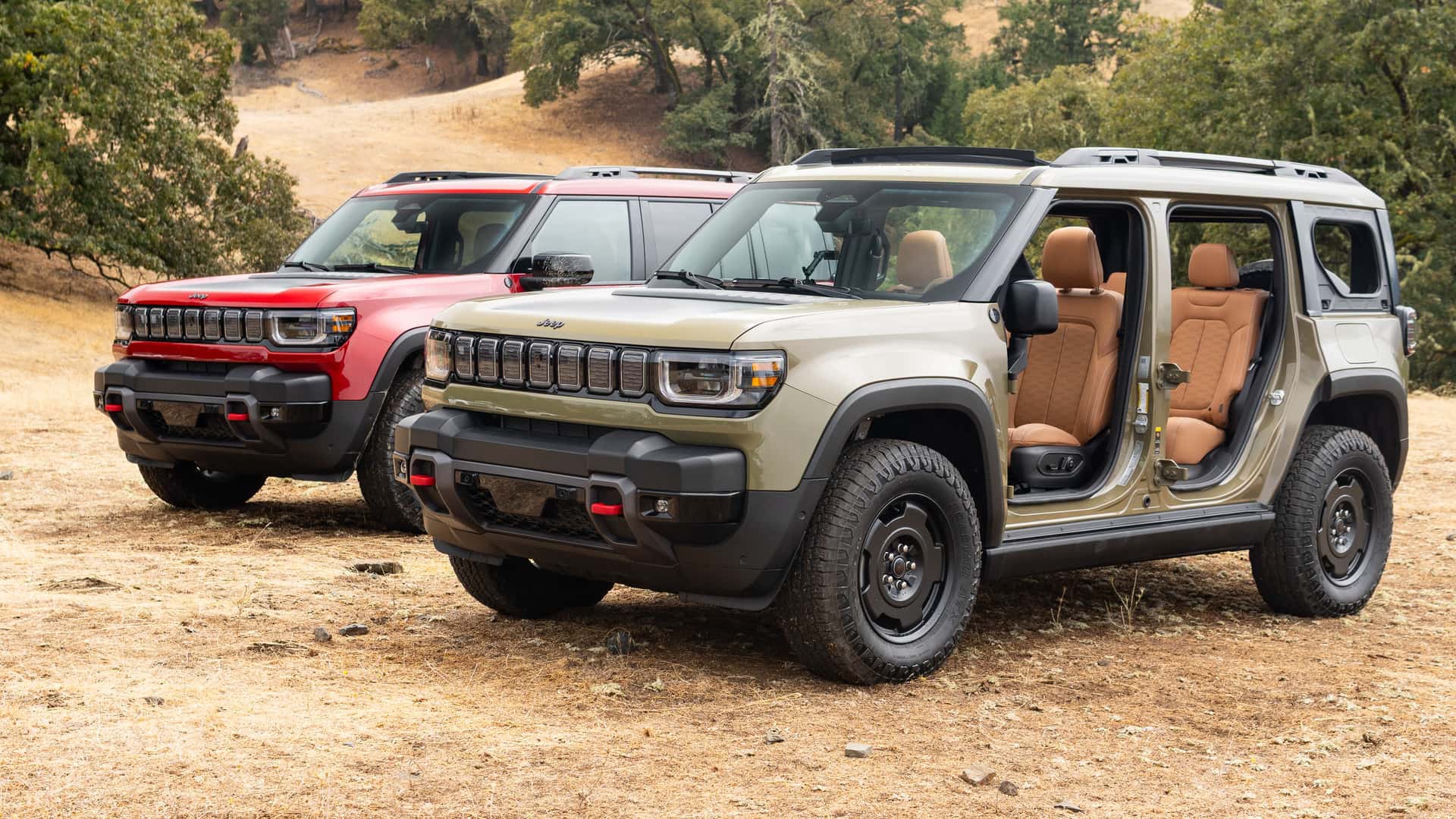
The unveiling of the all-electric Jeep Recon Moab, particularly its stated 222-mile range and $66,995 starting price, has sparked considerable debate among automotive journalists and consumers alike. Many critics have voiced dissatisfaction, suggesting a need for greater range at a lower cost. However, this perspective often overlooks the fundamental engineering compromises inherent in developing a high-performance electric off-road vehicle.
Achieving superior off-road capabilities necessitates design choices that inherently reduce on-road efficiency and increase manufacturing costs. Features like elevated ground clearance, robust all-terrain tires, a boxy aerodynamic profile, and aggressive gearing are critical for tackling challenging terrains but significantly impact battery range. The Jeep Recon Moab’s specifications reflect a deliberate prioritization of its rugged off-road prowess over maximum electric range, a trade-off common across the specialized automotive industry.
The Core Dilemma: Capability Versus Efficiency
The automotive industry operates on a principle of engineering compromises, particularly evident in the specialized segment of off-road vehicles. Enthusiasts often demand a vehicle capable of conquering challenging terrains, which requires specific design elements. These elements, while enhancing off-road prowess, almost invariably detract from on-road fuel efficiency or electric range.
For example, a traditional gas-powered, body-on-frame 4×4 truck with lifted suspension and aggressive gearing typically delivers less than 20 miles per gallon (MPG)—often closer to 10 or 15 MPG. This reality is well-understood by experienced off-roaders, who recognize it as an inherent characteristic of such vehicles.
Off-Road Design and Fuel Consumption in ICE Vehicles
Several design choices contribute to the reduced efficiency of internal combustion engine (ICE) off-road vehicles. Tall suspension, essential for increased ground clearance during rock crawling, significantly augments air resistance. Large, knobby all-terrain tires excel in mud and loose surfaces but are notoriously inefficient and noisy at highway speeds, increasing rolling resistance.
Furthermore, a robust 4×4 system provides crucial traction in slippery conditions, but its engagement consumes more fuel. Aggressive gearing, designed to maximize torque at the wheels for superior climbing ability, results in the engine spinning at higher revolutions per minute (RPM) during highway cruising, consequently increasing fuel consumption.
A personal observation with an old Chevrolet Tahoe, equipped with 33-inch AT tires, a 4WD system with low range, and a powerful V-8 engine, yielded approximately 13 MPG in city driving conditions. This perfectly illustrates the trade-off: enhanced capability comes at the cost of efficiency.
The contrast between a Toyota Prius, optimized for fuel efficiency, and a Jeep Wrangler, built for off-roading, highlights this fundamental dichotomy. While a Prius can be modified for off-road use by lifting it and adding larger tires, such modifications inevitably sacrifice its exemplary 50 MPG rating. This principle holds true: improving off-road capability almost always diminishes on-road efficiency, regardless of the powertrain.
Electric Vehicles and the Off-Road Equation
The fundamental trade-offs between capability and efficiency are not exclusive to internal combustion engine vehicles; they apply equally to electric vehicles (EVs). When designing an electric off-roader, engineers face similar challenges in balancing robust performance with optimal battery range.
High ground clearance, dual-motor drivetrains, large all-terrain tires, and inherently boxy vehicle shapes—all crucial for off-road performance—significantly impact an EV’s energy consumption. Each of these features, while desirable for tackling rugged terrain, contributes to reduced overall efficiency and, consequently, a shorter electric range.
For instance, significant ground clearance is non-negotiable for an authentic off-road vehicle, preventing undercarriage damage on uneven surfaces. Similarly, large, aggressive tires provide the necessary grip and traction where pavement ends. A vehicle designed for extreme off-roading cannot realistically feature low ground clearance and thin, road-biased tires.
Jeep’s Deliberate Engineering for the Recon Moab
Jeep offers a clear example of these design trade-offs within its own electric vehicle lineup. The Jeep Wagoneer S, for instance, shares the same 100.5 kWh battery pack as the Jeep Recon Moab but achieves a significantly higher range of up to 294 miles. This extended range is a direct result of its design choices, which prioritize on-road efficiency: it features approximately 6 inches of ground clearance and street-oriented tires, alongside a more aerodynamic silhouette.
In stark contrast, the Recon Moab is engineered with genuine off-road capability as its primary objective. It boasts 9.1 inches of ground clearance, substantial heavy-duty skid plates for underbody protection, and aggressive 33-inch all-terrain tires. Its more upright body design enhances approach and departure angles, which are vital for navigating steep obstacles without scraping. All these features, while essential for its intended purpose, inherently reduce its electric range.
The Role of Gearing in Electric Off-Roaders
Beyond physical attributes, the gearing within an EV’s drivetrain plays a critical role in determining its performance and efficiency profile. Although EVs do not use traditional multi-speed transmissions like ICE vehicles, they still employ gear ratios to translate motor torque to the wheels.
Taller gear ratios (indicated by a lower first number, e.g., 9:1 for an EV) are optimized for highway cruising and better efficiency at higher speeds. Conversely, shorter gear ratios significantly amplify torque delivered to the wheels from a standstill, which is paramount for low-speed off-roading, climbing, and pushing through challenging obstacles.
The Jeep Recon Moab features aggressive 15:1 gearing on its rear motor. This strategic choice maximizes low-end torque, making the Recon exceptionally capable in demanding off-road scenarios. An added benefit of this gearing is quicker acceleration, allowing the Recon to achieve 0-60 mph in a swift 3.6 seconds. However, this emphasis on torque and rapid acceleration comes with an inherent compromise: the shorter gearing reduces efficiency, particularly at higher speeds. This explains an observed efficiency of just 2.5 miles per kWh in the Recon, contributing to its 222-mile range.
Comparative Landscape: Electric Off-Roaders and Their Compromises
To further contextualize the Jeep Recon’s 222-mile range and price point, it is helpful to examine other electric off-road-capable vehicles and their respective design philosophies and trade-offs.
Rivian R1S: A Different Approach to Capability
The Rivian R1S, a formidable electric SUV, generally demonstrates better efficiency than the Recon, even when fitted with all-terrain tires. However, Rivian’s strategy for offering off-road capability also involves significant compromises and cost escalations. The company does not offer all-terrain tires on models equipped with its base 108-kWh battery pack.
To get all-terrain tires on an R1S, customers must upgrade to the larger 140 kWh battery version. Even with this substantial battery increase, the estimated range drops from 410 miles (on street tires) to 370 miles (with AT tires). This configuration also pushes the price point to approximately $96,000. Furthermore, the R1S, despite its capabilities, features taller gearing and lacks a locking rear differential, features present in the Recon that enhance extreme off-road performance.
Mercedes-Benz G580 w/EQ Technology: Peak Off-Road EV with Premium Pricing
For an even higher echelon of electric off-road capability, the Mercedes-Benz G580 w/EQ Technology presents a compelling, albeit significantly more expensive, option. This vehicle offers an advanced off-road system, including separate low-range gears for each of its four motors. This sophisticated hardware allows it to surpass both the Jeep Recon and Rivian R1S in climbing prowess and then revert to higher gearing for more efficient on-road cruising.
However, this unparalleled engineering comes at a steep cost. With a starting price of $163,000 and a substantial 116 kWh of usable battery capacity, the G580 w/EQ Technology still achieves an EPA-estimated range of only 239 miles. It is also important to note that for all these specialized off-road EVs, highway range is typically significantly lower than combined EPA estimates, as the various efficiency-reducing factors (aerodynamics, tires, gearing) become more pronounced at higher speeds.
Implications for the Electric Vehicle Industry and Consumer Expectations
The performance specifications of vehicles like the Jeep Recon, the Volkswagen ID. Buzz, and similar specialized electric models underscore a critical insight for the evolving EV industry: the most inherently inefficient vehicle types present the greatest challenges for electrification. Achieving competitive range figures in large, heavy, and aerodynamically compromised vehicles requires exceptionally large and costly battery packs.
A 91-kWh or 100-kWh battery pack, while considerable, simply does not translate into the same range in a boxy, lifted off-roader with aggressive tires and gearing as it would in a sleeker, more aerodynamically optimized passenger car. These design choices, fundamental to off-road capability, necessitate a different set of expectations from consumers.
As battery technology continues to advance, charging times decrease, and the charging network expands, many of these current challenges will gradually diminish. However, for the foreseeable future, consumers seeking a genuinely capable electric off-road vehicle must be prepared to accept certain trade-offs. The current market reality dictates that advanced off-roading capabilities in an EV will likely come with a compromise on both maximum range and overall purchase price.
FAQ Section
Q1: Why does the Jeep Recon have a relatively low range for an EV?
The Jeep Recon prioritizes extreme off-road capability. Features like high ground clearance (9.1 inches), heavy skid plates, 33-inch all-terrain tires, a boxy design, and aggressive 15:1 gearing for low-end torque significantly increase energy consumption, thus reducing its electric range compared to more road-focused EVs.
Q2: Is the 222-mile range of the Jeep Recon considered poor for an electric SUV?
While 222 miles might seem modest compared to some street-oriented EVs, it reflects a strategic trade-off for a dedicated off-road vehicle. Similar to how gas-powered off-roaders have lower MPG, electric off-roaders sacrifice some range for critical capabilities like rock crawling and rugged terrain traversal.
Q3: How do off-road features impact an EV’s range?
Off-road features such as lifted suspension, large and knobby all-terrain tires, a non-aerodynamic body shape, and gearing optimized for torque (rather than efficiency) all increase aerodynamic drag and rolling resistance. These factors combined demand more energy from the battery, directly reducing the vehicle’s total electric range.
Q4: How does the Jeep Recon’s range compare to other electric off-roaders?
The Recon’s 222-mile range is comparable to or slightly better than some high-end electric off-roaders with similar capabilities. For instance, the Mercedes G580 w/EQ Technology, with a larger battery and even more advanced off-road hardware, achieves 239 miles. The Rivian R1S, with AT tires, gets 370 miles but uses a larger battery and lacks some of Recon’s specialized features.
Q5: Is the high price of the Jeep Recon justified by its features?
The $66,995 starting price of the Recon Moab is influenced by the advanced electric drivetrain technology, the substantial 100.5 kWh battery pack, and the specialized engineering required for its robust off-road capabilities. These components and design choices inherently increase manufacturing costs compared to simpler, road-biased electric vehicles.
Q6: Will future electric off-road vehicles have better range?
As battery technology continues to evolve, offering higher energy density and faster charging, and as charging infrastructure expands, it is highly probable that future electric off-road vehicles will achieve better range figures. However, the fundamental compromises between extreme capability and maximum efficiency will likely persist.