
Key Takeaways
The recent Paris Motor Show highlighted a significant divergence: Chinese electric vehicle (EV) manufacturers demonstrated cutting-edge technology, particularly in ultra-fast charging and advanced software integration.
In contrast, European car companies largely showcased re-imagined classic designs and concept vehicles, emphasizing their rich heritage over immediate technological parity.
This dynamic underscores the increasing pressure on European automakers, who face diminishing market share in China, economic headwinds from US tariffs, and heightened competition within their home markets.
Despite defensive tariff measures, the industry’s future hinges on its ability to rapidly innovate and transition exciting concept designs into production-ready vehicles that can compete technologically and emotionally.
The recent Paris Motor Show, traditionally a showcase for Continental automotive innovation, presented a striking new reality for the global electric vehicle (EV) market. While grand European marques were present, the spotlight was undeniably seized by a burgeoning array of Chinese manufacturers, whose offerings signaled a profound shift in technological leadership.
Walking through the exhibition halls of Paris expo Porte de Versailles, advertisements for giants like Geely and BYD were ubiquitous, with Li Auto commanding one of the first prominent booths. This overwhelming presence underscored a growing competitive challenge for established European car companies.
The Ascent of Chinese EV Innovation
Chinese brands such as Zeekr, Li Auto, Denza, and BYD arrived in Paris with a formidable display of production-ready electric vehicles. These manufacturers presented innovations that were, in many instances, years ahead of their Western counterparts, particularly concerning charging infrastructure, battery technology, and integrated software systems.
Their vehicles boasted features that were, until recently, largely theoretical or confined to high-end prototypes. This included incredibly short charging times, astonishing power figures, and bold, unconventional designs that captured significant attention from industry observers and potential consumers alike.
Unmatched Charging Capabilities
A central theme of the Chinese display was the unprecedented speed of their EV charging technology. Brands showcased production cars capable of charging from 10% to 80% in under 11 minutes, a benchmark that even premium Western automakers struggle to achieve.
For instance, BYD highlighted models with a remarkable 10-97% charge time of just nine minutes, a figure that sets a new industry standard. The Denza Z further pushed boundaries, demonstrating the ability to charge from 10% to 97% in a mere nine minutes, effectively “blowing the brakes off any Western EVs.”
Li Auto’s first European-market EV, the i6, promised a 10-80% charge in under 11 minutes, a capability that, while impressive on its own, was presented almost as a basic expectation rather than a groundbreaking achievement in this rapidly evolving landscape. The Zeekr 9X, an ultra-plug-in-hybrid, showcased a 900-volt architecture and an impressive 111-mile electric range.
This rapid iteration in charging technology, often on “iteration 2, 5, or 10” of their software-defined vehicle (SDV) platforms, contrasts sharply with many Western luxury brands that are just now introducing their first 800-volt EVs. This technological gap quantifies a qualitative edge discernible throughout the show.
Beyond Speed – Design and Software Prowess
Beyond raw performance metrics, Chinese electric vehicles offered compelling designs and advanced passenger comfort features. The Zeekr 9X, for example, combined its extensive electric range with plush recliners, indicating a focus on luxury and user experience.
The Li Auto Megahome concept, with its “mobile home from the future” aesthetic, showcased innovative design thinking. During a 30-minute test drive of the Li 6, its excellence in head-up display technology, a Tesla-like ultra-quick interface, exceptionally comfortable massaging rear recliners, and a sumptuous air suspension ride were particularly noteworthy.
(Full disclosure: Geely was the company that brought me out to the Paris Auto Show, covering my flights and lodging. Li Auto also provided a 30-minute test drive of the i6.)
Europe’s Strategic Pivot: Leaning on Legacy
Faced with this technologically advanced competition, European car companies adopted a different strategy. Rather than directly challenging the Chinese on pure EV specifications, many chose to emphasize their rich history and iconic designs.
This approach was evident in the prevalence of re-interpreted concept versions of their most celebrated models. The message was clear: a strong reliance on brand heritage, design legacy, and the emotional connection consumers have with established European marques.
Reimagining Icons for the Electric Age
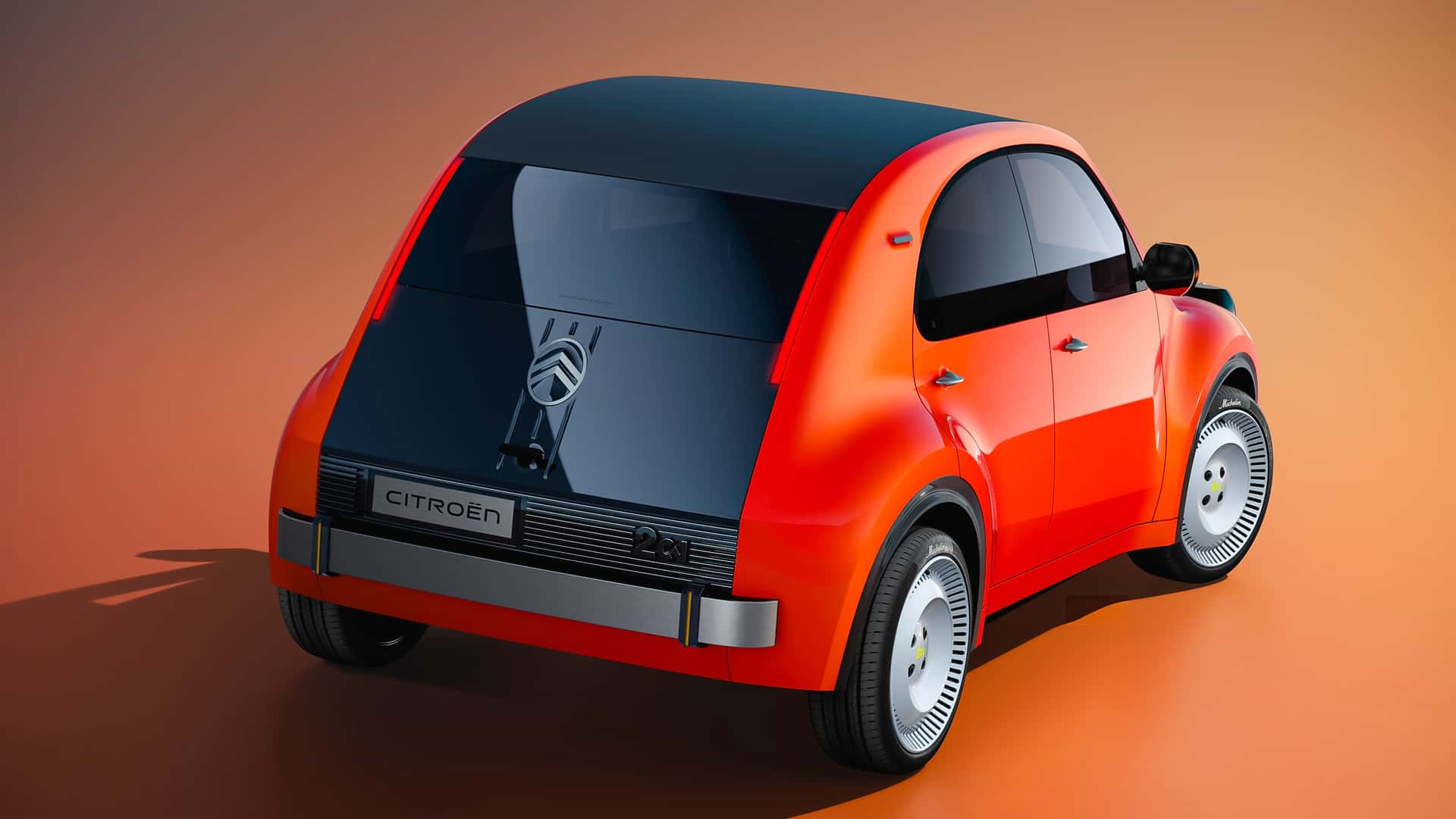
Notable examples included the Renault Espace, the captivating concept re-envisioning the Citroen 2CV, and the Alpine A310. These presentations aimed to evoke nostalgia and remind audiences of the enduring appeal of European automotive design and craftsmanship.
The Citroën 2CV Fourgonnette Concept, for instance, promised a modern take on a beloved classic. Similarly, the 2026 Alpine A310 Vision concept signaled a future that blends performance heritage with electric propulsion. These concepts were designed to charm and reassure existing loyal customer bases.
The Challenge of Concept to Production
While emotionally engaging, this strategy presented a crucial dilemma: the most exciting European efforts were largely concept cars. This contrasts with the Chinese brands, which presented readily available, spec-sheet-dominating production models.
The fundamental question facing European car companies is whether they can translate these compelling concept designs into market-ready vehicles, equipped with technology that genuinely competes with the best offerings from China. The gap between aspirational design and deliverable EV technology remains a significant hurdle.
The Geopolitical and Economic Pressures
The challenge for European car companies extends beyond technological competition; they are navigating a complex landscape of geopolitical and economic pressures. Unlike American legacy firms, who are somewhat shielded by domestic regulations against Chinese EVs, European automakers confront an immediate threat.
They are experiencing a multi-front assault on their traditional market dominance. Sales in China, once a lucrative market, are collapsing as formidable domestic competitors rapidly gain market share. Profits in the American market are being eroded by aggressive tariffs, limiting their global reach.
A Multi-Front Battle for Market Share
Crucially, their home market share is now directly threatened by an expanding roster of Chinese brands offering compelling, high-tech, and often more affordably priced EVs. This intensifying competition is compounded by higher energy costs, labor expenses, and stringent regulatory requirements within Europe, making global competitiveness increasingly difficult.
Executives across major European brands like BMW and Mercedes are openly acknowledging this precarious position, sounding alarms on earnings calls and in discussions with government officials. This collective concern highlights the potential for significant disruption to one of Europe’s most valuable industries.
The Impact of Tariffs and Regulatory Hurdles
In response, European governments have begun to implement defensive measures. Chinese EVs already face substantial tariffs, with brands like Li Auto encountering cumulative duties exceeding 40% in some cases. Furthermore, Europe is tightening restrictions on hybrid vehicle imports, which previously offered a loophole.
Despite these significant legal and tariff barriers, Chinese manufacturers remain competitive. Li Auto, for example, plans to price its Li 6 in line with models like the BMW iX3, even though the iX3 offers less interior space and slower charging speeds. This pricing strategy underscores the robust cost advantages and technological efficiency of Chinese production.
While the BMW iX3 is a “range monster” and the Mercedes GLC EV boasts “shockingly efficient” performance, these attributes alone may not be sufficient to ignite widespread excitement. The ongoing battle necessitates a combination of advanced technology, competitive pricing, and compelling design to truly win over consumers.
A Path Forward: Innovation and Emotional Connection
The automotive industry is not solely driven by specifications; it is deeply intertwined with emotional connection and brand appeal. This emotional aspect offers a potential avenue for European car companies to differentiate themselves, even in the face of technological superiority.
During a drive in the Li 6 through Paris, experiencing its superior technology, the outlook for European brands seemed bleak. However, the sight of a vibrant group of multicolor Renault Twingo EVs provided a crucial counterpoint, highlighting the enduring power of design and nostalgia in automotive purchasing decisions.
The Power of Design and Brand Loyalty
The Renault Twingo E-Tech Electric, combining decent EV technology with a great design, proves that the emotional appeal of a legendary design can still win over consumers. Similarly, the reborn 2CV concept, looking as friendly and unique as the original but with a modern sensibility, holds significant promise.
Even concepts like the E-Space, which presented itself as a “lounge-on-wheels,” could potentially evolve into production models, especially given that Chinese brands are already offering production EVs with features like swivel seats. This suggests that ambitious European concepts are indeed feasible if effectively executed.
The Urgency for Accelerated Execution
For these promising designs to translate into market success, European car companies must accelerate their development and production timelines. Chinese automakers are known for their rapid product cycles, quickly bringing new models to market, experimenting, and swiftly abandoning less successful ideas.
European brands need to adopt a similar agility. They must move faster, embrace greater risks, and operate with a degree of humility, acknowledging their current position in the global EV race. In an environment of shrinking profits and intensified competition, this shift in mindset is challenging, but vital.
In Paris, the commitment to leveraging their design heritage and loyal customer bases was evident. It’s a gamble that European car companies are taking, hoping that these strengths will sustain them until they can achieve technological parity with their Chinese rivals. Success is far from guaranteed, but the question remains: what other viable choice do they have?
Frequently Asked Questions (FAQ)
What was the main observation at the Paris Motor Show regarding EVs?
The primary observation was the stark contrast between Chinese EV manufacturers, who showcased advanced, production-ready electric vehicles with superior charging speeds and integrated technology, and European car companies, who largely presented concept cars and emphasized their historical design legacy.
How do Chinese EVs compare to European models in terms of charging speed?
Chinese EVs demonstrated significantly faster charging capabilities, with several models achieving 10-80% charge times in under 11 minutes, and some even reaching 10-97% in just nine minutes. Many European brands are still introducing their first generation of 800-volt EVs, lagging behind this rapid innovation.
What strategy are European car companies employing to compete?
European automakers are leaning heavily on their brand heritage and iconic designs, presenting modern interpretations of classic models as concept cars. The aim is to leverage emotional connections and customer loyalty while they work to catch up technologically with Chinese rivals.
What economic challenges do European automakers face from Chinese competition?
European car companies face multiple challenges: declining sales in the Chinese market, eroded profits in the US due to tariffs, and increasing competition in their home markets from Chinese brands offering technologically advanced and often more affordable EVs. High energy, labor, and regulatory costs also impact their competitiveness.
Are tariffs helping European car companies against Chinese imports?
While Chinese EVs face steep tariffs (over 40% in some instances) and restrictions on hybrid imports are tightening, these measures do not appear to fully offset the competitive advantages of Chinese manufacturers. Their cost efficiency and rapid innovation allow them to remain competitive even with added duties.
Can European design and brand loyalty be enough to fend off Chinese tech?
Design and emotional appeal are powerful factors in car purchasing, as evidenced by positive reactions to models like the Renault Twingo EV and the Citroën 2CV concept. However, this strategy requires swift execution and the integration of competitive technology to truly succeed and capture market share against high-tech, lower-cost Chinese offerings.