
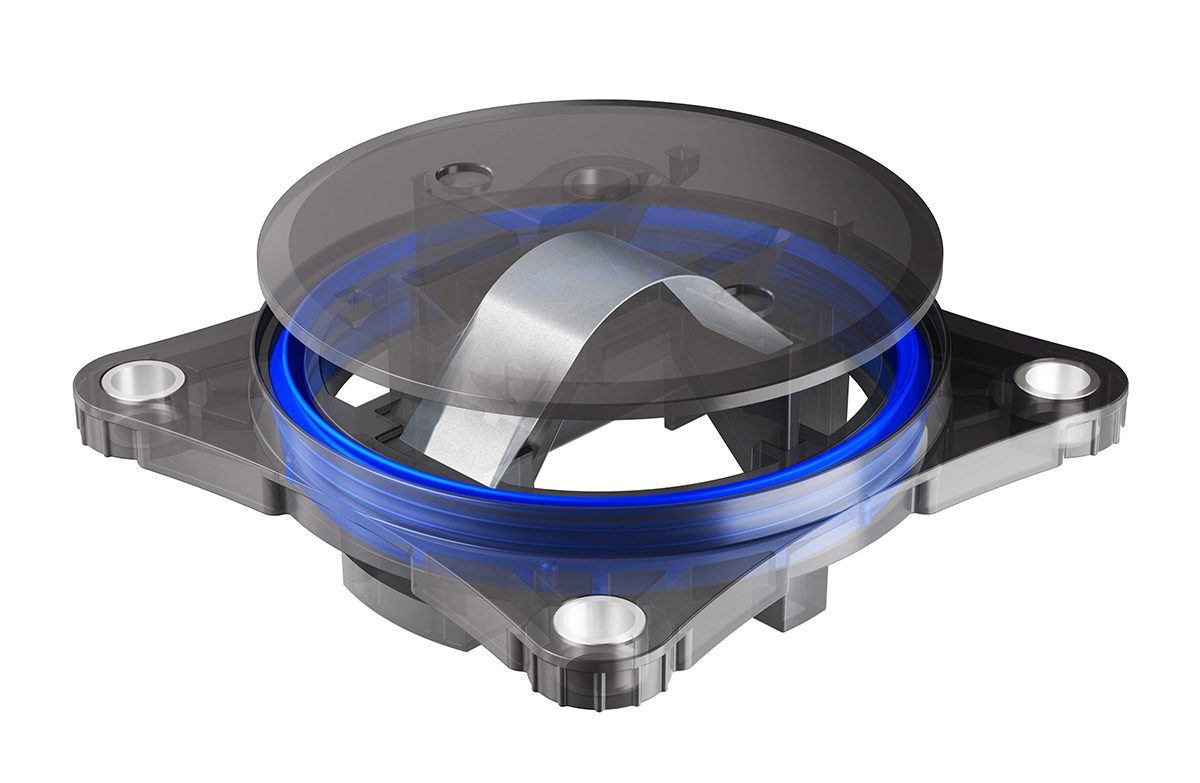
In a significant advancement for electric vehicle (EV) safety technology, Freudenberg Sealing Technologies has introduced its latest innovation, the DIAvent maxFlow. This pioneering degassing element is specifically engineered for lithium-ion vehicle batteries to manage and mitigate critical situations like EV battery thermal runaway events, setting a new benchmark for protective measures in automotive battery design.
The DIAvent maxFlow is designed to rapidly vent hot gases that can accumulate during a thermal runaway scenario, a critical safety concern in EV battery packs. Its full specifications reveal an impressive capability: the system can vent more than 190 liters of gas per second at a 300 mbar differential pressure. This represents a substantial improvement, delivering 2.5 times the flow rate of its predecessor, the DIAvent HighFlow, thereby offering enhanced safety and performance for electric vehicles.

Key Takeaways: Enhanced EV Battery Safety
- Superior Gas Flow: The DIAvent maxFlow delivers over 190 liters per second at 300 mbar, a 2.5x increase over previous models, crucial for managing EV battery thermal runaway events.
- Instantaneous Activation: Features a profiled metal spring that snaps fully open, rapidly expelling hot gases and significantly reducing the risk of cascade failures.
- Autonomous Re-Sealing: The innovative spring mechanism allows the valve to reclose automatically after pressure drops, preventing oxygen ingress and enhancing safety for first responders.
- Precision and Testability: Offers adjustable trigger pressure (50-200 mbar) with low tolerance, surpassing conventional burst disks. Its reversible design enables non-destructive end-of-line testing for quality assurance.
- Compact and Robust: Measures a mere 86 × 86 × 12.1 mm, boasts IPX9K and IP6KX protection, and is UL94 V0 flame-retardant, ensuring durability and easy integration into modern EV battery systems.
Understanding the Challenge of EV Battery Thermal Runaway
Electric vehicles rely on powerful lithium-ion batteries, which, under extreme conditions such as overcharging, physical damage, or manufacturing defects, can experience thermal runaway. This phenomenon involves an uncontrollable self-heating process within a battery cell, leading to a rapid temperature increase, gas generation, and potential fire or explosion. When one cell enters thermal runaway, there’s a significant risk of it spreading to adjacent cells, known as cascade failure, posing a severe threat to vehicle occupants and emergency personnel.
Effective thermal management and robust safety protocols are paramount for EV battery design. Degassing elements like the DIAvent maxFlow are critical components in these safety systems. They act as a controlled pressure relief valve, designed to vent the accumulated gases from the battery pack in a controlled manner, preventing pressure buildup that could rupture the battery casing and escalate the safety incident.
Engineering for Instantaneous Response and Enhanced Safety
A core innovation in the DIAvent maxFlow’s design lies in its novel mechanism. Freudenberg Sealing Technologies has replaced the conventional rubber umbrella used in earlier DIAvent generations with a precisely engineered profiled metal spring. This design choice is pivotal, particularly during a thermal runaway event.

Unlike solutions that open gradually as pressure escalates, the metal spring in the DIAvent maxFlow is engineered to snap fully open the instant a predefined trigger threshold is reached. This rapid deployment is crucial for expelling hot gases at an accelerated rate, thereby significantly reducing the internal pressure and mitigating the risk of cascade failures spreading to neighbouring battery cells. The speed and efficiency of gas expulsion are vital in containing the event and minimizing damage.
Post-Event Security and First Responder Safety
Beyond its rapid venting capabilities, the DIAvent maxFlow offers a critical advantage in post-event safety. Once the internal pressure within the battery pack drops to a safe level, the profiled metal spring autonomously closes the valve. This self-sealing mechanism is dual-purpose:
- Limiting Further Combustion: By sealing the battery pack, it prevents oxygen ingress, which is essential for starving any potential ongoing combustion and limiting the extent of the fire.
- Ensuring First Responder Safety: For emergency personnel arriving at the scene after an EV battery thermal runaway event, a sealed battery pack significantly reduces immediate hazards associated with residual heat, active combustion, or exposure to hazardous gases. This feature directly contributes to safer intervention protocols.
Precision Engineering and Quality Assurance Advantages
The DIAvent maxFlow introduces a new level of precision in managing battery pack pressure. Its trigger pressure is precisely adjustable, ranging from 50 to 200 mbar, and features remarkably low tolerance. This level of accuracy is a significant differentiator when compared to conventional burst disks, which are often used as an alternative venting solution.
Traditional burst disks suffer from several limitations. They typically cannot match the precise pressure setting capabilities of the DIAvent maxFlow. More importantly, once a burst disk is activated and ruptures, it cannot reclose, leaving the battery pack open to the environment. Furthermore, burst disks cannot be tested non-destructively once installed, making comprehensive quality control a challenge.
In contrast, the DIAvent maxFlow’s reversible mechanism offers a considerable quality control advantage in the manufacturing process. It allows for non-destructive end-of-line testing of fully assembled battery packs, ensuring that each valve performs as intended without compromising its integrity or functionality. This capability is invaluable for automakers seeking to implement robust safety standards and streamline production efficiency.
Compact Design, Robust Protection, and Seamless Integration
Despite its advanced capabilities, the DIAvent maxFlow boasts a highly compact package, measuring a mere 86 × 86 × 12.1 mm overall, with an installation height of just 12.1 mm. This small footprint facilitates easier integration into increasingly compact EV battery pack designs without requiring extensive modifications.
The valve also features impressive protection ratings, achieving IPX9K and IP6KX, which denote high resistance to water ingress (including high-pressure jet cleaning) and dust ingress, respectively. This ensures reliability and durability under demanding automotive operating conditions. Furthermore, the DIAvent maxFlow carries UL94 V0 flame-retardancy certification, underscoring its commitment to fire safety within the battery system. Every unit undergoes 100% testing before delivery, assuring consistent quality and performance.
Installation flexibility is also a key consideration. While an M6 bolt handles standard fastening, clip and bayonet mounting options are also available, providing versatility for various battery pack designs. An integrated PIP (Pressure-Indicating Point) seal is designed to tolerate up to 0.2 mm of housing unevenness, further simplifying integration and ensuring a reliable seal even with minor manufacturing tolerances.
Expert Perspective on a Unified Solution
The development of the DIAvent maxFlow represents a concerted effort to consolidate and improve upon existing safety solutions. Daniel Uhl, Head of Product Management at Freudenberg Sealing Technologies, encapsulated the essence of this innovation, stating, “With the DIAvent maxFlow, we have addressed the disadvantages of previous venting solutions with a single product.” This statement highlights the company’s ambition to offer a comprehensive, reliable, and advanced solution to a complex engineering challenge in the EV sector.
The introduction of the DIAvent maxFlow is poised to have a significant impact on EV battery design and safety standards across the automotive industry. By providing a more efficient, reliable, and testable solution for managing EV battery thermal runaway events, Freudenberg Sealing Technologies is contributing to the ongoing evolution of electric vehicle safety, inspiring greater consumer confidence and paving the way for more resilient energy storage systems.
Frequently Asked Questions About DIAvent maxFlow
What is the primary purpose of Freudenberg’s DIAvent maxFlow?
The DIAvent maxFlow is a critical safety component designed for lithium-ion EV batteries. Its main purpose is to rapidly and safely vent hot gases generated during EV battery thermal runaway events, preventing excessive pressure buildup and minimizing the risk of cascade failures within the battery pack.
How does DIAvent maxFlow improve upon previous venting solutions?
It significantly enhances performance by delivering over 190 liters of gas per second at 300 mbar differential pressure, which is 2.5 times the flow rate of earlier DIAvent models. Its new profiled metal spring design ensures instantaneous opening, unlike the gradual opening of older rubber umbrella designs.
What is the benefit of the profiled metal spring design?
The profiled metal spring allows the valve to snap fully open the instant the trigger pressure is reached. This rapid response is crucial for quickly expelling hot gases, thereby reducing internal pressure more effectively and preventing the spread of thermal runaway to adjacent cells in an electric vehicle battery.
Can the DIAvent maxFlow be reused after activation?
Yes. A key advantage of the DIAvent maxFlow is its autonomous re-closing mechanism. Once the internal pressure within the battery pack drops, the metal spring closes the valve. This seals the battery against oxygen ingress, which helps limit further combustion and ensures safer conditions for first responders.
How does the DIAvent maxFlow improve quality control for battery manufacturers?
Unlike conventional burst disks, the DIAvent maxFlow features a reversible mechanism. This allows for non-destructive, end-of-line testing of fully assembled battery packs. Manufacturers can verify the valve’s functionality without destroying the component, providing a significant advantage in quality assurance and production efficiency.
What are the key physical specifications of the DIAvent maxFlow?
The unit is compact, measuring 86 × 86 × 12.1 mm, with an installation height of 12.1 mm. It boasts high protection ratings of IPX9K and IP6KX, ensuring resistance to water and dust. Additionally, it is UL94 V0 flame-retardant and tolerates up to 0.2 mm of housing unevenness thanks to its integrated PIP seal.