
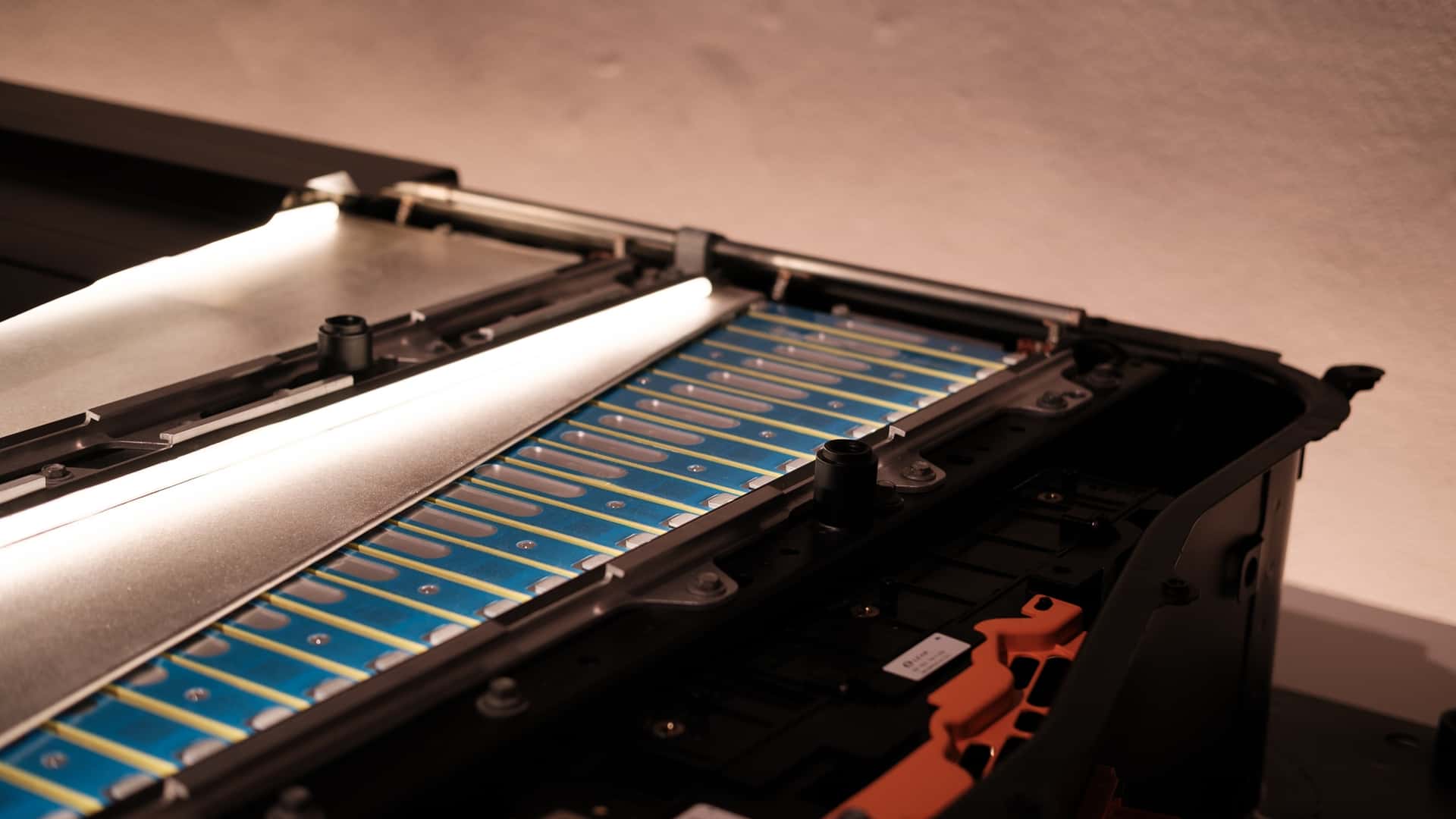
General Motors (GM) has officially designated its Ultium Cells joint venture plant in Spring Hill, Tennessee, as the mass-production hub for its pioneering lithium-manganese-rich (LMR) battery cells. This announcement marks a critical advancement in the automaker’s ambitious electrification strategy, solidifying the production location for a battery technology poised to redefine performance and cost-efficiency in electric vehicles (EVs).
While the automotive giant continues strategic investments in conventional fuel-powered trucks, its commitment to electric mobility remains unequivocal. The decision to commence mass production of these advanced prismatic LMR cells at the Spring Hill facility is a significant indicator of GM’s long-term vision for its electric vehicle portfolio.

Key Takeaways
- General Motors has selected its Spring Hill, Tennessee, Ultium Cells plant for mass-producing next-gen lithium-manganese-rich (LMR) batteries.
- The facility, a joint venture with LG Energy Solution, will undergo upgrades starting late 2024, with full LMR production by 2028.
- LMR battery chemistry is projected to deliver 33% more range than current lithium-iron-phosphate (LFP) batteries, targeting over 400 miles EPA range for full-size EV trucks and SUVs.
- These new batteries will achieve cost parity with LFP cells by utilising a higher percentage of manganese, a more abundant and cheaper raw material, reducing reliance on expensive cobalt and nickel.
- The Spring Hill plant will be the world’s first to mass-produce prismatic LMR cells, positioning GM at the forefront of advanced battery manufacturing.
A Pivotal Move in EV Battery Production
The Spring Hill, Tennessee, facility, a key component of the Ultium Cells LLC joint venture between General Motors and LG Energy Solution, is set to undergo extensive upgrades. These enhancements are slated to commence towards the end of this year, with a projected completion target of 2028. This strategic timeline aligns with GM’s broader objectives for a comprehensive EV rollout.
Significantly, the automaker has affirmed that this Tennessee plant will be the inaugural facility globally dedicated to the mass production of prismatic LMR cells. This unprecedented step underscores GM’s leadership in advanced battery technology and its proactive approach to scaling up EV component manufacturing.
The choice of Spring Hill highlights the strategic importance of localised battery production for the North American market. It provides a robust foundation for GM’s Ultium platform, which is designed for flexible, scalable EV architecture, accommodating a wide range of vehicle types and sizes.

Understanding General Motors’ Next-Gen EV Battery: LMR Chemistry Explained
At the core of this announcement is General Motors’ next-gen EV battery, known as lithium-manganese-rich (LMR) chemistry. This innovative cell technology represents a crucial evolutionary step in battery development, bridging the gap between existing high-performance and cost-effective solutions.
LMR batteries share fundamental similarities with traditional nickel-manganese-cobalt (NMC) cells, which are currently prevalent in many high-performance electric vehicles. However, a key differentiator lies in their material composition: LMR cells utilise a significantly lower percentage of cobalt and nickel.
These two elements, while effective, are notoriously expensive and associated with complex, often environmentally challenging mining processes. By reducing their reliance, GM is addressing critical concerns related to both cost volatility and sustainability within its battery supply chain.
Enhancing Range and Reducing Costs
The primary advantage of General Motors’ next-gen EV battery lies in its impressive performance metrics. GM projects that the LMR chemistry will deliver a substantial 33% increase in driving range compared to the widely used lithium-iron-phosphate (LFP) batteries.
LFP batteries, while known for their affordability and safety, typically offer lower energy density. The LMR battery’s enhanced energy density positions it as a superior alternative for vehicles demanding greater range, particularly larger formats such as full-size trucks and SUVs.
For these segments, the automaker anticipates that LMR batteries will enable an EPA-estimated driving range exceeding 400 miles. This extended range is crucial for attracting consumers to larger EV segments, mitigating range anxiety, and making electric full-size vehicles more practical for diverse usage scenarios.
Beyond range, the LMR battery technology also promises significant cost benefits. GM estimates that the LMR battery will achieve nearly the same cost as LFP batteries. This cost parity, while delivering superior driving range, represents a major breakthrough in EV economics, potentially accelerating adoption across the market.
Sustainable Sourcing and Material Advantages
A critical aspect of the LMR battery’s design is its strategic use of manganese. Instead of relying heavily on cobalt and nickel, the LMR chemistry incorporates a much higher percentage of manganese in its cathode composition. This pivot towards manganese offers distinct advantages in terms of supply chain and cost.
Manganese is more abundant globally and generally considered easier to source and less expensive to mine and process compared to cobalt and nickel. This material shift directly contributes to the projected cost-effectiveness of the LMR battery, enabling GM to offer competitive pricing for its electric vehicles equipped with this technology.
This approach also aligns with broader industry goals for more sustainable and ethical sourcing of battery raw materials. By reducing dependence on materials with complex supply chains, GM aims to enhance the resilience and stability of its battery production, crucial for long-term growth in the EV market.
The Ultium Cells Vision: A Foundation for GM’s Electrification
The Ultium Cells joint venture, a collaboration between General Motors and LG Energy Solution, is central to GM’s comprehensive electrification strategy. This partnership is designed to ensure a robust and reliable supply of advanced battery cells, a fundamental requirement for scaling EV production.
Currently, the Ultium Cells venture is also responsible for manufacturing lithium-iron-phosphate (LFP) batteries, primarily for energy storage systems. This existing production capability demonstrates the venture’s versatility and expertise in diverse battery chemistries, laying a strong foundation for integrating the new LMR technology.
The establishment of dedicated battery manufacturing facilities, like the one in Spring Hill, underscores GM’s commitment to vertical integration and control over key components of its electric vehicles. This strategic control is vital for ensuring quality, optimising costs, and accelerating the pace of innovation in a highly competitive global EV market.
In 2022, GM provided an exclusive tour of its Warren, Michigan R&D facility, where these innovative LMR cells were undergoing development. This transparency highlighted the extensive research and development efforts underpinning General Motors’ next-gen EV battery, showcasing the rigorous process from concept to eventual mass production.
Future Outlook for General Motors’ Electric Vehicles
The introduction of General Motors’ next-gen EV battery is slated to significantly impact the automaker’s electric vehicle lineup. The first EVs equipped with these advanced LMR cells are anticipated to hit the market in 2028, aligning with the completion of the Spring Hill plant upgrades.
GM plans to initially deploy LMR batteries in its full-size electric trucks and SUVs. This strategic focus on larger vehicles is crucial, as these segments are highly popular and profitable, presenting a significant opportunity for market penetration and establishing a strong foothold in the competitive electric truck and SUV categories.
The LMR technology is envisioned to occupy a strategic position within GM’s battery hierarchy. While high-performance NMC batteries will continue to power EVs demanding the absolute maximum driving range, LMR cells will effectively slot in between NMC and the more cost-effective LFP batteries.
This layered approach allows GM to optimise battery chemistry for different vehicle segments and price points, catering to a broader spectrum of consumer needs and preferences. It reflects a nuanced strategy to balance performance, cost, and availability across its diverse electric vehicle offerings.
The successful integration and widespread adoption of LMR batteries have the potential to meaningfully alter the economics of owning and operating large electric SUVs and trucks. By delivering superior range at a competitive cost, GM aims to make these electric vehicles a more compelling and accessible option for consumers, driving further momentum in the global transition to electric mobility.
FAQs about GM’s Next-Gen EV Battery
What is General Motors’ next-gen EV battery?
General Motors’ next-gen EV battery refers to its lithium-manganese-rich (LMR) chemistry. This innovative battery technology offers improved energy density and cost efficiency compared to current LFP cells, leveraging a higher proportion of manganese in its composition to deliver enhanced performance for electric vehicles.
Where will GM’s LMR batteries be produced?
GM’s LMR batteries will be mass-produced at the Ultium Cells joint venture plant with LG Energy Solution located in Spring Hill, Tennessee. This facility is being upgraded to become the world’s first plant dedicated to the mass production of prismatic LMR cells, bolstering domestic battery manufacturing capabilities.
What are the key advantages of LMR batteries?
LMR batteries are expected to deliver 33% more range than lithium-iron-phosphate (LFP) batteries, aiming for over 400 miles EPA range in larger vehicles. They also achieve cost parity with LFP cells by using more abundant and cheaper manganese, reducing reliance on expensive cobalt and nickel.
When will EVs with LMR batteries be available?
General Motors anticipates that the first electric vehicles equipped with its LMR battery cells will begin rolling out to the market in 2028. This timeline aligns with the planned completion of factory upgrades at the Spring Hill facility, marking a significant milestone in GM’s EV roadmap.
Which vehicles will utilise LMR batteries?
GM plans to install the LMR batteries primarily in its full-size electric trucks and SUVs. This focus is aimed at providing these popular, larger segments with the extended driving range and cost-efficiency needed to compete effectively and appeal to a broad consumer base in the rapidly evolving EV market.
How do LMR batteries compare to other EV battery types?
LMR batteries are similar to nickel-manganese-cobalt (NMC) cells but use less cobalt and nickel, replacing them with manganese. This positions LMR between NMC (highest range, higher cost) and lithium-iron-phosphate (LFP) (lower range, lowest cost), offering a balanced option for range and affordability for GM’s diverse EV lineup.