
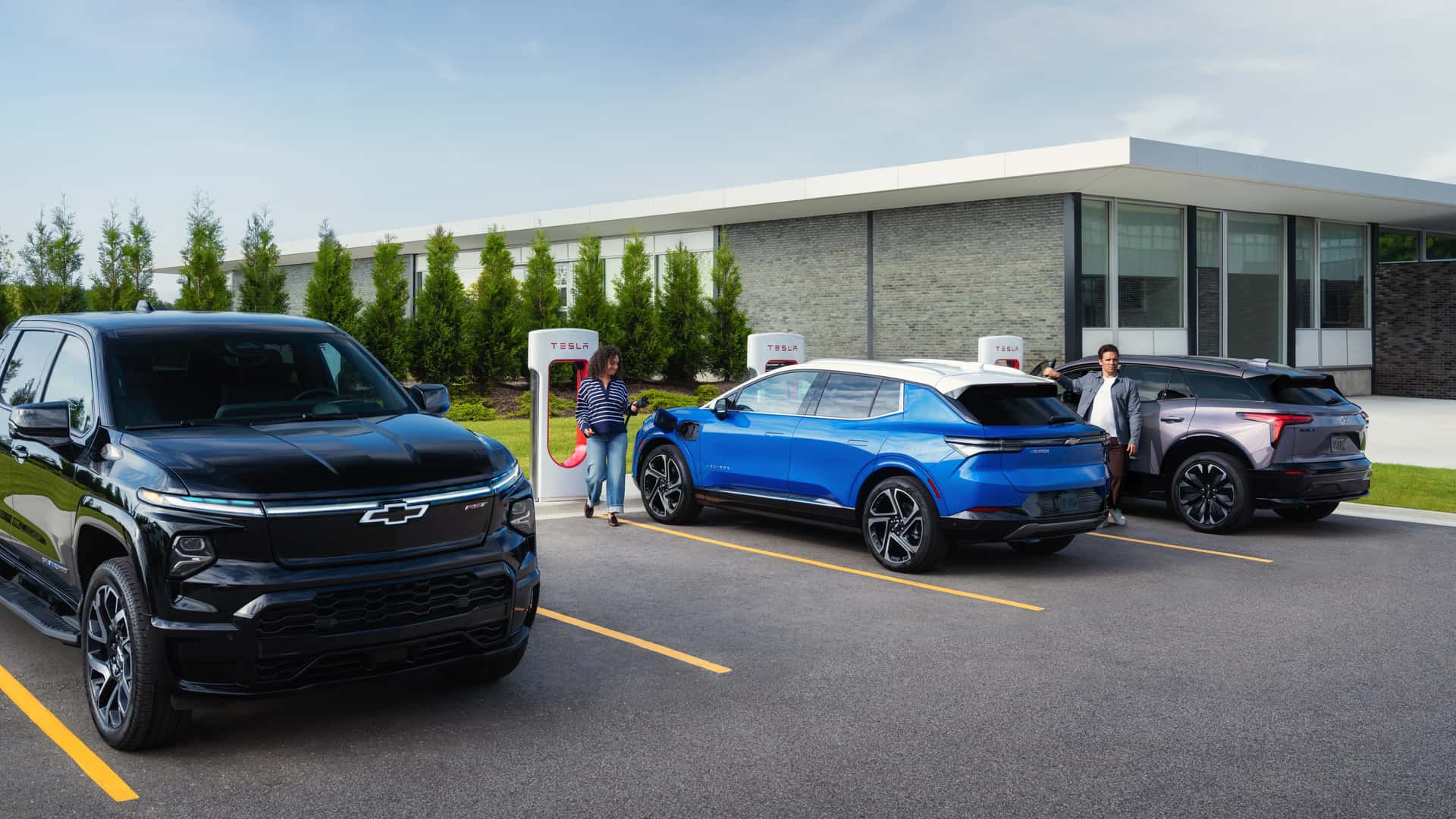
General Motors (GM) is set to significantly enhance the electric vehicle (EV) charging experience for its customers, introducing a groundbreaking feature called Energy Pass and confirming the transition to the North American Charging Standard (NACS) for all its 2027 models. These strategic moves aim to simplify EV charging, addressing one of the most persistent pain points for electric vehicle owners: the fragmentation of charging networks and varying connector standards.
Key Takeaways
- GM’s new Energy Pass integrates major EV charging networks into its brand-specific smartphone applications (MyChevrolet, MyCadillac, MyGMC).
- The Energy Pass initially offers access to Tesla Supercharger, Ionna, and Electrify America stations, with EVgo and ChargePoint to be added soon.
- This consolidated platform allows drivers to manage charging sessions, monitor status, and view history from a single account, covering nearly 70% of U.S. DC fast chargers.
- Plug & Charge functionality is supported across several networks, enabling a ‘plug-and-play’ charging experience without app interaction.
- GM is transitioning all its 2027 EV models to native NACS ports, enhancing interoperability with the Tesla Supercharger network.
Streamlining the Electric Vehicle Charging Experience with Energy Pass
General Motors is introducing Energy Pass, a new feature designed to make life on the road considerably easier for owners of its electric vehicles. Integrated directly into the existing MyChevrolet, MyCadillac, and MyGMC smartphone applications, Energy Pass consolidates access to multiple major EV charging networks across the United States. This eliminates the cumbersome requirement of juggling various apps, accounts, and payment methods for different charging providers.
Upon its launch, GM EV drivers will gain seamless access to Tesla Supercharger, Ionna, and Electrify America stations through their brand-specific apps. The automaker has also confirmed that ChargePoint and EVgo networks will soon be incorporated into the Energy Pass system. Collectively, these integrated networks are projected to encompass nearly 70% of all DC fast chargers available in the U.S., alongside a substantial number of Level 2 chargers, providing a robust and expansive charging infrastructure for GM customers.
Unlocking Convenience: How Energy Pass Works
The functionality of Energy Pass extends beyond mere access. Through their vehicle’s dedicated smartphone app, drivers can effortlessly initiate and conclude charging sessions, receive real-time updates on their charging status, and meticulously track their charging history and receipts, all within a unified interface. This centralized approach significantly improves the user experience, offering unprecedented control and transparency over their charging activities.
Moreover, Energy Pass users can unlock exclusive discounts at certain charging networks. Notably, Ionna recently began offering a 10% discount on charging sessions for all GM EVs when utilizing the integrated apps, further enhancing the value proposition for General Motors customers and making EV charging more economical.
The Era of Plug & Charge: Effortless Powering Up
A significant advancement within GM’s Energy Pass feature is its comprehensive support for Plug & Charge technology. This innovative capability transforms the charging process by allowing drivers to simply plug their vehicle into a compatible charging stall and commence charging immediately, without any need to interact with the app or the charger’s screen. Once a payment method is securely set up within their Energy Pass account, the system handles the authorization and payment automatically, delivering a truly ‘plug-and-play’ experience.
Currently, Plug & Charge functionality is active at Ionna Rechargeries and EVgo stations. General Motors has outlined an ambitious roadmap for expansion, with plans to introduce this seamless capability to ChargePoint locations starting this summer. Furthermore, a crucial development for GM EVs equipped with a native NACS charge port is the forthcoming integration of Plug & Charge at Tesla Superchargers. The company has stated that an over-the-air (OTA) software update later this year will activate Plug & Charge capability on the Tesla Supercharger network for NACS-equipped vehicles, marking a pivotal moment in cross-network interoperability.
Embracing the North American Charging Standard (NACS)
Beyond digital integration, General Motors is making a significant hardware shift by fully adopting the North American Charging Standard (NACS). The automaker has confirmed its intention to replace the current CCS1 (Combined Charging System) connector with the more compact and widely adopted NACS inlet across all its 2027 EV models. This move aligns GM with a growing industry trend, recognizing the practical advantages and expanding prevalence of the NACS connector, largely popularized by Tesla’s Supercharger network.
This transition is already underway with specific models. The 2026 Cadillac Optiq and the 2027 Chevrolet Bolt are among the first GM EVs to feature a NACS port directly from the factory. The comprehensive rollout will see all upcoming 2027 electric vehicles from Chevrolet, GMC, and Cadillac incorporating the NACS port between now and December, standardizing the charging interface across GM’s future EV lineup.
Impact of NACS Adoption on EV Drivers and Infrastructure
The industry-wide shift towards NACS is a critical development for the future of electric mobility. For GM owners, this means direct compatibility with the extensive and highly reliable Tesla Supercharger network, widely regarded as one of the most robust and accessible charging infrastructures globally. This eliminates the need for adapters, which can sometimes be cumbersome or introduce compatibility issues, thereby simplifying EV charging journeys, especially for long-distance travel.
The adoption of a single, prevalent charging standard like NACS is expected to foster greater confidence among potential EV buyers, alleviating concerns about charger availability and compatibility, often referred to as ‘range anxiety’. It also simplifies the development and deployment of future charging infrastructure, potentially accelerating the expansion of public charging options across North America. This standardization marks a significant step towards a more cohesive and user-friendly EV ecosystem.
Addressing EV Driver Pain Points: A Holistic Approach
Seasoned EV drivers frequently recount the frustrations associated with navigating a disparate charging landscape, often requiring multiple smartphone applications and accounts to simply power up their vehicles. General Motors’ latest initiatives, the Energy Pass and the comprehensive adoption of NACS, represent a holistic and proactive approach to tackling these long-standing challenges.
By offering a singular digital interface through Energy Pass and standardizing hardware with NACS, GM is smoothing out the complexities inherent in the current EV charging infrastructure. This integrated strategy promises to deliver an unparalleled level of convenience and reliability, making the ownership experience of a GM electric vehicle more appealing and practical than ever before. These developments underscore GM’s commitment to advancing electric mobility, not just through vehicle production, but also by refining the essential supporting infrastructure that underpins the EV lifestyle.
FAQ Section
What is GM’s Energy Pass?
Energy Pass is a new feature integrated into GM’s brand-specific smartphone apps (MyChevrolet, MyCadillac, MyGMC) that allows electric vehicle owners to access multiple major charging networks with a single account. It streamlines the process of finding, starting, and paying for charging sessions, eliminating the need for separate apps for each network.
Which charging networks are included in Energy Pass?
At launch, Energy Pass provides access to Tesla Supercharger, Ionna, and Electrify America stations. General Motors has also announced plans to soon integrate EVgo and ChargePoint networks. Combined, these networks cover a significant majority of DC fast chargers and numerous Level 2 chargers across the U.S.
What is Plug & Charge, and how does it work with Energy Pass?
Plug & Charge is a technology that enables an EV to communicate directly with a charging station to authorize and pay for a session automatically, simply by plugging in the vehicle. With Energy Pass, drivers can set up a payment method once, then utilize Plug & Charge at compatible Ionna, EVgo, and soon ChargePoint stations, and Tesla Superchargers for NACS-equipped GM EVs.
When will GM EVs adopt the NACS charging port?
General Motors will transition all its 2027 electric vehicle models to native North American Charging Standard (NACS) ports. This includes new EVs from Chevrolet, GMC, and Cadillac, with the rollout commencing between now and December. Some 2026 and 2027 models, like the Cadillac Optiq and Chevrolet Bolt, are already being equipped with NACS.
What are the benefits of GM adopting NACS?
The adoption of NACS means GM EVs will be directly compatible with Tesla’s extensive Supercharger network without needing an adapter, significantly expanding charging access. It also contributes to industry standardization, simplifying the charging experience for consumers, reducing range anxiety, and fostering greater investment in charging infrastructure.
Will existing GM EV owners with CCS1 ports be affected?
Existing GM EV owners with CCS1 ports can continue to use the current charging infrastructure. GM has previously announced that it will provide NACS adapters to its CCS1-equipped EV owners starting in 2024, ensuring they can also access the Tesla Supercharger network. This ensures a smooth transition for all customers.
How does Energy Pass improve driver convenience?
Energy Pass significantly enhances driver convenience by consolidating all charging-related activities into one application. Drivers can easily locate stations, start/stop charging, check status, and review billing history without juggling multiple interfaces. This unified platform simplifies the entire EV charging experience, making it more intuitive and less time-consuming.