
Key Takeaways:
- Mini has rolled out significant updates to its fully battery-electric (BEV) Countryman models, primarily focusing on enhanced efficiency and range.
- The core of these improvements is the integration of a new Silicon Carbide (SiC) inverter, a crucial component in the electric drivetrain.
- This technological advancement has boosted the WLTP driving range for the Mini Countryman E to 501 km (from 462 km) and the Countryman SE ALL4 to 467 km (from 432 km).
- The SiC inverter promises more efficient energy conversion, improved power delivery, and enhanced energy recuperation during braking.
- These updates are expected to translate into better real-world efficiency, particularly beneficial in urban and stop-start driving conditions.
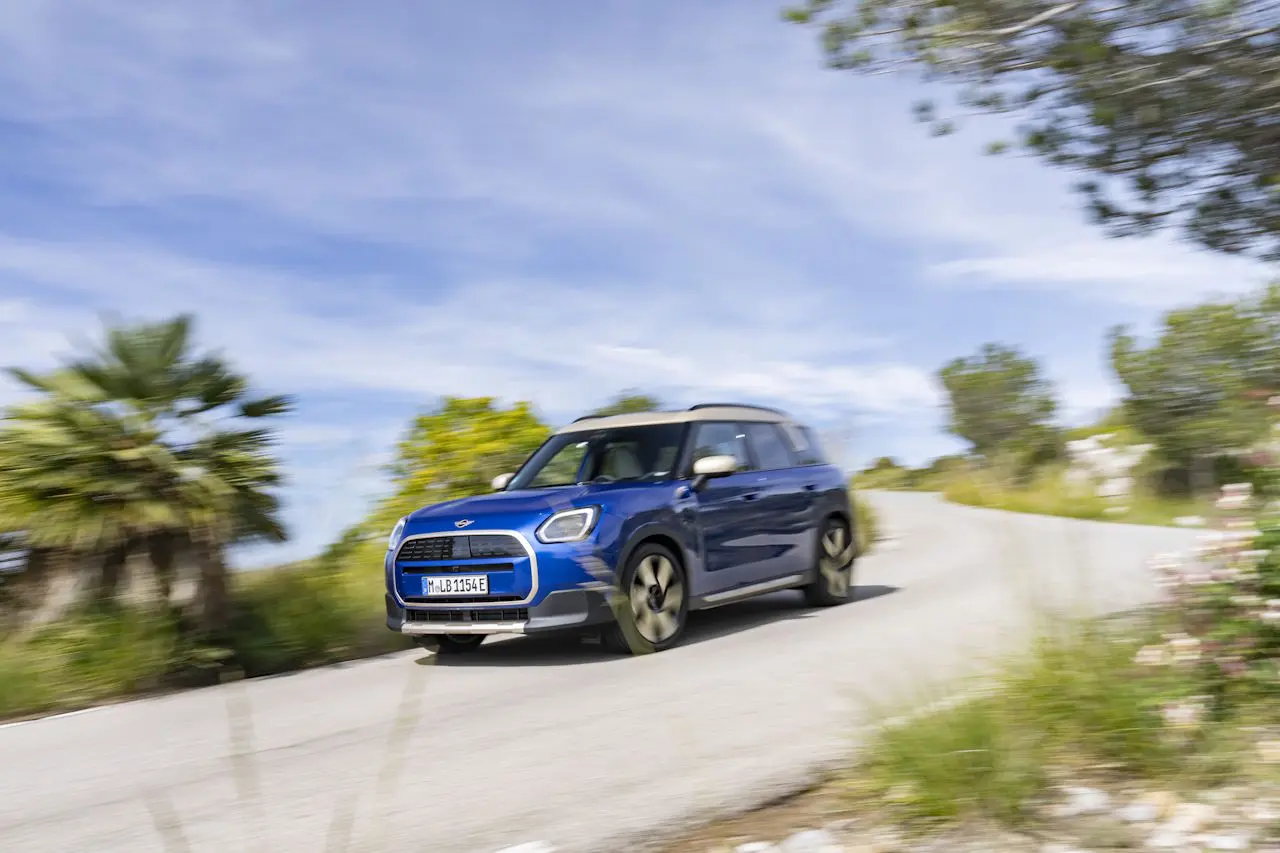
Mini has officially announced a series of strategic updates and refinements across its Countryman line-up, with particular attention paid to its full battery-electric (BEV) variants. These enhancements underscore Mini’s ongoing commitment to advancing electric mobility, delivering improved performance and efficiency to consumers.

The principal upgrade for the electric Countryman models revolves around the introduction of a sophisticated new Silicon Carbide (SiC) inverter. This key component is central to the vehicle’s electrical architecture, playing a pivotal role in power management.
The Pivotal Role of the Silicon Carbide Inverter
For those unfamiliar with the intricacies of electric vehicle technology, the inverter serves as the electronic control unit responsible for converting direct current (DC) from the battery into alternating current (AC) required to power the electric motor. It also meticulously manages the motor’s operations in direct response to driver inputs, ensuring seamless acceleration, deceleration, and overall vehicle control.
Mini has highlighted several tangible benefits derived from the implementation of this advanced SiC inverter. These include a markedly more efficient energy conversion process and optimized power delivery, which are critical for maximizing electric powertrain performance.

Furthermore, the new inverter significantly enhances energy recuperation, commonly known as ‘regen’ braking. This process captures kinetic energy typically lost during braking and converts it back into electrical energy to recharge the battery, thereby improving overall energy efficiency and extending range. The cumulative effect of these improvements is a demonstrably enhanced overall drivetrain efficiency across the electric Countryman range.
Significant Boost in Driving Range and Real-World Efficiency
The direct consequence of these powertrain enhancements is a notable increase in the certified WLTP (Worldwide Harmonized Light Vehicles Test Procedure) driving ranges for both electric Countryman variants. The WLTP standard provides a globally harmonized method for measuring fuel consumption, pollutant emissions, and electric range for passenger cars.
The Mini Countryman E now boasts an impressive WLTP range of up to 501 km, a substantial increase from its previous 462 km. Similarly, the more powerful Mini Countryman SE ALL4, which features all-wheel drive, sees its WLTP range extended to 467 km, up from 432 km.
Beyond the laboratory-tested figures, Mini anticipates that the SiC inverter will translate into tangible improvements in real-world efficiency. This is particularly relevant for drivers operating in urban environments or those who frequently encounter stop-start traffic conditions, where the inverter’s ability to manage power flow and recuperate energy effectively can make a significant difference to daily usability and range confidence.
These range improvements are crucial for strengthening consumer confidence in electric mobility solutions, addressing common concerns regarding range anxiety and the practicalities of long-distance electric vehicle travel.
Pricing and Market Positioning of the Updated Models
With these substantial upgrades, Mini has also outlined the pricing structure for its enhanced electric Countryman models, positioning them competitively within the premium compact SUV segment. The Mini Countryman E is available starting from $68,990.
For those seeking enhanced performance and all-wheel drive capabilities, the Mini Countryman SE ALL4 begins at $73,990. It is important for prospective buyers to note that these prices are exclusive of on-road costs (ORCs). These additional costs typically encompass charges such as stamp duty, registration fees, compulsory third-party insurance, and dealer delivery charges, which can vary significantly by region and overall vehicle price.
Mini’s Electric Vision and Broader Market Context
These latest updates to the electric Countryman models are indicative of a wider trend within the automotive industry, where continuous innovation in electric vehicle technology is paramount. As competition intensifies and consumer expectations evolve, manufacturers are consistently seeking ways to improve battery efficiency, charging speeds, and overall driving dynamics.
Mini’s strategic adoption of Silicon Carbide technology highlights its commitment to leveraging cutting-edge advancements to enhance its electric portfolio. SiC semiconductors are renowned for their superior performance in high-power applications, offering advantages such as higher efficiency, better thermal management, and improved power density compared to traditional silicon-based components. This positions Mini at the forefront of adopting advanced power electronics in its electric drivetrain.
The iterative improvements seen in the Mini electric Countryman underscore the rapid pace of development in the electric car market. Such enhancements contribute not only to a more compelling product offering but also to the broader goal of accelerating the transition to sustainable transport solutions globally.
Accessing Detailed Information and Market Data
For individuals seeking comprehensive technical specifications on the Mini Countryman BEV, further details can be found on TheDriven’s new models page, as well as the AEVA Fact Sheets page. These resources offer an in-depth look into the vehicle’s features, performance metrics, and other relevant data.
Additionally, for those interested in tracking the performance of electric vehicles in the Australian market, detailed EV sales data is available, providing insights into Australian electric vehicle sales by month in 2026; by model and by brand. This data offers a valuable perspective on market trends and consumer preferences in the rapidly expanding electric vehicle segment.
Stay informed on the latest developments in electric vehicle news and analysis by signing up for The Driven’s free daily newsletter, delivering essential updates straight to your inbox.
Frequently Asked Questions (FAQ)
What is the main update to the Mini electric Countryman models?
The primary update is the integration of a new Silicon Carbide (SiC) inverter. This advanced electronic component is crucial for converting battery DC power to AC for the motor, significantly improving energy conversion efficiency and power delivery across the electric drivetrain.
How does the new SiC inverter benefit the electric Countryman’s performance?
The SiC inverter offers several benefits, including more efficient energy conversion and power delivery, enhanced energy recuperation during braking, and overall improved drivetrain efficiency. These lead directly to increased driving range and better real-world performance, especially in urban conditions.
What are the new WLTP driving ranges for the updated models?
The Mini Countryman E now achieves a WLTP driving range of up to 501 km, an increase from 462 km. The Mini Countryman SE ALL4, with its all-wheel-drive system, boasts an improved WLTP range of up to 467 km, up from 432 km.
Will the SiC inverter improve real-world driving efficiency?
Yes, Mini anticipates that the new SiC inverter will notably improve real-world efficiency. This benefit is expected to be particularly noticeable in urban environments and stop-start driving scenarios, where optimized power management and energy recuperation are most impactful.
What are the starting prices for the updated electric Countryman models?
The Mini Countryman E starts from $68,990, while the Mini Countryman SE ALL4 is priced from $73,990. It is important to remember that these figures are exclusive of on-road costs (ORCs), which encompass additional fees like registration, stamp duty, and dealer delivery.
What is the significance of using Silicon Carbide (SiC) technology?
Silicon Carbide is a advanced semiconductor material known for its superior efficiency, thermal performance, and power density compared to traditional silicon. Its use in the inverter leads to lower energy losses, improved power handling, and overall more compact and efficient electric vehicle powertrains, reflecting a commitment to cutting-edge EV innovation.