
Key Takeaways:
- Researchers at Hanyang University have established 2.5 nanometers as the minimum effective thickness for lithium niobium oxide (LNO) coatings to protect sulfide solid-state battery cathodes.
- This quantitative lower bound is crucial for optimizing the design and performance of next-generation all-solid-state batteries.
- The study demonstrated that a 2.5 nm LNO coating significantly extended cycle life by 43% and reduced interfacial resistance by over 50% compared to uncoated cells.
- Thinner coatings (1.0 nm) proved insufficient, while thicker ones (5.0 nm) offered no substantial additional benefits in cycle life and reduced initial capacity.
- The findings provide a vital guideline for enhancing the stability and longevity of sulfide-based all-solid-state batteries.
SEO Keyword: sulfide solid-state battery cathodes

In a significant development for the electric vehicle (EV) and energy storage sectors, researchers at Hanyang University have pinpointed a crucial threshold for the protective coatings essential for advanced battery technology. Their study establishes 2.5 nanometers as the minimum effective thickness for lithium niobium oxide (LNO) coatings, vital for safeguarding cathode materials in sulfide-based all-solid-state batteries.
This quantitative determination addresses a long-standing gap in the field, providing a precise lower bound that was previously missing. The breakthrough promises to accelerate the optimization and commercial viability of these high-performance battery systems.
Revolutionising Energy Storage with Solid-State Batteries
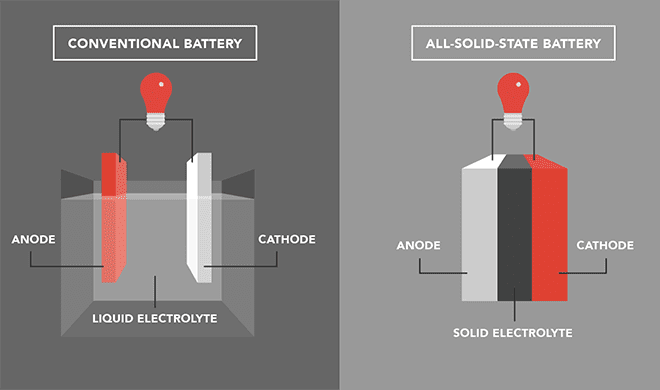
All-solid-state batteries (ASSBs) represent a transformative leap in energy storage technology, offering significant advantages over conventional lithium-ion batteries. Their solid electrolytes eliminate the flammable liquid electrolytes found in current batteries, enhancing safety by drastically reducing the risk of thermal runaway and fires.

Beyond safety, ASSBs promise higher energy density, faster charging capabilities, and extended lifespans, making them ideal candidates for powering the next generation of electric vehicles and portable electronic devices. However, their widespread adoption has been hampered by several engineering challenges, particularly concerning the stability and efficiency of the cathode-electrolyte interface.
Addressing the Cathode Interface Challenge
One of the primary hurdles for sulfide-based solid electrolytes lies in their inherent chemical reactivity at the cathode interface. When these solid electrolytes come into direct contact with cathode active materials, they initiate undesirable side reactions. These reactions lead to the formation of resistive degradation products.
The accumulation of these degradation products creates a barrier that impedes lithium-ion transport, increasing the battery’s internal resistance. This elevated resistance directly translates into reduced power output, decreased energy efficiency, and a shortened cycle life, compromising the overall performance and durability of sulfide solid-state battery cathodes.
The Role of Protective Coatings
To mitigate these detrimental interfacial reactions, researchers have explored various strategies, with protective coatings emerging as a promising solution. Thin layers applied to the cathode materials act as a diffusion barrier, physically separating the reactive solid electrolyte from the cathode’s active components.
Lithium niobium oxide (LNO) has been identified as a highly effective material for such protective coatings due to its stability and ion-conducting properties. However, until this recent Hanyang University study, the precise minimum thickness required for these LNO coatings to effectively suppress side reactions and protect sulfide solid-state battery cathodes remained an open question.
Precision Engineering: The Hanyang University Approach
The Hanyang University team focused their investigation on LNO coatings applied to NCM811 cathode powders. NCM811 is a nickel-rich cathode material known for its high energy density, making it a prime candidate for next-generation batteries, but also particularly susceptible to degradation issues at the interface.
The researchers utilized a sophisticated technique known as rotary powder atomic layer deposition (ALD). This method is highly regarded for its ability to deposit ultra-thin, highly uniform, and conformal films with atomic-level precision. The team employed a supercycle ALD method, which involved alternating the deposition of lithium and niobium precursors with ozone, ensuring precise control over the composition and thickness of the LNO layers.
Experimental Design and Critical Findings
To determine the optimal thickness, the Hanyang team systematically deposited LNO coatings at three distinct thicknesses: 1.0 nm, 2.5 nm, and 5.0 nm. The performance of cells constructed with these different coating thicknesses was then rigorously evaluated, revealing a clear trade-off between initial discharge capacity, cycle life, and interfacial resistance.
-
1.0 nm Coating: This thinnest coating initially delivered the highest discharge capacity, reaching 229 mAh g⁻¹. However, its protective capabilities were found to be insufficient. Cells with a 1.0 nm coating exhibited a cycle life 28% shorter than those with a 2.5 nm coating, and their interfacial resistance was a significant 59% higher. Spectroscopic analysis confirmed that side reactions were not effectively suppressed, indicating the coating was simply too thin to prevent electrolyte contact with the cathode surface.
-
2.5 nm Coating: Cells featuring the 2.5 nm LNO coating achieved an initial capacity of 216 mAh g⁻¹. Crucially, this thickness demonstrated effective suppression of side reactions, significantly improving battery longevity. Against an uncoated cell, the 2.5 nm coating extended cycle life by 43% and reduced interfacial resistance to less than half its original value, highlighting its critical role in enhancing battery stability for sulfide solid-state battery cathodes.
-
5.0 nm Coating: Increasing the coating thickness further to 5.0 nm led to a slight reduction in initial discharge capacity, which dropped to 207 mAh g⁻¹. More importantly, this thicker coating offered no meaningful additional gain in cycle life compared to the 2.5 nm coating. This suggests that while thicker, it did not provide substantially enhanced protection beyond the critical 2.5 nm threshold, while also adding more inactive material to the cell.
A Practical Guideline for Next-Generation Batteries
The comprehensive analysis conducted by the Hanyang University team provides definitive evidence for the optimal LNO coating thickness. Professor Tae Joo Park, who spearheaded the research, articulated the significance of these findings, stating, “Our results show that the minimum effective thickness of the LNO protective layer to suppress side reactions in sulfide-based ASSBs is 2.5 nm. This provides a practical guideline for cathode–electrolyte interface optimization in next-generation solid-state batteries.”
This quantitative guideline is invaluable for battery developers, enabling them to design more stable and durable sulfide solid-state battery cathodes without over-engineering or adding unnecessary material, which can reduce energy density.
Scalability and Future Outlook
While the laboratory results are highly promising, the research team also acknowledged the challenges associated with large-scale manufacturing. They noted that powder ALD, the technique used for depositing the LNO coatings, holds significant potential for scalable manufacturing processes.
However, integrating this precise deposition method into gigafactory-level production remains an open challenge that requires further research and engineering innovation. Overcoming these manufacturing hurdles will be crucial for the widespread commercialization of sulfide solid-state battery cathodes and, consequently, for the broader adoption of electric vehicles.
The groundbreaking study was published in the esteemed journal Energy Storage Materials, marking a critical step forward in the quest for safer, more efficient, and longer-lasting batteries for electric vehicles and various high-tech applications. The insights from Hanyang University are set to significantly influence the design and production strategies for future battery technologies. Source: Hanyang University / Energy Storage Materials.
Frequently Asked Questions (FAQ)
What is the main discovery by Hanyang University researchers?
Hanyang University researchers have determined that 2.5 nanometers is the minimum effective thickness for lithium niobium oxide (LNO) coatings to protect cathode materials in sulfide-based all-solid-state batteries, preventing degradation and enhancing performance.
Why are sulfide solid-state battery cathodes challenging to develop?
Sulfide-based solid electrolytes are chemically reactive with cathode active materials at their interface. This reactivity generates resistive degradation products, which shorten battery cycle life and increase internal resistance, posing a significant challenge.
What is the role of the LNO coating?
The LNO coating acts as a diffusion barrier, physically separating the reactive sulfide solid electrolyte from the cathode active material. This prevents undesirable side reactions that lead to performance degradation and extends the battery’s lifespan.
How was the optimal coating thickness determined?
The Hanyang team applied LNO coatings of 1.0 nm, 2.5 nm, and 5.0 nm to NCM811 cathode powders using rotary powder atomic layer deposition. They then compared the initial discharge capacity, cycle life, and interfacial resistance of cells made with each thickness to identify the most effective protective layer.
What improvements did the 2.5 nm coating demonstrate?
Compared to an uncoated cell, the 2.5 nm LNO coating extended the battery’s cycle life by 43% and reduced its interfacial resistance to less than half. This critical thickness effectively suppressed side reactions while maintaining good initial discharge capacity.
Why is 2.5 nm considered the minimum effective thickness?
While a 1.0 nm coating was too thin to prevent side reactions, a 5.0 nm coating offered no significant additional cycle life gains beyond 2.5 nm, and slightly reduced initial capacity. Thus, 2.5 nm strikes the optimal balance for protection without unnecessary material addition.
What is the significance of this research for solid-state batteries?
This research provides a crucial quantitative guideline for optimizing the cathode-electrolyte interface in sulfide-based ASSBs. It accelerates the development of more stable, durable, and efficient next-generation batteries for electric vehicles and other advanced applications, addressing a key challenge in the field.