
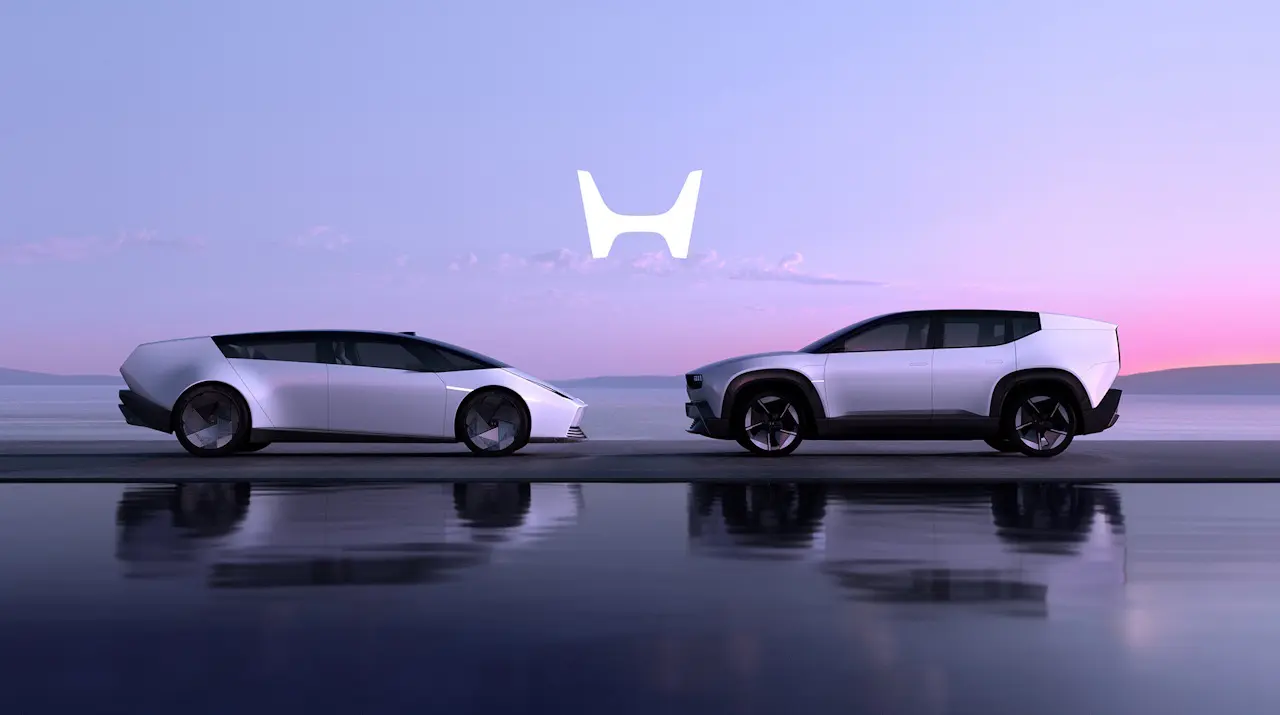
Honda Pulls Brakes on Three New Electric Vehicles, Cites Market Challenges
Honda has announced a significant shift in its electrification strategy, revealing the cancellation of development and market launch plans for three previously announced electric vehicles (EVs) destined for the North American market. The move comes as the Japanese automaker acknowledges a diminished ability to compete with rapidly advancing Chinese EV manufacturers.
Strategic Reassessment Leads to Program Cancellations
In a comprehensive “reassessment of the company’s automobile electrification strategy,” Honda has officially halted the development and planned rollout of the Honda 0 SUV, the Honda 0 Saloon, and the Acura RSX. This strategic pivot is attributed to “various factors including recent changes in the business environment,” according to the company’s late last week announcement.

Anticipated Financial Impact and Future Direction
The fallout from these cancelled plans and the inability to match the competitive pricing and features offered by Chinese EV makers is expected to result in substantial financial write-offs. Honda anticipates a loss of approximately $15.7 billion (equivalent to $A22.5 billion) when it releases its annual financial results next month. The company is slated to present an updated future strategy in May, with indications pointing towards a renewed focus on hybrid vehicle technology.
Shifting Market Dynamics and Global EV Landscape
Honda had previously set ambitious goals for achieving carbon neutrality across its products and corporate activities by 2050. In alignment with this vision and the former U.S. administration’s support for electric vehicles, Honda had committed to introducing a series of new electric models. However, a confluence of factors, including the imposition of U.S. tariffs, a general slowdown in EV market growth fueled by eased fossil fuel regulations, and reduced EV incentives, has prompted this abrupt change in direction.
Intensified Competition from China’s EV Sector
The competitive landscape in China has emerged as a significant factor influencing Honda’s decision. The company’s statement highlighted the evolving priorities of Chinese automotive consumers. “In China, what customers value more in automobiles is shifting from hardware features, such as fuel efficiency and cabin space, to software-based features that will continuously advance according to customer preferences,” Honda explained.

This shift has dramatically intensified competition, largely due to the swift emergence of new EV manufacturers. These companies leverage their agile product development cycles and possess distinct strengths in software-defined vehicle (SDV) technologies, including advanced driver-assistance systems (ADAS). Honda acknowledged its struggle in this environment.
Honda’s Competitive Stance in the EV Market
“In such a difficult competitive environment, Honda was unable to deliver products that offer value for money better than that of newer EV manufacturers, resulting in a decline in competitiveness,” the company stated. This candid admission underscores the challenges Honda faces in adapting to the rapid advancements and aggressive market strategies of its competitors, particularly those originating from China.
The automaker’s revised strategy is expected to provide more clarity on how it plans to navigate the evolving automotive industry, balancing its traditional strengths with the demands of a rapidly electrifying global market. The focus on hybrids may represent a transitional phase as the company reassesses its long-term EV roadmap.