
Key Takeaways (TL;DR)
- Samsung Electro-Mechanics has launched new ultra-high-voltage Multilayer Ceramic Capacitors (MLCCs) ranging from 1000V to 1500V.
- These advanced MLCCs, featuring C0G and X8G dielectrics, are specifically engineered to support the growing demands of 800V electric vehicle (EV) inverter systems and next-generation onboard chargers (OBCs).
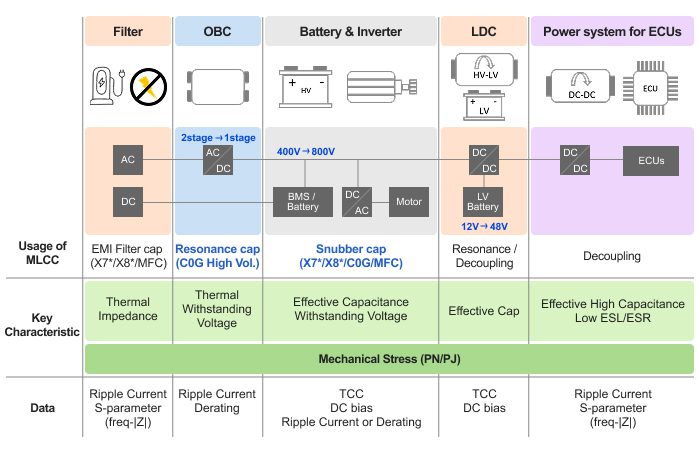
- The components are crucial for applications such as resonant tank circuits in EV charging systems and snubber capacitors in inverter power modules.
- They offer exceptional temperature stability, which is vital for maintaining optimal performance, efficiency, and reliability across demanding EV operational conditions.
- Now in mass production, these high-performance MLCCs are set to address the escalating voltage and capacitance requirements of modern high-power EV systems.
In a significant development for the rapidly evolving electric vehicle (EV) industry, Samsung Electro-Mechanics has commenced mass production of a new range of ultra-high-voltage Multilayer Ceramic Capacitors (MLCCs). These advanced components, rated from 1000V to 1500V, are poised to play a critical role in supporting the next generation of 800V EV inverter systems and cutting-edge onboard chargers (OBCs).

The introduction of these high-performance Samsung Electro-Mechanics MLCCs for EV applications underscores the industry’s continuous drive towards greater efficiency, enhanced power density, and superior reliability in electric propulsion systems. As global automotive manufacturers accelerate their transition to electric powertrains, the demand for sophisticated, robust, and stable electronic components has never been higher.
The Evolving Landscape of Electric Vehicle Technology
The global shift towards electric vehicles is profoundly reshaping automotive engineering, with a strong emphasis on boosting performance, extending range, and significantly reducing charging times. A key enabler for these advancements is the transition from conventional 400V battery architectures to more advanced 800V systems.
The 800V architecture offers several compelling advantages, including faster charging speeds due to higher power delivery, reduced current flow that allows for lighter and thinner cabling, and improved overall system efficiency. However, this higher voltage naturally necessitates a new generation of power electronic components capable of operating reliably under increased electrical stress.

Samsung’s Latest MLCC Innovation: Meeting Future Demands
Samsung Electro-Mechanics, a leading global manufacturer of electronic components, has responded to this industry imperative with its new series of ultra-high-voltage MLCCs. These components extend the company’s well-regarded C0G and X8G temperature-stable series, specifically designed to meet the rigorous demands of 800V EV powertrains and high-power charging solutions.
The newly introduced MLCCs are critical for designers working on advanced EV systems, providing the necessary capacitance and voltage handling capabilities required for superior performance and longevity. Their design is a direct response to the escalating power requirements within modern electric vehicles.
Technical Specifications and Dielectric Advantages
All four devices in the new series share a compact 1210 package size, measuring 3.2×2.5 mm, which is vital for maintaining power density in space-constrained automotive designs. A standout feature of these MLCCs is their exceptional temperature stability, holding capacitance within 0±30 ppm/°C across their entire operating range.
The C0G dielectric variant is specified for an operating temperature range of –55 to 125°C, while the X8G variant extends this robustness to –55 to 150°C. This wide operating temperature window is crucial for components deployed in the often-harsh thermal environments of an EV powertrain. Capacitance values for these Samsung Electro-Mechanics MLCCs for EV range from 1.2 nF at 1500V to 33 nF at 1000V.
Specifically, the new MLCCs include:
- CL32G122KVV3PN#: 1.2 nF capacitance, 1500V rated voltage, X8G dielectric.
- CL32C103JXV3PN#: 10 nF capacitance, 1250V rated voltage, C0G dielectric.
- CL32C223JIV3PN#: 22 nF capacitance, 1000V rated voltage, C0G dielectric.
- CL32C333JIV1PN#: 33 nF capacitance, 1000V rated voltage, C0G dielectric.
Notably, three of these four devices are designated with a fail-safe design. This crucial safety feature significantly enhances the reliability of the overall EV system by mitigating potential risks associated with component failure, ensuring safer and more robust operation.
Critical Applications in EV Architecture
The target applications for these new Samsung Electro-Mechanics MLCCs for EV are highly specific and critical to the performance of electric vehicles. They are designed to excel in challenging environments, directly impacting charging speed and inverter efficiency.
Enhancing Onboard Chargers (OBCs)
One primary application lies within the resonant tank circuits, specifically utilizing the CLLC (Capacitor-Inductor-Inductor-Capacitor) topology, found in advanced EV charging systems. As next-generation onboard chargers push output power beyond 22 kW, the demand for components with higher voltage and capacitance capabilities intensifies.
These advanced MLCCs enable designers to achieve these higher power levels while maintaining excellent power density without compromising system reliability. The stability provided by C0G and X8G dielectrics is paramount here, as it directly influences the resonant frequency of the circuit, which is crucial for efficient power transfer during charging.
Optimising EV Inverter Systems
Another vital application for these MLCCs is their use as snubber capacitors within inverter power modules. Inverters are responsible for converting the DC power from the battery into AC power to drive the electric motor. During the rapid switching operations of inverter power modules, voltage spikes and transients can occur, potentially damaging other components and reducing system lifespan.
Snubber capacitors are strategically placed to absorb and suppress these switching transients, thereby protecting the delicate power electronics and ensuring the stable, long-term operation of the inverter. The high voltage rating and robust design of the new Samsung Electro-Mechanics MLCCs for EV make them ideal for this protective role.
Why Temperature Stability Matters for EV Performance
The choice of C0G and X8G dielectrics is not arbitrary; it is fundamental to the performance and reliability of EV power electronics. These dielectrics are renowned for delivering near-zero capacitance drift over temperature fluctuations. In environments like an EV, where components can experience significant temperature swings, this characteristic is indispensable.
In resonant converter designs, such as those in OBCs, capacitance directly dictates the resonant frequency. Any substantial drift in capacitance due to temperature variations would cause a shift in the operating point, leading to decreased efficiency and potentially compromising the charging process. By extending this superior level of stability to the 1000V–1500V range, Samsung Electro-Mechanics directly addresses a critical requirement of the burgeoning 800V powertrain generation.
Driving Power Density and Reliability in EVs
The compact 1210 package size combined with the high voltage and capacitance capabilities of these new MLCCs offers distinct advantages for EV manufacturers. In electric vehicles, every cubic centimetre and gram matters for optimising space, weight, and overall vehicle performance.
These advanced Samsung Electro-Mechanics MLCCs for EV allow designers to maintain or even enhance power density within their systems. This means more power can be handled within a smaller physical footprint, which is crucial for integrating powerful charging systems and inverters into increasingly compact vehicle designs without sacrificing reliability or thermal performance. The fail-safe design further solidifies their contribution to the overall reliability and safety of EV systems.
Mass Production and Industry Readiness
The fact that these high-voltage MLCCs are already in mass production signals Samsung Electro-Mechanics’ readiness to support the immediate and future needs of the EV industry. This ensures that automotive manufacturers have access to critical components as they scale up their production of 800V-based electric vehicles.
Furthermore, Samsung Electro-Mechanics is offering comprehensive technical support and samples for customer-specific designs. This commitment to collaboration and customisation is vital for accelerating the integration of these advanced components into new EV platforms and ensuring optimal system performance.
The Road Ahead for EV Component Development
The introduction of these ultra-high-voltage Samsung Electro-Mechanics MLCCs for EV systems marks another milestone in the continuous innovation driving the electric vehicle sector. As EVs become more prevalent and sophisticated, the demand for highly specialized, robust, and efficient electronic components will only grow.
These advancements in passive components, often overlooked compared to major power semiconductors, are fundamental to unlocking the full potential of next-generation EV architectures. They collectively contribute to the overarching goals of faster charging, longer range, and ultimately, a more sustainable and electrified future of mobility.
Frequently Asked Questions (FAQs)
What are MLCCs and why are they important for EVs?
MLCCs, or Multilayer Ceramic Capacitors, are passive electronic components that store electrical energy. In EVs, they are crucial for filtering electrical noise, stabilizing voltage, and enabling efficient power conversion within systems like inverters and chargers, ensuring smooth and reliable operation.
What makes these new Samsung MLCCs suitable for 800V EV systems?
These new Samsung Electro-Mechanics MLCCs for EV are specifically rated for ultra-high voltages, from 1000V to 1500V. This higher voltage handling capability directly supports the demands of 800V EV architectures, which offer faster charging and improved efficiency over traditional 400V systems.
What are C0G and X8G dielectrics, and why are they beneficial?
C0G and X8G are types of ceramic dielectrics used in MLCCs, known for their exceptional temperature stability. They ensure near-zero capacitance drift across a wide temperature range, which is vital for maintaining consistent performance and efficiency in thermally demanding EV environments.
Where are these MLCCs primarily used within an EV?
The primary applications for these high-voltage MLCCs are in resonant tank circuits within onboard chargers (OBCs) for efficient EV charging, and as snubber capacitors in inverter power modules to suppress voltage transients and protect sensitive power electronics.
How do these MLCCs contribute to power density and reliability?
Their compact 1210 package size combined with high voltage and capacitance ratings allows more power handling within a smaller footprint, enhancing power density. Additionally, a fail-safe design in three of the four models significantly boosts system reliability and overall safety for EV applications.
Are these new MLCCs available for immediate integration into EV designs?
Yes, Samsung Electro-Mechanics has confirmed that these ultra-high-voltage MLCCs are already in mass production. This ensures that EV manufacturers and designers can immediately access these components for their current and future electric vehicle platforms, with technical support also available.