
Key Takeaways:
- LG Energy Solution (LGES) posted record quarterly earnings for Q3 2023, with revenue growing 59% year-over-year to $7.21 billion and operating profit rising 25% to $565 million.
- The company’s robust performance was primarily fueled by strong electric vehicle (EV) battery sales in the European market and a significant uptake in energy storage battery systems (ESS) in the United States.
- While North American EV battery production initially faced headwinds due to slower-than-expected demand, LGES successfully leveraged the burgeoning market for stationary storage solutions, particularly for AI data centers and grid upgrades.
- U.S. Inflation Reduction Act (IRA) manufacturing credits and compensation from automakers for unmet purchase agreements further bolstered the battery giant’s financial results.
- LGES is strategically expanding its North American supply chain and manufacturing capabilities, including a new lithium offtake agreement in Canada and a $2 billion gigafactory in Michigan producing batteries for Tesla and Toyota.
Seoul, South Korea — LG Energy Solution, a global leader in battery manufacturing and a key supplier to major electric vehicle manufacturers including Tesla, announced record quarterly earnings for the third quarter, largely propelled by robust electric vehicle (EV) battery sales across Europe and an expanding energy storage battery business in the United States. Preliminary results released in a regulatory filing in South Korea reveal a significant surge in revenue and operating profit, underscoring the company’s strategic adaptability in a dynamic global market.
The South Korean battery giant reported a remarkable 59% year-over-year increase in third-quarter revenue, reaching an estimated $7.21 billion. Concurrently, operating profit saw a substantial 25% rise, climbing to approximately $565 million. These impressive figures highlight LGES’s ability to navigate market complexities and capitalize on key growth sectors, even as certain segments of the industry experience shifts in demand. Full official results are anticipated in November.
Strategic Pivot Amidst North American EV Market Adjustments
The past two years have presented a challenging landscape for battery manufacturers in North America, with many compelled to scale back their initial EV production ambitions. This adjustment stemmed from a cooler-than-anticipated consumer adoption rate for electric vehicles in the region. Consequently, battery makers, including LG Energy Solution, have sought to mitigate potential losses by diversifying their portfolios and tapping into other high-growth areas.
LGES proactively responded to these market dynamics by strategically shifting its focus and investment towards the rapidly expanding market for stationary energy storage batteries. This pivot has proven prescient, as demand for these systems has surged, driven by two primary factors: the escalating power requirements of advanced AI data centers and the urgent need for comprehensive grid infrastructure upgrades across the United States.
Europe’s Electrification Drives EV Battery Demand
While the North American EV battery sector saw production adjustments, LGES’s EV battery business found strong momentum in Europe. The continent’s accelerated push towards electrification, fueled by stringent emission regulations and increasing consumer preference for plug-in vehicles, has created a fertile ground for battery suppliers.
According to The Korea Herald, LGES’s manufacturing facility in Poland has been a significant beneficiary of this European boom. The plant is reportedly experiencing robust demand from prominent automakers such as Volkswagen and Renault, whose growing EV sales in the region directly translate into heightened orders for LGES’s electric vehicle battery solutions. This strong European performance has effectively buoyed the company’s overall EV-battery division, offsetting slower demand experienced elsewhere.
The Booming U.S. Market for Energy Storage Systems
The strategic bet on stationary energy storage systems (ESS) in the U.S. has indeed begun to yield substantial returns for LG Energy Solution. The demand for these advanced battery solutions is being driven by critical infrastructure needs and technological advancements.
The proliferation of artificial intelligence (AI) data centers, which are notoriously power-intensive, requires reliable and scalable energy storage solutions to ensure uninterrupted operation and manage peak loads. Simultaneously, the aging U.S. electricity grid is undergoing significant modernization efforts to enhance its resilience, efficiency, and capacity for renewable energy integration. Energy storage batteries are fundamental to these grid upgrades, providing stability and flexibility.
To meet this escalating demand, LGES has established and expanded its local production capabilities, now manufacturing ESS batteries at multiple plants across the United States. This localized production not only streamlines supply chains but also positions the company advantageously within the American market.
Inflation Reduction Act and Production Credits Provide a Boost
A significant contributing factor to LGES’s impressive earnings surge can be attributed to financial incentives provided by the U.S. government. The company has benefited from substantial battery-manufacturing credits through the U.S. Inflation Reduction Act (IRA), a landmark piece of legislation designed to promote domestic clean energy manufacturing.
Specifically, the Section 45X Advanced Manufacturing Production tax credits, which incentivize the domestic production of certain components and critical minerals for clean energy technologies, have played a crucial role. These credits are slated to remain available through 2032, offering a sustained advantage to companies like LGES that invest in U.S.-based manufacturing.
In addition to these government incentives, LGES also received compensation from various automakers. This compensation was related to their failure to meet minimum electric vehicle battery purchase requirements, as stipulated in existing contracts, further enhancing the battery maker’s bottom line.
Strengthening the North American Supply Chain and Manufacturing Footprint
LG Energy Solution is actively working to fortify its battery supply chain and expand its manufacturing presence across North America. This proactive approach aims to reduce reliance on overseas raw material sourcing and bring production closer to its key markets.
In a significant development, the company recently signed a multi-year offtake agreement with Canada’s Elevra Lithium. Under the terms of this deal, LGES will secure 240,000 metric tonnes of raw lithium concentrate from Elevra’s mine located in Quebec. This agreement underscores the strategic importance of securing a stable and geographically diverse supply of critical battery raw materials.
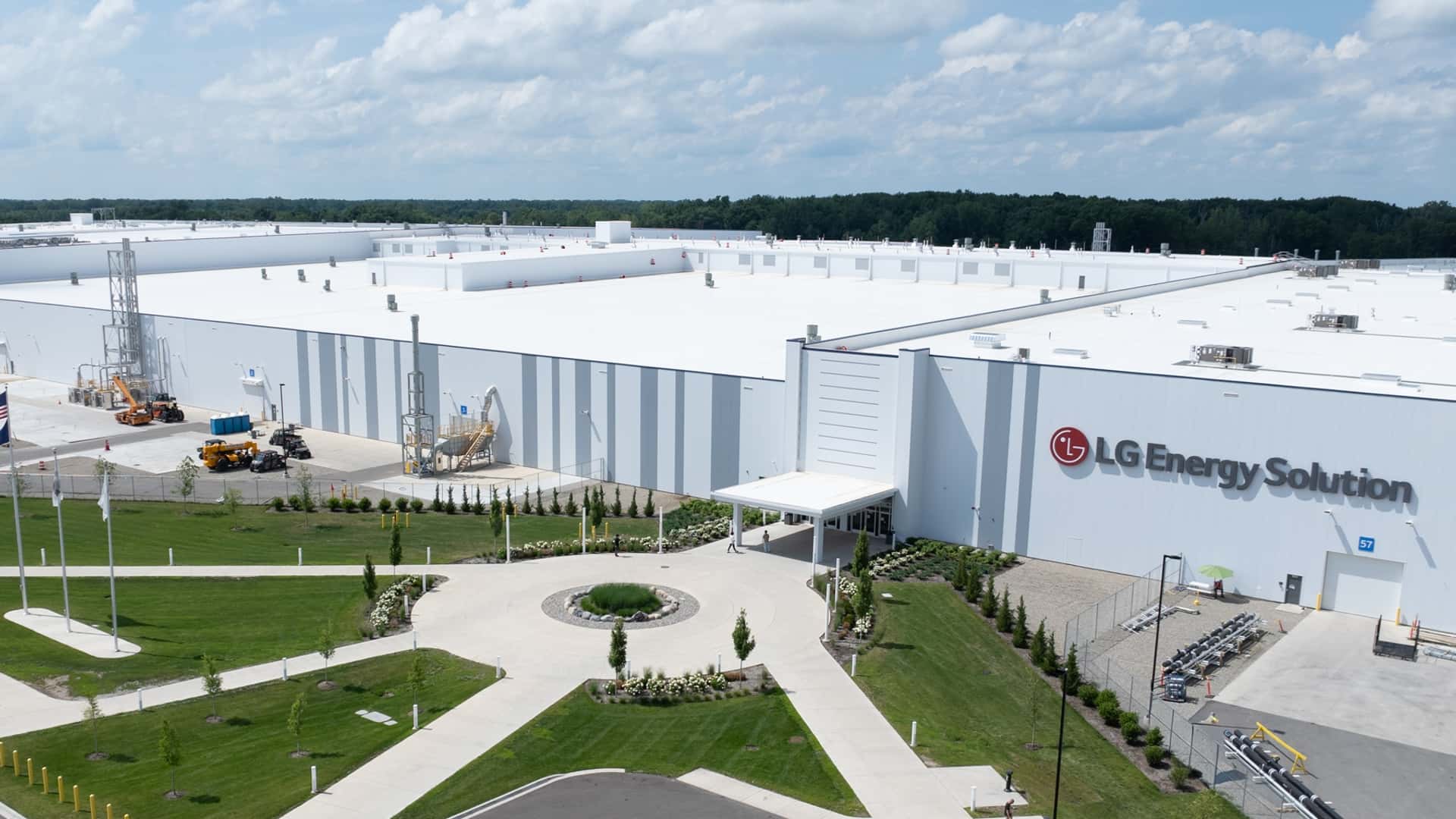
Further bolstering its North American operations, LGES officially opened its $2 billion gigafactory in Lansing, Michigan, in August. This state-of-the-art facility is a cornerstone of the company’s domestic manufacturing strategy. The Michigan plant is now actively producing energy storage lithium-iron-phosphate (LFP) batteries, which are supplied to Tesla, and nickel-manganese-cobalt (NMC) EV batteries for Toyota. The diverse battery chemistries produced at this facility highlight LGES’s broad technological capabilities and its commitment to meeting varied client needs in the evolving battery market.
Outlook: A Diversified Growth Strategy
LG Energy Solution’s record third-quarter performance is a testament to its agile business strategy, successfully balancing growth in established markets with aggressive expansion into emerging sectors. By capitalizing on Europe’s robust EV adoption and effectively pivoting to the burgeoning U.S. energy storage market, the company has demonstrated resilience and foresight.
The strategic investments in domestic manufacturing, coupled with securing crucial raw material supply agreements, position LGES strongly for sustained growth. As global demand for both electric vehicles and grid-scale energy storage continues to intensify, the company’s diversified approach, leveraging its expertise as a leading Tesla supplier and broader battery innovator, appears well-aligned with future market trends.
FAQ Section
Q1: What are the primary reasons behind LG Energy Solution’s record Q3 earnings?
LG Energy Solution’s record Q3 earnings were primarily driven by strong electric vehicle battery sales in Europe, propelled by increasing EV adoption and supportive policies. Additionally, a significant surge in demand for energy storage batteries in the U.S., particularly for AI data centers and grid upgrades, contributed substantially to the company’s financial success. U.S. manufacturing credits also provided a notable boost.
Q2: How did the North American EV battery market impact LGES’s strategy?
Initially, LGES experienced a slowdown in North American EV battery production due to slower-than-expected sales. In response, the company strategically diversified its focus, intensifying its efforts in the stationary energy storage battery market. This pivot successfully offset losses from the EV sector, demonstrating LGES’s adaptability to evolving regional demands.
Q3: What role does the U.S. Inflation Reduction Act play for LG Energy Solution?
The U.S. Inflation Reduction Act significantly benefits LGES through Section 45X Advanced Manufacturing Production tax credits. These credits incentivize domestic battery manufacturing, making local production more economically attractive. By having U.S.-based plants, LGES qualifies for these substantial incentives, which contribute positively to its profitability and competitiveness in the American market.
Q4: Where does LGES produce batteries for Tesla and Toyota in the U.S.?
LG Energy Solution produces batteries for Tesla and Toyota at its new $2 billion gigafactory located in Lansing, Michigan. This facility manufactures lithium-iron-phosphate (LFP) batteries specifically for Tesla’s energy storage solutions, and nickel-manganese-cobalt (NMC) electric vehicle batteries for Toyota, catering to the diverse needs of its major automotive partners.
Q5: How is LGES securing raw materials for its battery production?
To secure its raw material supply chain, LGES recently signed a multi-year offtake agreement with Canada’s Elevra Lithium. This deal ensures a steady supply of 240,000 metric tonnes of raw lithium concentrate from Elevra’s mine in Quebec. Such agreements are crucial for reliable battery production and reducing dependency on volatile global commodity markets.
Q6: What is the significance of LGES’s focus on energy storage batteries for data centers?
The focus on energy storage batteries for data centers is crucial due to the immense power demands of AI and other high-performance computing operations. These centers require highly stable and uninterrupted power, which battery storage systems can provide, alongside managing peak electricity loads. This segment represents a rapidly growing market that complements LGES’s core EV battery business.
Q7: Which European automakers are contributing to LGES’s strong EV battery sales?
According to reports, LGES’s plant in Poland is experiencing strong demand for EV batteries from major European automakers. Specifically, Volkswagen and Renault’s growing electric vehicle sales across the continent are significant drivers, contributing substantially to LGES’s robust performance in the European EV battery market.