
Key Takeaways:
- Taiwanese innovator ProLogium, with significant backing from Mercedes-Benz, has announced the commencement of mass production for its all-solid-state battery cells.
- The company’s Taoyuan facility is now rolling out large-format pouch cells, marking a crucial milestone for the electric vehicle (EV) industry.
- ProLogium’s Generation 3.5 Lithium Ceramic Battery (LCB) boasts impressive gravimetric energy density of 381 watt-hours/kilogram and can charge from 5% to 80% in under 10 minutes.
- Independent certifications from TÜV and UL Solutions validate the performance and genuine all-solid-state nature of these batteries, aligning with stringent new Chinese standards.
- Ambitious expansion plans include doubling Taiwanese production by 2030 and establishing a massive 44 GWh facility in Dunkirk, France, by 2028, signaling a global push for this transformative battery technology.
The Dawn of Solid-State Battery Mass Production
In a significant development poised to redefine the landscape of electric mobility, ProLogium, a Taiwanese firm backed by automotive giant Mercedes-Benz, has officially announced the commencement of mass production for its all-solid-state battery cells. This breakthrough marks a pivotal moment for the electric vehicle (EV) industry, which has long anticipated the commercial viability of solid-state battery technology due to its potential for enhanced performance, faster charging, and superior safety.

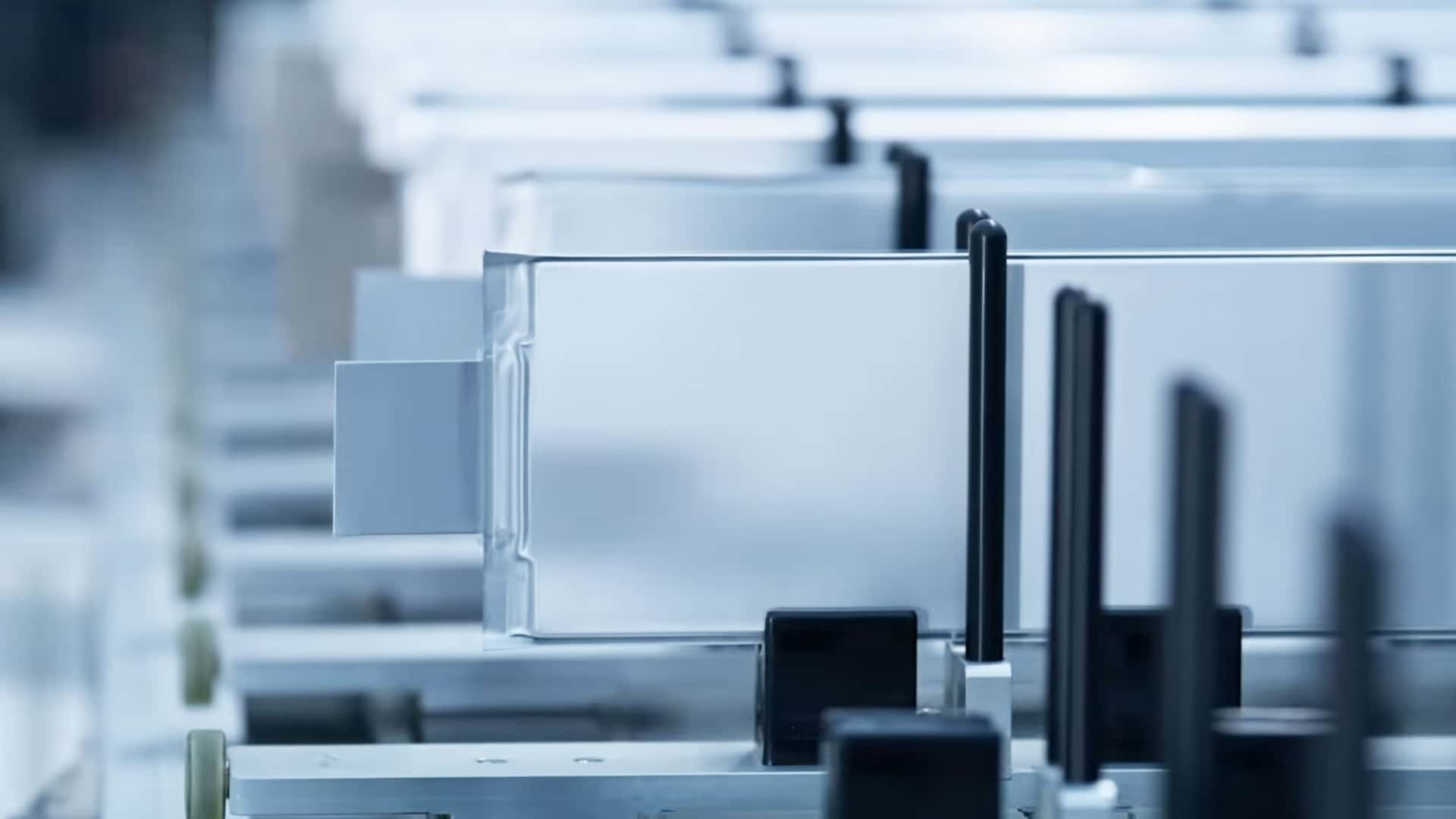
The first large-format pouch cells are now rolling off the assembly line at ProLogium’s gigawatt-capable facility in Taoyuan, Taiwan. This move positions the company at the forefront of the global race to commercialize next-generation energy storage solutions, moving beyond pilot projects to tangible manufacturing output.
Unpacking ProLogium’s Advanced Lithium Ceramic Battery
ProLogium’s flagship product entering mass production is its Generation 3.5 large-format 185.4 ampere-hour Lithium Ceramic Battery (LCB) cell. Rigorous testing by Germany’s reputable certification body, TÜV, has validated its impressive specifications, instilling confidence in its capabilities for future electric vehicle integration.
The LCB cell achieves a remarkable gravimetric energy density of 381 watt-hours/kilogram (Wh/kg) and a volumetric energy density of 903 watt-hours/liter (Wh/liter). These figures represent a significant leap forward in battery performance, crucial for extending EV driving ranges and optimizing package space.
Performance Benchmarks Against Current Technologies
To put ProLogium’s achievement into perspective, the gravimetric energy density of 381 Wh/kg is approximately 30% higher than that of mainstream nickel-manganese-cobalt (NMC) cells. Current NMC cells, which power the majority of electric cars in markets like the United States, typically peak around 300 Wh/kg at the cell level.
Furthermore, this performance significantly surpasses the more cost-effective lithium-iron-phosphate (LFP) cells, increasingly adopted in EVs worldwide, which generally offer a gravimetric energy density ranging between 150 and 200 Wh/kg. This enhanced energy density directly translates to longer ranges for electric vehicles on a single charge.
Independent Validation and Adherence to Standards
The credibility of ProLogium’s solid-state battery technology is further bolstered by independent verification from leading certification bodies. Beyond TÜV’s performance assessments, UL Solutions, a global leader in safety science and certification, conducted extensive testing on ProLogium’s large-format cells.
These tests were performed under China’s recently introduced GB/T 43568-2026 methodology, implemented in July. This new standard is designed to precisely differentiate between true all-solid-state cells and those that still incorporate some form of liquid electrolyte, ensuring strict compliance and transparency within the burgeoning battery market.
Rigorous Testing for Solid-State Authenticity
During UL Solutions’ examination, ProLogium’s cell underwent a demanding six-hour vacuum test at a constant temperature of 248°F (120°C). The recorded weight loss during this extreme test was less than 0.05%, comfortably below the 0.5% maximum threshold established by the GB/T 43568-2026 standard. This stringent evaluation confirms the cell’s genuine all-solid-state composition and its stability under challenging conditions.
The Gen 3.5 cell’s internal architecture features a composite solid electrolyte and a ceramic separator. This sophisticated design, coupled with a proprietary edge-frame structure, plays a critical role in isolating potential internal burrs while simultaneously providing robust sealing and insulation, integral to both performance and longevity of this solid-state battery technology.
Advancements in Charging and Safety
Beyond impressive energy density, ProLogium’s previous Generation 3 cell demonstrated remarkable charging capabilities and safety features. This earlier iteration could achieve a fast charge from 5% to 80% state of charge in a mere eight and a half minutes, significantly reducing charging stops for electric vehicles.
Crucially, the inherent safety advantages of solid-state batteries are highlighted by ProLogium’s tests. The Gen 3 cell proved resistant to thermal runaway and fire, even when subjected to extreme conditions such as being shot with a bullet, exposed to temperatures as high as 338°F (170°C), or overcharged at twice its rated voltage. These safety attributes are paramount for consumer confidence and broader adoption of electric mobility.
Scaling Production: Global Ambitions Unveiled
While the initial production capacity of ProLogium’s Taoyuan facility for the Gen 3.5 large-format pouch cells stands at 0.5 gigawatt-hours (GWh), the company has outlined ambitious plans for significant expansion. This initial output is sufficient for approximately 6,000 EV battery packs, each with 80 kWh of capacity, a modest start compared to conventional lithium-ion battery plants.
However, the Taiwanese facility is slated to double its production capacity by 2030, demonstrating a clear commitment to scaling operations. Furthermore, ProLogium is embarking on a major international expansion with a second, much larger production facility planned for Dunkirk, France. This European gigafactory is designed for an initial annual output of 4 GWh, with the potential to reach a maximum capacity of 44 GWh.
The French factory is projected to come online in 2028, with a strategic ramp-up of production through 2030. This substantial investment underscores ProLogium’s intent to become a key global supplier of advanced solid-state battery technology, addressing the surging demand for reliable and high-performance EV batteries across continents.
The Next Horizon: ProLogium’s Gen 4 Battery Cell
Looking ahead, ProLogium is already progressing towards its Generation 4 battery cell, which it anticipates will be available in the near future. This next-generation solid-state battery promises even greater advancements, featuring a fully inorganic superfluidized electrolyte system.
The Gen 4 cells are expected to deliver further improvements in charging speeds and exhibit superior performance in low-temperature environments, addressing common challenges faced by current battery technologies. A key advantage of this forward-looking design is its compatibility with existing manufacturing infrastructure.
Factories currently assembling Gen 3.5 cells will require upgrades to just 10% of their line equipment to transition to Gen 4 production. This modular upgrade pathway is critical for maintaining cost efficiency and accelerating the adoption of new innovations, positioning ProLogium for continuous evolution in the competitive solid-state battery technology market.
Conclusion: A New Era for Electric Vehicles
The commencement of mass production for all-solid-state batteries by ProLogium, supported by Mercedes-Benz, marks a momentous occasion for the automotive and energy sectors. This development promises to deliver electric vehicles with longer ranges, significantly faster charging capabilities, and enhanced safety features, addressing some of the primary concerns currently facing EV adoption.
As the company scales its operations in Taiwan and establishes a formidable presence in Europe, ProLogium is set to play a crucial role in the global transition to sustainable electric mobility. This breakthrough underscores the accelerating pace of innovation in battery technology, bringing the widespread availability of advanced solid-state solutions closer to reality.
Frequently Asked Questions (FAQ)
What makes ProLogium’s solid-state batteries significant?
ProLogium’s significance lies in being one of the first companies to achieve mass production of all-solid-state battery cells. Backed by Mercedes-Benz, their advanced Lithium Ceramic Batteries (LCB) offer superior energy density, rapid charging, and enhanced safety, positioning them as a potential game-changer for the electric vehicle industry’s future.
How do ProLogium’s batteries compare to existing EV batteries?
ProLogium’s Gen 3.5 LCB cells boast a gravimetric energy density of 381 Wh/kg, which is approximately 30% higher than the 300 Wh/kg typically found in mainstream NMC (nickel-manganese-cobalt) lithium-ion batteries. This translates to longer driving ranges and better overall performance for electric vehicles.
What are the key safety features of these solid-state batteries?
ProLogium’s solid-state batteries exhibit remarkable safety, having been tested to withstand extreme conditions without catching fire. This includes remaining stable when shot, enduring temperatures up to 338°F (170°C), and tolerating overcharging at twice the rated voltage, significantly enhancing EV safety.
Where are ProLogium’s solid-state batteries being produced?
Currently, ProLogium’s all-solid-state battery cells are mass-produced at their gigawatt-capable facility in Taoyuan, Taiwan. The company also plans a significant expansion, including a new, much larger 44 GWh production facility in Dunkirk, France, expected to commence operations by 2028.
What is the charging speed of ProLogium’s latest battery technology?
ProLogium’s Generation 3 solid-state battery cells have demonstrated impressive fast-charging capabilities, reaching an 80% state of charge from 5% in approximately eight and a half minutes. The newer Generation 3.5 cells are also designed for fast charging, promising similar rapid replenishment times crucial for EV adoption.
How is the authenticity of ProLogium’s solid-state claims verified?
The authenticity of ProLogium’s all-solid-state battery claims has been independently verified by reputable certification bodies like TÜV and UL Solutions. UL Solutions tested the cells under China’s strict GB/T 43568-2026 methodology, confirming minimal weight loss under vacuum, which is a key indicator of true solid-state composition.
What are ProLogium’s future plans for solid-state battery development?
ProLogium is actively developing its Generation 4 battery cell, which will feature a fully inorganic superfluidized electrolyte system. This next-gen battery promises even faster charging, improved low-temperature performance, and a cost-effective upgrade path for existing production lines, signaling continuous innovation in solid-state battery technology.