
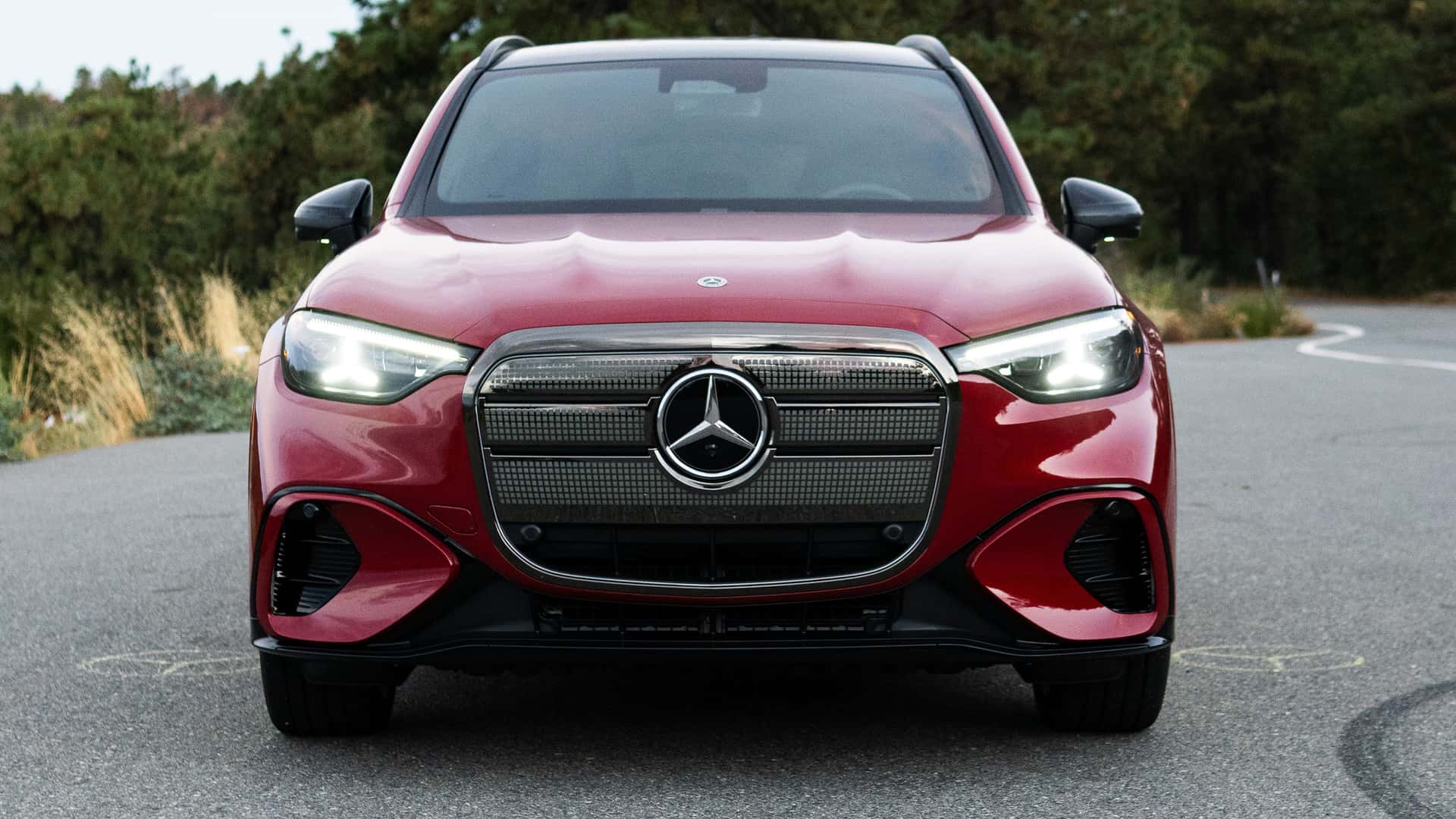
Key Takeaways:
- Mercedes-Benz has forged a strategic partnership with UK-based autonomous driving startup Wayve to integrate its ‘AI Driver’ technology into future vehicles.
- This collaboration aims to deliver an advanced urban point-to-point driving assistant, akin to Tesla’s Full Self-Driving (Supervised), within the next two years.
- Wayve’s innovative ‘end-to-end’ AI approach distinguishes itself by not requiring high-definition (HD) maps, potentially simplifying deployment across diverse geographies.
- The new deal raises questions about its interplay with Mercedes’ ongoing collaboration with Nvidia for its MB.Drive Assist Pro system, signalling a multi-pronged strategy in the competitive ADAS landscape.
- This move underscores Mercedes’ commitment to leading in advanced driver-assistance systems, building on its legacy from Distronic to the Level 3 Drive Pilot.
Mercedes-Benz, a stalwart in automotive innovation, has announced a significant strategic collaboration with Wayve, a UK-based autonomous-driving startup. This partnership is poised to introduce an advanced point-to-point driving assistant into Mercedes vehicles within the next two years, signalling a robust push towards developing a sophisticated Mercedes FSD-like system.
The agreement leverages Wayve’s cutting-edge ‘AI Driver’ technology, which promises advanced urban point-to-point driving assistance. This functionality draws a direct comparison to Tesla’s Full Self-Driving (Supervised) system, highlighting Mercedes-Benz’s ambition to rival current market leaders in advanced driver-assistance capabilities.
Wayve’s AI Driver: An End-to-End Approach to Autonomy
At the heart of this new collaboration is Wayve’s unique approach to autonomous driving. The startup champions an ‘end-to-end’ artificial intelligence (AI) methodology for its ‘AI Driver’ system. This innovative framework allows vehicles to learn directly from real-world driving data, bypassing the traditional reliance on complex, pre-mapped high-definition (HD) maps.
The elimination of HD maps could be a significant differentiator, potentially enabling faster and more scalable deployment of advanced driver-assistance systems across varied and rapidly changing urban environments. This method reduces the dependency on static geographical data, offering greater flexibility and adaptability for a Mercedes FSD-like system.
Mercedes-Benz has been an investor in Wayve, and the recent agreement is a natural progression of a multi-year technical partnership between the two entities. This long-standing relationship underscores a shared vision for the future of intelligent driving systems and validates Wayve’s technological prowess in the rapidly evolving autonomous vehicle sector.
Navigating the Dual Strategy: Wayve and Nvidia
While the announcement of the Wayve partnership marks a new chapter, it also brings to the forefront questions regarding Mercedes-Benz’s existing collaborations in the autonomous driving space. Notably, the luxury automaker maintains a significant partnership with Nvidia, aimed at delivering its own point-to-point system.
Last year, Mercedes showcased MB.Drive Assist Pro, an Nvidia-based system that promised to guide vehicles to a destination under driver supervision, adeptly managing pedestrians, traffic lights, and other complex urban scenarios. Despite its demonstration, MB.Drive Assist Pro has yet to reach customer vehicles, creating an intriguing dynamic with the newly announced Wayve integration.
The precise details regarding how these two distinct partnerships—Wayve and Nvidia—will coexist or be integrated into Mercedes-Benz’s broader advanced driver-assistance systems strategy remain largely unarticulated. This dual approach could indicate Mercedes’ strategy to explore multiple technological pathways to accelerate its development of advanced autonomous capabilities, ensuring a robust Mercedes FSD-like system.
Mercedes-Benz: A Legacy of Driver Assistance Innovation
Mercedes-Benz has a long and distinguished history in pioneering advanced driver-assistance technologies. The company was among the first to introduce radar-based cruise control, launching its groundbreaking Distronic system on the S-Class in the late 1990s. This innovation marked a significant step towards vehicles autonomously managing their speed in response to surrounding traffic.
More recently, in 2023, Mercedes-Benz achieved a major milestone by becoming the first automaker to sell a Level 3 driver-assistance system in the United States that permitted hands- and eyes-free operation under specific conditions. Known as Drive Pilot, this system could operate on designated highways in California and Nevada at low speeds, setting a new benchmark for conditional autonomy.
However, earlier this year, Mercedes-Benz reportedly paused the expansion of its Drive Pilot system. This decision was made to allow the company to redirect its focus and resources towards its point-to-point project with Nvidia, highlighting the automaker’s evolving priorities in the race for advanced autonomous driving. The integration of a Mercedes FSD-like system is clearly a top priority.
The Intensifying Race for Advanced ADAS Features
The automotive industry is currently embroiled in an intense competition to develop and deploy advanced driver-assistance systems that offer capabilities beyond traditional cruise control. Tesla’s Full Self-Driving (Supervised) has set a high bar, prompting numerous manufacturers to pursue similar point-to-point navigation features.
Other major players are also making significant strides in this domain. Rivian, for instance, has plans to roll out a point-to-point upgrade to its Autonomy+ system within the current year. Toyota has publicly stated its intentions to introduce its own Level 2++ feature by 2028, further intensifying the competitive landscape.
Hyundai has strategically partnered with Nvidia for its near-term Level 2+ capabilities, while simultaneously developing an in-house Atria AI system for later in the decade. Luxury EV maker Lucid is also collaborating with Nvidia, underscoring the chipmaker’s pervasive influence in the autonomous driving hardware and software ecosystem. These developments showcase the industry-wide push for a Mercedes FSD-like system and other advanced autonomous driving features.
Wayve’s Growing Influence in the Autonomous Space
Wayve has rapidly emerged as a key technology provider in the advanced driver-assistance sector. Beyond its recent deal with Mercedes-Benz, the UK-based startup has successfully secured partnerships with other prominent global automakers.
Over the past year, Wayve has entered into agreements to integrate its technology into vehicles produced by Stellantis, a multinational automotive corporation encompassing brands like Fiat, Chrysler, Peugeot, and Citroën. Additionally, Nissan, a major Japanese automotive manufacturer, has also tapped Wayve for its innovative autonomous driving solutions. These collaborations cement Wayve’s position as a significant and sought-after player in the global pursuit of sophisticated autonomous driving capabilities.
Outlook: The Future of Driving with a Mercedes FSD-Like System
The collaboration between Mercedes-Benz and Wayve represents a pivotal moment in the evolution of automotive technology. By aiming to integrate advanced urban point-to-point driving assistance within two years, Mercedes-Benz is clearly signaling its intent to be at the forefront of the autonomous revolution. The success of this partnership, and its interplay with existing initiatives like the Nvidia collaboration, will be keenly watched by industry observers and consumers alike.
As vehicles become increasingly intelligent, the development of robust, reliable, and user-friendly advanced driver-assistance systems will define the next era of mobility. Mercedes-Benz’s latest move, embracing Wayve’s end-to-end AI Driver, positions it strategically to deliver a compelling Mercedes FSD-like system that could redefine driving experiences worldwide.
FAQ Section
What is the core of the Mercedes-Benz and Wayve partnership?
The partnership aims to integrate Wayve’s ‘AI Driver’ technology into Mercedes-Benz vehicles within two years. This will enable advanced urban point-to-point driving assistance, providing a highly automated driving experience similar to Tesla’s Full Self-Driving (Supervised) system, enhancing overall driver assistance capabilities.
How is Wayve’s ‘AI Driver’ technology unique?
Wayve’s ‘AI Driver’ uses an ‘end-to-end’ artificial intelligence approach, learning directly from real-world driving data. This method significantly reduces or eliminates the need for high-definition (HD) maps, making the system potentially more adaptable and scalable for deployment across diverse and dynamic urban environments compared to traditional ADAS solutions.
Does Mercedes-Benz have other partnerships for autonomous driving?
Yes, Mercedes-Benz also has an ongoing collaboration with Nvidia for its MB.Drive Assist Pro system, which promises point-to-point driving assistance. The Wayve deal complements this, indicating Mercedes’ multi-pronged strategy to develop advanced driver-assistance systems and explore various technological pathways to achieve its autonomous driving goals.
What is Mercedes-Benz’s history with advanced driver-assistance systems (ADAS)?
Mercedes-Benz has a rich history in ADAS, pioneering radar-based cruise control with its Distronic system in the late 1990s. In 2023, it introduced Drive Pilot, the first Level 3 hands- and eyes-free driver-assistance system in the U.S. for specific highway conditions, showcasing its long-standing commitment to innovation in this field.
When can consumers expect to see the Mercedes FSD-like system?
Mercedes-Benz and Wayve have announced plans to deploy the Wayve-based point-to-point driving assistant in Mercedes vehicles within the next two years. Specific details regarding which markets or vehicle models will receive this advanced Mercedes FSD-like system first are expected to be announced closer to the launch date.