
Key Takeaways
- Mercedes-Benz has officially exited the electric vehicle (EV) charging market in Europe, selling its proprietary network to French operator Electra.
- The transaction, valued at €99 million ($111 million), was disclosed in Mercedes-Benz’s third-quarter financial report.
- This strategic divestment means Mercedes-Benz will now exclusively rely on partnerships with third-party providers like Electra and Ionity for EV charging solutions across Europe.
- The move reflects a broader industry trend towards consolidation and the pursuit of economies of scale in the rapidly evolving EV charging infrastructure sector.
- Mercedes-Benz EV owners will continue to receive discounted charging rates, now across Electra’s expanded network and through other premium partnerships.
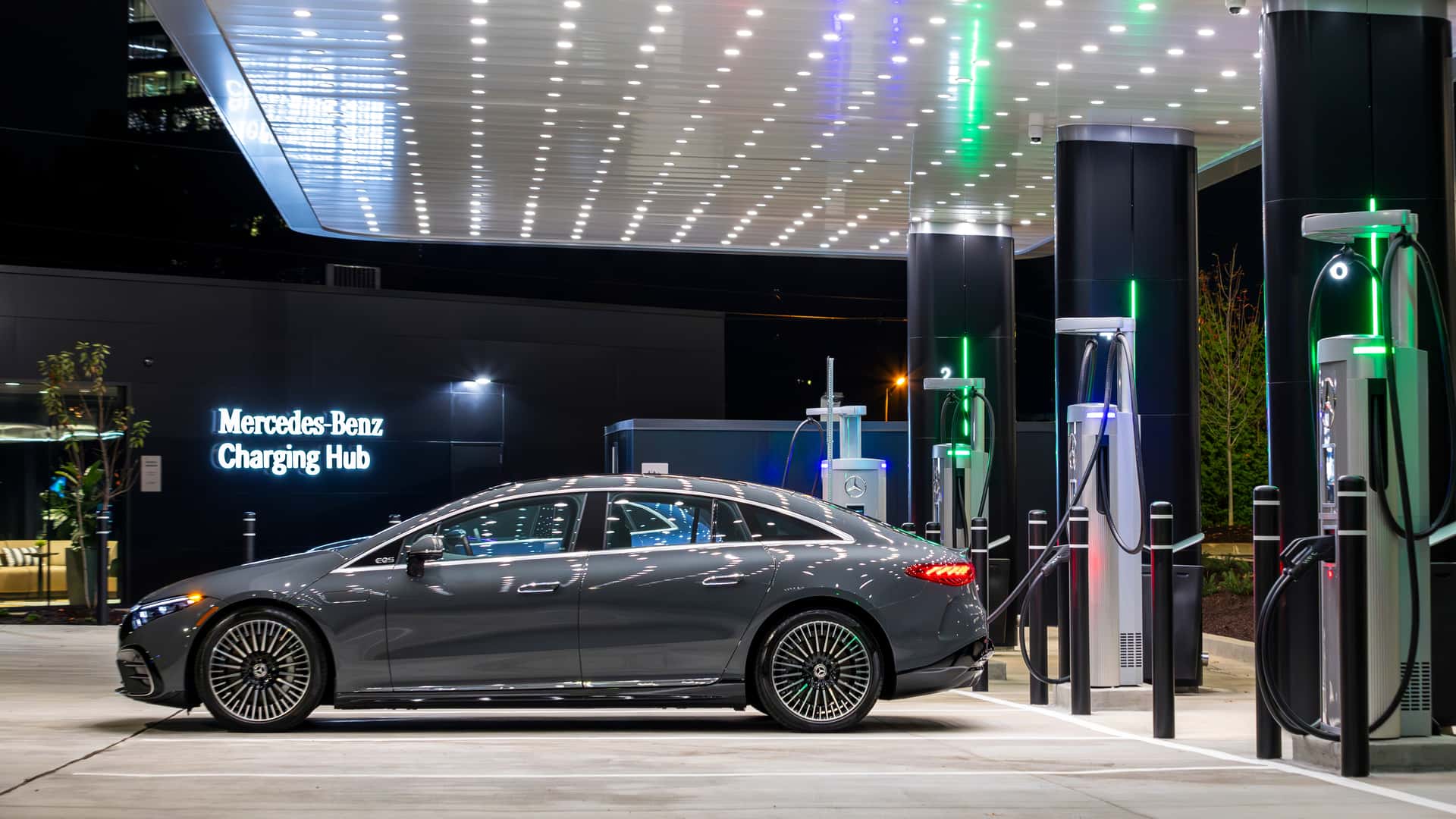
Stuttgart, Germany — Mercedes-Benz has made a significant strategic shift in its electric vehicle (EV) infrastructure approach, announcing its complete exit from the proprietary EV charging market across Europe. The luxury automotive manufacturer has sold its network of fast-charging hubs to Electra, a prominent French EV charging operator, a move first reported by *Electrive*.
This silent transaction, revealed within the automaker’s third-quarter financial report, underscores a recalibration of Mercedes-Benz’s investment priorities in the rapidly expanding EV ecosystem. The assets associated with this European charging business were valued at a substantial €99 million, equivalent to approximately $111 million.
Strategic Divestment Signals Industry Evolution
The decision to divest its European charging network marks a pivotal moment for Mercedes-Benz and the broader automotive industry. Instead of directly owning and operating charging stations, the German brand will now exclusively leverage external partnerships to provide charging solutions for its growing base of EV customers in the region.
The relinquished network, which Mercedes-Benz had actively developed, comprised 374 fast-charging ports distributed across 47 strategic locations throughout Europe. These facilities are now seamlessly integrated into Electra’s rapidly expanding infrastructure, bolstering the French operator’s footprint across the continent.
Electra’s Enhanced Role and Driver Benefits
Following this acquisition, Electra has been elevated to the status of a “Premium Partner” for Mercedes-Benz, a designation that places it second only to Ionity, another major player in the European charging landscape. This partnership is designed to ensure continued, high-quality charging access for Mercedes-Benz EV drivers.
Under the terms of the agreement, Mercedes-Benz EV drivers will benefit from discounted rates at a significantly enlarged network. They now have access to over 5,000 Electra chargers spread across 800 locations in multiple European countries, providing a comprehensive and convenient charging experience.
Economies of Scale Driving Corporate Decisions
The rationale behind Mercedes-Benz’s divestment appears to be rooted in the evolving dynamics of the EV charging market. Paul Tonini, Electra’s General Manager for Germany, elaborated on this trend, stating that the market is increasingly consolidating around larger providers.
This consolidation often makes it challenging for relatively smaller entities, such as the now-defunct Mercedes-Benz Charging Network in Europe, to maintain financial viability and achieve optimal operational efficiency. Larger networks benefit significantly from economies of scale, allowing for more cost-effective operations and a greater potential for income generation through broader user bases and diversified revenue streams.
By opting for a partnership model, Mercedes-Benz effectively secures premium access to a robust and expanding network without the substantial capital expenditure and operational complexities associated with building and maintaining its own infrastructure. This strategic move allows the automaker to focus its resources on core vehicle development and manufacturing, while relying on specialists for charging services.
A Look Back at Mercedes-Benz’s Charging Ambitions
The Mercedes-Benz Charging Network was launched just three years ago with ambitious goals. The company had initially aimed to establish over 10,000 fast chargers globally by the end of the decade, signaling a strong commitment to directly addressing range anxiety and enhancing the EV ownership experience.
The network was equipped with state-of-the-art technology, primarily utilizing high-powered charging equipment from Alpitronic. The majority of the sites featured advanced 400-kilowatt dispensers, ensuring rapid charging capabilities for Mercedes-Benz vehicles. Furthermore, earlier this year, the company had begun installing its first 1,000-kilowatt-capable stalls at select charging parks in both Europe and North America, pushing the boundaries of fast-charging technology.
While the European segment of this ambition has now been divested, the underlying commitment to advanced charging technology and a premium customer experience remains, albeit through a revised operational model focused on collaborations.
Immediate Impact and Future Outlook in Europe
The transition of ownership has been swift and efficient. This past weekend, the former Mercedes-Benz charging stalls were fully integrated into Electra’s operational network. While the charging functionality remains uninterrupted, users can anticipate imminent changes to the physical infrastructure.
The existing card payment terminals at these locations will soon be replaced, and the station branding will be updated to prominently display Electra’s ownership. This ensures a consistent brand experience across the newly expanded Electra network and clarifies operational responsibilities.
For Mercedes-Benz, the immediate future in Europe involves deepening its engagement with existing and new third-party providers. The objective is to continually broaden the availability of discounted charging rates for its EV owners across an even wider array of compatible networks, reinforcing convenience and accessibility.
Global Strategy: Differentiated Approaches for Different Markets
It is important to note that Mercedes-Benz’s decision to exit the European EV charging market does not extend globally. The automaker’s fast-charging business operations in the United States remain unaffected by this European transaction, indicating a differentiated regional strategy.
In the United States, Mercedes-Benz continues to operate its High-Power Charging network, which currently comprises 748 charging ports spread across 80 distinct locations. These figures are corroborated by data from the Department of Energy’s Alternative Fuels Data Center, highlighting the brand’s continued direct investment in North American infrastructure.
Similarly, in Canada, Mercedes-Benz maintains a presence with 62 charging ports available at eight dedicated stations. This regional distinction underscores how different market conditions, regulatory environments, and competitive landscapes can influence a global automaker’s infrastructure investment strategy.
The shift in Europe demonstrates a move towards asset-light models, focusing on leveraging the strengths of specialized charging providers. Meanwhile, continued direct investment in North America could reflect differing perceived needs for a proprietary network to ensure a premium brand experience in that specific market.
The Road Ahead for Mercedes-Benz’s EV Charging Strategy
Mercedes-Benz’s pivot from owning to partnering in Europe’s EV charging sector highlights a maturing electric vehicle market. As the industry evolves, automakers are continuously reassessing the most effective ways to support their EV customers while managing capital expenditure.
This strategic divestment allows Mercedes-Benz to mitigate the significant financial and operational challenges associated with building and maintaining a continent-wide charging network. By collaborating with established, large-scale charging providers like Electra and Ionity, the brand can ensure extensive, reliable, and premium charging access for its drivers without direct ownership.
Ultimately, this approach aims to deliver a seamless charging experience for Mercedes-Benz owners, offering them flexibility and choice across a robust network of third-party stations, aligning with a broader industry trend toward interoperability and partnership-driven growth in electric vehicle infrastructure.
FAQ Section
Why did Mercedes-Benz sell its EV charging network in Europe?
Mercedes-Benz divested its European EV charging network to focus on partnerships with larger, specialized providers like Electra. This move is driven by the increasing consolidation in the charging market and the desire to leverage economies of scale, allowing the automaker to avoid direct investment in infrastructure while ensuring premium access for its customers.
Which company acquired Mercedes-Benz’s European charging network?
The European EV charging network of Mercedes-Benz was acquired by Electra, a prominent French operator in the electric vehicle charging sector. This acquisition significantly expands Electra’s footprint and network capabilities across multiple European countries, integrating Mercedes-Benz’s former charging hubs.
What does this mean for Mercedes-Benz EV owners in Europe?
Mercedes-Benz EV owners in Europe will continue to receive discounted charging rates, now across Electra’s expanded network and through other premium partnerships like Ionity. The aim is to provide broader access and convenience, as the former Mercedes-Benz charging stations are integrated into Electra’s system.
Is Mercedes-Benz exiting the EV charging business globally?
No, Mercedes-Benz is not exiting the EV charging business globally. This divestment specifically pertains to its European operations. The company’s fast-charging networks in the United States and Canada remain operational and unaffected by this strategic decision, indicating a differentiated regional approach.
How many charging points did Mercedes-Benz’s European network have?
Prior to the sale to Electra, Mercedes-Benz’s proprietary EV charging network in Europe consisted of 374 fast-charging ports located at 47 different sites. These facilities, equipped with high-powered Alpitronic charging equipment, are now part of Electra’s extensive network, enhancing European charging infrastructure.
What was the value of the transaction?
The transaction for the sale of Mercedes-Benz’s European EV charging network to Electra was valued at €99 million, which translates to approximately $111 million. This financial detail was disclosed in Mercedes-Benz’s third-quarter financial report, highlighting the significant investment involved in the deal.