
Key Takeaways (TL;DR):
Two prominent YouTubers from TFLEV explored the long-term realities of owning a Fiat 500e obtained through exceptionally low-cost lease deals. While benefiting from federal and state EV tax credits combined with aggressive manufacturer promotions, making the vehicles nearly free, the experience was a mix of convenience and compromise. Owners Tommy and Case faced range limitations, especially in cold weather, and encountered persistent technical issues with charging and the infotainment system. Despite these challenges, the Fiat 500e proved to be a charming and practical electric daily driver for city use, highlighting that even less advanced EVs offer significant utility when acquired at minimal cost.

The Allure of Ultra-Affordable Electric Vehicles
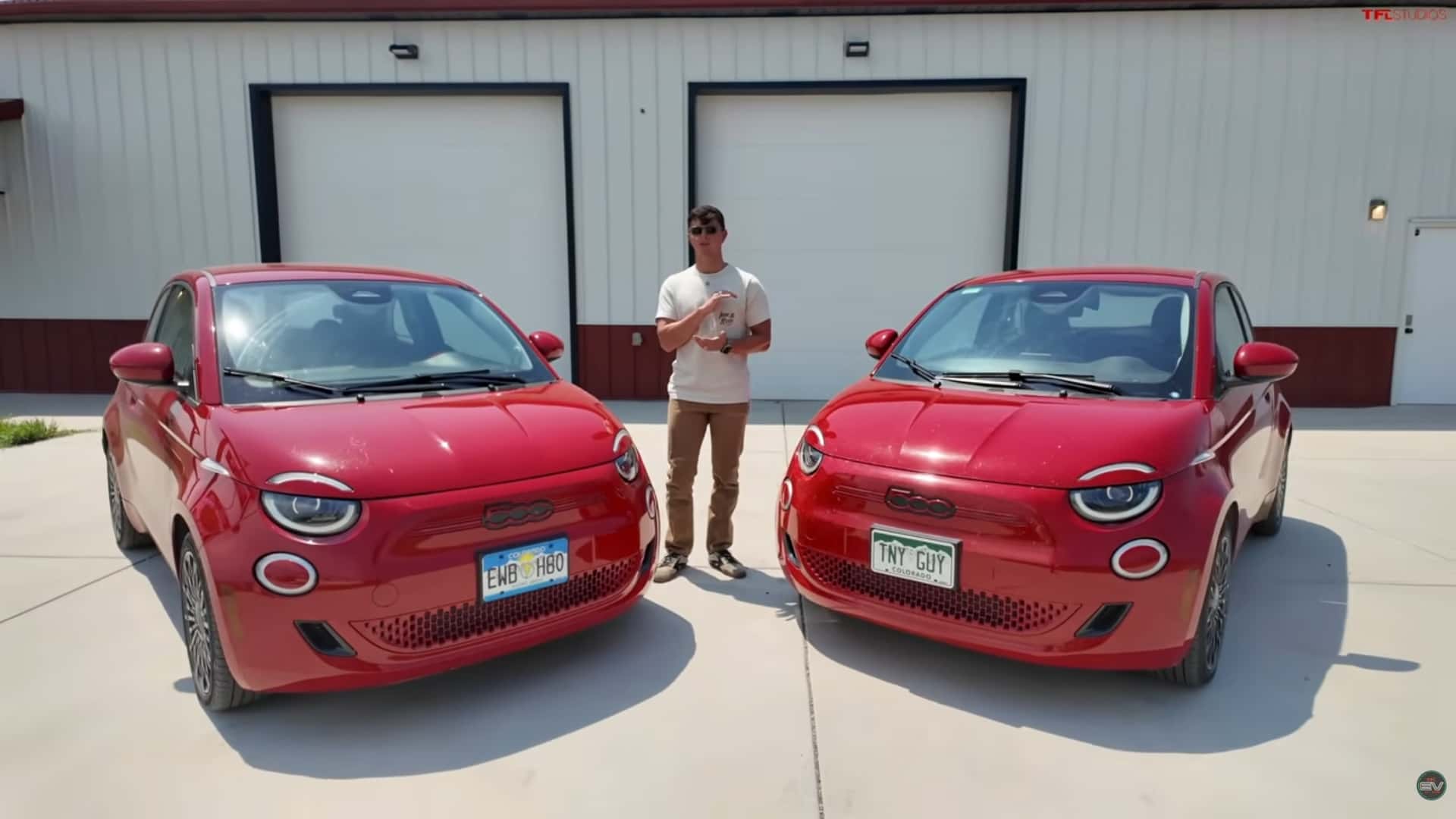
The prospect of acquiring a modern vehicle for minimal cost holds considerable appeal, influencing consumer decisions across various markets. This phenomenon has notably extended to the burgeoning electric vehicle (EV) sector. Two well-known hosts from the TFLEV YouTube channel, Tommy and Case, recently shared their comprehensive two-year experience with the Fiat 500e, secured through highly advantageous Fiat 500e lease deals.
Their journey offers a crucial real-world assessment of the practicalities and trade-offs associated with ultra-affordable electric mobility. A recent ownership update video, published two years after their initial acquisition around 2024, details a nuanced picture of life with a budget-friendly electric car, revealing both its charming aspects and persistent challenges.
Unpacking the Nearly Free Acquisition: How Incentives Played a Role
The remarkable affordability of the Fiat 500e for Tommy and Case was not coincidental. It was the direct outcome of a strategic convergence of aggressive manufacturer promotions and substantial government incentives. Fiat, at the time, was offering compelling nationwide promotions for the 500e, designed to boost market penetration for its electric compact.

These promotional offers were further amplified by significant government subsidies. Crucially, the federal $7,500 EV tax credit provided a nationwide financial incentive for electric vehicle purchases and leases, encouraging broader adoption. In addition, Colorado, where Tommy and Case reside, offered its own substantial $5,000 EV credit. This stacking of federal and state incentives, combined with Fiat’s promotions, created an almost unprecedented opportunity for consumers.
The financial details underscore the extraordinary value proposition. Tommy reported an initial payment of just $1,000, solely to cover taxes, with subsequent monthly payments amounting to $0 throughout his lease term. Case, opting for a lease wear-and-tear protection plan, made an upfront payment of a few hundred dollars and now pays a nominal $49 per month. These figures demonstrate how effectively the Fiat 500e lease deals transformed a potentially significant automotive expense into a near-zero cost, democratizing access to electric vehicle ownership for a select period.
Real-World Range and Charging: Constraints on Freedom
While the financial benefits were substantial, the inherent specifications of the Fiat 500e presented tangible practical limitations, particularly concerning its battery range and charging infrastructure capabilities. The vehicle offers an estimated 149 miles of range on a full charge, combined with a direct current (DC) fast-charging capacity of only 85 kW. These specifications firmly position the Fiat 500e primarily as a city commuter, rather than a vehicle suited for extensive long-distance travel or road trips.
Both YouTubers explicitly stated that their 500es were not their primary vehicles for extended journeys, necessitating reliance on other cars in their personal fleets for longer trips. The challenge of range anxiety became even more pronounced during colder weather conditions, where the effective range diminished significantly to approximately 100 miles. A notable omission in the vehicle’s features was the lack of battery preconditioning, a function that would optimize battery temperature for improved cold-weather performance and faster charging rates.
This absence of preconditioning, coupled with the reduced range, made any aspirations of traveling beyond immediate urban vicinities during winter months a considerable logistical hurdle for the compact electric Fiat. The experience underscored a critical consideration for prospective EV owners: assessing typical travel patterns against a vehicle’s specific range and charging profile is paramount.
Navigating Technical Glitches and Unique Ownership Quirks
Beyond the fundamental performance characteristics, Tommy and Case reported several recurring technical and minor mechanical issues that introduced friction into an otherwise economically advantageous ownership experience. A primary point of concern involved persistent and unpredictable charging interruptions. According to their observations, “Both cars—plus the ones purchased by Tommy’s in-laws and one of TFL’s support staff—often stop charging after a few minutes when plugged in, and neither works on certain chargers.” This widespread issue across multiple units points to potential inconsistencies in the vehicle’s charging management software or compatibility issues with a diverse range of public and private charging stations, a crucial aspect for consistent electric vehicle usability.
The Fiat 500e’s accompanying mobile application also garnered significant criticism. Tommy explicitly stated, “The app is pretty much useless, Tommy says,” indicating a severe lack of functional utility, reliability, or user-friendliness. Furthermore, an unusual and somewhat intrusive system quirk involved the car sending email notifications to the owner every time a charging session commenced or concluded, an alert system that users found to be excessive and unnecessary. On the mechanical front, Tommy’s specific vehicle experienced a “slightly misaligned” rear hatch, which occasionally hindered proper opening, compromised the seal against external elements, and allowed the ingress of wind and dust into the cabin. While these issues individually might appear minor, their cumulative effect over two years contributed to an imperfect user experience.
The Daily Driving Charm: Where the Fiat 500e Excels
Despite the array of technical imperfections and practical limitations, the overarching sentiment from both YouTubers remained remarkably positive, particularly regarding the Fiat 500e’s role as an urban daily driver. They found the compact electric vehicles to be “plenty practical for around-town runs, and reasonably nice to drive.” The agility, responsive handling, and diminutive dimensions of the 500e are inherently well-suited for navigating congested city streets, executing tight maneuvers, and fitting into compact parking spaces, offering a significant advantage in dense urban environments.
While acknowledging that the current generation of the electric 500e might not replicate the exact engaging driving dynamics of its internal combustion engine predecessors, the vehicle still provided a more spirited and enjoyable driving experience compared to some of its competitors in the affordable EV segment. Tommy specifically drew a comparison with previous last-generation Nissan Leaf models also leased by TFL, noting, “But the last-gen Leaf was far comfier and more practical, Tommy says.” This comparison highlights the subjective trade-offs that consumers often face between driving engagement, interior comfort, and overall practicality when evaluating entry-level electric vehicles.
The Value Proposition: Redefining “Free” in Electric Vehicle Ownership
The comprehensive two-year ownership experience with these nearly free Fiat 500e lease deals offers a poignant lesson in the economics of the automotive market: the price often directly correlates with a product’s capabilities and feature set. As the original analysis succinctly summarized, “In either case, you get what you pay for.” Vehicles such as the Fiat 500e and the Nissan Leaf, though made highly affordable or effectively free through aggressive promotional schemes, inherently do not offer the extensive range, ultra-fast charging, or cutting-edge infotainment technology found in premium-segment electric vehicles. These advanced features inevitably command a higher price point within the competitive EV market.
However, the pivotal takeaway from Tommy and Case’s journey is the surprising degree of utility and satisfaction derived from these entry-level electric vehicles. Their “overall positive experiences with the 500e are a good reminder that even some of the least impressive EVs still make for incredible daily drivers.” For individuals whose primary transportation needs revolve around local commutes, urban errands, and short-distance travel, these affordable electric options represent an undeniable value proposition. They demonstrate that electric mobility can be remarkably accessible, practical, and enjoyable, even when the initial financial barrier is significantly reduced, despite the occasional quirks.
Conclusion
The detailed two-year review of the Fiat 500e by TFLEV’s Tommy and Case provides invaluable insights into the multifaceted realities of ultra-affordable electric vehicle ownership. While challenges pertaining to battery range, charging infrastructure reliability, and minor technical malfunctions were evident, the compelling financial benefits derived from strategic Fiat 500e lease deals undeniably shaped a largely favorable overall perception. Their documented experience underscores a critical truth in the rapidly evolving automotive landscape: that even the most basic electric vehicles can offer a practical, engaging, and highly economical solution for a significant portion of everyday driving needs, particularly when the initial entry barrier to electric mobility is substantially lowered.
Frequently Asked Questions About Fiat 500e Lease Deals
Q: What made the Fiat 500e lease deals so affordable for the YouTubers?
A: The exceptional affordability stemmed from a combination of aggressive Fiat promotions, the federal $7,500 EV tax credit, and Colorado’s state-specific $5,000 EV credit. These incentives, when stacked, drastically reduced the overall cost, making the effective monthly payments negligible.
Q: What were the primary practical limitations of the Fiat 500e?
A: The main limitations included a range of 149 miles (dropping to around 100 miles in cold weather), slow 85 kW fast-charging, and a lack of battery preconditioning. These factors made the 500e less suitable for long-distance travel or extensive winter driving outside urban areas.
Q: Did the owners encounter any reliability issues with their Fiat 500e vehicles?
A: Yes, they reported several issues, including charging interruptions where the cars would stop charging prematurely, incompatibility with certain chargers, and a “useless” mobile app. Tommy’s car also had a misaligned rear hatch causing improper sealing.
Q: How did the Fiat 500e compare to other affordable EVs like the Nissan Leaf?
A: While the Fiat 500e was considered more engaging to drive than the last-generation Nissan Leaf, Tommy noted that the Leaf offered a “far comfier and more practical” experience, highlighting different strengths in the compact EV segment.
Q: What was the overall sentiment regarding living with a nearly free electric vehicle?
A: Despite the noted imperfections, both owners expressed a positive overall sentiment. They found the Fiat 500e to be a charming and practical electric daily driver for local errands and city commutes, proving that even less technologically advanced EVs can offer substantial value.
Q: Are these advantageous Fiat 500e lease deals still available today?
A: The article references promotions and lease deals that were notably prevalent around 2024. Such aggressive, stacked incentives are typically time-limited and subject to change based on market conditions and government policies. Potential buyers interested in current electric vehicle incentives should consult local dealerships and government resources for the latest offers available.