
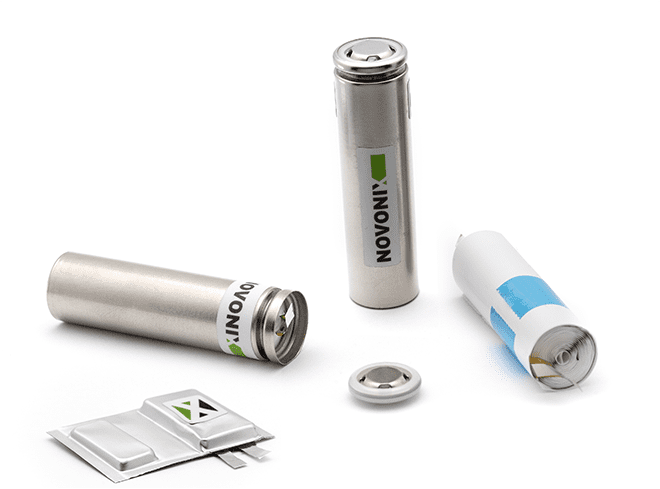
In a pivotal development for the electric vehicle (EV) industry and the burgeoning domestic battery supply chain, NOVONIX has announced the delivery of a mass production qualification sample – commonly known as a “C-sample” within the exacting automotive supply ecosystem – of its synthetic graphite anode active material (AAM) to Panasonic Energy. This milestone signifies a critical step forward in establishing a robust and secure US battery anode supply for Panasonic’s extensive cell manufacturing operations.
The achievement is particularly notable as it marks the first known instance of a synthetic graphite AAM C-sample being produced in North America. This advancement directly addresses the global concentration of synthetic graphite production, which is currently heavily dominated by Chinese manufacturers, paving the way for greater supply chain independence for the United States.

Key Takeaways
- NOVONIX has delivered a C-sample of synthetic graphite anode active material to Panasonic Energy.
- This marks the first known North American-produced synthetic graphite AAM C-sample.
- The delivery represents a significant stride toward a secure US battery anode supply for Panasonic’s manufacturing.
- Formal validation by Panasonic is underway, with mass production targeted for the second half of 2027, contingent on successful qualification.
- The move underscores efforts to reduce reliance on foreign supply chains for critical EV battery components.
Understanding the C-Sample Milestone
The automotive industry operates on a meticulous, multi-stage qualification process for components destined for mass production. A “C-sample” represents the culmination of extensive development and prototyping, signifying a mass production-intent sample. This stage is distinctly different from earlier development (A-sample) and prototype (B-sample) phases, where materials and processes are still being refined and tested at a smaller scale.
At the C-sample stage, the material is produced using equipment and processes intended for full commercial scale, ensuring that the quality, consistency, and performance meet the rigorous specifications required for high-volume manufacturing. While NOVONIX’s internal assessments indicate that the material successfully meets Panasonic’s stringent specifications, the official validation remains subject to Panasonic’s comprehensive evaluation over the forthcoming months.
This phase is critical for ensuring the material’s compatibility with Panasonic’s cell designs and manufacturing processes, guaranteeing optimal performance, safety, and longevity in the final lithium-ion battery cells. Success at this stage is a prerequisite for advancing towards commercial production.

Strategic Imperatives for a US Battery Anode Supply
The delivery of this C-sample carries immense strategic weight for the broader North American EV ecosystem. Synthetic graphite is the predominant anode material utilized in lithium-ion batteries due to its excellent electrochemical properties, including high energy density and cycle stability. However, the vast majority of its global production capacity is concentrated outside North America, primarily in China.
This geographical concentration creates inherent vulnerabilities in the supply chain, posing risks to material availability, cost stability, and geopolitical security for countries seeking to rapidly scale up EV production. The push for a localized US battery anode supply is driven by a desire to mitigate these risks and to foster a resilient domestic industry capable of supporting the projected growth in electric vehicle manufacturing.
Initiatives like the Inflation Reduction Act (IRA) have further incentivized the localization of battery component manufacturing, offering significant tax credits and other benefits for EVs with batteries sourced and processed within North America. NOVONIX’s advancement directly aligns with these national objectives, aiming to establish a secure and reliable supply of critical battery materials within the region.
NOVONIX’s Role in Shaping the Domestic Supply Chain
NOVONIX has positioned itself as a key player in the development and supply of high-performance synthetic graphite anode materials. The company’s technology and manufacturing capabilities are central to its ambition of establishing a fully domestic US battery anode supply, reducing reliance on international markets for this crucial component.
Commenting on the significance of this development, NOVONIX CEO Mike O’Kronley stated, “The delivery of a mass production C-sample to Panasonic is an important moment for NOVONIX and for the development of a secure North American battery materials supply chain. We are now one step closer to realizing a fully domestic supply chain in the US.” This statement underscores the company’s commitment to strengthening the domestic battery manufacturing landscape and its strategic partnership with a global leader like Panasonic.
The company’s focus on innovative production techniques and quality control ensures that its synthetic graphite AAM not only meets but potentially exceeds industry benchmarks, providing a competitive edge for its partners in the rapidly evolving EV market.
Panasonic Energy’s Vision for North American Manufacturing
Panasonic Energy, a global pioneer in battery technology and a major supplier to the automotive industry, has made significant investments in expanding its manufacturing footprint in North America. The company operates gigafactories in the US and is actively pursuing partnerships to secure diversified and resilient supply chains for its battery production.
Securing a local US battery anode supply is a strategic imperative for Panasonic. It ensures proximity to its manufacturing facilities, reduces logistical complexities, and enhances the security of its raw material sourcing. This local sourcing also helps Panasonic meet requirements for incentives under various government programs aimed at promoting domestic content in EV production.
The collaboration with NOVONIX is a testament to Panasonic’s proactive approach in building a robust and localized supply chain, critical for its long-term growth and competitiveness in the North American EV market.
The Path Ahead: Validation and Commercial Scale-Up
While the C-sample delivery marks a significant milestone, the journey to mass production involves further rigorous steps. Panasonic Energy will now conduct extensive testing and validation of the NOVONIX material over the next several months. This comprehensive evaluation will cover various aspects, including material purity, electrochemical performance, manufacturing compatibility, and long-term durability under operational conditions.
NOVONIX has reiterated its previous guidance, anticipating that mass production for Panasonic is slated to commence in the second half of 2027. This timeline, however, remains contingent on the successful completion of Panasonic’s qualification process and the material receiving full approval. The meticulous nature of this validation phase is standard in the automotive industry, where even minor discrepancies can have significant implications for battery performance and safety.
Once qualified, the ramp-up to full commercial production will involve scaling NOVONIX’s manufacturing operations to meet the substantial demand from Panasonic’s gigafactories, solidifying the presence of a localized US battery anode supply.
Broader Implications for the North American EV Ecosystem
The successful development and impending mass production of a domestically sourced synthetic graphite anode will have profound implications beyond NOVONIX and Panasonic. It serves as a powerful proof point for the feasibility of building out a comprehensive North American battery supply chain, encompassing everything from raw material processing to final cell assembly.
Such localization efforts are crucial for enhancing economic resilience, creating high-value manufacturing jobs, and fostering innovation within the domestic EV sector. It also contributes to the strategic goal of reducing reliance on geopolitical rivals for critical technologies, ensuring national security and economic stability.
This development sends a clear signal to other players in the battery materials and EV manufacturing sectors, encouraging further investment and collaboration aimed at strengthening the overall North American industrial base. The pursuit of a secure US battery anode supply is not merely a corporate objective but a strategic national imperative.
FAQ Section
What is a C-sample in the automotive supply chain?
A C-sample is a mass production-intent sample of a component, following earlier development (A-sample) and prototype (B-sample) stages. It is produced using final manufacturing processes and equipment to verify that the material meets all specifications for high-volume commercial production.
Why is synthetic graphite important for lithium-ion batteries?
Synthetic graphite serves as the dominant anode active material in lithium-ion batteries. It is preferred for its excellent electrochemical properties, including high energy density, long cycle life, and stable performance, which are crucial for electric vehicle batteries.
Why is a North American-produced C-sample significant?
This C-sample represents the first known instance of North American production of synthetic graphite AAM at this qualification stage. It is crucial for reducing reliance on foreign supply chains, particularly from China, and building a more resilient, localized US battery anode supply for EV manufacturing.
What are the next steps after C-sample delivery?
Following the C-sample delivery, Panasonic Energy will conduct a formal validation process over several months to rigorously assess the material’s performance and compatibility. Successful completion of this qualification is necessary before proceeding to mass production.
When is mass production expected to begin?
NOVONIX anticipates that mass production of the synthetic graphite anode active material for Panasonic is expected to commence in the second half of 2027. This timeline is contingent upon the successful and satisfactory completion of Panasonic’s comprehensive validation process.
How does this align with US efforts to bolster EV supply chains?
This development strongly supports US government initiatives, such as the Inflation Reduction Act, which aim to localize the manufacturing and sourcing of critical EV battery components. It contributes to greater domestic supply chain independence, economic resilience, and job creation within the US EV sector.