
Key Takeaways / Summary Box (TL;DR)
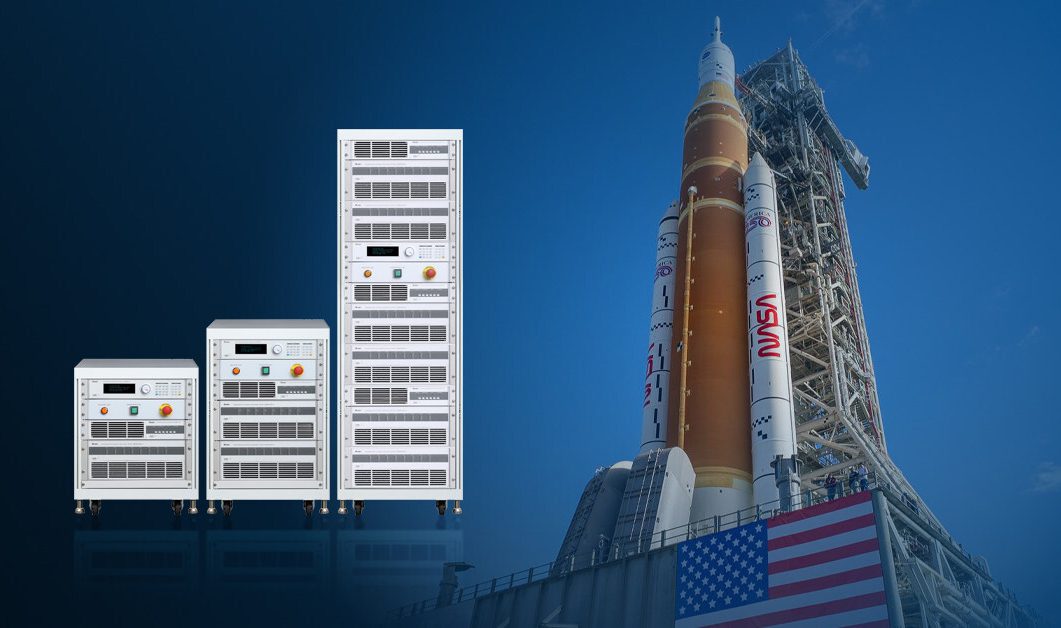
Chroma Systems Solutions’ 17020 Battery Test System has played a critical role in validating the lithium-ion battery systems powering NASA’s Orion crew capsule for the upcoming Artemis II mission. This crucial mission marks the first crewed flight of the Artemis program, designed to send four astronauts on a circumlunar voyage. The sophisticated Chroma’s battery tester underwent a rigorous two-phase validation process, spanning both laboratory conditions and direct integration into the launch tower, to ensure the absolute reliability and safety of Orion’s power systems under extreme space conditions, including vital eclipse simulations and the demands of its crucial launch abort system.

Ensuring Mission Criticality: Chroma’s Role in Artemis II
In a significant stride for human space exploration, Chroma Systems Solutions has announced the successful validation of the lithium-ion battery systems aboard NASA’s Orion crew capsule, destined for the Artemis II mission. This milestone was achieved through the meticulous application of the company’s advanced Chroma 17020 Battery Test System.
The Artemis II mission stands as a pivotal moment, marking the first crewed flight of the ambitious Artemis program. It will carry four astronauts on a challenging circumlunar voyage, setting the stage for future lunar landings and deeper space exploration.
The Chroma 17020 Battery Test System: A Pillar of Reliability
The Chroma 17020 Battery Test System is a programmable, high-precision platform renowned for its capabilities in evaluating battery performance, reliability, and safety. Its selection for such a high-stakes mission underscores its advanced features and the trust placed in its accuracy by NASA engineers.

For space missions, where even the smallest component failure can have catastrophic consequences, the rigorous testing provided by Chroma’s battery tester is indispensable. The system is designed to simulate a wide array of operational conditions, crucial for understanding battery behavior in the unforgiving environment of space.
A Dual-Phase Validation for Uncompromised Safety
The validation process for Orion’s battery systems was executed in two distinct, yet interconnected, phases, demonstrating an unparalleled commitment to safety and operational integrity. This comprehensive approach ensured that every aspect of the battery’s function was thoroughly vetted.
Laboratory Rigour: Performance, Reliability, and Safety Assessment
Initially, the Chroma 17020 Battery Test System was deployed in laboratory conditions. During this phase, engineers meticulously evaluated the battery performance, reliability, and safety characteristics of the lithium-ion systems. This foundational testing established baseline data and identified any potential vulnerabilities before integration.
This phase is critical for simulating the extreme environmental stressors batteries will face, from vacuum conditions to significant temperature fluctuations and radiation exposure. Chroma’s battery tester played a central role in these comprehensive assessments, ensuring robustness.
On-Site Integration: Validating up to Liftoff
Following successful lab validation, the Chroma 17020 system was integrated directly into the launch tower. This crucial second phase allowed for continuous validation of battery performance right up to the final countdown. This on-site testing provided real-time assurance of battery readiness under actual launch conditions.
The ability to monitor and validate power systems in such close proximity to launch offers an invaluable layer of security. It ensures that the batteries are functioning optimally at the most critical juncture of the mission: liftoff.
Simulating the Rigors of Lunar Spaceflight
A key capability of Chroma’s battery tester is its programmable test platform, which allowed NASA engineers to simulate a broad spectrum of mission-specific load conditions. This feature is vital for predicting and mitigating potential power challenges during the lunar voyage.
Navigating Eclipse Periods and Sustaining Critical Systems
Among the most critical simulations were those replicating eclipse periods. During these times, the Orion capsule will be shielded from solar charging, placing the full demand for power squarely on its lithium-ion batteries. The batteries must flawlessly support communication, navigation, and propulsion systems without interruption.
The test system’s ability to accurately mimic these demanding scenarios proved essential in understanding the battery’s endurance and capacity under extreme stress. This predictive analysis ensures the crew’s safety and mission success far from Earth.
The Backbone of Orion: Primary and Specialized Battery Systems
The Orion crew capsule is equipped with a sophisticated power architecture, relying on multiple battery systems to ensure continuous operation and, critically, crew safety.
Powering the Crew Module
Within the crew module, Orion carries four primary lithium-ion batteries. These units are responsible for providing stable and reliable power to all essential systems that support the astronauts’ life, operations, and communications throughout their journey to and from the Moon.
The performance of these primary batteries is non-negotiable, given the long duration and isolated nature of the Artemis II mission. Chroma’s battery tester ensured their readiness for this monumental task.
The Indispensable Launch Abort System Batteries
Beyond the primary power, Orion also incorporates specialized batteries within its launch abort system. This hardware is engineered to deliver power for a single, critical, no-failure-tolerated event should an anomaly occur during ascent. The precise and instantaneous activation of this system is paramount for astronaut survival.
The reliability of these specialized batteries is paramount, representing the ultimate safeguard. The rigorous validation performed by Chroma’s battery tester provides confidence in this vital emergency system.
A Contribution to the Future of Human Space Exploration
The successful validation of Orion’s battery systems by Chroma Systems Solutions represents more than just a technical achievement; it signifies a profound contribution to humanity’s ongoing quest for space exploration.
Fred Sabatine, CEO of Chroma Systems Solutions, articulated the company’s pride in this endeavor: “We are proud to contribute to a mission that represents a major step forward in human space exploration.” This sentiment underscores the collaborative spirit and shared ambition driving the Artemis program.
The meticulous work in battery testing ensures that future missions, including the eventual return of humans to the lunar surface and beyond, can proceed with the highest degree of confidence in their power systems. The insights gained from using Chroma’s battery tester in such a demanding application will undoubtedly benefit future aerospace innovations.
Source: Chroma Systems Solutions
Frequently Asked Questions (FAQ)
What is the primary purpose of the Artemis II mission?
The Artemis II mission is designed as the first crewed flight of NASA’s Artemis program, sending four astronauts on a circumlunar voyage. Its main objective is to test Orion’s systems with a crew onboard in deep space, preparing for future lunar landings and sustained presence on the Moon.
How did Chroma’s battery tester contribute to the mission?
Chroma’s 17020 Battery Test System was instrumental in validating Orion’s lithium-ion battery systems. It evaluated their performance, reliability, and safety through a rigorous two-phase testing process, simulating critical mission conditions to ensure optimal functionality for Artemis II.
What makes the Chroma 17020 Battery Test System suitable for space applications?
The Chroma 17020 is a highly programmable and precise test platform. It can simulate complex mission-specific load conditions, including deep space eclipse periods where solar charging is unavailable, making it ideal for the extreme demands and critical reliability required for spaceflight.
What were the two phases of battery testing for Artemis II?
The testing involved an initial phase in laboratory conditions to assess general battery performance and safety. The second phase integrated the Chroma 17020 system directly into the launch tower, providing continuous validation of battery performance up to the final countdown before liftoff.
Why are reliable battery systems so critical for the Orion capsule?
Reliable battery systems are vital for Orion as they power critical communication, navigation, and propulsion systems during the mission, especially when solar power is unavailable. Additionally, specialized batteries in the launch abort system must perform flawlessly for crew safety in an emergency, tolerating no failures.
Who developed the battery testing system used for Artemis II?
The battery testing system utilized for the validation of NASA’s Orion crew capsule’s lithium-ion batteries for the Artemis II mission was developed by Chroma Systems Solutions. Their Chroma 17020 Battery Test System was key to ensuring the batteries’ readiness.
What types of batteries are used in the Orion crew capsule?
The Orion crew capsule primarily uses four lithium-ion batteries within its crew module to power essential systems. Additionally, specialized batteries are integrated into the launch abort system, designed for critical, single-event activation in case of an ascent emergency.