
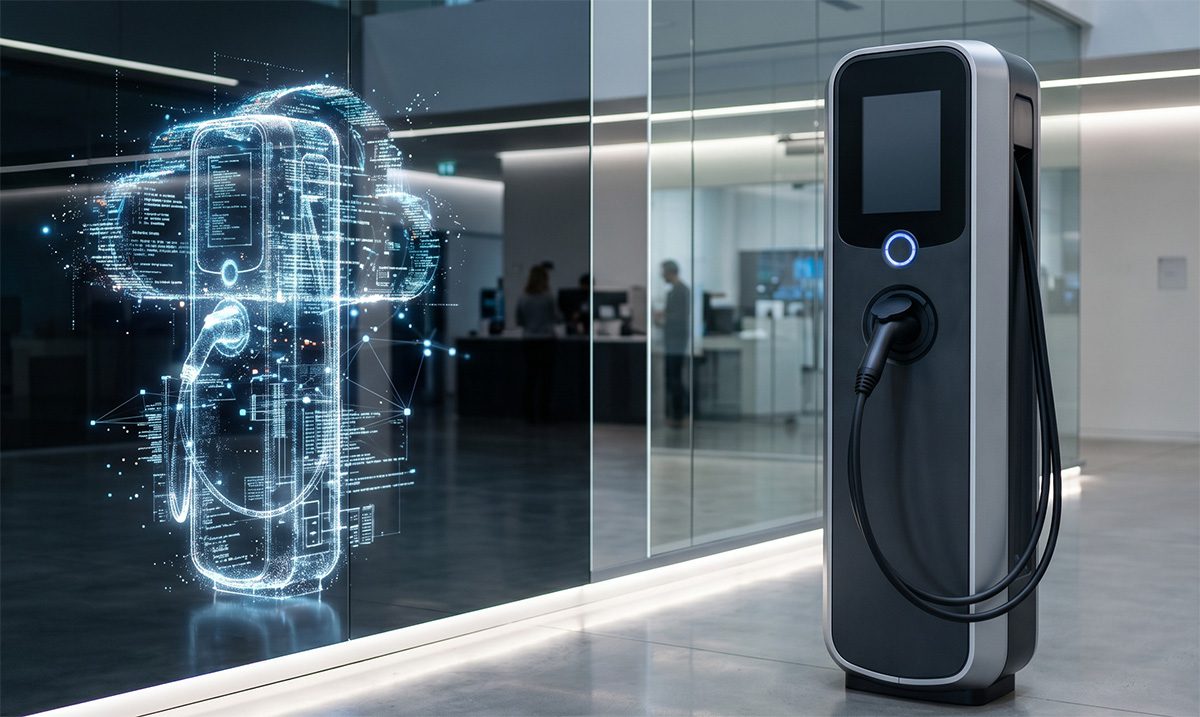
In a significant development for the burgeoning electric vehicle (EV) charging sector, Pionix, the German company renowned for its open-source EVerest charging stack, has officially launched Pionix Cloud. This innovative white-label device backend is specifically engineered to provide comprehensive support for EV charger manufacturers, addressing critical operational challenges that arise once charging infrastructure is deployed in the field.
The introduction of Pionix Cloud marks a strategic step towards enhancing the efficiency and reliability of global EV charging networks. It offers manufacturers a robust solution to maintain visibility and control over their deployed hardware, ensuring seamless operation and swift resolution of technical issues.

Key Takeaways
- Pionix, developers of the EVerest open-source charging stack, has launched Pionix Cloud, a white-label device backend for EV charger manufacturers.
- The platform provides crucial visibility and remote management capabilities for deployed EVSE hardware, bridging the gap between factory and field operations.
- Pionix Cloud features two main components: the Charger Device Cloud (CDC) for development and testing, and the Charger Maintenance Cloud (CMC) for post-production fleet diagnostics.
- It enables secure SSH access, real-time telemetry, remote configuration, and automated firmware updates with one-click rollbacks.
- The solution is designed to complement existing Charge Point Management Systems (CPMS) by focusing on device-level diagnostics and maintenance, rather than commercial operations.
- Pionix Cloud is available free for the EVerest community (up to 10 chargers in a lab) with paid commercial tiers for larger deployments, promising significant operational cost savings for EV charger manufacturers.
Addressing Post-Production Challenges for EV Charger Manufacturers
The journey of an electric vehicle supply equipment (EVSE) from manufacturing plant to active service often presents unique challenges for engineering teams. While initial production focuses on hardware integrity, the true test comes with real-world deployment, where unforeseen issues can emerge.
Traditionally, diagnosing and resolving these field-specific problems has been resource-intensive, often requiring on-site technicians. Pionix Cloud aims to revolutionize this process by empowering EV charger manufacturers with unprecedented remote visibility and control.
Pionix articulates the core philosophy behind its new offering: it is “meant to give engineers the same visibility across a deployed [charger] fleet that they have on the bench.” This statement underscores the product’s commitment to providing a consistent and comprehensive diagnostic environment, regardless of the charger’s physical location.

A Versatile Platform: EVerest and Beyond
While Pionix Cloud is intrinsically built for the company’s open-source EVerest platform, its versatility extends further. The system is engineered to operate seamlessly even on non-EVerest chargers, demonstrating its adaptability and potential to serve a wider spectrum of EV charger manufacturers in the industry.
This cross-platform compatibility is a critical advantage, allowing manufacturers with diverse product portfolios to consolidate their backend device management under a single, unified solution. It simplifies complex fleet operations and streamlines support workflows.
Dual Views for Comprehensive Device Management
Pionix Cloud is structured with two distinct, yet complementary, views to cater to different stages of a charger’s lifecycle: the Charger Device Cloud (CDC) and the Charger Maintenance Cloud (CMC). Each component addresses specific needs of EV charger manufacturers, from initial development to ongoing operational support.
The Charger Device Cloud (CDC): Enabling Efficient Development
The Charger Device Cloud (CDC) is primarily designed for the developmental phase of EVSE hardware. It acts as a centralized hub, pooling globally dispersed test hardware into a unified cloud inventory. This feature is invaluable for engineering teams working on prototypes and pre-production units, regardless of their physical location.
Key functionalities of the CDC include automated firmware distribution, ensuring that all test units are running the latest software versions effortlessly. Furthermore, it provides secure SSH access, allowing engineers to directly interface with individual chargers remotely. Real-time telemetry data offers immediate insights into device performance, while remote configuration capabilities allow for on-the-fly adjustments during testing. This integrated approach significantly accelerates the development cycle for EV charger manufacturers.
The Charger Maintenance Cloud (CMC): Proactive Fleet Diagnostics
Once production commences and chargers are actively deployed, the Charger Maintenance Cloud (CMC) takes over, offering critical diagnostic information from the active fleet. This component is essential for post-production support, enabling EV charger manufacturers to proactively manage and maintain their charging infrastructure.
The CMC delivers granular diagnostics, providing detailed insights into hardware and firmware performance. It facilitates remote configuration adjustments and over-the-air (OTA) updates through a manufacturer-owned channel. Crucially, this dedicated channel remains connected and operational irrespective of which charge point management system (CPMS) an operator might be utilizing. This ensures that manufacturers retain direct control over their devices for maintenance purposes, enhancing reliability and reducing downtime for the end-user.
Advanced Capabilities for Enhanced Operational Efficiency
Beyond its dual-view architecture, Pionix Cloud integrates several advanced capabilities designed to optimize the management of EV charging infrastructure for manufacturers.
These include sophisticated firmware rollout mechanisms that allow for controlled deployment of updates across the fleet, coupled with essential one-click rollbacks. This feature mitigates risks associated with new firmware versions, offering a safety net if unforeseen issues arise post-update. Such control is vital for maintaining the integrity and performance of charging stations and builds trust with EV charger manufacturers.
The platform also incorporates robust role-based and asset-level access controls. This allows manufacturers to precisely define who can access specific chargers or functionalities, and even enables temporary privilege escalation for troubleshooting. This granular control enhances security and ensures that only authorized personnel can make critical adjustments to deployed devices.
Perhaps one of the most impactful features is its diagnostic capability, which provides information extending beyond the standard OCPP (Open Charge Point Protocol) layer. By offering deeper insights into the underlying hardware and firmware, Pionix Cloud enables engineering and support teams to identify and clear errors remotely without the necessity of dispatching a technician to the field. This capability translates into significant cost savings and faster resolution times for EV charger manufacturers.
Complementing, Not Replacing, CPMS
A crucial distinction highlighted by Pionix is that its Cloud solution is intended to complement existing charge point management systems (CPMS), rather than replace them. This clarity is vital for EV charger manufacturers and charge point operators alike, ensuring a clear understanding of each system’s role.
A CPMS typically manages the commercial aspects of EV charging – handling tariffs, billing, user authentication, and roaming services. It focuses on the transactional and user-facing elements of charging. In contrast, Pionix Cloud operates in parallel, establishing a direct device-level channel specifically for the manufacturer’s engineering and support teams.
This parallel operation ensures that manufacturers retain a dedicated pathway for diagnostics, maintenance, and updates, independent of the commercial operations managed by the CPMS. It provides a distinct advantage to EV charger manufacturers by giving them full control over their hardware’s health and performance throughout its lifecycle.
Strategic Advantage and Accessibility for Manufacturers
Pionix CEO Marco Möller succinctly captured the essence of the solution’s value proposition. “Manufacturers shouldn’t have to fly blind or spend years building a non-core backend,” Möller stated. This highlights the strategic burden that in-house backend development can place on manufacturers, diverting resources from their core competency of hardware innovation.
By offering a ready-to-use, white-label solution, Pionix Cloud allows EV charger manufacturers to focus on their primary strengths – designing and producing cutting-edge EVSE hardware – while entrusting the complexities of device backend management to an expert provider.
Accessibility is also a key feature. Pionix Cloud is offered free of charge for the EVerest community, supporting up to 10 chargers in a lab environment. This tier provides an excellent opportunity for smaller manufacturers, startups, and developers to experiment with the platform. For larger deployments and commercial operations, paid commercial tiers are available, scalable to meet the needs of growing fleets.
The company also announced that EVerest will conduct a live walkthrough of the Pionix Cloud on July 9, offering prospective users and interested parties an in-depth demonstration of its functionalities and benefits.
The launch of Pionix Cloud represents a significant leap forward in standardizing and simplifying the backend management for EV charger manufacturers. As the global EV charging infrastructure continues its rapid expansion, solutions that enhance reliability, reduce operational costs, and streamline maintenance will be paramount to sustaining growth and ensuring a seamless charging experience for electric vehicle users worldwide.
Frequently Asked Questions (FAQ)
What is Pionix Cloud?
Pionix Cloud is a white-label device backend solution launched by Pionix, designed for EV charger manufacturers. It provides advanced remote visibility, diagnostics, and management capabilities for deployed electric vehicle supply equipment (EVSE) hardware, streamlining post-production support and maintenance processes.
Who can benefit from Pionix Cloud?
EV charger manufacturers are the primary beneficiaries, as the platform helps engineering and support teams manage deployed hardware more efficiently. It reduces the need for on-site visits, simplifies firmware updates, and offers deep diagnostic insights, whether their chargers run on EVerest or other platforms.
How does Pionix Cloud differ from a Charge Point Management System (CPMS)?
Pionix Cloud complements a CPMS. While a CPMS handles commercial aspects like billing, tariffs, and user management, Pionix Cloud focuses purely on device-level maintenance, diagnostics, and firmware management for the manufacturer’s engineering teams, operating on a parallel, dedicated channel.
Can Pionix Cloud be used with non-EVerest chargers?
Yes, while optimized for Pionix’s open-source EVerest platform, Pionix Cloud is designed to be compatible and can effectively run on non-EVerest chargers. This broad compatibility makes it a versatile solution for a wide range of EV charger manufacturers in the market.
What are the main components of Pionix Cloud?
Pionix Cloud comprises two key components: the Charger Device Cloud (CDC), which is used during the development phase for testing and managing global test hardware, and the Charger Maintenance Cloud (CMC), which provides diagnostics and maintenance support for active, deployed charger fleets.
What advanced features does Pionix Cloud offer?
It offers features such as automated firmware distribution with one-click rollbacks, secure SSH access, real-time telemetry, remote configuration, role-based access controls, and granular diagnostics that delve beneath the standard OCPP layer to resolve complex errors remotely.
Is Pionix Cloud free to use?
Pionix Cloud offers a free tier for the EVerest community, allowing management of up to 10 chargers in a lab environment. For larger deployments and commercial applications, paid commercial tiers are available, providing scalability and expanded features to meet enterprise demands.