
Key Takeaways
- Traditional EV charging models, focused on home or DC fast charging, overlook the needs of urban street parkers.
- The lack of accessible Level 2 curbside charging infrastructure in dense cities like New York and San Francisco presents a significant barrier to electric vehicle adoption.
- It’s Electric, a Brooklyn-based company, is pioneering an innovative Level 2 curbside charging solution that draws power from buildings, circumventing high utility-connection costs.
- The company’s ‘Bring Your Own Cable’ approach, common in Europe, addresses common issues of cable damage and theft, improving reliability and user experience.
- New York City’s selection of It’s Electric to install 700 chargers signals a growing recognition of the critical need for convenient urban EV charging to accelerate the transition to electric mobility.
As the global push for electric vehicles (EVs) gains momentum, a critical challenge persists in urban centers worldwide: accessible and convenient charging infrastructure for residents without private garages or driveways. While much attention focuses on rapid DC fast charging stations and residential setups, a crucial segment of potential EV owners — those who rely on street parking — often finds themselves underserved.
This overlooked segment highlights a fundamental gap in current electric vehicle infrastructure planning, one that a Brooklyn-based startup, It’s Electric, aims to bridge by revolutionizing curbside charging. Their innovative approach seeks to make EV ownership viable and attractive for millions of city dwellers.

The Urban Charging Conundrum: Beyond the Garage
For many urban residents, the prospect of owning an electric vehicle remains daunting, not due to the upfront cost alone, but primarily because of the lack of reliable and accessible charging options. The ideal scenario of plugging in an EV overnight in a private garage is a luxury not afforded to street parkers in bustling metropolitan areas.
In cities like San Francisco, Boston, and New York, where dense populations and limited parking are norms, the absence of widespread Level 2 charging infrastructure tailored for street parking is particularly acute. This deficit disproportionately impacts drivers considering more budget-friendly used EVs, such as older Chevrolet Bolt or Nissan Leaf models, which are less efficient at DC fast charging and benefit significantly from slower, overnight Level 2 charging.
It’s Electric: Pioneering Curbside EV Charging Solutions
Addressing this pressing need, It’s Electric, co-founded by Tiya Gordon, has emerged with a solution designed specifically for the urban landscape. The company is at the forefront of bringing Level 2 plugs directly to city streets, transforming how electric vehicle charging can integrate into daily urban life.

Gordon elaborated on their mission during a recent discussion on the Plugged-In Podcast, highlighting the disparity in charging access. “When you park your car on the street, you don’t have that option,” she stated. “So we’re looking to bring that home charging opportunity to street parkers.”
Overcoming Infrastructure Hurdles
A primary hurdle for developing curbside EV charging in the United States lies in the existing electrical infrastructure. Unlike many European counterparts, accessory power in most American cities often runs at less than 220 volts. This necessitates Level 2 chargers to draw power directly from utility grids, significantly inflating installation costs and extending deployment timelines.
It’s Electric has ingeniously circumvented this challenge by designing its chargers to source power directly from nearby buildings. This localized approach drastically reduces reliance on extensive utility upgrades, making the deployment of charging stations more economically feasible and scalable within dense urban environments.
The ‘Bring Your Own Cable’ Innovation
Another distinctive feature of It’s Electric’s hardware is the absence of built-in charging cables. Instead, users are provided with their own cables, a model that Gordon identifies as a critical design choice. This strategy aims to mitigate the “biggest fail point” for public chargers: cable damage, theft, or general wear and tear.
This ‘Bring Your Own Cable’ (BYOC) methodology, while perhaps unconventional in the U.S., is a widely adopted and successful practice in many European countries. “We are not reinventing the wheel here,” Gordon affirmed. “We like to say: It’s not weird, it’s just European.” This European influence underscores a pragmatic, user-centric design that prioritizes durability and operational efficiency.
A Glimpse into the Broader EV Landscape
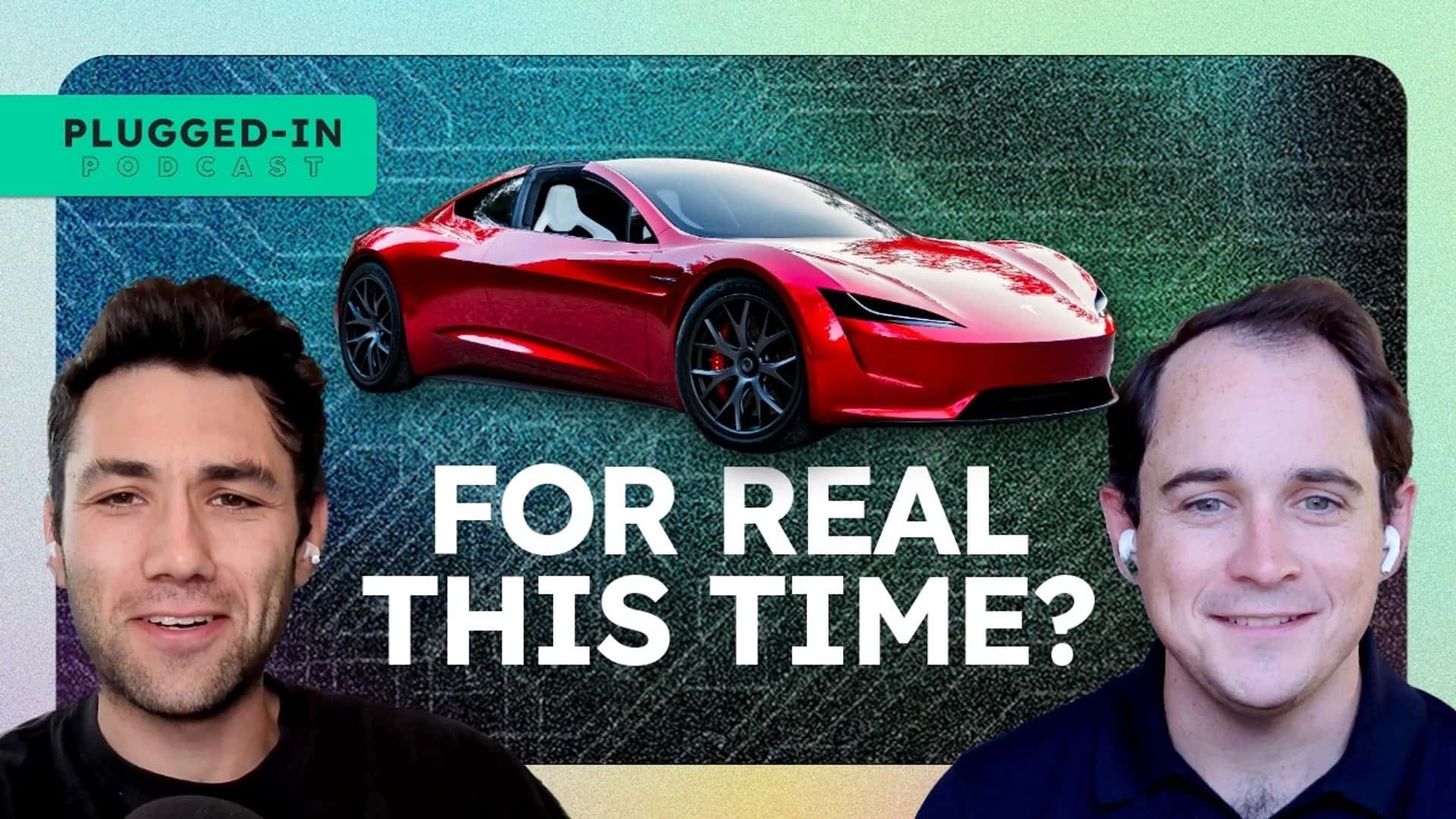
Beyond the critical discussion on urban charging infrastructure, the Plugged-In Podcast also delved into other significant developments shaping the electric vehicle market. Topics included insights into the upcoming Tesla Roadster 2.0 unveiling, a comprehensive review of the Mercedes GLC EV’s performance, updates on Volvo’s new XC90 and XC60 PHEVs, and discussions surrounding Ford Fathom, among other key EV and technology news from the week.
These diverse discussions underscore the rapid evolution across various segments of the EV industry, from high-performance sports cars to practical SUVs and innovative charging solutions. The common thread is the ongoing effort to enhance electric mobility in all its forms, making it more accessible, efficient, and appealing to a broader consumer base.
New York City Embraces Curbside Charging
The innovative spirit of It’s Electric is already yielding tangible results. New York City recently selected the startup to install 700 of its curbside chargers across the five boroughs. This landmark decision marks New York as the eighth city where It’s Electric will deploy its charging infrastructure, signaling a significant vote of confidence in their model.
The partnership with New York City represents a pivotal moment for urban EV adoption. By providing visible and convenient charging options directly within neighborhoods, Gordon hopes to inspire more New Yorkers to consider making the switch to electric vehicles.
Driving EV Adoption Through Convenience
Tiya Gordon articulates a compelling vision for accelerating EV adoption, moving beyond environmental motivations to focus on practical benefits. “No one’s going to buy an EV because of energy, because of climate. They’re going to buy it because it’s cheaper, it’s easier, and it’s more convenient,” she asserted. This perspective emphasizes that for widespread adoption, electric vehicle ownership must seamlessly integrate into everyday life, offering clear advantages over traditional gasoline-powered cars.
The underlying philosophy is simple yet profound: “So if you just make the right thing to do the easy thing to do, then everybody can win.” This sentiment captures the essence of It’s Electric’s mission – to dismantle barriers to entry for urban EV owners, thereby fostering a more sustainable and accessible future for electric transportation.
The conversation on the Plugged-In Podcast underscored the critical role of innovative charging solutions in shaping the future of electric mobility. As cities continue to grapple with the complexities of urban development and environmental sustainability, companies like It’s Electric offer a promising pathway to making EVs a practical reality for all.
FAQ Section
What is curbside EV charging?
Curbside EV charging refers to electric vehicle charging stations installed along public streets, typically near sidewalks or parking spaces. It provides a crucial charging solution for urban residents who do not have access to private garages or driveways for home charging, enabling them to power their vehicles while street parked.
Why is Level 2 charging important for urban areas?
Level 2 charging, which uses 240-volt power, is vital for urban areas as it offers a balance between charging speed and infrastructure cost. It’s significantly faster than Level 1 (standard wall outlet) and allows for substantial charging overnight or during work hours, making it ideal for daily commuting and for older EV models less suited for DC fast charging.
How does It’s Electric’s charging solution differ from others?
It’s Electric innovates by drawing power for its Level 2 chargers directly from nearby buildings rather than relying on utility grid connections, which are often costly and slow to install in the U.S. Additionally, their ‘Bring Your Own Cable’ model enhances charger durability and reduces maintenance by preventing damage or theft of integrated cables.
Are American cities behind European cities in curbside charging?
Yes, compared to countries like the U.K., Germany, and Norway, American cities generally lag in widespread curbside charging infrastructure. This disparity is partly due to differences in electrical accessory power standards and regulatory environments, which have historically made U.S. installations more complex and expensive.
How will It’s Electric’s expansion impact EV adoption in New York City?
The deployment of 700 It’s Electric chargers in New York City is expected to significantly boost EV adoption. By providing convenient and accessible charging options directly within neighborhoods, it removes a major barrier for prospective EV buyers who currently lack reliable charging solutions, making electric vehicle ownership more practical and appealing for city dwellers.
What is the ‘biggest fail point’ for public EV chargers?
According to Tiya Gordon of It’s Electric, the ‘biggest fail point’ for public EV chargers is the charging cable itself. Cables are prone to getting stolen, damaged from being dropped, or experiencing wear and tear due to constant public use, leading to frequent repairs and reduced availability of charging stations.