
Key Takeaways
ROHM has launched its 4th-generation 650 V automotive-grade IGBTs, engineered to optimize performance in electric vehicle (EV) compressors, high-voltage heaters, and industrial equipment. These new devices feature a low collector-emitter saturation voltage (VCE(sat)) of 1.55 V and a robust 7 µs short-circuit withstand time, meeting the stringent AEC-Q101 automotive reliability standard. The design improvements focus on reducing both conduction and switching losses while maintaining critical short-circuit tolerance, addressing the evolving demands for efficiency and reliability in power semiconductor applications. The product line includes various packages and bare wafer options, signifying ROHM’s commitment to supporting the electrification trend across multiple sectors.
Advancing Power Semiconductors for Electric Vehicles
In a significant development for the automotive and industrial sectors, ROHM has announced the release of its 4th-generation 650 V Insulated Gate Bipolar Transistors (IGBTs). These new semiconductor devices are specifically designed to meet the rigorous demands of electric vehicle (EV) auxiliary systems, including electric compressors and high-voltage heaters, as well as a broad range of industrial equipment inverters.

The introduction of these automotive-grade IGBTs underscores the continuous innovation required to support the global transition towards electrification. Power semiconductors are the foundational components driving efficiency in these critical applications, and ROHM’s latest offering aims to deliver enhanced performance and reliability.
Precision Engineering for Critical EV Components
The newly launched IGBTs feature a typical collector-emitter saturation voltage, VCE(sat), of 1.55 V. This metric is crucial as it directly correlates with conduction losses within the device. A lower VCE(sat) signifies reduced power dissipation during the device’s conductive state, which translates into less heat generated and, consequently, reduced thermal management requirements for the overall system. This efficiency gain is vital for extending EV range and improving system longevity.
Beyond efficiency, the reliability of power semiconductors in automotive applications is paramount. ROHM’s 4th-generation IGBTs boast a short-circuit withstand time of 7 µs at a junction temperature (Tj) of 25°C. This characteristic is a critical safety feature, providing ample time for inverter and heater control circuits to detect and mitigate an overcurrent condition before potential device failure. Maintaining such robust short-circuit tolerance while simultaneously reducing losses represents a significant engineering achievement.
Meeting Stringent Automotive Standards
A key highlight of these new automotive-grade IGBTs is their compliance with the AEC-Q101 automotive reliability standard. This certification is a benchmark for discrete semiconductor components, ensuring that they meet the rigorous quality and reliability requirements for use in the demanding environmental conditions of vehicles. Achieving AEC-Q101 compliance is indicative of ROHM’s commitment to delivering products that offer robust and dependable performance in safety-critical automotive applications.
Technological Innovation Behind Enhanced Performance
The enhanced performance of the new 650 V automotive-grade IGBTs stems from a comprehensive redesign of the device structure. ROHM engineers focused on optimizing both the manufacturing process and the edge termination of the semiconductor. These refinements have enabled a significant increase in current density while simultaneously reducing both conduction and switching losses.
Traditionally, there has been a trade-off between reducing power losses and maintaining a high short-circuit tolerance in IGBT designs. However, ROHM’s advanced design approach has managed to minimize both conduction and switching losses without compromising the essential 7 µs short-circuit withstand time. This balance is critical for ensuring that inverter and heater circuits have sufficient margin to detect and safely interrupt overcurrent events, thereby safeguarding the entire system and prolonging device lifespan.
Strategic Positioning in the Power Semiconductor Landscape
The power semiconductor market is continually evolving, with silicon carbide (SiC) increasingly adopted for very high-power applications, particularly in traction inverters that drive the electric motors of EVs. However, 650 V automotive-grade IGBTs continue to play a crucial role in the lower-power auxiliary systems of electric vehicles. These include the sophisticated electric compressors responsible for HVAC (heating, ventilation, and air conditioning) systems, and high-voltage heaters, such as PTC (Positive Temperature Coefficient) and coolant-type heaters, which are vital for cabin comfort and battery thermal management in EVs, especially in colder climates.
Beyond the automotive sphere, these silicon-based IGBTs maintain widespread use in industrial applications, powering various motors and compressors. Their cost-effectiveness, proven reliability, and robust performance make them an ideal choice for a diverse array of industrial equipment, demonstrating the versatility and enduring relevance of IGBT technology.
Comprehensive Product Lineup and Future Expansion
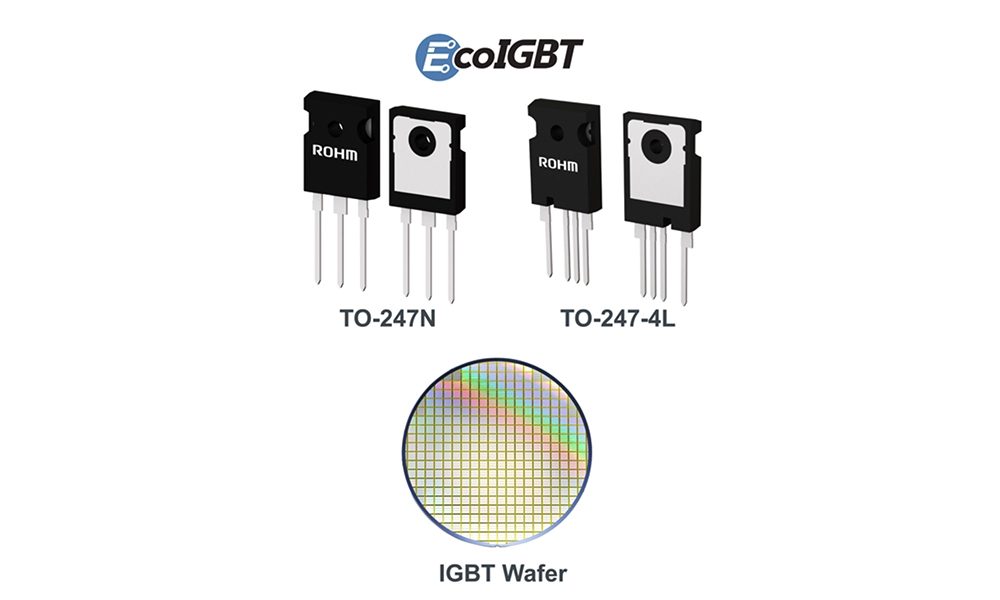
ROHM’s new 4th-generation 650 V automotive-grade IGBTs are available in a variety of configurations to suit different application needs. The initial lineup includes 12 distinct products offered in the industry-standard TO-247N package, categorized under the RGAxxTS65HR and RGAxxTS65EHR series. Additionally, 10 bare wafer products are available within the SG83xxWN series, providing flexibility for module integrators and custom packaging solutions.
Looking ahead, ROHM is actively developing an expanded portfolio. Plans include a 12-product series in the TO-247-4L package, which offers enhanced electrical performance, particularly at higher frequencies, through a Kelvin emitter connection. Furthermore, the company intends to release surface-mount IGBTs in TO-263L and top-side cooling packages, catering to applications that require higher power density, improved thermal performance, and automated assembly processes. This roadmap reflects ROHM’s commitment to supporting the diverse and growing market demands for high-performance power solutions.
ROHM’s Commitment to Electrification
The launch of these advanced 650 V automotive-grade IGBTs reinforces ROHM’s position as a key innovator in power semiconductor technology. By focusing on critical performance parameters such as low VCE(sat) and robust short-circuit withstand time, coupled with stringent automotive qualification, ROHM is actively contributing to the development of more efficient, reliable, and safe electric vehicles and industrial systems. These devices are poised to enable the next generation of power conversion and management solutions, supporting the global drive toward sustainable energy and enhanced technological capabilities.
FAQ Section
What are ROHM’s new 4th-generation 650 V IGBTs designed for?
ROHM’s new 4th-generation 650 V automotive-grade IGBTs are primarily designed for electric vehicle (EV) auxiliary systems, including electric compressors and high-voltage heaters (PTC and coolant types). They are also suitable for various inverter applications in industrial equipment, offering enhanced efficiency and reliability across these critical sectors.
What key performance metrics do these new IGBTs offer?
These new IGBTs feature a typical collector-emitter saturation voltage (VCE(sat)) of 1.55 V, which reduces power loss during operation. They also provide a robust short-circuit withstand time of 7 µs at 25°C, ensuring critical safety and reliability for applications susceptible to overcurrent conditions.
Why is AEC-Q101 compliance important for these devices?
AEC-Q101 compliance signifies that these automotive-grade IGBTs meet stringent reliability and quality standards for discrete semiconductor components used in vehicles. This certification ensures the devices can withstand the harsh operational environments of automotive systems, contributing to the overall trustworthiness and longevity of EV components.
How do these IGBTs reduce power losses?
ROHM achieved reduced power losses by redesigning the device structure, including optimizations in the manufacturing process and edge termination. These innovations enable higher current density while simultaneously cutting both conduction and switching losses, leading to improved energy efficiency in target applications.
Where do 650 V IGBTs fit in the EV power landscape compared to SiC?
While SiC (silicon carbide) is increasingly adopted for high-power EV applications like traction inverters, 650 V IGBTs remain crucial for lower-power auxiliary systems such as electric compressors and high-voltage heaters. They offer a cost-effective and reliable solution for these components, complementing SiC in the broader EV power architecture.
What types of packages are available for these new IGBTs?
The initial lineup includes 12 products in the TO-247N package and 10 bare wafer products (SG83xxWN series). ROHM also plans to release a 12-product TO-247-4L series and surface-mount IGBTs in TO-263L and top-side cooling packages, offering diverse options for integration and thermal management.