
Key Takeaways
- ROHM has launched its 4th-generation 650 V IGBTs, specifically designed for electric vehicle (EV) applications such as compressors and high-voltage heaters, as well as industrial equipment inverters.
- These new ROHM automotive-grade IGBTs achieve a low collector-emitter saturation voltage (VCE(sat)) of 1.55 V, significantly reducing conduction losses and improving thermal management.
- A critical feature is their robust 7 µs short-circuit withstand time at 25°C, providing essential safety margins for overcurrent detection in critical systems.
- The devices meet the stringent AEC-Q101 automotive reliability standard, ensuring high performance and longevity in demanding environments.
- ROHM’s design innovations include a re-engineered device structure to boost current density while simultaneously cutting both conduction and switching losses.
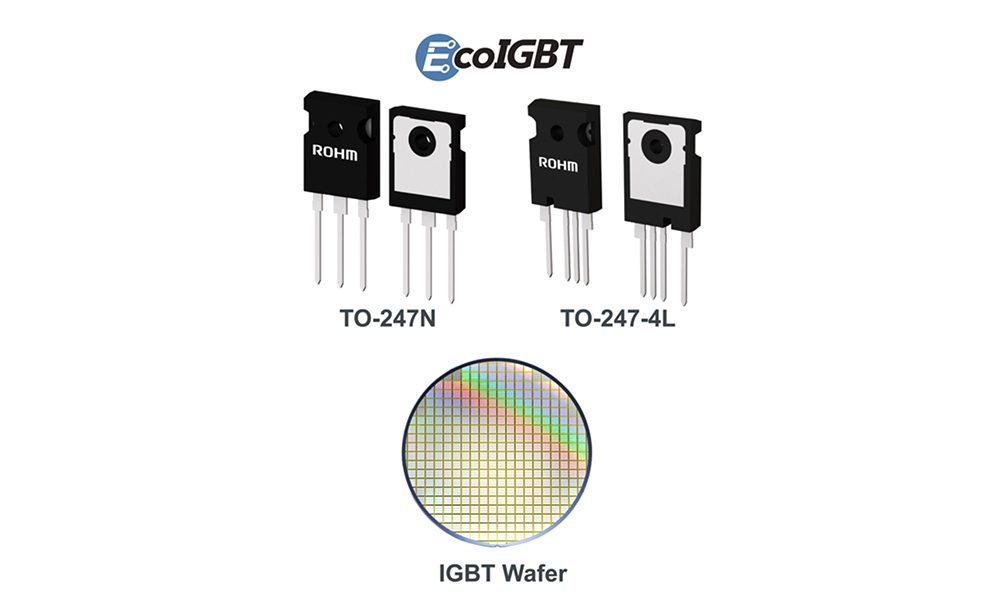
- The comprehensive product lineup includes TO-247N and bare wafer options, with further developments planned for TO-247-4L and surface-mount packages.
ROHM, a prominent semiconductor manufacturer, has announced the release of its 4th-generation 650 V insulated gate bipolar transistors (IGBTs). These new ROHM automotive-grade IGBTs represent a significant advancement in power semiconductor technology, specifically engineered to enhance the efficiency and reliability of electric vehicle (EV) auxiliary systems, including electric compressors and high-voltage heaters.
The innovation extends beyond the automotive sector, with these devices also poised to play a crucial role in improving industrial equipment inverters. This strategic launch underscores ROHM’s commitment to providing robust and high-performing solutions for critical power management applications across diverse industries.

Advancing EV Auxiliary Systems with 4th-Generation IGBTs
The core application for ROHM’s latest 650 V IGBTs lies within the rapidly evolving electric vehicle market. Modern EVs rely on sophisticated power electronics to manage various systems, from propulsion to cabin comfort. Electric compressors, vital for air conditioning, and high-voltage heaters, essential for battery thermal management and cabin heating (both PTC and coolant types), demand highly efficient and reliable switching devices.
ROHM’s new IGBTs are precisely tailored to meet these stringent requirements. They boast a typical collector-emitter saturation voltage (VCE(sat)) of 1.55 V. This low VCE(sat) is a critical parameter, directly correlating to reduced conduction losses, which in turn leads to less power dissipation and a more efficient system overall.
Key Specifications and Automotive Reliability
Beyond efficiency, the reliability of components in automotive applications is paramount. The new ROHM automotive-grade IGBTs feature a robust short-circuit withstand time of 7 µs at a junction temperature (Tj) of 25°C. This specification is crucial for safety, providing ample time for inverter and heater circuits to detect and interrupt overcurrent events before potential device failure.

Furthermore, these devices have successfully met the rigorous AEC-Q101 automotive reliability standard. This certification is a testament to their durability and performance under the demanding conditions characteristic of automotive environments, ensuring long-term operational integrity and safety for EV manufacturers and end-users alike.
Technical Innovation: Balancing Efficiency and Robustness
Achieving both low conduction losses and high short-circuit tolerance is often a challenging trade-off in power semiconductor design. ROHM engineers undertook a significant redesign of the device structure to overcome this inherent challenge. This involved refining both the manufacturing process and the edge termination of the IGBTs.
The result of these innovations is a substantial increase in current density. Simultaneously, the redesign has led to a notable reduction in both conduction and switching losses. Conduction loss, as indicated by the VCE(sat), is minimized when the device is conducting current, while switching losses occur during the transitions between ON and OFF states. Optimizing both types of losses is fundamental to improving overall system efficiency and reducing thermal stress on the component.
Mitigating Overcurrent Risks with Advanced Design
The balance between minimizing losses and ensuring robustness is delicate. While lower losses generally imply a reduced ability to withstand short-circuit events, ROHM states that the 7 µs withstand time of these new IGBTs is meticulously engineered. This duration is sufficient to provide inverter and heater control systems with adequate margin to detect and actively interrupt an overcurrent condition, thereby safeguarding the device from catastrophic failure.
This careful engineering ensures that system designers can implement these IGBTs with confidence, knowing that they deliver both high operational efficiency and critical protection mechanisms essential for the reliable functioning of EV and industrial power systems.
The Role of 650 V IGBTs in the Power Electronics Landscape
The broader landscape of power electronics is witnessing a significant shift towards advanced materials like silicon carbide (SiC), particularly in high-power applications such as electric vehicle traction inverters. SiC devices offer superior performance in terms of switching speed, efficiency, and thermal management at very high power levels.
However, 650 V IGBTs continue to maintain a crucial and cost-effective position in various applications. ROHM highlights that these silicon-based IGBTs remain widely adopted in lower-power auxiliary systems within EVs, such as the aforementioned electric compressors and high-voltage heaters. Their proven reliability and mature manufacturing processes make them an ideal choice for these specific, yet critical, functions.
Versatility in Industrial Applications
Beyond the automotive sector, silicon IGBTs demonstrate extensive utility in a broad array of industrial applications. They are commonly employed in industrial motors and compressors, where their robustness and efficiency contribute significantly to operational performance and energy savings. The release of these new ROHM automotive-grade IGBTs, with their enhanced specifications, is expected to further solidify their position in these traditional markets while expanding their appeal for next-generation industrial designs.
This dual applicability underscores the strategic importance of ROHM’s investment in advancing IGBT technology, catering to both the burgeoning EV market and established industrial segments.
Comprehensive Product Portfolio and Future Developments
ROHM has introduced a diverse range of products within this 4th-generation 650 V IGBT lineup, offering flexibility for various design requirements. The initial release includes 12 distinct products housed in the widely used TO-247N package, available under the RGAxxTS65HR and RGAxxTS65EHR series designations. These packaged devices are ready for integration into a wide array of power modules and circuits.
In addition to packaged solutions, the company is also making available 10 bare wafer products within the SG83xxWN series. Bare wafers provide greater flexibility for manufacturers who wish to integrate the IGBTs directly into their own custom power modules or hybrid circuits, allowing for optimized form factors and thermal management solutions.
Expanding Packaging Options
ROHM’s commitment to innovation and market needs is further evidenced by its ongoing development initiatives. The company is actively developing a 12-product series in the TO-247-4L package, which typically offers improved thermal performance and simplified gate drive connections compared to the standard 3-lead TO-247. This enhancement can lead to even greater efficiency and reliability in high-power density applications.
Looking ahead, ROHM plans to release surface-mount IGBTs in TO-263L and top-side cooling packages. These future offerings will cater to designs requiring higher component density, automated assembly processes, and advanced thermal management strategies, ensuring that ROHM’s IGBT technology remains at the forefront of power electronics innovation for both automotive and industrial sectors.
Ensuring Reliability and Performance
The AEC-Q101 standard, which these ROHM automotive-grade IGBTs comply with, is a critical benchmark in the automotive industry. It specifies the qualification requirements for discrete semiconductor components, ensuring they can withstand the rigorous operating conditions found in vehicles. These conditions include extreme temperatures, vibrations, humidity, and electromagnetic interference.
Compliance with AEC-Q101 signifies that ROHM’s IGBTs have undergone extensive testing and validation processes, guaranteeing their fitness for demanding automotive applications. This adherence to industry standards is a cornerstone of trust and reliability, providing manufacturers with confidence in the performance and longevity of the components integrated into their EV systems.
Impact on Electric Vehicle Infrastructure
The introduction of ROHM’s 4th-generation 650 V IGBTs has significant implications for the broader EV infrastructure. By providing highly efficient and reliable components for auxiliary systems, these IGBTs contribute to the overall performance and energy economy of electric vehicles. More efficient compressors mean less energy drawn from the battery for cooling, extending range, while reliable heaters ensure consistent cabin comfort and optimal battery operating temperatures.
As the electric vehicle market continues its rapid expansion, the demand for sophisticated power semiconductor solutions will only grow. ROHM’s latest offerings solidify its position as a key enabler of this transition, delivering the foundational technology required to build safer, more efficient, and increasingly performant electric vehicles for the future.
Source: ROHM
Virtual Conference on EV Engineering: Free to Attend
Don’t miss our next Virtual Conference on September 14-17, 2026. Register for the free webinar sessions below to reserve your spot and watch them live or on demand.
Advancing Battery Safety Through Early Thermal Runaway Detection With Infineon Sensors
Register
Scalable And Cost-Efficient Testing Of State-of-the-Art Battery Management Systems
Register
CoolGaN™ Automotive Bidirectional Switch: Shaping Single-Stage On-Board Chargers
Register
Microseconds Matter: High-Fidelity FPGA Motor Models For Real-Time HIL Validation
Register
Simplifying Commercial EV Power Distribution With Integrated Off-the-Shelf Solutions
Register
From Lab To Vehicle: Driving Reliable Insulation Systems For E-mobility Innovation
Register
Driving Efficiency In EV Manufacturing: Ultrasonic Solutions For Critical Connections
Register
How To Test For Anti-Islanding In EV Chargers, OBCs, And V2G Systems
Register
Multiphysics Modeling Of Transport Phenomena In Cells With Gas Diffusion Electrodes
Register
Optimizing HV/LV Power Conversion For Next-Generation xEV Architectures
Register
Beyond Sealing: Extrusion And Co-Extrusion For Thermal, Electrical, And Sensing Applications
Register
LOAD MORE SESSIONS
Frequently Asked Questions (FAQs)
What are ROHM’s new 4th-generation 650 V IGBTs designed for?
ROHM’s new IGBTs are primarily engineered for electric vehicle (EV) auxiliary systems, specifically electric compressors and high-voltage heaters (PTC and coolant types). They also find application in inverters for various industrial equipment, aiming to enhance overall efficiency and reliability in these power management systems.
What key performance metrics do these new IGBTs offer?
These ROHM automotive-grade IGBTs feature a low typical collector-emitter saturation voltage (VCE(sat)) of 1.55 V, which minimizes conduction losses. Additionally, they provide a robust short-circuit withstand time of 7 µs at Tj = 25°C, ensuring critical safety margins for overcurrent protection in demanding applications.
How do these IGBTs improve efficiency and reliability in EVs?
The redesigned device structure boosts current density while cutting both conduction and switching losses, leading to higher energy efficiency. Meeting the AEC-Q101 automotive reliability standard ensures these components can endure the harsh operating conditions in EVs, thereby enhancing vehicle longevity and performance.
What is the significance of the 7 µs short-circuit withstand time?
The 7 µs short-circuit withstand time is a crucial safety feature. It provides sufficient duration for inverter and heater circuits to detect and interrupt an overcurrent event before the IGBT device can be permanently damaged. This capability is vital for the reliable and safe operation of EV auxiliary systems.
How do these new IGBTs compare to Silicon Carbide (SiC) devices?
While SiC is increasingly adopted for high-power applications like EV traction inverters due to its superior characteristics, 650 V IGBTs, including these new ROHM automotive-grade IGBTs, remain a cost-effective and common solution for lower-power auxiliary systems such such as EV compressors and high-voltage heaters, as well as industrial motors and compressors, offering proven reliability.
What packaging options are available for these new ROHM IGBTs?
Currently, the lineup includes 12 products in the TO-247N package (RGAxxTS65HR and RGAxxTS65EHR series) and 10 bare wafer products (SG83xxWN series). ROHM is also developing a 12-product TO-247-4L series and plans to introduce surface-mount IGBTs in TO-263L and top-side cooling packages for future designs.