
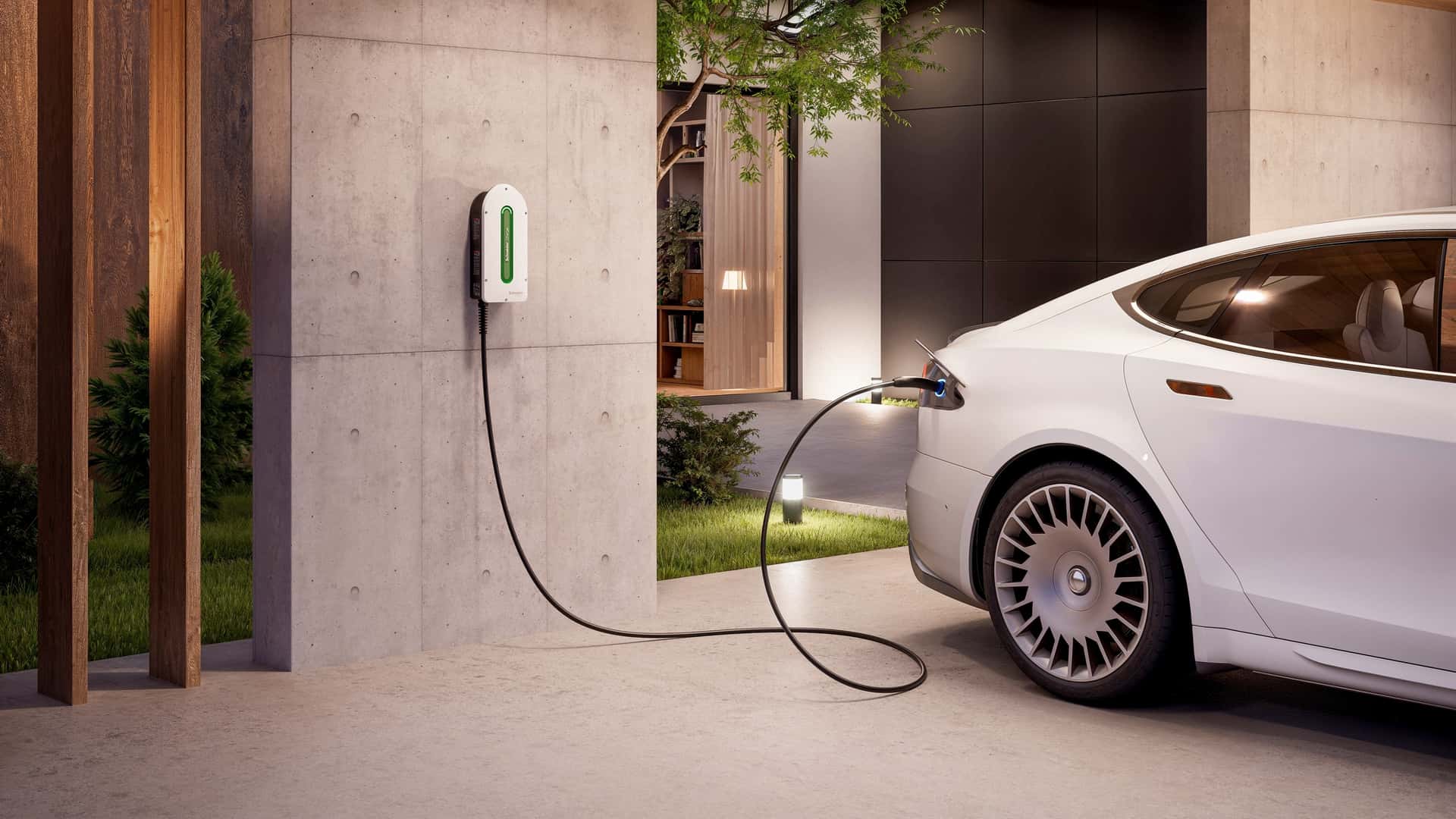
As electric vehicle (EV) adoption continues its rapid ascent, the demand for efficient, intelligent, and cost-effective home EV charging solutions has never been higher. Homeowners are increasingly seeking chargers that not only power their vehicles but also integrate seamlessly with their existing electrical infrastructure without requiring costly upgrades. In a significant development for the residential EV charging market, Schneider Electric has launched a new smart Level 2 EV charger in the U.S. and Canada, directly addressing these critical needs by bundling a key feature that competitors typically offer as an add-on.
Key Takeaways
- Schneider Electric has introduced the ‘Schneider Charge,’ a new smart Level 2 home EV charger for the U.S. and Canadian markets.
- This innovative home EV charger integrates current transformer (CT) clamps directly into the package, enabling dynamic load balancing from the outset.
- Dynamic load balancing allows the charger to intelligently adjust power delivery based on real-time household electricity consumption, preventing circuit overloads and optimizing charging speed.
- Priced at $695, the Schneider Charge offers a more cost-effective solution for dynamic load balancing compared to Tesla’s Wall Connector, which requires an additional $210 Remote Meter, bringing its total cost for this feature to $745.
- The Schneider Charge delivers up to 11.5 kW (48 amps) and is available with either a NACS or J1772 connector, supporting a wide range of electric vehicles.
- While the integrated CT clamps require hardwiring to the main board, potentially increasing installation complexity for distant panels, they offer an immediate, bundled solution for advanced energy management.
Understanding Dynamic Load Balancing in Home EV Chargers
At the heart of Schneider Electric’s new offering is its integrated dynamic load balancing capability. This feature is crucial for many homeowners, particularly those with older electrical panels or households with high simultaneous energy demands. Dynamic load balancing allows an EV charger to intelligently monitor the home’s total electricity consumption and adjust the power supplied to the electric vehicle in real-time.

The system ensures that the total current draw from the main electrical panel never exceeds its maximum rated capacity, thereby preventing nuisance breaker trips. For instance, if a home’s main breaker is rated for 200 amperes and the household is already consuming 160 amps for appliances like an air conditioner, oven, or water heater, the EV charger will automatically limit its power draw to the remaining 40 amps. As other household loads decrease, the charger can then increase the power delivered to the vehicle, optimizing charging speed without compromising electrical safety.
The Mechanics of Smart Power Management
This intelligent power management is made possible by current transformer (CT) clamps. These devices are installed around the main incoming electrical service lines, allowing the charger to accurately measure the real-time energy flow into the home. By bundling these CT clamps directly with the Schneider Charge, Schneider Electric simplifies the process for homeowners to leverage this advanced functionality from the moment of installation.
The ability to dynamically manage electrical loads is a significant benefit, especially for homes that might otherwise require costly and extensive electrical panel upgrades to accommodate a high-power Level 2 EV charger. It democratizes access to faster home charging, making it safer and more efficient for a wider demographic of EV owners.

Schneider Charge: A New Contender in Residential EV Charging
The Schneider Charge is positioned as a comprehensive and user-friendly home EV charger. It delivers robust performance, capable of outputting up to 11.5 kilowatts at 48 amps. This power level is sufficient to provide a substantial range addition to most EVs overnight, significantly reducing charging times compared to standard Level 1 (120V) outlets.
Features and Technical Specifications
Designed for versatility, the compact enclosure of the Schneider Charge allows for flexible installation, whether indoors in a garage or utility room, or outdoors, protected against the elements. Recognizing the evolving landscape of EV connectors, customers have the choice between a NACS (North American Charging Standard) connector, now widely adopted, or the traditional J1772 connector, ensuring compatibility with a broad spectrum of electric vehicles on the market.
Beyond its core charging capabilities, the Schneider Charge is a connected device. It integrates with a dedicated smartphone application, providing users with convenient control over their charging sessions. This app allows for scheduling charging during off-peak hours, monitoring charging status, and managing other smart features, enhancing the overall user experience and potentially lowering electricity costs.
The Integrated Dynamic Load Balancing Advantage
A primary differentiator for the Schneider Charge is the inclusion of the necessary hardware for dynamic load balancing directly in the box. This means that current transformer (CT) clamps, essential for monitoring household power consumption, are part of the standard package. This strategic bundling offers an immediate advantage in terms of both cost and functionality for homeowners seeking to maximize their installed power capacity without tripping circuit breakers.
While the CT clamps need to be hardwired to the charger’s main board, requiring additional wiring from the main electrical panel to the charger, this direct connection ensures reliable communication. This hardwired approach is generally straightforward when the charger is installed in close proximity to the main panel. However, for properties where the charger is located in a distant corner, the need to trace additional wires could potentially add to the complexity and cost of installation.
Direct Comparison with Tesla Wall Connector
The Schneider Charge enters a competitive market, with established players like Tesla’s Wall Connector being a popular choice for many EV owners. The comparison between these two Level 2 home EV chargers highlights Schneider’s distinct value proposition, particularly concerning dynamic load balancing.
Cost-Effectiveness and Bundled Features
Tesla’s Wall Connector, a widely recognized home EV charger, offers robust charging capabilities. However, to enable dynamic load balancing, Tesla’s system requires an additional component: the Remote Meter. This accessory, priced at $210, must be purchased separately. When combined with the $535 cost of the Wall Connector itself, the total hardware expenditure for a Tesla setup with dynamic load balancing capability reaches $745.
In contrast, the Schneider Charge retails for $695 and includes the CT clamps for dynamic load balancing within its standard package. This pricing strategy positions the Schneider Charge as a more cost-effective option for homeowners who prioritize or require dynamic load balancing from the outset, offering a direct saving of $50 on hardware costs alone when compared to a comparably equipped Tesla setup.
Installation Considerations: Hardwired vs. Wireless
Beyond the initial purchase price, installation methodology presents another key difference. As noted, the Schneider Charge’s integrated CT clamps require a hardwired connection to the charger’s main board. This means a set of additional wires must be run from the main electrical panel to the charger. While this ensures a secure and reliable connection, it can increase installation complexity and cost if the charger and panel are located far apart or if significant conduit work is required.
Conversely, the optional Tesla Remote Meter communicates wirelessly with the Wall Connector. This wireless communication can simplify installation, particularly in scenarios where running additional wires from the main panel to a distant charger might be challenging or aesthetically undesirable. While a convenience, the wireless communication of the Tesla Remote Meter adds to the overall cost.
It is important to note that if dynamic load balancing is not a priority for a homeowner, or if their electrical panel has ample spare capacity, Tesla’s Wall Connector remains a highly regarded option, known for its reliability and widespread compatibility, especially within the Tesla ecosystem.
The Broader Landscape of Residential EV Charging
The introduction of products like the Schneider Charge reflects a maturing market for residential EV charging solutions. As more consumers transition to electric vehicles, the sophistication and intelligence of home charging equipment become increasingly vital. Chargers with features like dynamic load balancing not only enhance safety and efficiency but also contribute to a more resilient electrical grid.
Addressing Diverse Homeowner Needs
Homeowners exhibit diverse needs based on their existing electrical infrastructure, budget constraints, and charging habits. A key challenge is the perceived complexity and potential cost of upgrading home electrical systems to support Level 2 charging. Solutions that mitigate the need for such upgrades, like the Schneider Charge’s bundled dynamic load balancing, empower a broader range of homeowners to comfortably install fast home charging.
The availability of both NACS and J1772 connectors also underscores the industry’s response to an evolving standard landscape. This flexibility ensures that the Schneider Charge remains a viable option for owners of various EV brands, future-proofing their home charging investment to some extent.
The Future of Smart Home Charging Solutions
Looking ahead, the market for home EV chargers is expected to continue innovating, with an increased focus on smart grid integration, vehicle-to-grid (V2G) capabilities, and enhanced energy management features. Chargers that can intelligently interact with utility grids, optimize charging based on renewable energy availability, or even provide backup power to the home are emerging trends.
Schneider Electric’s move to integrate critical energy management components upfront positions them favorably in this evolving landscape. By providing advanced functionality as standard, they are setting a benchmark for value and ease of access to smart charging features that will likely become indispensable for future-proof home energy ecosystems.
For now, the Schneider Charge is available exclusively as a hardwired model, equipped with a 25-foot cable. However, Schneider Electric has confirmed plans to introduce a plug-in version early next year, further expanding its versatility and catering to different installation preferences.
Frequently Asked Questions (FAQs)
What is dynamic load balancing in an EV charger?
Dynamic load balancing is a smart feature that allows an EV charger to monitor a home’s total electricity usage in real-time. It adjusts the power delivered to the electric vehicle, ensuring that the total household consumption never exceeds the main electrical panel’s capacity, thus preventing breaker trips and optimizing charging speed.
How does the Schneider Charge compare to Tesla’s Wall Connector in terms of features?
Both are Level 2 home EV chargers. The key difference is that the Schneider Charge includes hardware for dynamic load balancing (CT clamps) as standard, priced at $695. Tesla’s Wall Connector requires a separate $210 Remote Meter for this feature, making the combined cost $745 for comparable functionality.
What are the power output and connector options for the Schneider Charge?
The Schneider Charge delivers up to 11.5 kilowatts (48 amps), providing fast charging for most electric vehicles. Customers can choose between a NACS (North American Charging Standard) connector or a J1772 connector, ensuring broad compatibility with different EV models.
Is the Schneider Charge suitable for outdoor installation?
Yes, the Schneider Charge features a compact enclosure designed for both indoor and outdoor mounting. Its robust construction allows it to withstand various environmental conditions, making it a versatile choice for different home setups.
What are the installation considerations for the Schneider Charge’s dynamic load balancing?
The included CT clamps need to be hardwired to the charger’s main board. This means additional wires must be run from your main electrical panel to the charger. While straightforward if near the panel, it might require more complex wiring if the charger is installed far from the panel.
When will a plug-in version of the Schneider Charge be available?
Currently, the Schneider Charge is available as a hardwired model with a 25-foot cable. Schneider Electric has announced plans to release a plug-in version of the home EV charger early next year, offering more flexibility for homeowners who prefer a simpler installation or relocation option.