
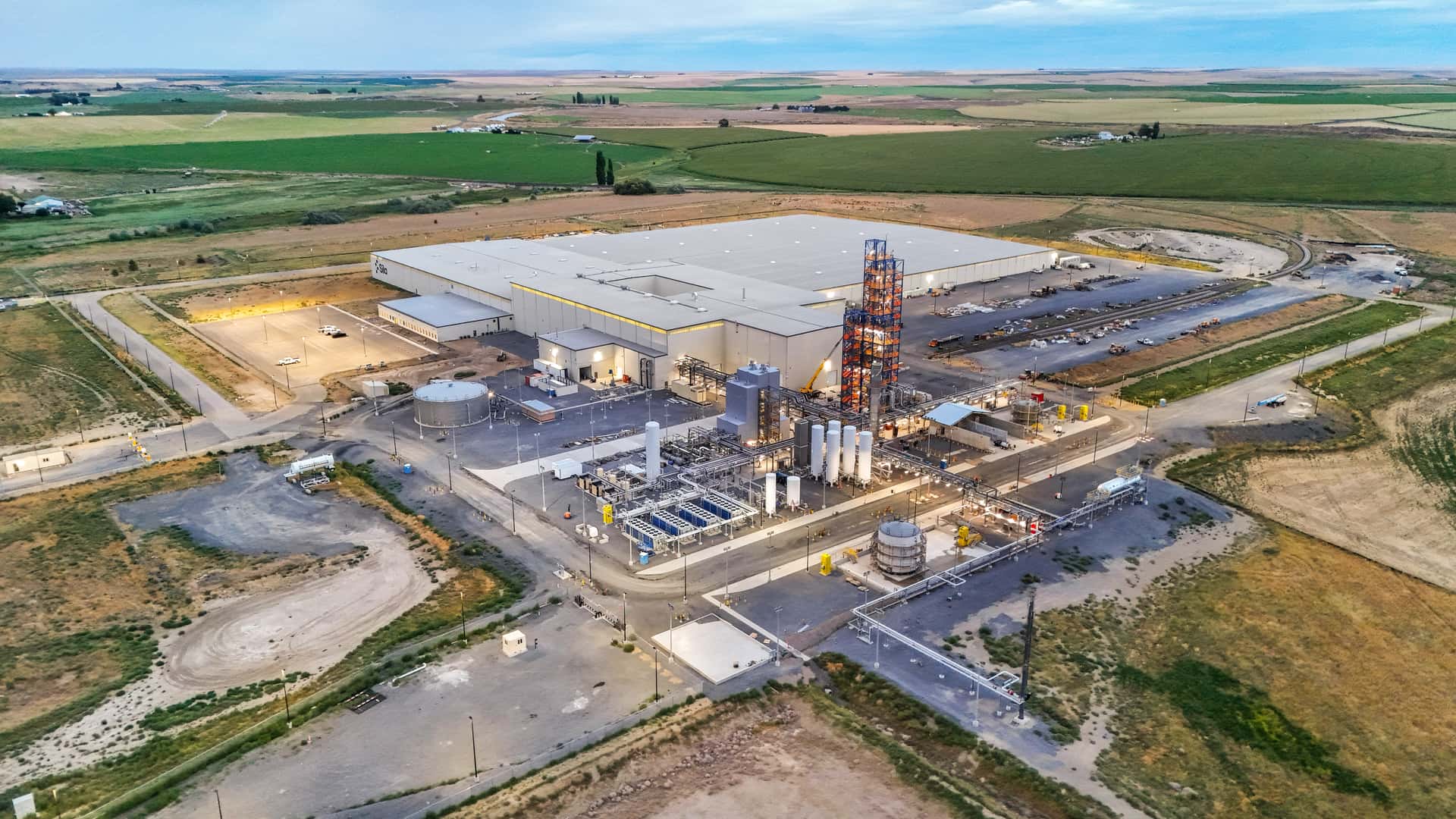
A significant investment of $300 million has been secured by Sila, a pioneering U.S.-based battery materials startup. This substantial funding is earmarked for accelerating the production of its groundbreaking silicon-carbon anode material, which promises to deliver a substantial 20% increase in electric vehicle (EV) range without necessitating larger battery packs. This development marks a pivotal moment in the evolution of EV battery technology, signaling a shift towards more energy-dense and efficient solutions.
The capital infusion will be instrumental in expanding Sila’s manufacturing capabilities at its Moses Lake, Washington facility. Furthermore, it will support a planned second phase of the site’s expansion, underscoring the company’s ambitious vision to scale its innovative battery components for widespread automotive adoption. The move reflects growing industry confidence in advanced materials like silicon anodes to overcome current EV limitations.

Key Takeaways
- U.S. battery startup Sila has raised $300 million to expand its silicon-carbon anode production.
- Sila’s Titan Silicon material promises a 20% increase in EV range and enhanced charging speeds compared to traditional graphite anodes.
- The company is scaling up its Moses Lake, Washington, factory, aiming for 250 GWh annual capacity to become the world’s largest anode facility within five years.
- Strategic partnerships with automotive giant Mercedes-Benz and battery leader Panasonic Energy underscore the industry’s confidence in Sila’s innovative battery technology.
- This development could significantly advance electric vehicle performance by improving energy density and reducing battery degradation challenges associated with silicon.
Sila Secures Significant Investment for Next-Gen EV Batteries
The $300 million private funding round highlights the intense interest and investment flowing into technologies that can fundamentally enhance electric vehicle performance. Sila’s focus is not on replacing the widely used lithium-ion battery entirely, but rather on improving one of its most critical components: the anode.
This strategic approach allows for an incremental yet impactful upgrade to existing battery architectures, potentially accelerating the transition to more capable and practical electric vehicles. The investment positions Sila as a key player in the next generation of battery innovation, particularly within the competitive global EV market.
The Promise of Silicon Anodes
At the heart of Sila’s innovation is its Titan Silicon silicon-carbon anode material, a product of 15 years of dedicated research and development. This advanced material is engineered to significantly boost battery performance, offering an increase of between 20% and 40% in a battery’s energy density compared to conventional graphite anodes.

Higher energy density directly translates to extended driving range for electric vehicles, a crucial factor for consumer adoption. Beyond range, Sila also states that its solution enables faster charging, though specific details on the speed improvements have not yet been disclosed.
Addressing Historical Challenges in Battery Technology
While silicon holds greater theoretical capacity for storing lithium than graphite, its integration into battery anodes has historically presented significant challenges. A primary hurdle is silicon’s tendency to swell and contract substantially during the charge and discharge cycles of a cell.
This physical expansion can lead to mechanical stress and damage to the anode structure, accelerating battery degradation and shortening the battery’s lifespan. Consequently, most production batteries currently incorporate only relatively small quantities of silicon, typically blended with graphite, to mitigate these adverse effects. Sila’s extensive research aims to overcome these inherent material limitations, enabling higher silicon content without compromising durability.
Scaling Production for Global Impact
The fresh capital is critical for Sila’s ambitious production ramp-up. The company’s vision extends beyond material development to establishing a robust manufacturing base capable of meeting future demand from major automotive and battery manufacturers.
This expansion is not just about increasing volume but also about solidifying Sila’s position as a foundational supplier in the burgeoning EV ecosystem, particularly within the United States.
Moses Lake Facility: A Hub for Innovation
Sila’s 160-acre factory in Moses Lake, Washington, commenced operations in the fall of 2025. The company is currently in the process of scaling up production from an initial capacity of 2 gigawatt-hours (GWh) of anode material.
The facility has been strategically designed to achieve an impressive annual production capacity of up to 250 GWh within five years. If realized, this target would position Sila’s Moses Lake plant as the world’s largest anode production facility, a significant milestone for U.S. battery material manufacturing and global EV supply chains.
Strategic Alliances Driving Adoption
Sila has already forged crucial partnerships, securing contracts to supply its Titan Silicon anode material to prominent industry players. These include the luxury automotive manufacturer Mercedes-Benz and the global battery production leader Panasonic Energy, alongside other unnamed companies.
Mercedes-Benz had previously announced its intention to integrate Titan Silicon into a future electric G-Class model, signaling a commitment to advanced battery performance in its premium vehicles. Similarly, Panasonic plans to incorporate Sila’s material into its next-generation EV battery cells, indicating a broader industry acceptance and integration of this innovative Sila battery technology.
The Broader Implications for Electric Vehicles
The successful deployment of silicon-rich anodes holds transformative potential for the entire electric vehicle industry. By addressing core performance metrics such as range and charging speed, this technology directly impacts consumer perception and adoption rates of EVs.
The implications extend beyond individual vehicle performance to the broader economic and environmental goals of sustainable transportation. Enhancements in Sila battery technology are critical for accelerating the global shift away from fossil fuels.
Enhanced Range and Faster Charging
Evidence of silicon-rich anodes making their way into production cars can already be seen. The Mercedes-AMG GT 4-Door EV, for instance, incorporates silicon in its battery anodes. This integration contributes to its remarkable charging performance, boasting a claimed 10% to 80% charging time of just 11 minutes and a peak charging power rating of 600 kW.
While it remains unclear whether Sila supplies the cells for this specific model, the Mercedes-AMG GT 4-Door EV powerfully demonstrates the tangible benefits and why automakers are increasingly interested in advanced anode materials. These performance benchmarks are vital for alleviating range anxiety and improving the practicality of electric vehicles for everyday use.
Industry’s Shifting Focus Towards Silicon
The trend towards increasing silicon content in batteries is gaining momentum across the automotive sector. General Motors, a major global automaker, anticipates that manufacturers will gradually escalate the proportion of silicon in their battery formulations. This forecast underscores a broad industry consensus on the future direction of battery chemistry.
According to industry experts, silicon-rich battery technology could enable manufacturers to reduce the physical size of battery packs, thereby lowering overall vehicle weight. This, in turn, can lead to improved energy efficiency and vehicle dynamics. Ultimately, such advancements are expected to contribute to a reduction in manufacturing costs, making electric vehicles more accessible without requiring the development of an entirely new battery architecture.
Paving the Way for Sustainable Mobility
The significant investment in Sila battery technology and its scaling of silicon anode production represent a critical step forward in the quest for more efficient and sustainable electric vehicles. By addressing the fundamental limitations of current battery chemistries, Sila’s innovations contribute to an ecosystem where EVs offer superior performance, convenience, and cost-effectiveness.
As the company’s Moses Lake facility ramps up production and its partnerships with industry leaders deepen, the widespread adoption of next-generation silicon-carbon anodes could redefine expectations for electric vehicle range, charging speeds, and overall utility, propelling the industry into a new era of sustainable mobility.
FAQ Section
What is Sila’s primary technological innovation?
Sila’s core innovation lies in its Titan Silicon silicon-carbon anode material. This material is designed to replace or enhance traditional graphite anodes in lithium-ion batteries, significantly improving energy density and enabling faster charging for electric vehicles. It’s the culmination of 15 years of dedicated research and development.
How much EV range can Sila’s technology add?
Sila claims its silicon-carbon anodes can deliver a 20% increase in electric vehicle range. This enhancement is achieved without the need for larger battery packs, primarily due to the 20% to 40% increase in the battery’s energy density that the Titan Silicon material provides over conventional graphite.
What is the purpose of Sila’s recent $300 million funding?
The $300 million private funding will be used to significantly ramp up production at Sila’s Moses Lake, Washington factory. It will also support the planned second phase of the facility’s expansion, enabling the company to scale its manufacturing capabilities to meet future demand from the automotive industry.
Who are Sila’s key partners?
Sila has secured contracts to supply its advanced anode material to major players in the automotive and battery sectors. Key partners include Mercedes-Benz, which plans to use Titan Silicon in a future electric G-Class, and Panasonic Energy, which intends to integrate the material into its next-generation EV battery cells.
What are the challenges of using silicon in batteries?
While silicon offers high lithium storage capacity, its main challenge is significant volumetric expansion and contraction during charging and discharging cycles. This can damage the anode structure, leading to accelerated battery degradation. Sila’s technology aims to mitigate these long-standing issues through its proprietary silicon-carbon composite.
Where is Sila’s main production facility located?
Sila’s primary production facility is located in Moses Lake, Washington, spanning 160 acres. This factory began operations in the fall of 2025 and is designed for substantial expansion. The company aims for an annual production capacity of up to 250 GWh within five years, potentially making it the world’s largest anode production facility.
How does increased silicon content benefit electric vehicles?
Increased silicon content in EV batteries allows for higher energy density, translating directly to greater driving range. It also enables faster charging capabilities. Additionally, this technology can facilitate the design of smaller, lighter battery packs, which can reduce vehicle weight and potentially lower manufacturing costs without sacrificing performance.