
Key Takeaways:
- Target is significantly expanding its electric vehicle (EV) charging network, with plans for dozens of new public EV charging facilities.
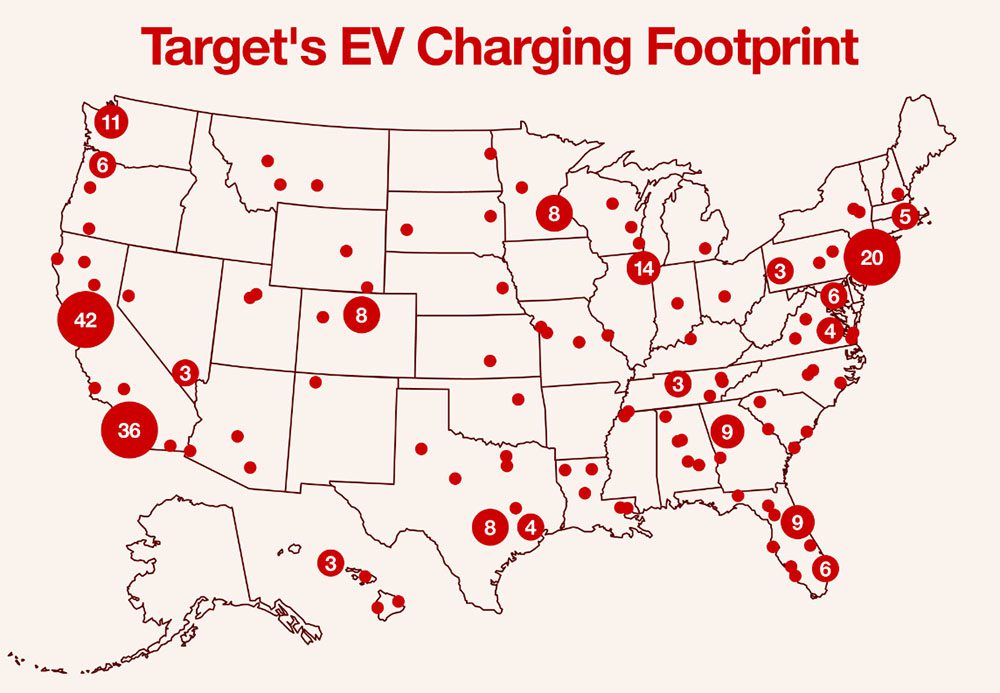
- The retailer currently hosts over 3,000 charging stalls across 300 sites in 42 states, having started its journey in 2017.
- An additional 35 sites are under construction, and more than 100 are in development, marking a substantial commitment to EV infrastructure.
- This expansion is driven by customer demand for convenience and strategic site selection based on market dynamics and local EV penetration.
- Target joins other major retailers like Walmart, Wawa, and Bojangles in accelerating EV charging rollouts, transforming shopping centers into vital hubs for electric mobility.
Retail Giants Embrace Electric Mobility: A Strategic Shift
The landscape of electric vehicle (EV) adoption in the United States continues to evolve at an unprecedented pace, with a critical focus on expanding robust charging infrastructure. In a significant development, Target, one of the nation’s leading big-box retailers, has announced ambitious plans to substantially increase its public EV charging facilities across its extensive network of stores. This move underscores a growing trend among major retail chains to integrate sustainable transportation solutions into their customer offerings, addressing a key barrier to widespread EV adoption: charging accessibility.

For years, industry observers noted a disparity between retailers’ stated environmental goals and their actual investment in on-site EV charging. Reports from 2024 highlighted that, despite clear opportunities, many big-name retailers had fallen short of their professed green ambitions regarding charging installations. However, a notable shift is now underway, with several US retail chains, convenience stores, and fast-food restaurants actively rolling out public EV charging at a respectable clip, signaling a renewed commitment to electric mobility.
Target’s Pioneering Journey in EV Charging
Target’s involvement in the EV charging space is not new, tracing its origins back to 2017 when the company commissioned its inaugural fast charging site. This pilot project was strategically located at a store in San Mateo, California, a region known for its early adoption of electric vehicles. Since that initial foray, Target has steadily built out its electric vehicle charging infrastructure, demonstrating a measured yet consistent commitment to supporting its EV-driving customers.
Today, Target boasts an impressive network that extends across 42 states, hosting public EV charging at 300 distinct locations. Within these sites, the company has deployed over 3,000 individual charging stalls, catering to a diverse and growing base of EV owners. This expansive footprint positions Target as a significant player in the national effort to make EV charging more convenient and readily available.

Accelerating Future Expansion Plans
Building on its established network, Target recently unveiled plans for a significant acceleration of its EV charging initiatives. The company confirmed that 35 additional EV charging sites are currently under active construction, poised to further expand its presence in key markets. Beyond these immediate projects, Target has a substantial pipeline, with more than 100-plus sites currently in various stages of development. This forward-looking strategy signals a long-term commitment to enhancing the charging experience for its customers.
This aggressive expansion aligns with feedback directly from Target’s customer base. The retailer has observed that its shoppers frequently identify the availability of EV charging facilities as a crucial added convenience, significantly enhancing their overall shopping experience. For many, the ability to recharge their electric vehicle while running errands transforms a necessary stop into a productive and efficient use of time, solidifying the value proposition of on-site charging.
Strategic Site Selection: A Data-Driven Approach
The strategic deployment of new public EV charging facilities is a complex undertaking, requiring careful consideration of numerous factors to ensure maximum utility and return on investment. Target employs a collaborative and data-driven approach, working closely with various partners to identify the most opportune locations within its vast portfolio of stores. This meticulous process is designed to optimize the impact of each new charging installation.
Key criteria for site selection include an in-depth analysis of market dynamics, assessing the overall demand for EV charging in a given geographical area. Local EV penetration rates are also a critical indicator, guiding decisions toward communities where electric vehicle ownership is already high or rapidly growing. Furthermore, the availability and capacity of local utility infrastructure play a pivotal role, ensuring that new charging sites can be seamlessly integrated into existing power grids without overburdening resources. This thoughtful methodology aims to create a highly efficient and user-friendly charging network, maximizing accessibility for EV drivers.
The Broader Retailer Charging Landscape
Target’s renewed vigor in EV charging is part of a broader trend sweeping through the retail sector. The past couple of years have seen a marked increase in commitments from various companies to build out charging infrastructure. Prominent examples include Walmart, which has made significant strides in installing charging stations at its supercenters, leveraging its vast real estate footprint. Similarly, convenience store chains like Wawa have recognized the synergy between quick stops for groceries or fuel and the need for fast EV charging, integrating these services into their customer experience.
Even fast-food establishments, such as Bojangles, are exploring opportunities to provide charging options, understanding that customers often spend sufficient time on-site for a quick top-up. These initiatives collectively contribute to the decentralization of EV charging, moving it beyond dedicated charging hubs and into everyday consumer destinations. This integration enhances convenience and familiarity, encouraging wider adoption of electric vehicles by making charging a routine, rather than a specialized, activity.
Enhancing Customer Convenience and Sustainability Goals
The decision by retailers to invest in EV charging facilities is driven by a dual benefit: enhancing customer convenience and supporting broader sustainability objectives. For EV owners, the ability to charge their vehicle while shopping offers unparalleled utility, transforming previously ‘dead’ time into productive recharging opportunities. This synergy improves the overall customer experience, potentially increasing dwell time and fostering loyalty to stores that offer such amenities. Furthermore, the presence of reliable public EV charging facilities can attract a new demographic of environmentally conscious consumers, further broadening a retailer’s appeal.
From a sustainability perspective, providing widespread EV charging infrastructure aligns with corporate social responsibility goals and contributes directly to reducing carbon emissions associated with transportation. As governments and consumers increasingly prioritize eco-friendly options, retailers that actively support the transition to electric mobility position themselves as leaders in responsible business practices. This commitment not only benefits the environment but also resonates positively with a growing segment of the consumer market, reinforcing brand image and values.
The Future Outlook for Retail-Integrated EV Charging
The expansion of public EV charging facilities at retail locations represents a critical pathway toward a more robust and accessible electric vehicle ecosystem. As the number of EVs on the road continues its upward trajectory, the demand for convenient, reliable, and widespread charging solutions will only intensify. Big-box retailers, with their extensive real estate, prime locations near highways and urban centers, and built-in customer dwell times, are uniquely positioned to meet this demand.
The collaborative approach taken by companies like Target, involving partnerships and data-driven site selection, exemplifies the strategic thinking required to build resilient charging networks. The ongoing commitment from major players like Walmart, Wawa, and Bojangles further solidifies the role of the retail sector in accelerating the transition to sustainable transportation. As these networks mature, they will not only serve existing EV owners but also play a crucial role in encouraging new buyers to make the switch, knowing that convenient charging is never far away.
Source: Target
Frequently Asked Questions About Retail EV Charging
Why are big-box retailers ideal locations for EV charging?
Big-box retailers like Target are excellent for EV charging due to their strategic locations near major roads and urban centers. Customers typically spend significant time shopping, providing an ideal window for vehicles to charge. This convenience enhances the shopping experience and maximizes the utility of charging infrastructure, integrating it seamlessly into daily routines.
How many EV charging sites does Target currently operate?
Target currently hosts public EV charging facilities at 300 of its stores across 42 states. These sites collectively offer over 3,000 individual charging stalls, making it one of the most extensive retail-integrated charging networks in the United States. This infrastructure supports a growing number of electric vehicle owners nationwide.
What is Target’s future plan for EV charging expansion?
Target has ambitious plans for further expansion, with 35 new EV charging sites actively under construction. Additionally, the company has over 100 more sites in various stages of development. This aggressive rollout strategy aims to significantly increase the availability of public EV charging facilities at its stores in the coming years.
How does Target select locations for new charging sites?
Target employs a strategic, data-driven approach to site selection, collaborating with partners. They carefully evaluate market dynamics, including local EV penetration rates, to identify areas with high demand for charging. Furthermore, the availability and capacity of local utility infrastructure are critical factors, ensuring efficient and reliable service for new public EV charging facilities.
Which other retailers are investing in EV charging?
Beyond Target, several other major retailers, convenience stores, and fast-food restaurants are actively expanding their EV charging offerings. Notable examples include Walmart, which is installing chargers at its supercenters, Wawa convenience stores, and fast-food chains like Bojangles. This collective industry effort is making EV charging more accessible across diverse consumer touchpoints.
What benefits do EV charging facilities offer to retailers?
For retailers, offering EV charging facilities provides multiple benefits. It enhances customer convenience, attracting EV owners and potentially increasing their dwell time in stores. It also aligns with corporate sustainability goals, improving brand image and appealing to environmentally conscious consumers. These facilities contribute to a positive customer experience and foster loyalty.