
Key Takeaways:
- Target is significantly expanding its electric vehicle (EV) charging infrastructure, with plans for dozens more public EV charging facilities across its stores.
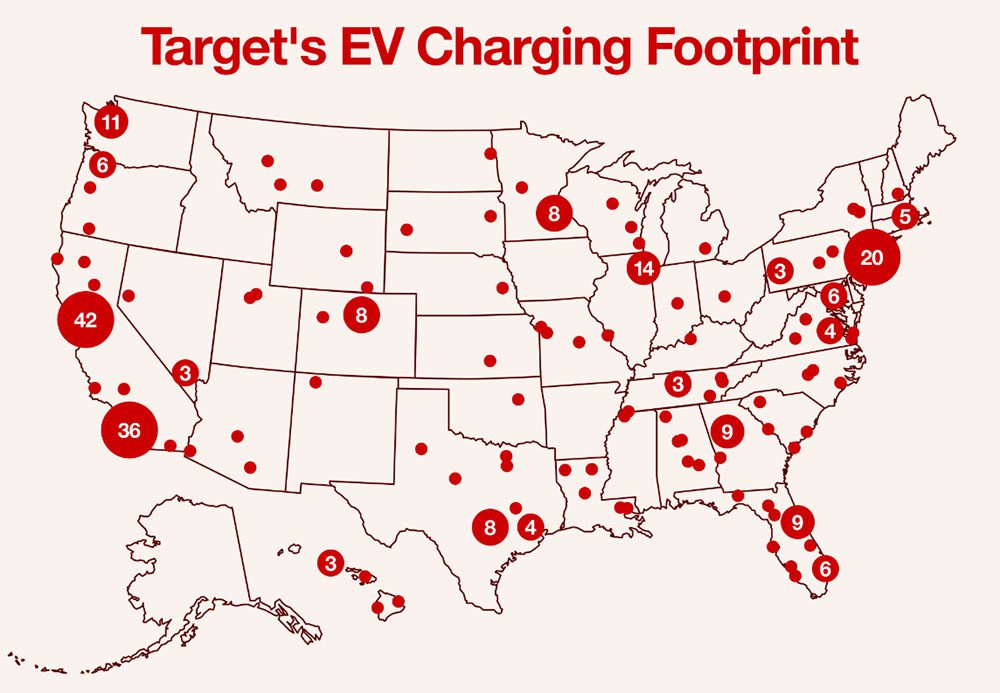
- The retail giant currently hosts over 3,000 charging stalls at 300 sites across 42 US states, following its initial fast-charging deployment in 2017.
- An additional 35 EV charging sites are under construction, with over 100 more in development, signaling a major commitment to electric mobility.
- This expansion addresses a growing consumer demand for convenient EV charging options, enhancing the shopping experience.
- Target employs a strategic approach to site selection, considering market dynamics, local EV penetration, and utility availability to optimize its public EV charging facilities network.
- The move reflects a broader trend among major retailers, including Walmart, Wawa, and Bojangles, to integrate EV charging into their customer offerings.
Minneapolis, Minnesota — Major retail chains are increasingly becoming pivotal hubs in the rapidly evolving landscape of electric vehicle infrastructure, a trend prominently led by Target. The retail giant has announced ambitious plans to significantly expand its network of public EV charging facilities, adding dozens more locations across the United States. This strategic move not only enhances customer convenience but also underscores the crucial role big-box retailers play in accelerating EV adoption nationwide.

For years, industry analysts have pointed to big-box retailers as ideal locations for public EV charging facilities. Their strategic placement near major highways and urban centers, coupled with the considerable time customers typically spend on-site during shopping trips, makes them highly attractive for EV owners seeking a convenient charge. Despite this recognized potential, reports from as recent as 2024 highlighted that many big-name retailers were lagging in their commitment to installing robust charging solutions, falling short of their stated green ambitions.
A Shifting Landscape: Retailers Embrace EV Charging
However, the narrative is rapidly changing. Over the past year, several prominent US retail chains, convenience stores, and fast-food restaurants have significantly ramped up their efforts to roll out public EV charging facilities. Companies like Walmart, Wawa, and Bojangles are among those making headlines with new initiatives, signaling a broader industry shift towards integrating electric vehicle support into their core offerings. This collective momentum is crucial for building a comprehensive and accessible charging network.
Target, a key player in the retail sector, has been steadily building its EV charging footprint. The company inaugurated its very first fast charging site at a store in San Mateo, California, in 2017. Since that initial pioneering step, Target has meticulously grown its network to an impressive scale. Today, it hosts public EV charging facilities at 300 locations across 42 states, encompassing over 3,000 individual charging stalls. This extensive infrastructure provides a vital service to a growing number of electric vehicle drivers.

Target’s Ambitious Expansion: Doubling Down on Convenience
Building on this foundation, Target has now unveiled its next phase of expansion, indicating a clear commitment to further cementing its position in the EV ecosystem. The company currently has 35 new EV charging sites under active construction. Beyond these immediate developments, an additional 100-plus sites are firmly in the pipeline, currently in various stages of development. This aggressive expansion plan highlights Target’s responsiveness to evolving consumer needs and its proactive approach to sustainable retail practices.
Customer feedback has been a significant driver behind Target’s continued investment in public EV charging facilities. The company consistently reports that its patrons frequently identify the availability of EV charging as a valuable added convenience. This feature not only enhances their overall shopping experience but also serves as a compelling draw for EV owners, potentially increasing foot traffic and dwell time at Target stores.
Strategic Site Selection for Optimal Impact
The successful deployment of public EV charging facilities is not merely about installing chargers; it requires a sophisticated, data-driven strategy for site selection. Target, in collaboration with its partners, employs a rigorous process to identify the most suitable locations for new charging stations. This involves a careful evaluation of several critical factors to ensure maximum efficiency and utility for EV drivers.
Key considerations in Target’s site selection process include detailed market dynamics. This involves analyzing local demographics, traffic patterns, and the density of electric vehicle ownership in a given area. Understanding the existing EV penetration allows Target to strategically place public EV charging facilities where demand is highest, thereby serving the largest possible user base. Furthermore, the availability and capacity of local utility infrastructure are paramount. Ensuring adequate power supply and grid readiness is essential for supporting fast-charging capabilities and the reliable operation of multiple charging stalls.
The Broader Impact of Retail Charging Infrastructure
The expansion of public EV charging facilities by major retailers like Target, Walmart, Wawa, and Bojangles represents a significant step forward for the broader electric mobility movement. By integrating charging options into everyday retail environments, these companies are making EV ownership more practical and appealing for a wider segment of the population. This accessibility helps alleviate range anxiety, a common concern among potential EV buyers, and fosters greater confidence in the long-term viability of electric transport.
Moreover, the presence of public EV charging facilities at retail locations transforms routine errands into opportunities for convenient charging. Shoppers can plug in their vehicles while they grocery shop, pick up household essentials, or grab a meal, effectively multitasking and optimizing their time. This seamless integration of charging into daily life is critical for accelerating the transition away from fossil-fuel-powered vehicles and towards a more sustainable future.
Future Outlook for EV Infrastructure Growth
As the adoption of electric vehicles continues its upward trajectory, driven by technological advancements, environmental consciousness, and government incentives, the demand for robust charging infrastructure will only intensify. The proactive investments by retailers like Target in public EV charging facilities are not just about immediate customer service; they are a forward-looking strategy that anticipates and supports the massive shift towards electric mobility.
This trend signifies a growing understanding among corporate leaders that investing in sustainable infrastructure is not merely a corporate social responsibility initiative but also a sound business decision. Providing essential services like EV charging helps attract and retain a growing segment of environmentally conscious consumers, enhancing brand loyalty and competitive advantage. The continued expansion of these charging networks will be instrumental in making electric vehicles a truly mainstream choice for millions across the nation, paving the way for a greener transportation future. (Source: Target)
Frequently Asked Questions About Target’s EV Charging Expansion
What is Target’s current EV charging footprint?
Target currently operates public EV charging facilities at 300 of its store locations across 42 states. These sites collectively feature over 3,000 individual charging stalls, providing widespread access for electric vehicle owners.
How many new EV charging sites is Target planning?
Target has announced significant expansion plans, with 35 new EV charging sites currently under construction. Additionally, over 100 more public EV charging facilities are in various stages of development, indicating a substantial future rollout.
When did Target install its first EV fast charging site?
Target deployed its inaugural EV fast charging site at a store in San Mateo, California, in 2017. This initial installation marked the beginning of the company’s commitment to providing electric vehicle charging solutions.
Why are big-box retailers ideal for public EV charging facilities?
Big-box retailers are strategically located near highways and urban centers, making them easily accessible. Customers also spend considerable time shopping, allowing for convenient charging sessions while they complete their errands, which enhances the overall value proposition.
What factors does Target consider when selecting new charging locations?
Target works with partners to determine the best locations, taking into account several factors. These include local market dynamics, the penetration of electric vehicles in the area, and the availability and capacity of the local utility infrastructure to support the public EV charging facilities.
How do customers perceive the availability of EV charging at Target stores?
Target’s customers frequently cite the presence of EV charging as an added convenience that significantly improves their shopping experience. This feedback underscores the value proposition of integrating charging infrastructure into retail environments.