
Key Takeaways
- Webasto has introduced the 900 EX Power Bridge, an innovative solution designed to enhance the capabilities of its existing 900 EX battery test units.
- This new hardware seamlessly links two 900 EX units, enabling a combined system to achieve up to 1,500 V and 500 kW for advanced battery testing.
- The Power Bridge allows laboratories to scale their high-voltage testing operations significantly without requiring the purchase of entirely new, expensive equipment.
- Excel Engineering, a prominent independent laboratory, has successfully implemented the Power Bridge to meet the escalating industry demand for 1,500 V platform validation.
- The solution prioritizes ease of control, installation, and integration, ensuring that existing test environments maintain their familiarity and functionality while expanding capacity for future EV and energy storage technologies.
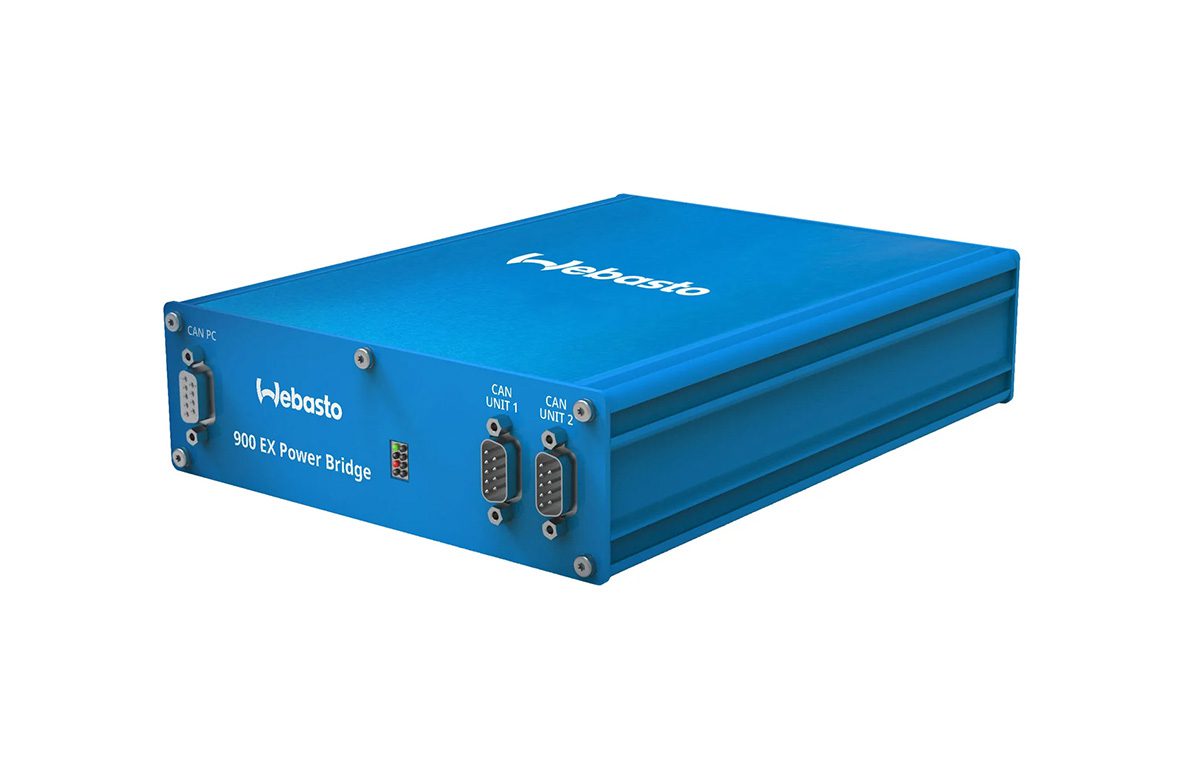
In a significant development for the electric vehicle (EV) and energy storage sectors, Webasto has unveiled a groundbreaking solution designed to dramatically enhance battery testing capabilities. The company’s innovative 900 EX Power Bridge now enables laboratories equipped with Webasto’s existing 900 EX battery test units to achieve significantly higher voltages and power outputs without necessitating a complete overhaul of their infrastructure.
This strategic introduction addresses the escalating demand for rigorous, high-voltage battery validation, a critical factor in the progression of advanced EV engineering. By linking two 900 EX units, the 900 EX Power Bridge creates a unified system capable of testing at an impressive 1,500 V and 500 kW, setting a new benchmark for scalable and efficient battery testing.

Bridging the Gap in High-Voltage Battery Testing
The core innovation behind the Webasto 900 EX Power Bridge lies in its ability to combine the strengths of two individual 900 EX test units. This integration allows for a substantial increase in both voltage and power, crucial parameters for evaluating next-generation battery packs and complex energy storage architectures.
Webasto emphasizes that this approach is meticulously designed to elevate voltage and power metrics without introducing additional complexity. Control, calibration, and service operations remain streamlined, ensuring that customers can leverage their existing infrastructure. The familiar look, feel, and function of their test environments are preserved, facilitating a smooth transition to enhanced testing capacities.
Meeting the Demands of Evolving EV Technology
The rapid evolution of electric vehicles, from passenger cars to heavy-duty commercial transport and even marine applications, is driving a relentless push towards higher voltage platforms. These advanced systems require robust battery test systems that can accurately mimic their operational parameters to ensure safety, performance, and longevity.

Traditional test setups often face limitations in accommodating these higher voltages and power demands. The 900 EX Power Bridge directly tackles this challenge, offering a clear and cost-effective pathway for laboratories to upgrade their capabilities to 1,500 V testing by utilizing equipment they already own. This modularity represents a forward-thinking solution for an industry in constant flux.
Dimitri Liambotis, Sales Manager of Power Test Systems at Webasto, highlighted the significance of this innovation. “The 900 EX Power Bridge represents a major step forward for users looking to scale their battery testing capabilities without disrupting existing test setups,” Liambotis stated, underscoring the product’s role in facilitating progress within the battery testing ecosystem.
Real-World Application: Excel Engineering’s Success Story
The practical utility and immediate impact of the 900 EX Power Bridge have already been demonstrated in the field. Excel Engineering, a highly respected independent laboratory specializing in the validation of electrical and energy storage systems, has successfully deployed the solution.
Excel Engineering serves a diverse array of markets, including automotive, off-road vehicles, rail, marine, and stationary energy storage. The lab had been experiencing a notable surge in demand for 1,500 V platform testing, a clear indicator of the industry’s accelerating shift towards higher voltage architectures.
Matt Sobotka, General Manager of Electrification Testing at Excel Engineering, affirmed the immediate benefits. “This solution allowed us to meet the needs of our customers in a timely manner, which is paramount,” Sobotka explained. He further praised the system’s operational advantages, stating, “The controlability, ease of use, and install of the 900 EX are unmatched in the industry. Projects often require high-frequency controls, which we have been able to achieve with this setup.”
This endorsement from an independent third-party laboratory underscores the Webasto 900 EX Power Bridge’s efficacy and its capacity to deliver on its promises of enhanced performance and user-friendliness in demanding test environments.
Enhancing Scalability and Efficiency in Lab Operations
The design philosophy behind the Webasto 900 EX Power Bridge focuses on maximizing the utility of existing assets. Instead of requiring labs to invest in entirely new, large-scale hardware for high-voltage testing, the Power Bridge offers an incremental upgrade path.
This approach not only provides a financially astute decision for many facilities but also ensures operational continuity. Test engineers and technicians can continue to work within a familiar interface, reducing training overheads and accelerating the deployment of new testing protocols. The seamless integration means that the expansion of capabilities does not equate to increased operational complexity.
The Future of EV Battery Validation
As the global push for electrification intensifies, the role of sophisticated and adaptable battery testing systems like the Webasto 900 EX Power Bridge becomes increasingly critical. The ability to accurately and efficiently test at higher voltages and power levels is paramount for validating advanced battery chemistries, innovative cooling systems, and complex battery management systems (BMS).
These robust testing capabilities are essential for ensuring that new EV models and energy storage solutions meet stringent performance, safety, and reliability standards before they reach the market. Webasto’s contribution with the 900 EX Power Bridge positions it as a key enabler in this crucial phase of EV engineering and development.
Frequently Asked Questions (FAQ)
What is the Webasto 900 EX Power Bridge?
The Webasto 900 EX Power Bridge is a new hardware solution designed to link two existing Webasto 900 EX battery test units, effectively combining their capabilities to achieve higher voltage and power outputs for advanced battery testing.
What are the key technical specifications achieved with the Power Bridge?
When two 900 EX units are connected via the Power Bridge, the combined system can reach testing parameters of up to 1,500 V and 500 kW, significantly expanding a lab’s high-voltage testing capacity.
How does the Power Bridge benefit laboratories already owning 900 EX units?
It allows labs to scale their high-voltage battery testing capabilities without purchasing entirely new, expensive test systems. It reuses existing infrastructure, maintaining familiar control, calibration, and service environments.
Why is 1,500 V testing becoming important in the industry?
The demand for 1,500 V testing is rising due to the continuous advancement of electric vehicle (EV) and large-scale energy storage systems, which increasingly utilize higher voltage platforms for improved efficiency, faster charging, and greater power delivery.
Which industries or applications benefit most from this solution?
Industries involved in EV engineering, battery pack design and manufacturing, energy storage architectures, and electrification testing across automotive, off-road, rail, marine, and stationary markets will benefit significantly from enhanced high-voltage validation capabilities.
Does using the Power Bridge complicate the control or operation of the test units?
No, Webasto states that the Power Bridge is designed to increase voltage and power without adding complexity to control, calibration, or service, ensuring the test environment retains its familiar look, feel, and function for users.
Has the 900 EX Power Bridge been validated by an independent entity?
Yes, Excel Engineering, an independent laboratory specializing in electrical and energy storage system validation, has successfully implemented and utilized the Webasto 900 EX Power Bridge to meet its growing demand for 1,500 V platform testing.