
Key Takeaways
- Tesla has significantly expanded its Robotaxi service geofence in Houston, Texas, on October 26, 2026, introducing a distinctive rocket-shaped boundary.
- The enlarged service area now extends further southeast, encompassing more central parts of Houston, building upon the initial launch of the service in April 2026.
- Despite CEO Elon Musk’s comments suggesting coincidence, the unique design of the geofence has been widely interpreted as an homage to SpaceX and a potential nod to future collaborations.
- This expansion underscores Tesla’s systematic approach to autonomous vehicle deployment, initially utilizing Model Y vehicles for public service.
- Houston is one of six U.S. cities currently offering unsupervised Tesla Robotaxi services, with the advanced Cybercab scheduled for deployment in Dallas next month.
Houston, Texas – Tesla has significantly broadened its Robotaxi operational zone in Houston, unveiling an expanded geofence that dramatically reshapes the autonomous vehicle landscape across the city’s northwestern and central sectors. The update, announced on October 26, 2026, marks a pivotal moment in the company’s ambitious rollout of its driverless ride-hailing service, further integrating advanced mobility solutions into urban environments.
The newly configured service boundary, notably shaped like a rocket, has captured widespread attention. While Tesla CEO Elon Musk dismissed the specific design as mere coincidence, observers within the technology and automotive sectors have interpreted the motif as a symbolic tribute to SpaceX, Tesla’s aerospace counterpart, hinting at potential synergistic ventures or a shared future vision between the two innovative companies.

Expanding the Horizon: Houston’s New Robotaxi Geofence
The official Tesla Robotaxi account on X (formerly Twitter) heralded the expansion with an evocative message: “Houston, we have liftoff” and “Bigger service area now live,” accompanied by a detailed map overlay. This announcement confirmed the considerable growth of the operational footprint for Tesla’s autonomous fleet.
Previously, the service operated within a white geofence covering approximately 25 square miles. This initial zone primarily served areas such as Jersey Village, Harvest Bend, and the Willowbrook corridor, strategically positioned along U.S. 290 and State Highway 249. The latest update introduces a substantially larger blue zone that now engulfs the original area, stretching purposefully southeast towards Bellair and integrating closer to the bustling central districts of Houston.
This strategic enlargement allows the Tesla Robotaxi Houston service to cater to a broader demographic and provide autonomous transportation options across a significantly increased urban expanse. The expansion is a testament to Tesla’s continuous data accumulation and validation processes, paving the way for wider public access to its driverless technology.

The SpaceX Connection: A Symbolic Rocket Boundary
The distinctive rocket shape of the expanded Houston geofence has fueled considerable discussion. Many view this unique design as an intentional Easter egg or a subtle homage to SpaceX, another revolutionary enterprise helmed by Elon Musk. The visual flair injects a layer of corporate identity and forward-thinking symbolism into Tesla’s autonomy rollout.
Although Musk stated the design was coincidental, the connection between Tesla and SpaceX is deeply ingrained in their shared vision for technological advancement and futuristic applications. This symbolic gesture, whether intentional or not, resonates with enthusiasts and industry watchers alike, underscoring the innovative spirit that defines both companies.
Tesla Robotaxi Houston: From Launch to Expansion
The Tesla Robotaxi service in Houston commenced on April 18, 2026, simultaneously with its launch in Dallas. This marked Tesla’s inaugural unsupervised public expansion of its autonomous ride-hailing services beyond Austin, where the program first gained traction.
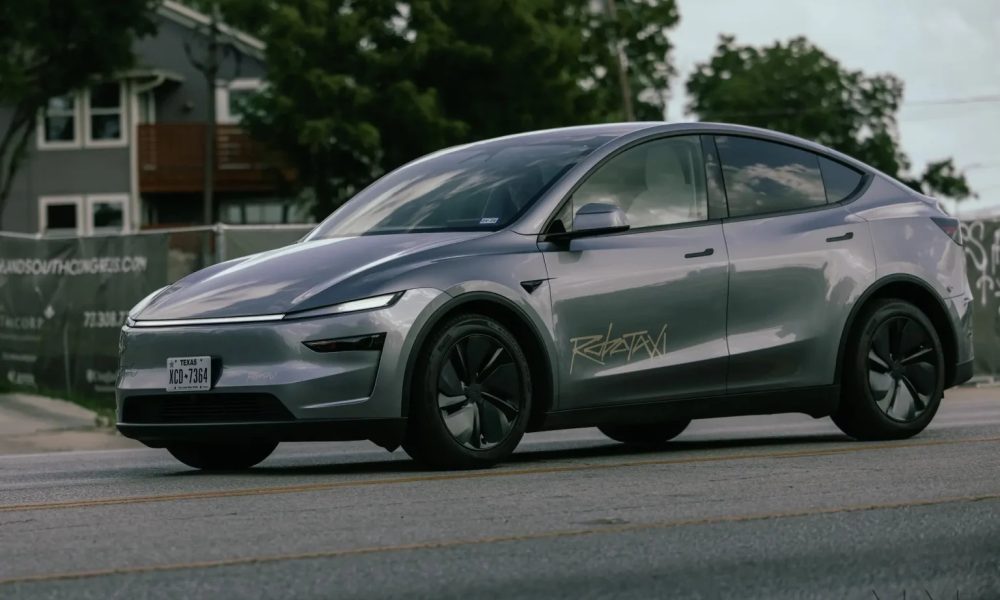
From its inception, the Houston fleet comprised Model Y vehicles operating without safety monitors or human occupants in the front seats. These fully autonomous rides are booked exclusively through the dedicated Tesla Robotaxi application, providing a seamless, driverless experience for public users within the designated geofence.
Initially, the service area measured approximately 25 square miles. Independent trackers and community data confirmed that this zone did not experience substantial growth by late September of the same year. The local fleet operating in Houston largely consisted of a modest number of unsupervised Model Ys, diligently collecting real-world data and refining the system’s performance.
The Broader Robotaxi Vision: Austin’s Precedent and Future Prospects
The journey of Tesla’s Robotaxi program began with public rides in Austin, Texas, in June 2025. This initial phase involved a smaller geofence and vehicles equipped with safety monitors, offering a controlled ride-hailing experience. Over time, as confidence and system capabilities advanced, Tesla progressively removed the monitors and steadily expanded the service area to cover most of the Austin metropolitan region, establishing a robust operational model.
Today, the unsupervised Tesla Robotaxi service is actively operational in six major U.S. cities: Austin, Dallas, Houston, Miami, Orlando, and Tampa. The company proudly reports that its driverless vehicles have collectively accumulated several million autonomous miles, a crucial metric in validating the safety and reliability of its sophisticated AI-driven systems.
Looking ahead, Tesla’s purpose-built, steering-wheel-free two-seater Cybercab entered public service in Austin in early September 2026, experiencing rapid scaling. While dozens to nearly 200 Cybercabs have been observed undergoing staging and testing in various Houston lots, their public deployment in Houston remains pending. The company has officially announced that Dallas is slated to be the next city for Cybercab rides, with a target launch in November. Further cities and 24/7 operating hours are anticipated by the close of 2026, alongside plans for fleet-operator sales of the innovative vehicle.
Competitive Landscape in Autonomous Mobility
The expansion of Tesla Robotaxi Houston services occurs within an increasingly competitive autonomous vehicle market. Notably, Waymo, a prominent player in the self-driving industry, also operates a fully driverless service in Houston. Waymo’s service has been accessible to the public since August 2026, offering residents another option for driverless transportation.
This parallel development highlights Houston as a key battleground for autonomous technology deployment, where leading companies are actively vying to establish and scale their services. The presence of multiple providers underscores the city’s strategic importance as a testing ground and a significant market for future urban mobility solutions.
Strategic Implications and Future Outlook
Tesla’s geofence expansion in Houston is consistent with its established strategy of initiating operations within tightly controlled validation zones. As real-world driving data accumulates and system reliability improves, the company systematically widens its service coverage. This methodical approach ensures that autonomous capabilities are thoroughly vetted before being scaled to larger, more complex urban environments.
For residents and visitors within the new, expanded boundary, requesting an unsupervised Model Y trip is straightforward via the Tesla Robotaxi app. The precise operating hours for the expanded service, along with definitive timelines for Cybercab availability in Houston, will be communicated through future app updates and official company statements.
The continuous growth of Tesla Robotaxi services, exemplified by this significant expansion in Houston, demonstrates the company’s commitment to advancing autonomous driving technology. It also signals a broader shift towards a future where driverless vehicles play an integral role in urban transportation networks, offering enhanced convenience and efficiency.
Frequently Asked Questions (FAQ)
What is the significance of the Tesla Robotaxi Houston geofence expansion?
The expansion significantly increases the operational area for Tesla’s driverless ride-hailing service in Houston, making it accessible to more residents. It signals Tesla’s confidence in its autonomous technology and its methodical approach to scaling operations after extensive data collection and validation.
Why is the new geofence shaped like a rocket?
The rocket-shaped boundary has been interpreted by many as a symbolic nod to SpaceX, another company led by Elon Musk, hinting at a shared vision for future technological endeavors. While Musk has suggested it is coincidental, the design adds a distinctive visual flair to the Robotaxi map.
When did the Tesla Robotaxi service launch in Houston?
The Tesla Robotaxi service officially launched in Houston on April 18, 2026. This launch coincided with the service debut in Dallas, marking a major step for Tesla in bringing its unsupervised autonomous ride-hailing outside of its initial Austin operational zone.
Which Tesla vehicles are currently used for Robotaxi services in Houston?
Currently, the Tesla Robotaxi service in Houston primarily utilizes Model Y vehicles. These cars operate fully unsupervised, meaning there are no human occupants in the front seats, and rides are booked exclusively through the dedicated Tesla Robotaxi application.
When can Houston expect Cybercab deployment?
While Cybercabs, Tesla’s purpose-built autonomous vehicles, have been sighted in Houston for testing, public deployment in the city is not yet confirmed. Dallas is slated to receive Cybercab service next month, with Houston and other cities anticipated to follow later in 2026 or beyond.
How does Waymo’s service in Houston compare to Tesla Robotaxi?
Waymo also operates a fully driverless ride-hailing service in Houston, which became publicly available in August 2026. Both companies represent leading efforts in autonomous vehicle deployment, indicating Houston as a significant market and testing ground for next-generation urban mobility solutions.