
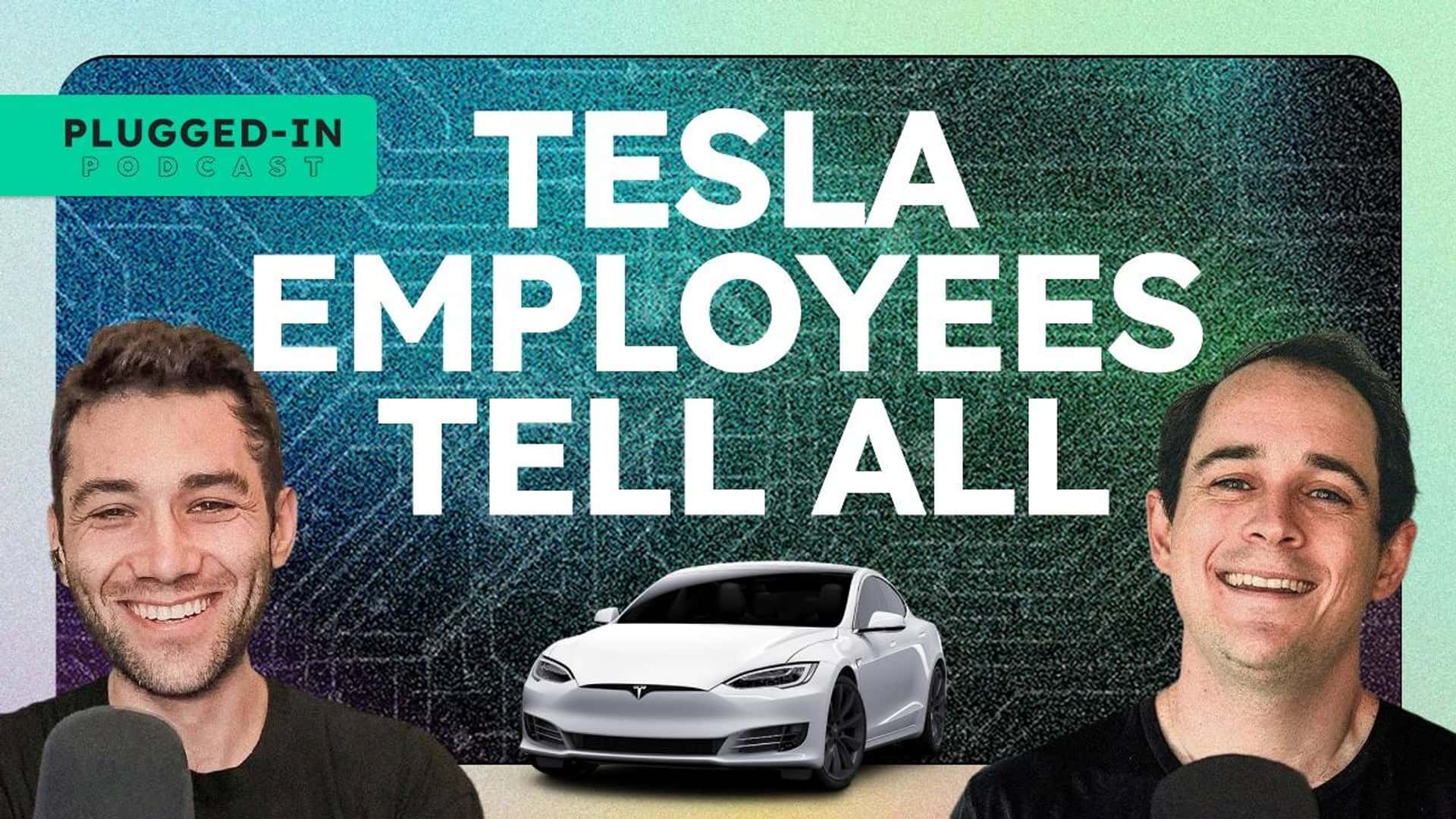
Key Takeaways:
- A recent report by Reuters revealed significant skepticism among former Tesla employees regarding the safety and reliability of the company’s Full Self-Driving (FSD) technology.
- Seven former data labelers stated they would not trust the software to drive them, with one employee expressing extreme reluctance.
- The report alleges that Tesla has strategically presented FSD data, potentially using incomplete or less flattering information to shape public perception.
- Despite CEO Elon Musk’s long-standing promises of full autonomy, FSD (Supervised) remains a Level 2 driver-assistance system, far from truly autonomous capabilities.
- Concurrently, significant advancements are being made in the broader electric vehicle (EV) charging infrastructure, with networks like Rivian Adventure Network and Electrify America expanding rapidly.
- Public perception of EV charging reliability often lags behind the on-the-ground improvements, particularly as Tesla Superchargers become more accessible to non-Tesla EVs.
The ambitious journey toward fully autonomous vehicles continues to face considerable hurdles, particularly for industry leader Tesla. Despite nearly a decade of promises from CEO Elon Musk that Tesla’s Full Self-Driving (FSD) technology would soon achieve complete autonomy, recent revelations suggest the path is far more complex than publicly portrayed. This ongoing development comes against a backdrop of fatal crashes, multi-million dollar lawsuit judgments, and a significant divide between marketing claims and operational reality regarding the self-driving system.
A detailed investigation by Reuters has brought to light the internal perspectives of former Tesla employees directly involved in labeling training data for the company’s autonomous driving efforts. Their testimonies cast a shadow of doubt over the current state and future prospects of Tesla Full Self-Driving, highlighting a concerning gap in confidence even among those intimately familiar with its development.
Internal Doubts Emerge on Tesla Full Self-Driving Capabilities
The Reuters report cited seven former Tesla employees who worked on the critical task of labeling training data for the company’s autonomous driving systems. These individuals expressed profound distrust in the software’s ability to operate vehicles safely without human intervention. Their reluctance to rely on FSD for personal transport underscores the significant challenges still facing the technology.
One former employee’s sentiment was particularly stark, stating they wouldn’t get in a car piloted by FSD “if you fucking paid me.” Such candid remarks from individuals who contributed to the very data that trains the FSD system provide a rare glimpse into the internal perceptions that often remain hidden from the public eye.
The report further alleges that Tesla has engaged in practices to “massaged the narrative” around its FSD capabilities. This involved purportedly presenting the system as safer than internal data might suggest, potentially using incomplete or incomparable data sets to paint a more favorable picture. These allegations suggest a deliberate effort to manage public and investor expectations, even when more comprehensive, albeit less flattering, data was available internally.
Currently, Tesla’s FSD (Supervised) system, despite its name, remains a Level 2 driver-assistance feature. While it offers impressive functionalities, assisting with steering, acceleration, and braking under human supervision, it is fundamentally “far from a fully autonomous system.” Drivers are still required to remain attentive and prepared to intervene at all times, a critical distinction from true Level 4 or Level 5 autonomy, which Tesla has repeatedly suggested is on the horizon.
Ferrari’s Electric Future and EV Charging Network Advances
Beyond the intricacies of autonomous driving, the broader electric vehicle landscape is witnessing dynamic shifts, from groundbreaking design concepts to significant improvements in charging infrastructure. A recent podcast episode discussed an in-person experience with the Ferrari Luce, an electric concept that has generated considerable public debate.
The detailed perspective from someone who physically sat in the Ferrari Luce provided valuable insight, particularly in countering common critiques. It highlighted that preconceived notions, such as the idea that the Luce is merely a “simulacra of a Nissan Leaf,” often fall short when confronted with the actual vehicle. Such firsthand accounts are crucial in clarifying the discourse around innovative, and often controversial, EV designs.
Progress in America’s Fast-Charging Infrastructure
In more universally positive news for the average EV owner, substantial advancements are being made across America’s fast-charging network. Major players in the automotive and energy sectors are consistently pushing to enhance the charging experience, making it more reliable and accessible for everyone.
Rivian, for instance, recently announced a significant milestone: its Adventure Network now boasts over 1,000 DC fast chargers spread across 148 charging stations. This expansion provides vital support for Rivian owners and contributes to the overall growth of high-speed charging options nationwide. Similarly, Electrify America and retail giant Walmart are among the entities driving a consistent push to improve the quality and availability of EV charging services.
Despite these tangible improvements, public sentiment often lags behind the reality on the ground. Many individuals, especially those who only occasionally review EVs or follow the market without personal ownership experience, continue to voice concerns about the unreliability of the fast-charging network. However, for regular EV owners, the practical experience suggests a different narrative.
From a firsthand perspective, frequent use of fast chargers, even for those relying solely on public infrastructure due to limited home charging options, reveals a growing reliability. In the past two years, instances of encountering multiple broken stalls at a single charging station have become rare. This trend indicates that as long as one utilizes a station from a reputable charging network, concerns about reliability are significantly diminishing.
While geographic location, such as residing within the “California bubble,” might offer a more developed charging ecosystem, improvements are evident even in regions like the Midwest. The increasing interoperability, particularly with most EVs now able to access Tesla Superchargers, has further alleviated range anxiety and charging frustrations. This widespread access to Tesla’s highly reliable network marks a pivotal moment in standardizing the EV charging experience across various brands.
Occasional issues, such as a single dispenser malfunction once a year or a payment processing problem during a major web outage like the nationwide CrowdStrike incident that briefly affected an Ioniq 5 XRT tester, are comparable to minor inconveniences experienced at traditional gasoline stations. As payment systems continue to be refined and the physical infrastructure of chargers expands, these instances are becoming rarer.
It is also crucial to consider that the demand for public charging stations differs significantly from that of gasoline stations. Approximately 86% of all EV charging occurs at home, a stark contrast to gasoline vehicles where nearly all refueling happens at public stations. This high rate of home charging reduces the overall pressure on public infrastructure, allowing for a more manageable build-out compared to the extensive network of gas stations required for internal combustion engine vehicles.
In conclusion, while highly public debates surrounding Tesla Full Self-Driving and specific EV designs continue, there is undeniable, steady progress in less visible, yet crucial, aspects of the electric vehicle industry, particularly in the realm of charging infrastructure. These incremental improvements collectively contribute to a more robust and user-friendly EV ecosystem.
FAQ
What is Tesla Full Self-Driving (FSD)?
Tesla Full Self-Driving (FSD) is a suite of advanced driver-assistance features offered by Tesla. Despite its name, FSD (Supervised) is currently a Level 2 system, requiring active human supervision at all times. It assists with steering, acceleration, and braking but does not enable the vehicle to drive itself completely autonomously without human input or oversight.
Why are former Tesla employees skeptical about FSD?
A Reuters report highlighted that former Tesla employees involved in training data labeling expressed significant distrust in FSD’s ability to drive safely. Their skepticism stems from their intimate knowledge of the system’s development, suggesting concerns about its current capabilities and reliability, leading some to openly state they would not ride in a car driven by FSD.
What are the main criticisms against Tesla’s FSD narrative?
Critics, including those cited in the Reuters report, allege that Tesla has “massaged the narrative” around FSD by using selective or incomplete data to portray the system as safer and more advanced than it truly is. This practice, if accurate, could mislead the public about the technology’s readiness for full autonomy and its inherent safety risks.
How is the EV fast-charging network improving in the US?
The US EV fast-charging network is seeing significant growth and reliability enhancements. Companies like Rivian have expanded their Adventure Network to over 1,000 DC fast chargers, while Electrify America and Walmart are also investing heavily. Crucially, increased access for most EVs to Tesla Superchargers is significantly boosting overall network reliability and availability.
Is public perception of EV charging accuracy?
Public perception often lags behind the actual improvements in EV charging infrastructure. While some still perceive the network as unreliable, EV owners frequently report fewer issues, with rare instances of broken stalls at reputable stations. The high rate of home charging (86%) also reduces the demand pressure on public chargers, contributing to better overall user experience.
What is the significance of Tesla Superchargers opening to other EVs?
The opening of Tesla Superchargers to non-Tesla EVs is a game-changer for the entire electric vehicle industry. Tesla’s network is renowned for its reliability and widespread availability. This interoperability standardizes the charging experience, significantly reduces range anxiety for a broader segment of EV owners, and accelerates the adoption of electric vehicles by enhancing charging convenience.