
Key Takeaways:
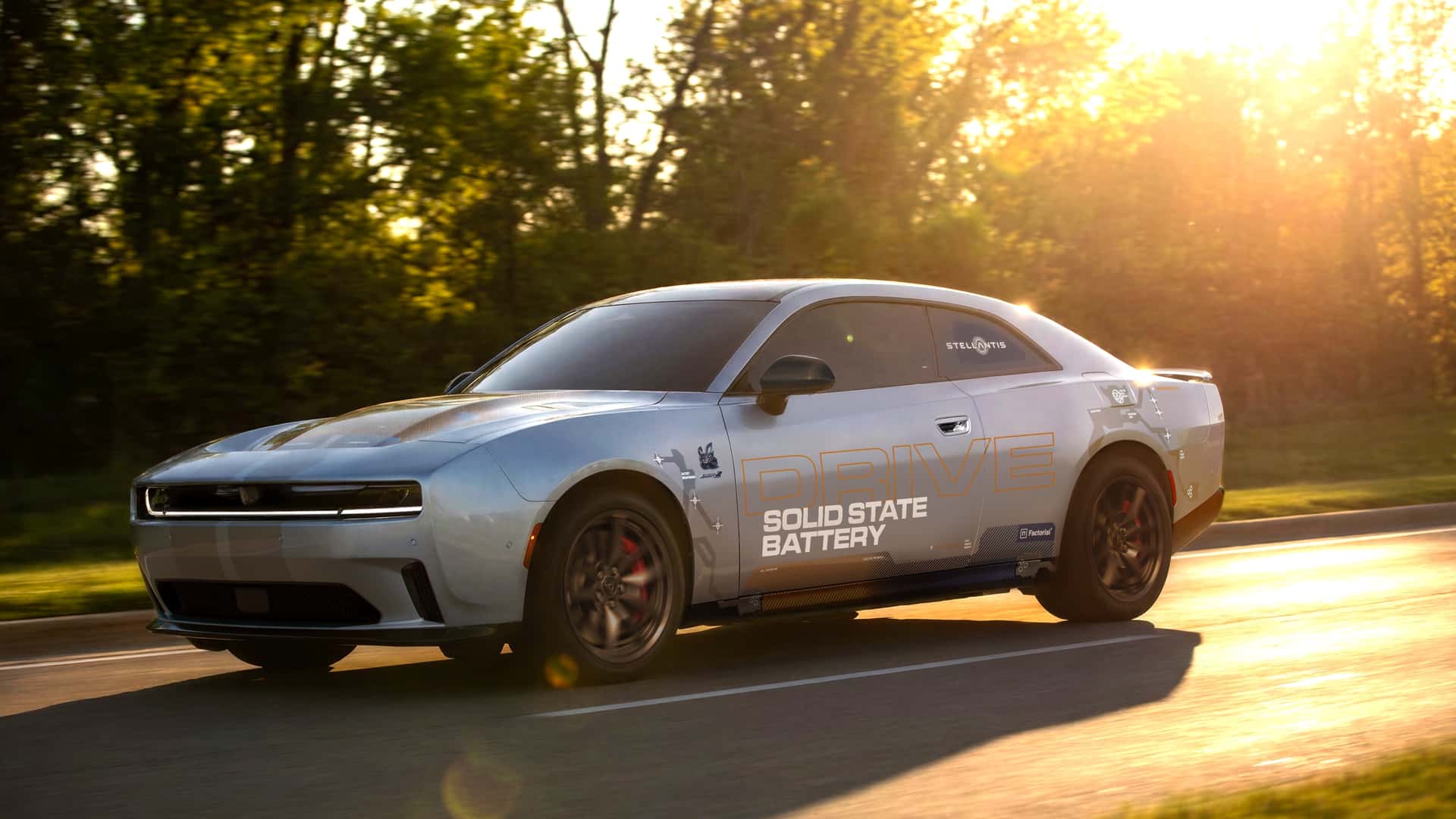
- Stellantis has initiated real-world testing of a Dodge Charger Daytona EV equipped with an experimental semi-solid-state battery from Factorial Energy.
- This advanced battery technology promises significant improvements in EV performance, including potentially longer range, faster charging, and reduced costs.
- The Factorial FEST cell boasts an energy density of 375 watt-hours per kilogram and can charge from 15% to 90% in just 18 minutes.
- The development marks a crucial step in validating next-generation battery solutions, building on previous successful tests like the Mercedes-Benz EQS prototype that achieved 749 miles on a single charge.
- Several major automakers, including BMW, Toyota, BYD, Nio, and MG Motor, are actively investing in solid-state battery development, signaling a global push towards this technology.
Stellantis Puts Next-Generation Battery Technology to the Test in Dodge Charger EV Prototype
In a significant stride towards revolutionizing electric vehicle (EV) performance, Stellantis, the global automotive giant behind brands like Jeep, Ram, and Dodge, has announced the commencement of real-world testing for a Dodge Charger EV prototype integrated with an experimental semi-solid-state battery. This critical development signals the automaker’s commitment to advancing battery technology, aiming to deliver electric vehicles with enhanced capabilities.

The rigorous testing program is part of Stellantis’s ongoing collaboration with Massachusetts-based battery startup Factorial Energy. Their joint effort focuses on evaluating the viability, safety, and performance of these advanced battery packs under diverse, real-world driving and charging scenarios.
Unpacking Semi-Solid-State Battery Innovation
The pursuit of solid-state batteries represents a frontier in EV innovation, promising superior energy density, faster charging times, and improved safety profiles compared to conventional lithium-ion batteries. However, developing and scaling these technologies for mass production has historically presented significant engineering challenges, a hurdle that many automakers are actively working to overcome.
Semi-solid-state batteries, like those developed by Factorial Energy, bridge the gap between traditional liquid-electrolyte lithium-ion batteries and the fully solid-state variants. They typically utilize a gel-like or polymer electrolyte, offering performance benefits closer to solid-state solutions while potentially mitigating some of the manufacturing complexities.
Dodge Charger Daytona EV: A Real-World Testbed
The chosen vehicle for this groundbreaking trial is a Dodge Charger Daytona EV. This high-performance electric muscle car serves as an ideal platform to push the boundaries of battery technology, providing a demanding environment for validating the experimental power unit.
Engineers are utilizing this specialized Dodge Charger EV prototype to fine-tune and rigorously validate the battery pack’s safety, overall performance, and long-term reliability. The tests encompass a wide array of actual charging cycles and dynamic driving conditions, ensuring the technology can withstand the rigors of everyday use.
Ned Curic, Stellantis’s Chief Engineering and Technology Officer, underscored the strategic importance of these trials. He stated, “This milestone shows we are bringing solid-state batteries closer to our customers with the potential for longer range, faster charging, and lower costs.”
Factorial’s FEST Cell: A Closer Look at Performance Metrics
At the core of this ambitious test program is Factorial’s FEST cell, which features a semi-solid-state chemistry. This particular cell boasts an impressive energy density of 375 watt-hours per kilogram (Wh/kg). To put this into perspective, conventional lithium-ion batteries commonly found in current electric vehicles typically offer energy densities ranging from 200-300 Wh/kg.
This higher energy density directly translates to a greater potential for extended range, allowing the Dodge Charger EV prototype to travel further on a single charge. Beyond range, the FEST cell also demonstrates remarkable charging capabilities. Stellantis reports that the pack can charge from 15% to 90% in a mere 18 minutes. This is a substantial improvement over the current production Dodge Daytona’s lithium-ion pack, which typically takes approximately 30 minutes to charge from 10% to 80%.
Furthermore, the Factorial battery exhibits robust thermal performance, capable of operating across a broad temperature spectrum, from -22 degrees Fahrenheit to 113 degrees Fahrenheit (-30°C to 45°C). This wide operating range is a crucial advantage, enhancing the viability and reliability of electric vehicles in diverse climatic conditions globally.
Siyu Huang, CEO of Factorial, emphasized the collaborative nature of this development, stating, “Real-world road testing is exactly the kind of deep full-stack collaboration that solid-state has always required.”
Proprietary Integration and Future Developments
Stellantis revealed that it has meticulously integrated the Factorial battery into the existing pack design of the Dodge Charger EV prototype. This integration leverages a new, patented mechanical architecture specifically engineered to extract the maximum performance potential from these advanced cells. The innovative design ensures optimal energy transfer and thermal management, crucial for the longevity and efficiency of the battery system.
Factorial Energy has previously indicated that the insights gleaned from its semi-solid-state cells, which utilize a gel-like electrolyte, are instrumental. These learnings are designed to feed directly into the ongoing development of its ambitious all-solid-state Solstice battery. Thus, the current real-world tests are equally vital for Factorial’s long-term research and development objectives as they are for Stellantis’s immediate product validation.
Industry-Wide Pursuit of Solid-State Battery Solutions
The push for advanced battery technology extends far beyond Stellantis and Factorial Energy. This collaboration is part of a broader, global trend among leading automakers investing heavily in next-generation battery solutions.
Last year, Factorial’s semi-solid-state cells were notably installed in a Mercedes-Benz EQS prototype. This vehicle undertook an extensive cross-country road trip in Europe, demonstrating an astonishing range of 749 miles on a single charge, with 85 miles of remaining range at the journey’s conclusion. This feat underscores the transformative potential of such battery advancements.
Similarly, BMW commenced testing of all-solid-state cells from Colorado-based startup Solid Power in a prototype i7. The German automaker has also partnered with Samsung SDI to aid in the development and validation of Solid Power’s innovative cells. Toyota is another major player with its own dedicated solid-state program, aiming to bring this technology to market.
In Asia, numerous Chinese automakers, including BYD, Nio, and MG Motor, are also actively engaged in their respective solid-state battery development initiatives. These concerted efforts across the industry highlight the consensus that solid-state and semi-solid-state technologies are poised to play a pivotal role in the future of electric mobility, promising a new era of performance, efficiency, and sustainability for electric vehicles globally.
FAQ Section
What is a semi-solid-state battery?
A semi-solid-state battery uses a gel-like or polymer electrolyte, rather than a purely liquid one found in conventional lithium-ion batteries or a completely solid one in full solid-state batteries. This design aims to combine the benefits of both, offering higher energy density and improved safety while potentially easing manufacturing challenges.
Why is Stellantis testing this battery in a Dodge Charger EV prototype?
Stellantis is utilizing the Dodge Charger EV prototype to conduct real-world tests, validating the safety, performance, and reliability of Factorial Energy’s semi-solid-state battery. This allows the automaker to gather crucial data under actual driving and charging conditions before wider implementation.
What are the key advantages of this new battery technology?
The Factorial FEST cell offers a higher energy density of 375 Wh/kg, enabling longer range for electric vehicles. It also supports significantly faster charging, with the ability to go from 15% to 90% in just 18 minutes, and operates effectively across a wide temperature range (-22F to 113F).
Who is Factorial Energy?
Factorial Energy is a Massachusetts-based startup specializing in advanced battery technology, particularly semi-solid-state and all-solid-state batteries. They are collaborating with Stellantis and other major automakers to develop and test their innovative battery solutions for future electric vehicles.
Have these batteries been tested in other vehicles?
Yes, Factorial’s semi-solid-state cells were previously installed in a Mercedes-Benz EQS prototype. This vehicle achieved an impressive 749 miles on a single charge during a cross-country European road trip, demonstrating the substantial potential of the technology.
Which other automakers are developing solid-state batteries?
Several global automakers are actively pursuing solid-state battery technology. Notable examples include BMW (in collaboration with Solid Power and Samsung SDI), Toyota, and Chinese manufacturers such as BYD, Nio, and MG Motor, all working towards next-generation EV battery solutions.